
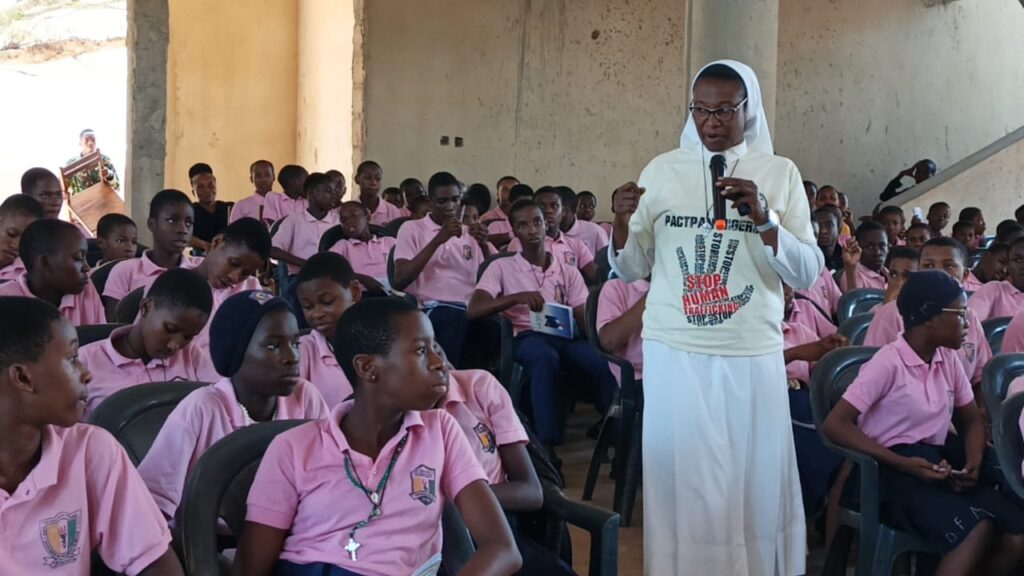
On the Feast of St. Josephine Bakhita, February 7, 2026 — celebrated on the 7th this year because February 8 fell on a Sunday — a day dedicated to prayer and reflection on human trafficking, a coordinated outreach effort brought critical awareness training to students in two secondary schools in Eastern Nigeria. The initiative, conducted in partnership with the Pan-African Catholic Theology and Pastoral Network (PACTPAN) and its Anti-Human Trafficking Army, reached students at Great Ambassador Secondary School, Oboama Enyiogugu, and Pope John Paul II Model Secondary School, Umunagbor Ihitte, both in Mbaise, Imo State.
The choice of date was deliberate. St. Bakhita, once kidnapped and enslaved as a child, later became a symbol of resilience and a global patron for victims of trafficking. Her story, according to the facilitators, underscores the spiritual and human cost of trafficking. “Human trafficking is not merely a social crime; it is a direct assault on the dignity of the human person created in God’s image,” the team emphasized.
Human trafficking is not merely a social crime; it is a direct assault on the dignity of the human person created in God’s image.”
Despite limited anti-trafficking education programs in Eastern Nigeria, trafficking remains one of the country’s most urgent human rights challenges. Children and adolescents are particularly vulnerable. Data from the ENACT Organized Crime Index identify Nigeria as a major source, transit, and destination country for trafficking, driven by poverty, unemployment, insecurity, porous borders, and corruption. Victims, predominantly women and children, are exploited for sexual purposes, forced labour, organ removal, domestic servitude, forced begging, and criminal recruitment.
Recent statistics paint a troubling picture. According to Statista, human trafficking cases in Nigeria rose by 180% between 2014 and 2022. The Counter Trafficking Data Collaborative (CTDC) reports that between 2005 and 2021, 5,431 Nigerian victims were registered by the International Organization for Migration, with 84% of cases recorded between 2018 and 2022. Adults accounted for 84% of victims, while 16% were children. Nigeria remains on Tier 2 of the U.S. Trafficking in Persons (TIP) Report, indicating that while efforts exist, the country still falls short of the minimum standards for eliminating trafficking.
Against this backdrop, the outreach awareness team said that waiting for government intervention is not enough. “As we wait for stronger government action, we continue to do what we can at our level,” they noted. With no government agencies present, the team stepped in to educate students, equip them with practical knowledge, and help them recognize early warning signs.
The decision to target secondary school students was strategic. Organizers explained that adolescents are often lured by promises of scholarships, jobs abroad, sponsorship, or gifts. A case from Imo State illustrates the danger: five years ago, a young girl was trafficked to Kano by a woman who initially posed as a benefactor. The trafficker used gifts and manipulation to gain her trust. “Trafficking does not always cross borders; sometimes it begins next door,” the facilitators warned.
Trafficking does not always cross borders; sometimes it begins next door.”
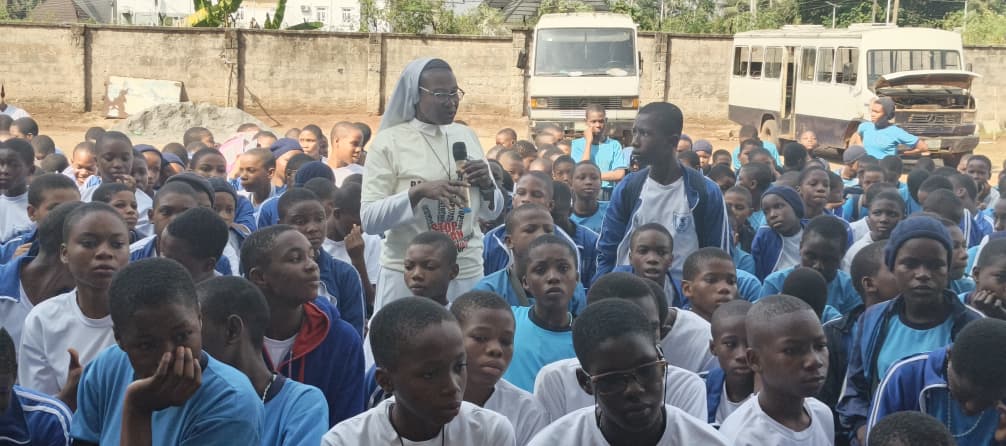
During the sessions, students learned how traffickers operate—through fake job offers, social media recruitment, pressure from acquaintances, and deceptive sponsorship schemes. Real-life scenarios helped them identify red flags. The content was delivered sensitively and tailored to their age.
The programme also featured a presentation on digital evangelization and online safety. With trafficking networks increasingly exploiting digital platforms, students were urged to view the internet as both a potential risk and a tool for protection. They were encouraged to value their education, verify opportunities with trusted adults, avoid oversharing personal information, and report suspicious activities.
The facilitators repeated simple, memorable calls to action:
THINK before you CLICK.
VERIFY every opportunity.
SHARE responsibly.
REPORT suspicious activities.
RESPECT human dignity.
The fight against human trafficking is not only a legal battle but a moral and spiritual duty to defend the God-given dignity of every human person.”
The outreach was highly interactive. Students asked questions, shared personal reflections, and expressed surprise at how close to home trafficking cases can be. Many admitted it was their first time receiving clear, structured information on the issue.
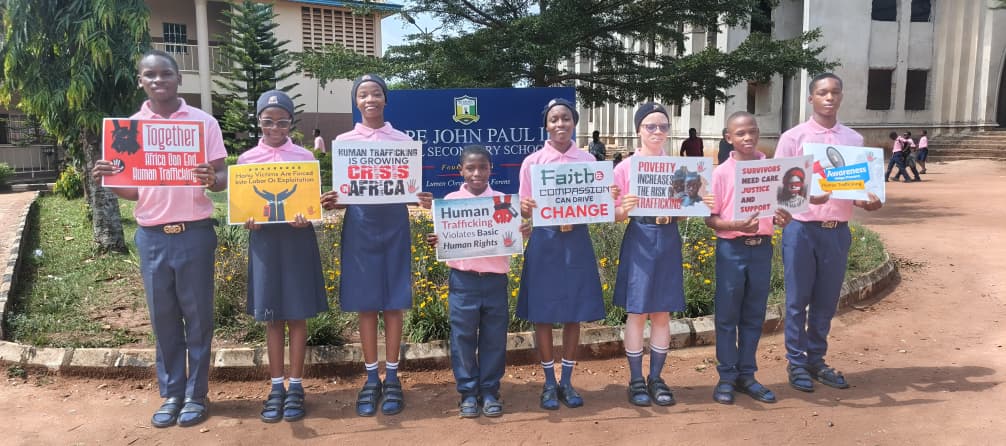
Organizers described the programme as “necessary and impactful,” noting that it corrected misconceptions, increased awareness, and equipped young people with practical self-protection skills. They stressed that continued school-based awareness programmes are essential for prevention. Informed adolescents, they said, can become advocates for safety and human dignity within their communities.
As the day ended, the spirit of St. Josephine Bakhita remained a guiding force. Her life story, once marked by exploitation and later transformed into a witness of hope, served as a reminder of the moral and spiritual responsibility to confront trafficking. “Inspired by St. Bakhita, we remain committed to transforming silence into action,” the organizers affirmed.


