

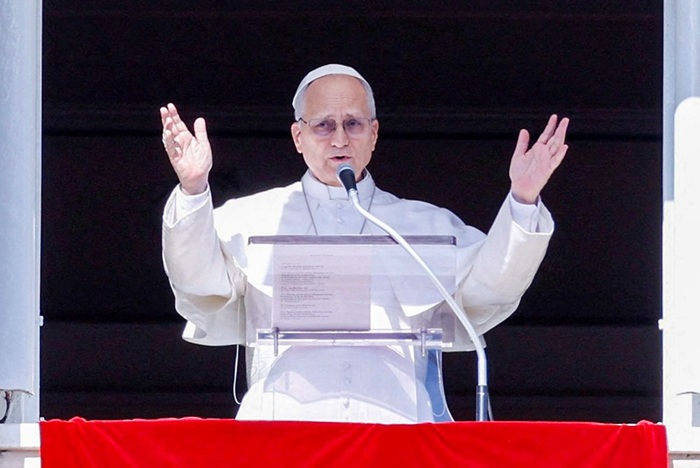
As Christians across the globe enter the sacred season of Lent, Pope Leo XIV has issued a compelling message urging the faithful to rediscover the transformative power of listening, fasting, and communal conversion. His reflection, titled “Listening and Fasting: Lent as a Time of Conversion”, frames Lent not merely as a ritual obligation but as a spiritual reset—an invitation to place God back at the centre of daily life.
Speaking with pastoral warmth, Pope Leo XIV describes Lent as a moment when “the Church, guided by a sense of maternal care, invites us to find renewal in our faith” by resisting the noise, anxiety, and distractions that dominate modern living. Conversion, he insists, begins with a heart willing to be touched by the Word of God.
Continuing the longstanding Lenten tradition of renewal within the Church, as articulated by John Paul II, Benedict XVI, and Francis, Pope Leo positions his message within a broader magisterial call for interior conversion rooted in listening, sacrifice, and solidarity.
Conversion begins with a heart willing to be touched by the Word of God.”
The Holy Father places listening at the heart of this year’s Lenten journey. True listening, he says, is the first sign of a desire for relationship—both with God and with one another. Drawing from the Book of Exodus, he reminds the faithful that God reveals Himself as the One who listens: “I have observed the misery of my people… I have heard their cry” (Ex 3:7).
This divine attentiveness, the Pope argues, becomes a model for Christians today. Listening to Scripture trains Christians to hear “the cry of those who are anguished and suffering”, especially the poor whose condition, he notes, “constantly challenges our lives, societies, political and economic systems, and the Church.”
In an age of digital noise, polarised debates, and social fragmentation, the Pope’s call resonates deeply across Africa, where communities continue to grapple with poverty, conflict, and the silent wounds of displacement.
For a youthful and socially vibrant African Church that navigates digital Pentecostalism, political polarization, and the accelerating influence of social media religious discourse, the call to disciplined listening offers both spiritual grounding and moral clarity. In societies where faith remains deeply communal, listening is not merely personal devotion, but a communal responsibility ordered toward justice and reconciliation.
In societies where faith remains deeply communal, listening is not merely personal devotion, but a communal responsibility ordered toward justice and reconciliation.”
According to Pope Leo, fasting, a practice long-rooted in Christian tradition, is not a mere self-denial but a spiritual discipline that sharpens desire and awakens justice. Because fasting involves the body, the Pope explains, it reveals what we truly hunger for. Quoting St Augustine, he notes that humanity “hungers and thirsts for justice,” and this longing expands the soul’s capacity for God.
Notwithstanding, the Pope also warns against fasting that becomes prideful or performative. Authentic fasting must be grounded in humility, nourished by the Word of God, and expressed through concrete acts of charity and sobriety.
In a strikingly practical appeal, he urges Christians to fast not only from food but also from harmful speech: “Let us begin by disarming our language… avoiding harsh words, rash judgment, slander, and speaking ill of others.” To him, this call carries particular weight in a digital era where online discourse often fuels division, misinformation, and emotional harm.
Let us begin by disarming our language.”
Pope Leo emphasizes that Lent is not a private spiritual exercise but a communal pilgrimage. He recalls the example of the Israelites in the Book of Nehemiah, who gathered to hear the Law and fast together as they renewed their covenant with God (cf. Nehemiah 9:1–3).


