
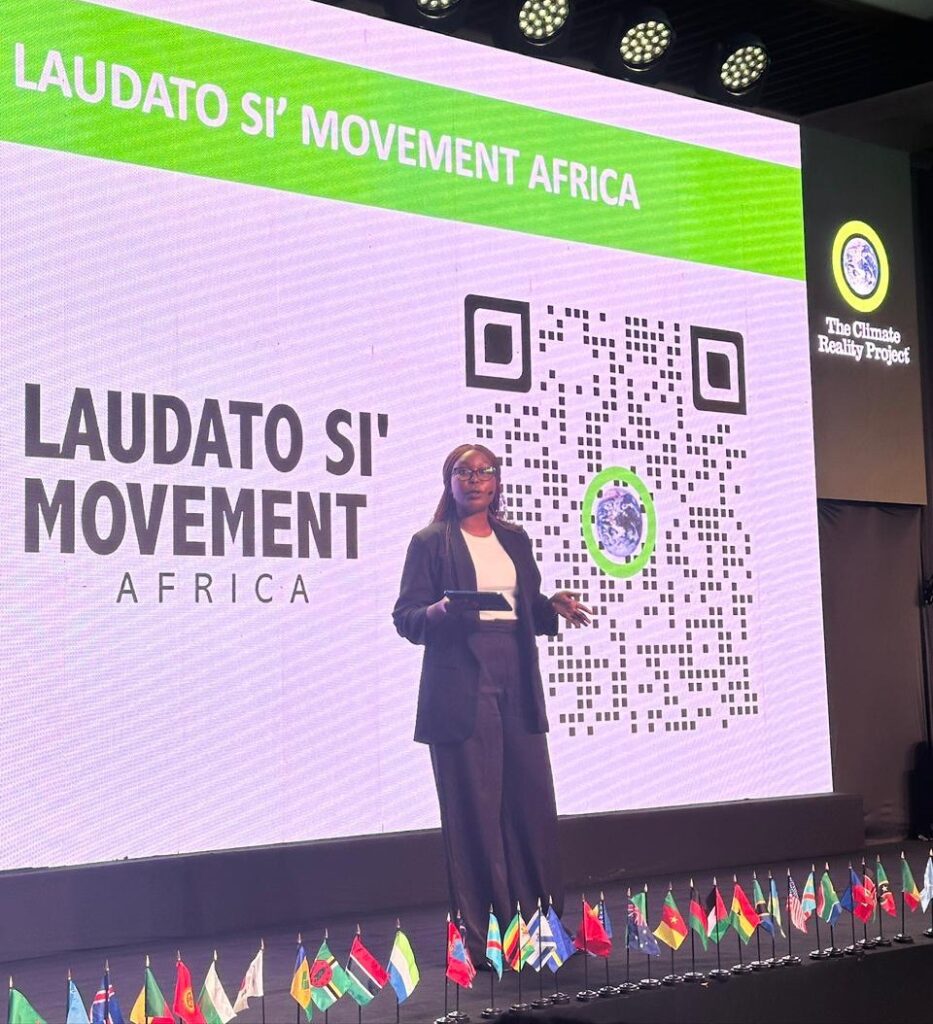
As the climate crisis deepens, so does the search for justice—especially in communities bearing the heaviest burden while contributing the least to the problem. In this in-depth conversation, Voice Afrique speaks with Ashley Kitisya, Africa Programs Manager at the Laudato Si’ Movement, on the climate crisis, fossil fuel divestment, and why Africa’s voice must not only be heard—but centred.
Voice Afrique:
You’ve been involved in climate justice. Today, we want to know a little about you. Who are you, Mrs. Ashley? Why is it that when we talk about climate justice in Africa, we see your name? What do you do that makes you stand out in the field?
Ashley Kitisya:
Thank you so much. It’s a pleasure and an honor to have this conversation with you.
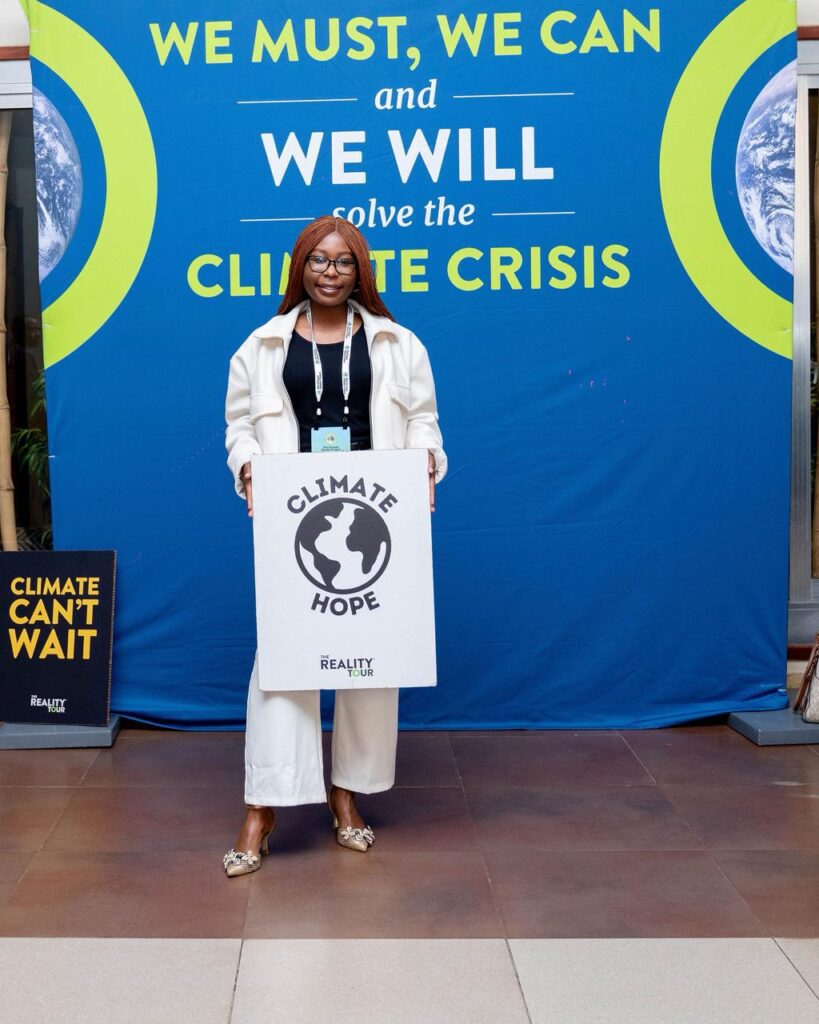
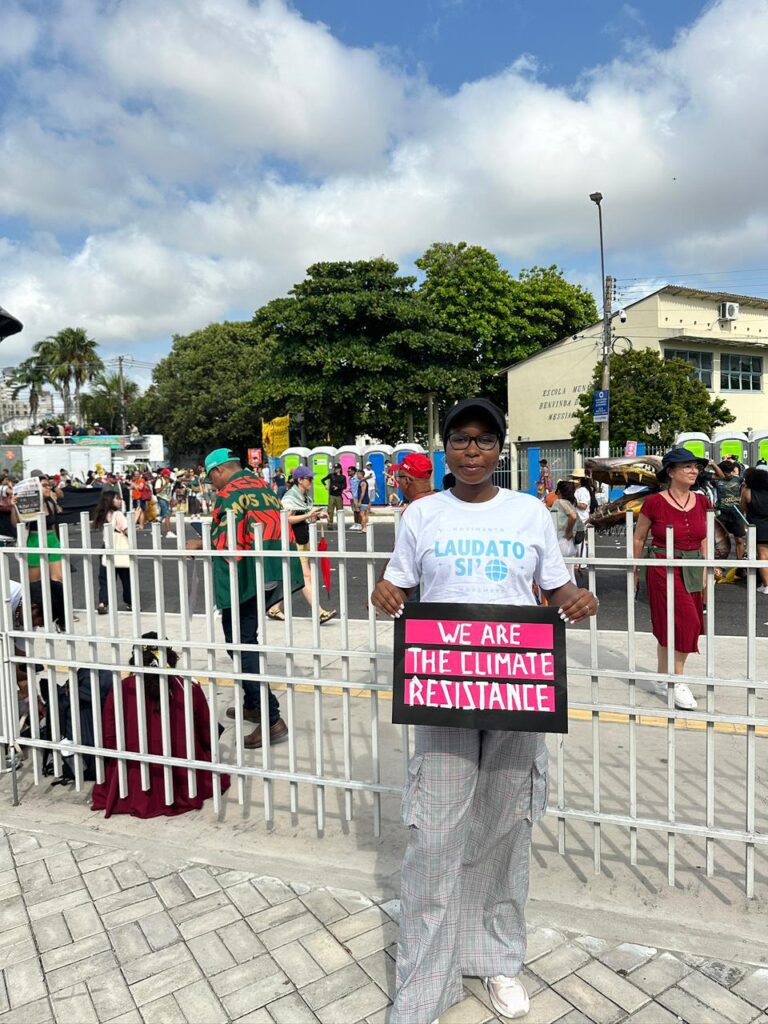
My name is Ashley Kitisya, and I serve as the Africa Programs Manager at the Laudato Si’ Movement—a global network of volunteers, member organizations, and partners working to bring Laudato Si’ to life.
In Africa, we have a vibrant movement active in over 33 countries—both Anglophone and Francophone. Our work is built on three pillars: eco-spirituality, advocacy, and footprint reduction.
The message we carry is clear: Laudato Si’ is alive, and it can be translated into action. We work with people of goodwill to actualize the vision of Pope Francis found in Laudato Si’ and Laudate Deum.
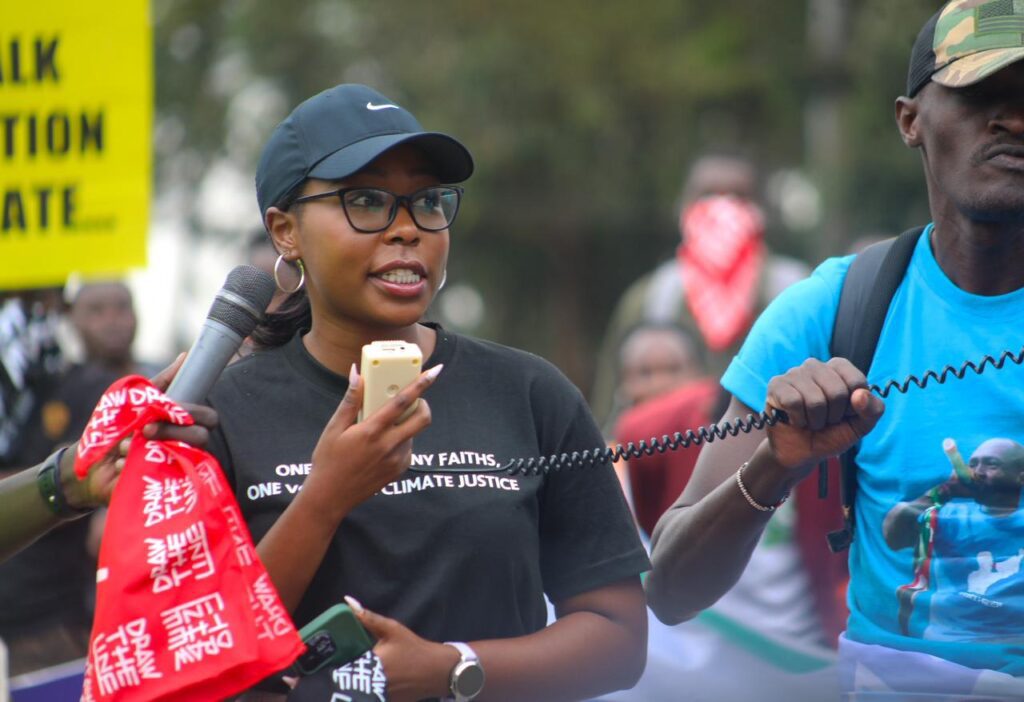
My role involves mobilizing communities, congregations, and partners to act for climate justice. We recognize the reality of ecological breakdown, which affects the poor the most—especially in Africa and across the Global South. Yet, there is hope. Systemic changes are possible, and even small actions matter.
I’m a lawyer by training, and I discovered Laudato Si’ during my studies. It moved me deeply, and that’s how I found myself on this path. I now work full-time in advocacy, pursuing justice and a sustainable future for Africa.
Voice Afrique:
At COP30 in Belém, Brazil, DR Congo’s President Félix Tshisekedi said, “The climate crisis is not only an environmental crisis; it is a crisis of justice and fairness.”
From your experience working with faith communities and grassroots movements, what does that justice look like in practical terms?
Ashley Kitisya:
That’s a powerful statement—and one echoed in Laudato Si’. Addressing the climate crisis is ultimately about addressing a social situation.
Everything is interconnected. Water injustice affects land; land connects to air; air impacts health. We must take a holistic view of what’s happening to our common home.
So, what does justice look like in practice?
- Energy sovereignty. Over 600 million Africans still lack access to energy—even though our continent is rich in sun, wind, and water. That’s a profound injustice.
- Food and land sovereignty. Foreign models are replacing our traditional food systems. We’re losing land to carbon markets and importing food that undermines local farming. Small-scale farmers are paying the price.
- Corporate accountability. Too many development projects displace communities and silence Indigenous voices. Look at Lamu in Kenya—a UNESCO site threatened by coal projects. There was no justice there.
- Climate debt and fair finance. Africa contributes only 4% of global emissions but suffers disproportionate impacts. Yet, we’re burdened by debt and denied fair access to markets.
- Decent work and industry. We must invest in processing our own raw materials and build sustainable, value-adding industries—not just export our wealth abroad.
Justice must reach beyond capital cities. Rural communities are still in the dark—literally and figuratively. Development must be inclusive and transformative.
Voice Afrique:
The DRC is called “a victim of its own riches.” At COP30, Jeanne-Marie Abanda referred to its minerals as “blood minerals.” As someone working on extractive justice, how do you view the link between mineral extraction, violence, and the climate struggle in Africa?
Ashley Kitisya:
Sadly, the old patterns continue.
There’s a clear link between traditional extractive practices—like oil and gas—and what’s now happening under the banner of the green transition. The so-called “critical minerals” needed for clean technologies are being extracted with the same exploitation as before.
In the DRC, this means armed conflict, legal circumvention, and ecological collapse. Why, with all the documentation we have on extractivism, are we still repeating the same mistakes?
The DRC has what the world needs—minerals for batteries and renewable tech. Yet, what it receives is violence, contamination, and poverty. Meanwhile, countries doing the extraction are celebrated as “green.”
That’s why we need governance, transparency, and community ownership. Africans must define how our resources are used—not foreign companies or governments.
We need fair technological partnerships, not ones where raw materials leave Africa only to return as expensive products. Why can’t Congolese communities process batteries themselves?
Without legal redress mechanisms, communities are left powerless. If we’re not careful, we’ll turn today’s green transition into tomorrow’s resource curse.
Voice Afrique:
The West—New Zealand, the UK, the U.S., Canada—and even countries like China—often propose climate alternatives after they’ve already moved on. They commit, then they backtrack. As someone who’s strongly advocated for stopping fossil fuel expansion in Africa, how do you respond to concerns that divestment could harm Africa’s economic development, especially in countries battling energy poverty?
Ashley Kitisya:
It’s a fair concern, and one that’s often politicized.
Yes, countries backtrack on climate promises. But Africa doesn’t need to copy those broken paths. We can leapfrog into renewables.
Africa has over 80% of its energy potential from renewable sources. But most fossil fuel projects—like the East Africa Crude Oil Pipeline—are designed for export, not local benefit.
The countries that industrialized through fossil fuels must lead the phaseout. For Africa, investing now in oil and gas means risking stranded assets and obsolete infrastructure in the near future.
Instead, we should invest in community-owned renewables, green jobs, and infrastructure that builds resilience, not dependency.
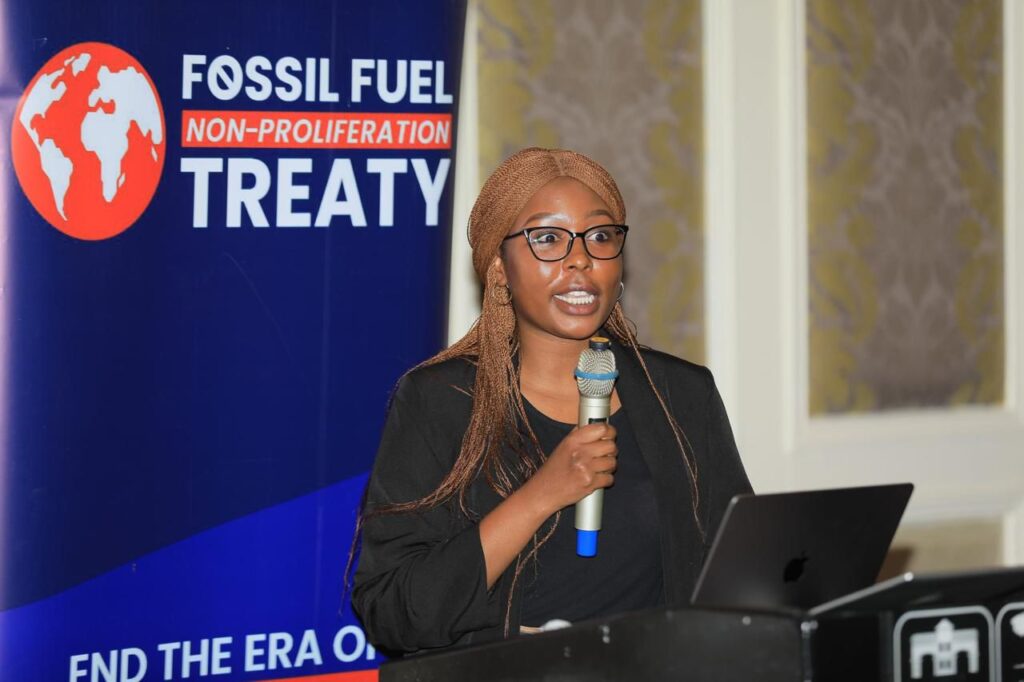
That’s why we support the Fossil Fuel Non-Proliferation Treaty—which calls for climate finance in the form of grants, not loans, to support Africa in developing while keeping fossil fuels in the ground.
We’re not saying don’t develop. We’re saying: develop wisely and differently.
Voice Afrique:
You warned against COP30 becoming just another “talk shop.” Do you think it marked a turning point for Africa?
Ashley Kitisya:
It was a turning point in some ways.
African, Indigenous, and marginalized voices were very present. The Catholic Church played a big role, primarily through the Global South statement on false solutions.
It may have been the strongest Catholic presence at any COP—and that’s a sign of hope. These conversations are moving beyond science and into community spaces.
There were major developments—such as the announcement by Small Island Developing States to host a summit on phasing out fossil fuels, and a Fossil Fuel Transition Plan endorsed by over 80 countries. That plan didn’t make it into the final COP30 agreement—but it marked progress.
Of course, some countries blocked strong language around phaseouts and responsibility. So yes, geopolitics remains a challenge. But we’re making moral and structural arguments that can’t be ignored.
We’re also now looking to the Colombia Conference, which will focus entirely on the phaseout of fossil fuels. I’m hopeful it leads to a real, binding roadmap.
Leaving COP30, I felt renewed and energized—not just for the next COP, but for the next 30.
Voice Afrique:
What is the most urgent message African faith communities are offering the world today—especially from those on the frontlines?
Ashley Kitisya:
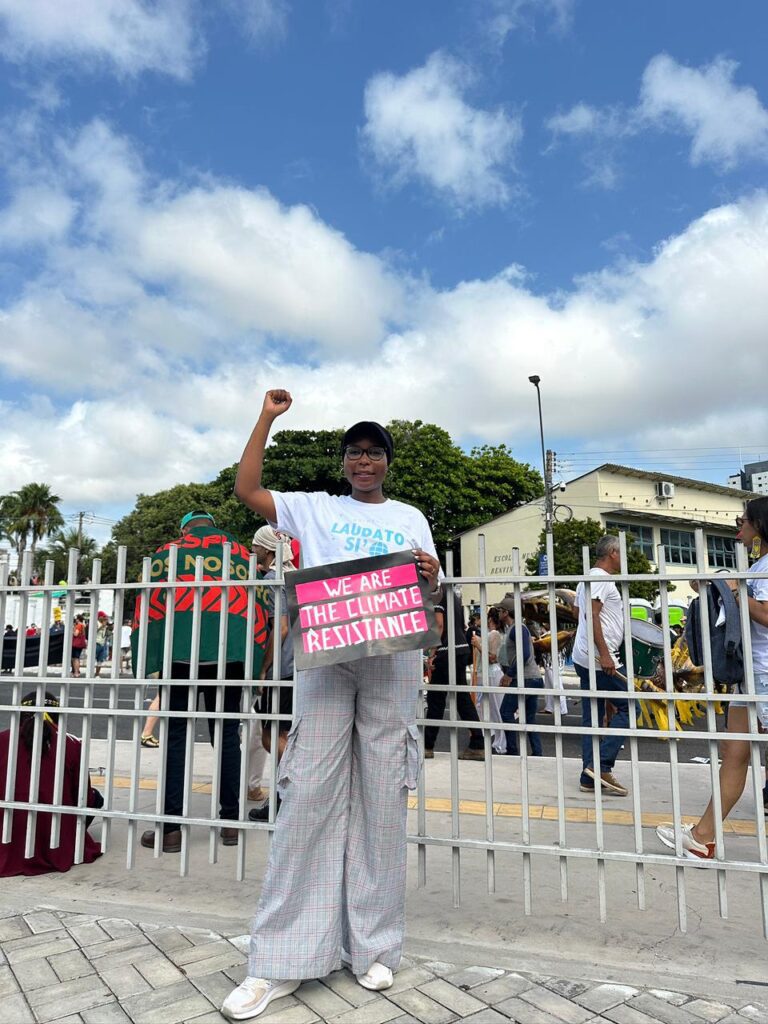
That message is simple but powerful: A just transition is non-negotiable.
We’re already at the table—now our values must shape the agenda. That includes:
- Land rights
- Mineral rights
- Energy justice
- Human dignity
We also need reparative justice—acknowledging historic emissions and empowering African people to determine their own futures.
Above all: life, dignity, and nature must come before profit.
There are many so-called “solutions” filled with technical jargon. But we must return to our traditional values, indigenous knowledge, and community-based practices that have always safeguarded the Earth.
This isn’t just about emissions or economics—it’s about morality.
Faith communities are bringing that moral clarity. Climate change is not just a technical crisis; it’s a moral crisis. And any solution must reflect that.
Voice Afrique:
Thank you very much, Ashley. This was marvellous.

1 comment
[…] the words of Ashley Kitisya, Program Manager for Africa at the Laudato Si […]