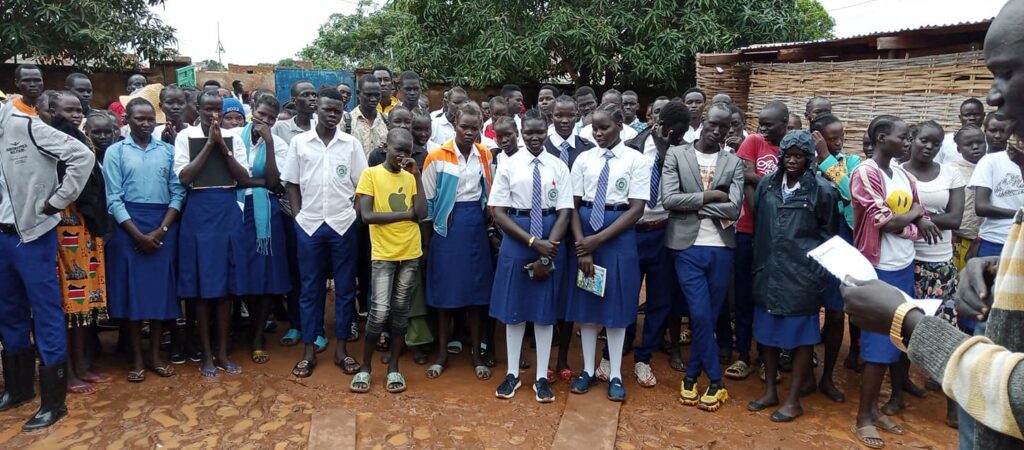
At the heart of the mission and vision of the Pan-African Catholic Theology and Pastoral Network (PACTPAN) is a demanding but straightforward conviction: Africa must tell her own story, interpret her own wounds, and imagine her own future through the lived faith, wisdom, and agency of her people. VoiceAfrique Catholic News Analysis exists to serve this calling—to shift the narrative from one too often buried beneath clichés of despair, dependency, and dysfunction toward a redemptive story of hope, agency, and imagination by focusing on the sites where Africans are converging to enact a praxis of reversal.
Africa must tell her own story, interpret her own wounds, and imagine her own future through the lived faith, wisdom, and agency of her people.”
In this Jubilee Year of Hope, amid wars, ecological crises, economic uncertainty, and democratic backsliding across the globe—and with Africa carrying a disproportionate share of these burdens—VoiceAfrique names African Young People as its Person of the Year. We do so because, in the darkness of our times, they have shone like stars, redefining the narrative of the continent. They are not merely the future of Africa; they are already its moral conscience, its restless civic energy, and its most credible sign of hope.
Demographically, this reality is undeniable: Africa is home to the youngest population in the world, and by mid-century, nearly one in three young people globally will be African—a youth bulge that could become a grave liability in contexts marked by poor governance, jobless growth, exclusion, and the systematic failure to invest in education, decent work, and opportunity. Yet recent history, and particularly the year 2025, tells a more hopeful story.
Against the odds, African young people have refused to be reduced to a “demographic problem.” They have emerged as protagonists of change—organizing, mobilizing, innovating, and insisting on dignity, accountability, and a future worth fighting for. Africa is a youthful continent not simply because of statistics, but because its youth are actively shaping public life and challenging injustice. They are, as Pope Francis reminded us, not the Church of tomorrow, but the Church of now.
Young people are not merely the Church of tomorrow; they are the Church of now.”
We honor African young people for three interrelated reasons.
First, youth courage and resistance have become the most powerful moral language of our time. Across Africa, young people are refusing to be infantilized, silenced, or dismissed as pawns. From Tanzania to Madagascar, Morocco to Kenya, and Cameroon, youth-led movements this year have risen against economic exclusion, corruption, political cynicism, and systems that deny them a voice, work, and dignity. These protests were not spontaneous eruptions of chaos but disciplined, organized, and often decentralized mobilizations—strategic in their use of digital tools, communal in their solidarity, and ethical in their insistence that Africa must be governed differently.
In Madagascar, Gen Z protesters filled the streets of Antananarivo and other cities, only to be dismissed by political authorities as “robots,” foreign agents, or naïve instruments of shadowy powers. The ensuing mockery on social media revealed something deeper: a generation that refuses to be treated as children in their own country, even as repression intensified. In Kenya, young people stood at the forefront of sustained protests against the rising cost of living, corruption, and state impunity, mobilizing digitally, documenting abuses, and paying with their bodies and lives when security forces responded with lethal force. In Morocco, youth protests against unemployment and structural inequality were met with heavy policing rather than dialogue, reinforcing a generational divide between rulers who cling to stability through force and young citizens who demand dignity through participation. Also, in Tanzania and Cameroon, youth activists, journalists, and student leaders were harassed for daring to imagine a more accountable public order. Across these contexts, young lives were lost, bearing tragic witness to the cost of speaking truth to unaccountable and repressive governments.
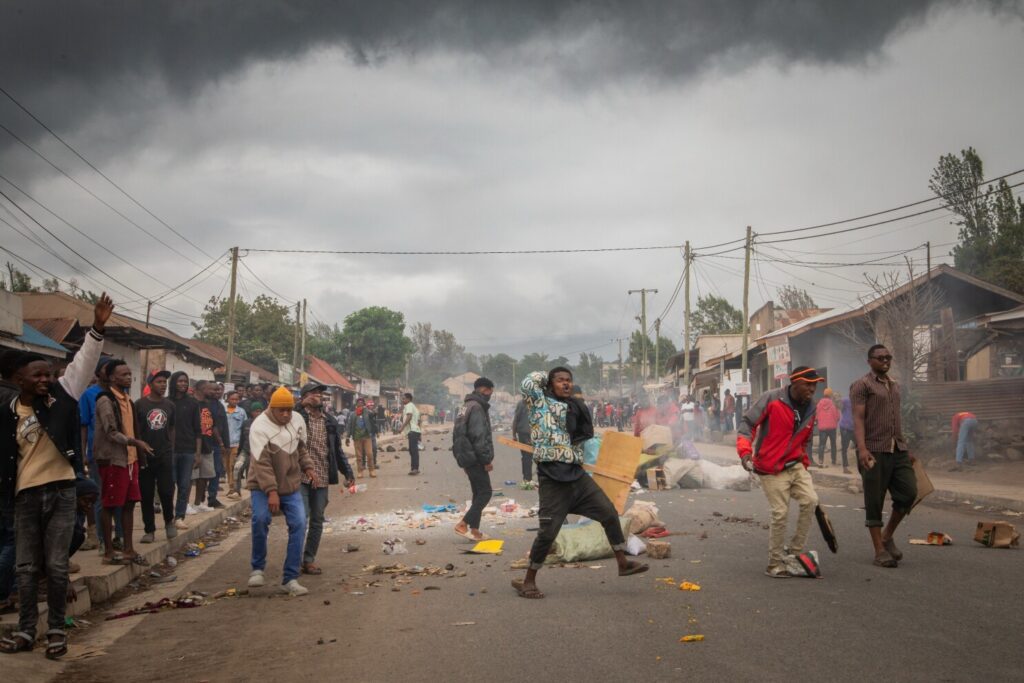
This resistance is neither nihilistic nor hedonistic; it is an idealism that transcends the narrow identity politics of the past. These youth protest not out of hatred, but because they love their countries too much to accept betrayal as destiny.
By confronting systems that exclude them from work, voice, and participation, African youth are exposing the moral exhaustion and spiritual vacuity of leadership structures that cling to power while offering no future. In doing so, they are becoming agents of repair in a wounded continent. African young people are patiently stitching together the broken pieces of our common life and naming the deeper ruptures caused by unresolved histories, failed modernities, and political economies brought on the continent by incompetent leaders. They, like sinecurists, have reduced the masses of our people—especially the young—into peons and pawns within patron–client systems that undermine merit while enthroning mediocrity as monarch. Against this bleak inheritance, Africa’s youth are sowing seeds of hope, insisting that another Africa is not only possible but already struggling to be born.
Second, African young people are building alternative sites of hope, pointing the Church and society to the burning bushes where God is speaking to some Moses out there—I have heard the cries of my people, I have seen their tears, and I am sending you to go set them free. This truth was powerfully on display for the Church in Africa at the III Pan-African Catholic Congress on Theology, Society, and Pastoral Life in Abidjan, where projects from 18 young people across the continent were presented. These initiatives—pastoral, social, ecological, digital, and entrepreneurial—demonstrated something both simple and revolutionary: with minimal support, genuine accompaniment, an enabling environment, and fair social, economic, and political systems, African youth can transform their communities. What they lack is not intelligence, creativity, or commitment; what they lack are systems that trust them.
One luminous example of the change agency we saw in our young people this year is Marco Nyoro Abal of Wau. His work with PACTPAN in the Catholic Diocese of Wau offers a quiet but powerful testimony to what hope looks like on the ground in a wounded society.
He is saving Africa with presence, listening, and the stubborn refusal to give up on his community.”
In August 2025, in a context marked by conflict, trauma, and social fragmentation in Sudan/South Sudan, Marco helped convene a community dialogue that brought together traditional leaders, religious authorities, and local community actors to confront some of the most painful and silenced realities of daily life: drug abuse, suicide, and gender-based violence. Rather than waiting for external interventions or retreating into despair, this young African leader chose the harder path of listening, convening, and building trust.
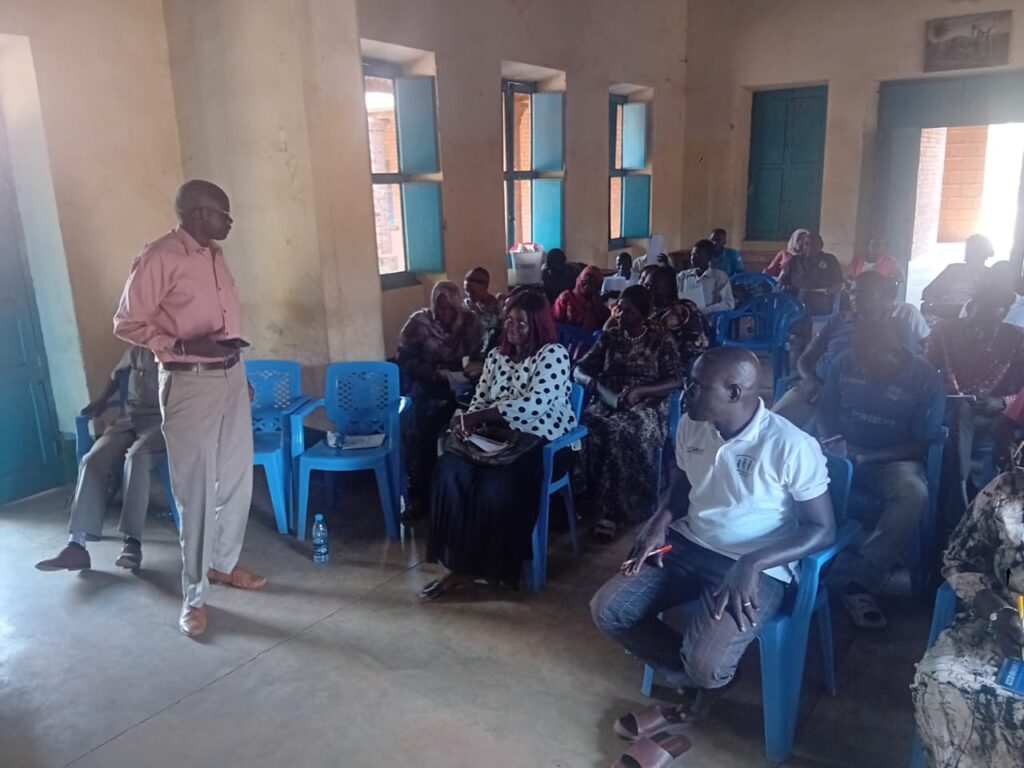
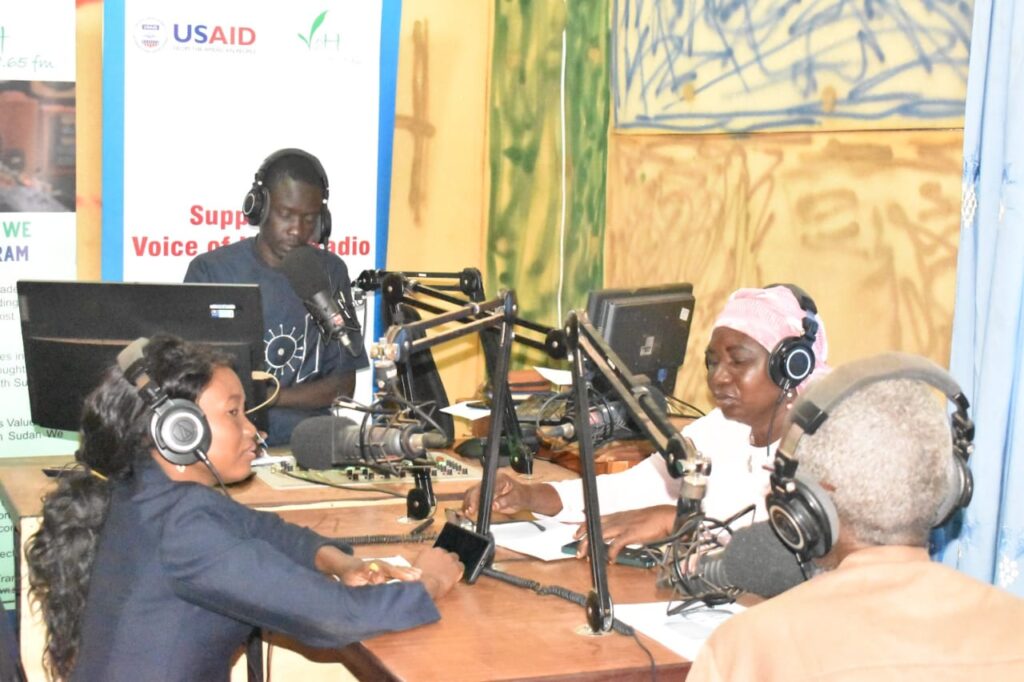
The dialogue created a rare, safe, and inclusive space where sensitive issues could be named openly and addressed collectively. Community and faith leaders shared experiences, acknowledged the growing impact of these social wounds—especially on youth and families—and committed themselves to coordinated action. What emerged was not a technocratic program imposed from outside, but community-led strategies rooted in local wisdom, local assets, moral authority, and shared responsibility.
Through this initiative, partnerships among PACTPAN, traditional leadership, and faith-based institutions were strengthened, reaffirming that churches and local structures remain trusted platforms for social healing and repair following ruptures in the political, economic, religious, ethnic, and cultural ecosystem. Participants identified concrete steps: sustained community sensitization, peer-to-peer education led by youth and women, stronger referral pathways for survivors, collaboration with schools and health facilities, and renewed parental engagement.
Above all, there was a shared recognition that communities are ready to act—if they are accompanied, coordinated, and supported to become protagonists in their own history. Marco Nyoro Abal’s work exemplifies the best of Africa’s young people: courageous enough to confront pain, creative enough to build bridges, and determined enough to believe that repair is possible even in fragile contexts. His leadership reminds us that African youth are not waiting for peace, stability, or perfect systems before acting. They are already doing the work of hope—patiently stitching together the social fabric, one dialogue at a time, and sewing hope.
VoiceAfrique honors African young people as Person of the Year because, like Marco, they are saving Africa not with grand speeches at the UN or AU or globetrotting like many African leaders. They wrongly believe that Africa’s salvation will come from the West, Russia, or China. They are saving Africa with presence, listening, and the stubborn refusal to give up on their communities.
Third, African youth continue to save lives—literally and symbolically—often beyond the continent’s borders. The story of Mamoudou Gassama, the young Malian migrant in France who climbed a building to save a child dangling from a balcony—earning the nickname “Spiderman”—is more than a viral moment. It is a parable of Africa’s youth. While Africa itself often dangles precariously from broken systems, it is her young people—frequently young Africans who are battling for survival at home or abroad as migrants, refugees, trafficked persons, stranded between hope and despair, jobless and homeless, or the excluded—who step forward to hold life together. They save not only individual lives but also the moral credibility of a continent that refuses to surrender to despair. VoiceAfrique honors African youth because we are convinced that they will save an Africa that too often seems suspended between collapse and possibility.

Two powerful analogies help us understand what is at stake. The late economist George Ayittey spoke of Africa’s youth as the cheetah generation—fast, agile, innovative, and eager to run—held back by elephants: old, tired political systems with enormous power that trample everything while refusing to move aside.
Africa’s youth are the cheetah generation—fast, agile, and innovative—held back by elephants: old, tired political systems.”
The tragedy of Africa is not that her youth cannot run; it is that the elephants block the path. Yet, as Dayo Olopade argues in The Bright Continent, African young people are breaking the rules, improvising, hacking broken systems, and writing a new chapter for Africa from the margins. They are not waiting for permission. They are reimagining politics, economics, faith, and citizenship in real time.
This is why VoiceAfrique names African Young People as Person of the Year. We do so not romantically, but realistically; not sentimentally, but prophetically. In this Jubilee of Hope, we affirm that Africa’s most valuable resource is not buried in the soil but alive in her youth. If accompanied, trusted, and empowered, they will repair what is broken, challenge what is unjust, and re-enchant a continent that still believes in life.
African young people are not asking for saviors. They are asking for space—to run, to build, to experiment, to fail, to try again, and to belong. In honoring them, VoiceAfrique commits itself anew to telling their stories, amplifying their voices, and standing with them as they carry Africa—sometimes on their broken and bruised backs, sometimes on their shoulders battered by police brutality—always in their hearts toward a future that still dares to hope.
Have any thoughts?
Share your reaction or leave a quick response — we’d love to hear what you think!
-
 0
0
-
 0
0
-
 0
0
-
 0
0
-
 0
0
-
 0
0