
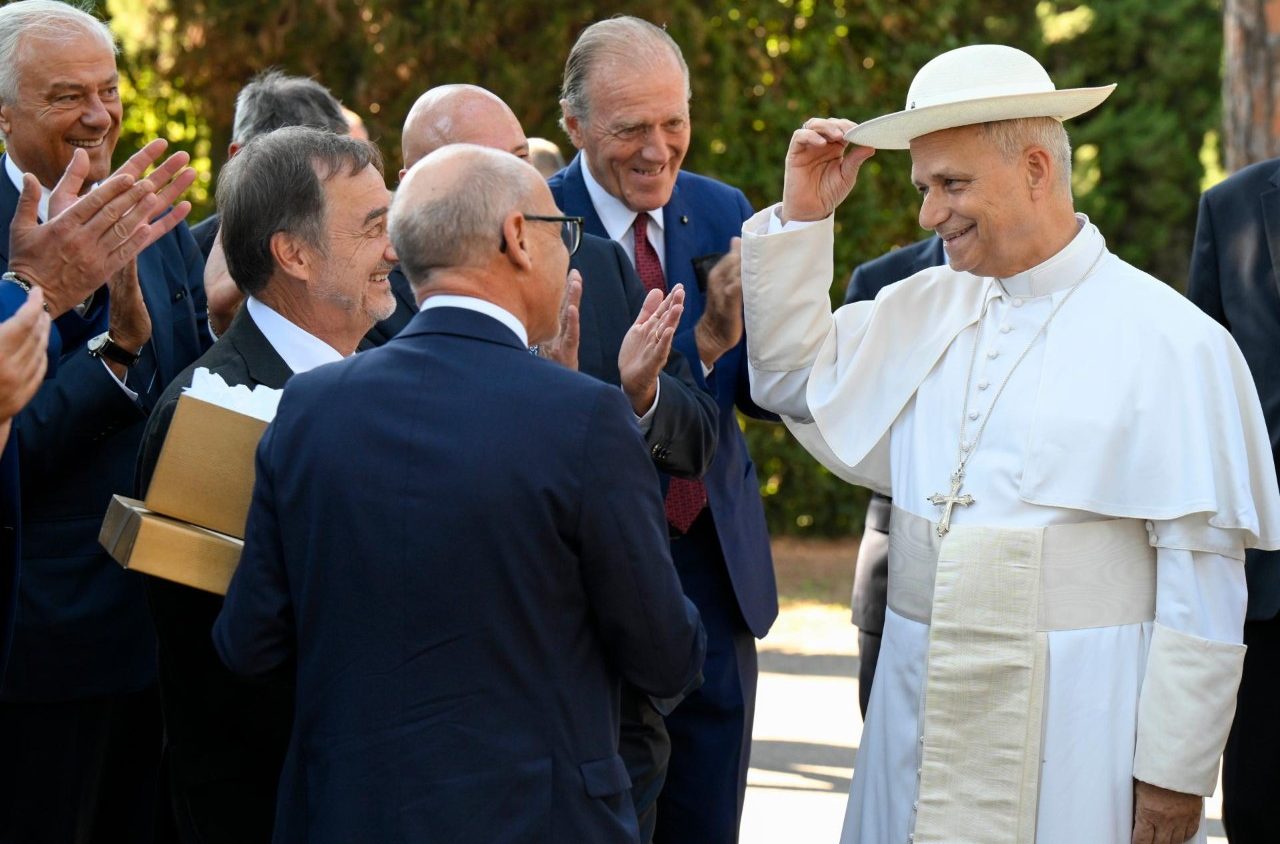
On September 8, Pope Leo will mark four months in office. I write this editorial as both a tribute to Pope Leo and a plea for Africa. It is already clear that Pope Leo has shown himself to be a steady hand at the helm—no missteps, only poise, purpose, and a calm clarity of vision. It was never going to be easy for any successor to fill the big shoes of Pope Francis, but God, through the cardinal electors, has given the Church a pope who, like our beloved Francis, has already won the hearts of Catholics and the wider world.
For those who sought continuity with Pope Francis, one of Pope Leo’s most significant gestures after his election was a visit to the General Secretariat of the Synod on June 26, where he reaffirmed the Church’s irreversible commitment to synodality and approved the plan for implementing the Final Document of the Synod on Synodality. This past week, he formally inaugurated the Borgo Laudato Si’, a special ecological campus at Castel Gandolfo, framing it as a living school of integral ecology and concrete care for creation.
At the same time, Leo has chosen his own distinct style of papal ministry: he has returned to the Apostolic Palace, restored the traditional red mozzetta over the white cassock, and even sung the Regina Caeli with the faithful. These choices signal reverence for tradition without nostalgia, continuity with Francis without imitation, and a readiness to chart his own course.
Leo does not fit neatly into the polarized camps of today’s Catholicism. He has framed his papacy as a ministry of building bridges, reconciliation, healing, and peace. This is a particularly important message given that the world is facing an epidemic of wars. From Gaza to Ukraine, he has consistently appealed for ceasefires, humanitarian corridors, and diplomacy over the “logic of arms.” He has also spoken with unusual candor about Africa, condemning atrocities in the Democratic Republic of Congo, naming the terror and religious persecution in Nigeria, and denouncing the failures of governance that impoverish entire nations.
Like Pope Paul VI, who inherited the unfinished Council after John XXIII’s death in 1963, Leo steps into the unresolved work of both Vatican II and the Synod on Synodality, with all their contested interpretations. The synodal process has already surfaced difficult questions—about authority and governance, the role of women, lay participation, and pastoral care in contexts of polygamy, sexual diversity, divorce, and separation. It is too soon to judge his papacy, but the early signs point to a sober and brilliant mind, a Good Shepherd’s heart, a patient and listening pope with reverence for the papal office and its ancient customs and rituals, and a keen awareness that the papacy remains one of the last truly credible moral voices on the global stage.
For Africa, Pope Leo has already spoken words that reveal his vision. In his message to the Third Pan-African Catholic Congress in Abidjan this August, he called the Church in Africa to embody hope as the theological virtue that bridges faith and charity and sustains believers through adversity. Under the theme “Journeying together in hope as the Church-Family of God in Africa,” he reminded us that baptismal dignity binds us as sons and daughters of God, and that the Church must become a family where networks of support reach especially those on the margins. “We have to live what we believe,” he urged, calling for theology and pastoral practice to walk hand in hand so that Africans may have life “to the full.” In a separate message to the 20th Assembly of the Symposium of Episcopal Conferences of Africa and Madagascar (SECAM) in Kigali, he prayed that the local Churches of Africa would remain “tangible signs of hope” and credible agents of reconciliation and peace in societies wounded by division and conflict.
These messages echo what many of us Africans have long hoped for in a pope. In 2013, I wrote for CNN an essay titled “What Africans Want in the Pope.” Then, as now, the deepest desire was for a pontiff who would take Africa seriously—not as a periphery, but as a living center of the Catholic faith. Africans want a pope who will champion women’s dignity; who will insist that priests and bishops prophetically confront poverty, corruption, and injustice; who will encourage leaders to embody pastoral closeness rather than clerical privilege; and who will affirm Africa’s cultural and spiritual wealth as a gift to the universal Church. Those hopes remain urgent today, and Pope Leo’s first months suggest that he is attentive to them.
But more is now required. Leadership is Africa’s greatest vulnerability. The Church on this continent is growing rapidly, but too often episcopal appointments are made from above, without genuine listening to the People of God. If synodality means anything, it must mean real consultation in the selection of bishops—where integrity, pastoral zeal, and closeness to the poor count more than political maneuvering, where ecclesial careerists and opportunists climb the ladder of power through sycophancy and fealty to authority. Pope Leo must also ensure that Rome looks more like Africa. The Roman Curia should include more African voices and faces, and especially African women, in key decision-making roles. That is not tokenism; it is fidelity to the catholicity of the Church.
Pope Leo will also need to support the implementation of the bold Vision 2025–2050 adopted by African bishops—a pastoral blueprint that includes justice and peace, self-reliance, ecological conversion, youth empowerment, and digital evangelization. Such a vision cannot remain on paper; it requires backing, resources, and alignment from the Vatican to succeed. Likewise, pastoral proposals from African bishops and theologians regarding polygamous marriages, long a reality in Africa, need careful discernment and encouragement to free many polygamous African Christians from being excluded from the Table of the Eucharist. A Church that is both faithful to doctrine and sensitive to context will find pathways of accompaniment that lead people toward the Gospel ideal without alienating them from the community of faith.
Education and youth are another frontier. Africa is the youngest Catholic continent, with millions of young people seeking education, work, and meaning in a digital world. Catholic schools and universities are vital, yet underfunded. In many African countries, the poor cannot afford Catholic education. Pope Leo must champion the renewal of Catholic education in Africa, supporting teachers, curricula, and institutions that form students not only in skills but in vocation. At the same time, young Africans are shaping the digital public square—as influencers, communicators, and innovators. Pope Leo has spoken about the ethical challenges of artificial intelligence and the moral responsibility of digital platforms. He can translate those concerns into action by supporting African youth ministries, training digital missionaries under the African Digital Influencers program championed by PACTPAN, and fostering a Catholic digital culture that affirms dignity, truth, and solidarity.
Above all, Pope Leo’s prophetic voice is needed in naming political failures in Africa, the extractive state, and destructive leadership in many African countries today. Africa faces a crisis of the state. He has already condemned terrorism in Nigeria and atrocities in Congo, but he must continue to hold leaders accountable where corruption, impunity, and violence reign. Africans need a pope who strengthens the weak, consoles the victims, and empowers bishops, priests, and laity to speak truth to power in the name of the Gospel.
Africa is no longer the Church of the margins. It is its beating heart. It is the continent where Catholicism is growing fastest in the world, where vocations abound, and where vibrant faith is lived amidst struggles. As I wrote in my newly released book, Where is God? Africans are living Christianity while “suffering and smiling.” To understand the Church’s future, one must see the footprints of God in Africa, for there the new faces of Catholicism are being born. Africa’s dream is not separate from the Church’s dream; it is the dream of the universal Church itself: a reconciled Church of love and solidarity, of participation and co-responsibility, a youth-led mission in the digital age, and shepherds who smell like their sheep—indeed, a missionary Church that is an open door to all. By paying closer attention to Africa—listening, encouraging, and empowering—Pope Leo will help show the world what the future of Catholicism looks like.

3 comments
This is a well-articulated piece. I so much appreciate the emphasis on the need to translate concerns into concrete actions. This is why I admire PACTPAN. I have doubts that Africa has short supply of transformative words or ideas. Action, concrete steps to implement our good ideas, bridging the gap between doing “theology and pastoral,” that’s where great effort is needed. Thank you Fr Stan for highlighting the areas that the Pope can offer assistance and clearly articulating the way forward. God bless you.
True and very interesting
Thanks alot Father