
We Are Managing”: Why Commitment Demands Creative Fidelity, Not Just Endurance

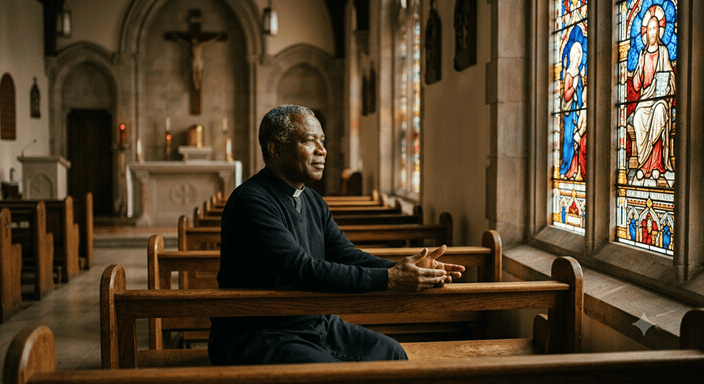
Several years ago, while facilitating a diocesan workshop for priests, an informal conversation with a small group of priests planted the seed for this reflection. Curious about how they were faring in their lives and ministry, I asked a simple question – “How are you?” Their responses were strikingly similar. “We are managing,” some replied. Others chuckled. One priest jokingly added, “Welcome to the club.”
Although the exchange was lighthearted, the phrases lingered in my mind.
Years later, I had a similar encounter during a seminar with priests in the United States. I noticed a young priest who appeared visibly exhausted. I asked whether he was well. He responded affirmatively but admitted he was tired and merely “managing” his life. He had been ordained only five years. That was what troubled me most.
How could someone experience his life, so early in his vocation, primarily in terms of endurance?
On another occasion, I observed a husband walking several steps ahead of his wife. Hoping to draw attention to the distance between them, I jokingly suggested that they walk side by side. With a laugh, he replied that she knew the way home and that, after several years of marriage, they were simply “managing life.”
These encounters are not isolated anecdotes. Rather, they reveal an existential condition that increasingly characterizes contemporary experiences of commitment. The language of “managing” has become commonplace in conversations about marriage, priestly and religious life, professional careers, and even one’s relationship with God.
Beneath its casual and humorous surface lies a deeper anthropological and spiritual crisis. To say that one is “managing” may do more than acknowledge difficulty. It can suggest that commitment has become burdensome, that vocation has lost some of its motivating power, and that life is being endured rather than lived with purpose and joy.
At first glance, such language may appear to express resilience. Human beings possess a remarkable capacity to persevere through adversity, and endurance remains indispensable to every long-lasting commitment. Marriages, vocations, friendships, and professions all demand sacrifice, discipline, and fidelity in moments of disappointment and discouragement.
But endurance should not be opposed to flourishing. In fact, flourishing often depends upon the willingness to persevere through difficulty. The real danger emerges when perseverance becomes disconnected from meaning, when commitment is sustained only by obligation and no longer accompanied by growth, love, and self-transcendence.
The real danger emerges when perseverance becomes disconnected from meaning.
Margaret Farley addresses this danger in Personal Commitments: Beginning, Keeping, Changing. She acknowledges the indispensable role of obligation in sustaining human relationships and vocations. Commitment inevitably involves duty. Fidelity often requires individuals to act despite diminished enthusiasm or emotional exhaustion.
Nevertheless, Farley warns against reducing commitment to what she calls “sheer duty.” When sustained solely by obligation, commitment risks degenerating into external conformity rather than a living expression of personal growth.
Commitment survives, but its life-giving power diminishes.
What initially appears as admirable perseverance can gradually deteriorate into “resentment, rancor, hypocrisy and despair” (Personal Commitments, Revised Edition, 59). Commitment survives, but its life-giving power diminishes.
The psychological and spiritual consequences of such an impoverished understanding of commitment can be profound. Those who experience commitment primarily as a burden often suffer emotional exhaustion, chronic stress, and detachment. Relationships that once fostered joy and growth become sources of silent frustration.
Spiritually, commitment may deteriorate into mere conformity: prayer becomes mechanical, ministry loses its deeper meaning, and God, community, or family come to be perceived less as gifts than as demands.
If left unresolved, this inner fragmentation can eventually generate a crisis of identity. L. M. Rulla, in Anthropology of Christian Vocation, describes a phenomenon that helps illuminate this condition. He refers to certain individuals as “nesters”, persons who remain within a vocation but gradually disengage from the ongoing process of growth and self-transcendence that the vocation demands.
They settle into the security of familiar structures while abandoning the deeper journey of conversion. Though physically present and externally committed, they become psychologically and spiritually stagnant. The vocation remains, but the dynamism that once animated it begins to fade.
The tension between perseverance and flourishing finds a profound philosophical articulation in Gabriel Marcel’s distinction between constancy and creative fidelity. In his book, Creative Fidelity, Marcel recognizes constancy as an essential dimension of human life. Commitments impose obligations that transcend fluctuating emotions, passing enthusiasms, and changing circumstances.
Fidelity cannot depend solely on affective satisfaction. Thus, the weary priest must still celebrate the Eucharist. The teacher enters the classroom despite fatigue. The religious sister or brother continues to participate in community life even when interior resistance threatens their sense of belonging. Without some degree of constancy, commitments would collapse whenever enthusiasm waned.
The person remains externally faithful but internally absent.
The Christian spiritual tradition has long recognized such experiences. St. Ignatius of Loyola speaks of periods of desolation in which consolation disappears, and believers are called to remain faithful in prayer and apostolic service.
The prolonged spiritual darkness experienced by St. Mother Teresa of Calcutta illustrates how fidelity often requires perseverance even when emotional reassurance is absent. Endurance, therefore, remains a necessary dimension of mature commitment.
For Marcel, however, constancy becomes problematic when it hardens into routine and loses contact with the living reality that originally inspired the commitment. What remains is the external structure of fidelity without its interior dynamism. Individuals continue to fulfill their obligations, but they do so mechanically, “going through the motions,” while becoming increasingly estranged from the meaning of their vocation.
This estrangement manifests itself in multiple ways. A married couple remains legally united, yet their relationship no longer fosters intimacy or mutual growth. A priest faithfully carries out sacramental and pastoral responsibilities while privately experiencing exhaustion and resentment.
A teacher continues to perform competently in the classroom but returns home emotionally depleted and unable to sustain healthy relationships with others. In each case, commitment survives institutionally but has been hollowed out existentially.
Marcel’s concern is not to diminish the importance of constancy or endurance. Rather, he wishes to protect fidelity from becoming sterile. The danger lies in allowing commitment to become detached from personal presence. Fidelity reduced to habit preserves the appearance of commitment while weakening its transformative potential. The person remains externally faithful but internally absent.
Against this impoverished enactment of commitment, Marcel proposes creative fidelity. Unlike constancy understood and lived merely as endurance, creative fidelity conceives commitment as a living and dynamic relationship.
Fidelity is not simply the repetition of obligations but the constant renewal and reinterpretation of the meaning of one’s commitments amid changing circumstances. It is a way of remaining alive within one’s promises.
At the heart of Marcel’s account lies the concept of disponibilité, often translated as “availability” or “openness.” It refers to a mode of being characterized by receptivity, presence, and responsiveness to others and to the demands of one’s vocation. To be available is to resist the temptation to retreat into routine, self-protection, or indifference.
It is to remain existentially present. Such presence enables individuals to encounter familiar realities with renewed attentiveness and to remain open to unexpected possibilities of growth.
Creative fidelity therefore requires continuous renewal, an ongoing reappropriation of one’s vocation. The spouse must repeatedly rediscover the other spouse not merely as a familiar companion but as a person whose mystery continues to unfold. The priest must remain open to encountering and re-encountering God in ministry and beyond his pastoral and administrative responsibilities.
Religious men and women must continually rediscover the meaning of community life and its role in shaping their identity and mission. Professionals likewise must resist reducing their work to mere productivity and instead rediscover its human and social significance.
The contemporary language of “managing” deserves careful attention because it often reveals more than it intends. While it may express resilience, it can also signal the gradual erosion of meaning and the weakening of creative fidelity.
To survive within a commitment is not necessarily to flourish within it. Marcel invites us to recognize that authentic fidelity cannot be reduced to endurance alone. It must remain creative—capable of renewing meaning, deepening relationships, and opening persons to growth and transcendence.
To survive within a commitment is not necessarily to flourish within it.
“Managing” may describe a temporary season of difficulty, but it should never become the defining narrative of a vocation or relationship.




Join the conversation