
Femicide in South Africa: Cases of Disappearing Women – an Open Sore for a Continent
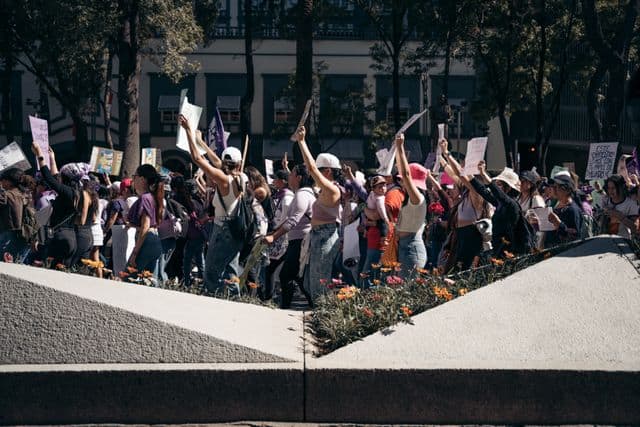
Photo by Miguel González
The news of the discovery of the ninth young woman’s body in South Africa is heartbreaking! All nine bodies of these young women were discovered within the same Ekurhuleni municipality, east of Johannesburg, over roughly two months, across communities including Kempton Park, Pomona, Clayville, Olifantsfontein, Rhodesfield, KwaThema, and Dawn Park.
These shocking and unexplained deaths are the tip of the iceberg regarding femicide in South Africa. There are still several missing young women despite a national emergency declared by the government in 2025.
South Africa has one of the highest homicide rates in the world. But these gory pictures of burned, violated, and mutilated bodies of South African women are a sad reminder of how destructive these crimes are and how entrenched they have become in the vast structures of society.
Whether these heinous displays of wickedness are being committed by a serial killer or a faceless network of killers, what is undeniable is the picture being painted of the country: a nation where safety evades women due to a toxic co-implication of social perverts and vicious perpetratorswho perceive women as objects to be discarded at will.
These horrible crimes gnaw at the liver of any person with a modicum of humanity and the milk of human kindness. The horrors being unearthed in South Africa are truly an open sore for our continent. For the land that gave Africa and the world Ubuntu—the philosophy that we are because of others—these images of dead young women, littered across the landscape of this wounded and bleeding land, depict a country dangling precariously on a fractured and unstable moral platform.
The sad reality, however, is that the data from South Africa point to a troubling trend in our continent: South Africa and the rest of Africa are becoming graveyards for young women. Mother Africa cannot remain silent when the lives of her daughters and mothers are being destroyed by evil people with a bottomless display of hatred and malfeasance. We must not allow this amoral, violent, and vicious cycle to congeal in our social ecosystem.
The sad reality, however, is that the data from South Africa point to a troubling trend in our continent: South Africa and the rest of Africa are becoming graveyards for young women.”
Many Church leaders and the South African government have rightly condemned these heinous crimes. In a statement, the Catholic bishops of South Africa drew attention to the contradiction of the killings: a violation of the sacredness of human life and the constitutional promise of safety and security for all citizens. But neither condemnation nor prayers are enough. South Africa is broken! Indeed, the question that religious leaders and all men and women of goodwill in South Africa should ask themselves is: What do these crimes say about this society? What kind of boys and men are we producing in our societies who are so full of bile that they would unconscionably spectacularize their naked immorality in this manner? These crimes are a mirror of the moral rot in South Africa and the satanic agents who are committing these inhuman acts.
What kind of boys and men are we producing in our societies who are so full of bile that they would unconscionably spectacularize their naked immorality in this manner?”
South Africa, which has failed to guarantee the safety of its citizens, is caught in a structural decadence built on an architecture of violence and unaddressed social ennui that has redrawn the peaceful map of the country. President Cyril Ramaphosa has directed that the investigations be treated as an absolute priority, telling the nation that these incidents are causing fear and uncertainty in communities, especially among women, and that, as a nation, South Africans must stand up for the rights, safety, and dignity of women and girls. But these words are hollow and offer little comfort to frightened families. Indeed, the Ekurhuleni horror is only the visible edge of a much larger catastrophe. The South African Human Rights Commission reported the following: 569 women were murdered, 1,052 survived attempted murder between April and June of this year, and 8,814 rape cases are being processed for the first quarter of the year.
Although the government declared gender-based violence and femicide a national disaster in November 2025, the killings are still rampant. Thus, simply promising an investigation means nothing to the traumatized women of South Africa. Many South Africans have heard the same empty promises and assurances after previous national disasters. Yet change is slow, and lives are precariously hanging in the balance in Black townships and suburbs, which are disproportionately affected by the crisis of femicide in South Africa.
Cases in other African countries tell a similar story. UNICEF’s data expose how violence against women in Africa begins in childhood. Its first-ever global and regional estimates found that more than 79 million girls and women across sub-Saharan Africa—over one in five—had experienced rape or sexual assault before turning eighteen, with the region bearing the highest number of child sexual-violence victims of any region in the world. A separate UNICEF analysis found that 32 percent of children in sub-Saharan Africa, some 187 million, are growing up in homes where their mothers have suffered intimate partner violence within the past year, embedding cycles of abuse that pass from one generation to the next. Taken together, the Ekurhuleni bodies are not isolated national tragedies; they are chapters of the same festering continental wound.
It is imperative that the deaths of these nine South African women be thoroughly investigated and those responsible brought to justice before another woman becomes a victim. But we must also confront a deeper reality: how our societies objectify, violate, and discard women’s bodies with a disturbing disregard for their dignity and humanity. We can no longer hide from the reality that women’s bodies are being treated as objects rather than as lives deserving of protection, dignity, and respect.
These bodies are our own bodies. Reflecting from my faith as a Christian and priest, I see in these bodies a public display to the world of the crucified body of the Lord on the Cross. Ekurhuleni is Golgotha relocated to South Africa. So many South African women are gripped with fear and are wailing like the women who stood with Mary at the foot of the Cross. It is a cry to and for our society. The blood of these nine women, those still missing, and many others being murdered in Africa is a judgment on us Africans for our failure to live up to the moral, spiritual, and communal ideals of our ancestors. This bloodshed indicts Africa for failing to protect and preserve the common good.
These bodies are our own bodies. Reflecting from my faith as a Christian and priest, I see in these bodies a public display to the world of the crucified body of the Lord on the Cross.”
The social compact on which South Africa and many other nations in Africa came into being has become a mockery to these very nations, as our women, the most vulnerable among us, continue to face daily threats to their survival. Sadly, the poor themselves—particularly Black South Africans—have been stripped of their humanity through poverty and neglect by a Black-led ANC government, forcing the poor to turn on each other.
The title of Alan Paton’s Cry, the Beloved Country captures the response these gruesome discoveries should evoke: a clarion call to national mourning and introspection. Yet in a nation where homicide and femicide have become tragically normalized, especially in Black communities, these deaths may be dismissed as just another dark stain on a landscape of violence: “It is their problem, not ours.”
But indifference is not the only choice. For believers and people of goodwill in South Africa, across Africa, and around the world, these images must call us instead to the foot of the Cross—to mourn with those who grieve, to refuse the normalization of violence, and to stand in solidarity with those whose hopes and dreams are being extinguished. They call us to renew the struggle to reclaim the soul of Africa, as Nelson Mandela evoked in his last speech to the South African Parliament.
