
There is a curious instinct among aides in Aso Rock: whenever a moral voice tells the President something he does not want to hear, the reflex is not to examine the claim but to discredit the messenger. This is not only a malady afflicting the sycophants around President Tinubu — it is a national disease. Even the weather-beaten masses of our people, rather than rising up against their oppressors, often lack the courage and self-belief to stand up to the darkness.
Thucydides, writing more than two thousand years ago, offered the grim verdict that has echoed through every age of empire since: “the strong do what they can, and the weak suffer what they must.” Too many of us have accepted that verdict as the final word.
But we forget Hannah Arendt’s insight that power is not a possession a ruler holds in his or her own hands — it “springs up,” she writes, “whenever people get together and act in concert,” and it survives only for as long as those people continue to obey. As she put it elsewhere, in politics “obedience and support are the same.”
The so-called powerful of this world are, in truth, dependent on us. But the greatest challenge we face in Nigeria, and in many other societies suffering from misrule in Africa and elsewhere, is that those who surround our leaders as advisors or allies do not tell them the truth, because they, too, benefit from the system and the people to whom power belongs are too exhausted with suffering or are often too fearful or are too manipulated to take back their own country from the hand of these ‘caterpillars of our commonwealth.’
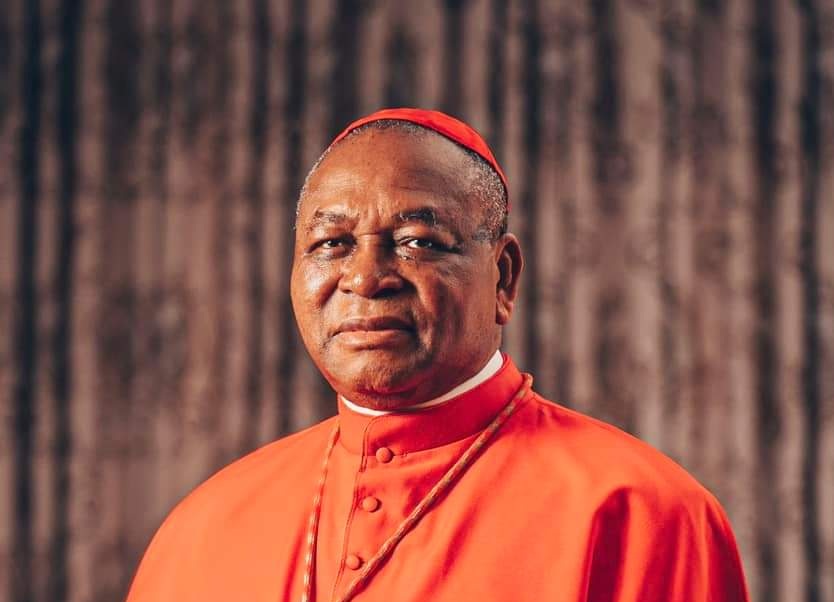
This explains what happened last week when Cardinal John Onaiyekan spoke to Arise News about the Catholic Bishops’ Conference of Nigeria’s meeting with President Bola Tinubu. Temitope Ajayi, Senior Special Assistant to the President on Media and Publicity, accused the Cardinal of an “abuse of clerical privilege.” The real abuse, however, is of a different kind — the abuse of proximity to power by aides who mistake flattery for loyalty, and objective criticism for disrespect.
The real abuse is the abuse of proximity to power by aides who mistake flattery for loyalty and legitimate criticism for disrespect.”
The Catholic Bishops’ Conference of Nigeria, representing tens of millions of Nigerian Catholics and addressing conditions affecting all Nigerians, regardless of faith, requested and was granted an audience with the President. They came with a carefully prepared collective statement describing the country as “bleeding.” When the President rejected that assessment and insisted the economy was doing well, Cardinal Onaiyekan later recounted the exchange — and for this he has been scolded for indiscretion. But the bishops did nothing wrong by speaking, and Onaiyekan did nothing wrong by telling Nigerians what was said in their name.
The question the Presidency should be asking is not why the Cardinal spoke, but why the president and his aids are so uncomfortable with the truth.
The suffering the bishops described is not a matter of clerical opinion. It is in the data.
Start with poverty. The World Bank’s Nigeria Development Update found that the poverty rate climbed to 63 percent in 2025, up from 56 percent in 2023 — roughly 140 million Nigerians below the poverty line, even as headline inflation eased. Household incomes, the Bank concluded, have simply not grown fast enough to offset years of inflation. PwC’s Nigeria Economic Outlook for 2026 projects the rate rising still further. These are not partisan numbers manufactured by a cardinal with a grudge; they are the findings of the multilateral institutions the Nigerian government itself cites when claiming progress.
Then there is the bleeding the bishops spoke of literally. Nigeria Watch’s 2025 report recorded nearly 13,000 violent deaths in a single year, with kidnapping-related fatalities almost doubling from 425 in 2024 to 747 in 2025. The Nigeria Violent Conflicts Database separately recorded over 3,100 kidnappings in more than 1,270 incidents, with banditry described as the single deadliest driver of violence.
Human Rights Watch’s 2026 world report documents a resurgence of Boko Haram’s JAS faction in Borno and continuing farmer-herder killings in the north-central states. This is what “the nation is bleeding” means in practice.
Many Nigerians are fleeing the country, and investors and partners are fleeing alongside them. I have met international investors, humanitarian organizations, and global agencies who would have loved to set up offices in Nigeria but for the insecurity, and for their sheer inability to obtain insurance for operations in our country.
The “japa” phenomenon is not a mood; it is a measurable hemorrhage. Roughly 94,000 doctors and nurses have left the country since the exodus began, including some 16,000 doctors in just the last five years and 16,000 nurses to the United Kingdom in 2025 alone — leaving Nigeria with barely 55,000 practicing doctors for a population of over 220 million. Engineers and academics are thinning out in the same way, alongside more than 3.7 million Nigerians already internally displaced by conflict. People do not abandon their homes and professional standing in droves because a cardinal told them the country was in trouble. They leave because they have lived the trouble themselves.
People do not abandon their homes and professional standing in droves because a cardinal told them the country was in trouble. They leave because they have lived the trouble themselves.”
In the 1980s, Nigeria was a sanctuary — a home for Africans fleeing hardship elsewhere on the continent. In January 1983, at the height of that confidence, the Nigerian government ordered an estimated two million undocumented West African migrants, more than half of them Ghanaians, to leave the country within weeks — the episode that gave us the phrase “Ghana Must Go.”
Today the direction has reversed entirely. It is Nigerians who are fleeing to Ghana, Kenya, Uganda, Rwanda, and South Africa, and Nigerians who now find themselves threatened in some of those same countries, South Africa most of all. How the mighty have fallen.
And then there is corruption, the quiet and corrosive engine beneath all of this. Transparency International’s 2025 Corruption Perceptions Index ranks Nigeria 142nd out of 182 countries, with a failing grade of just 26 out of 100 — behind 33 other African nations, from Ghana and Senegal to Rwanda and even Niger. The bishops did not invent this reality. They named it. Nor did they invent the existence of a recently uncovered fake government agency — the so-called Presidential Foreign Intervention Promotion Council — which operated out of the Federal Secretariat itself and was nearly handed almost $1 million in the 2026 national budget before the fraud was uncovered.
Nor did they invent the still-unanswered question of what has become of the billions of dollars in oil earnings. By some estimates, government revenues have risen well above this year’s budget projections because instability in the Middle East has driven up oil prices. Yet no public accounting has been offered. The silence eerily recalls the unresolved case of the $12.4 billion Gulf War oil windfall under the Babangida regime, of which the Okigbo Panel later found that about $12.2 billion could not be traced.None of this is a minority grievance dressed up in clerical robes. It is the country’s settled mood. A survey by Eagle Badger Data Analytics, released to mark the President’s third anniversary in office, put his approval rating at 30.2 percent, with 47.5 percent disapproving outright; 62 percent of respondents described their personal situation as worse than when Tinubu took office, against just 23.3 percent who reported any improvement.
Afrobarometer’s own tracking tells a consistent story: half of Nigerians now describe their country as a democracy with major problems, and eight in ten say corruption has worsened over the past year. Scholars describing Nigeria’s current government refer to it as ‘illiberal democracy’, ‘distributive illiberalism’, ‘a prebendal patron-client state’ that is characterized by extractive leadership. Thus, when the bishops described a bleeding nation, they were reading the room the government itself refuses to read.
Nigerians are losing faith not only in this government’s performance but in the ballot box meant to hold it accountable.
The development and civil society expert Udo Jude Ilo, writing in African Arguments, laid out how the conditions for a genuinely competitive 2027 election are being dismantled on three fronts. First, the Electoral Act amendment that civil society fought for — a clear legal requirement for real-time transmission of results from Nigeria’s more than 176,000 polling units — was watered down in the National Assembly and signed into law regardless, leaving transmission timing at the discretion of an electoral commission Nigerians already distrust (trust in INEC, per Afrobarometer, has fallen twelve percentage points since 2017).
Second, at least five opposition governors have defected to the ruling APC within six months, leaving it in control of roughly 31 of Nigeria’s 36 states — a ruling party does not need to rig an election it has already emptied of rivals.
Third, INEC has withdrawn recognition from the leadership of the main opposition ADC on the basis of a contested reading of a Court of Appeal ruling, serious enough to draw a rare rebuke from the Nigerian Bar Association, alongside reports of houses being built for judges in Abuja under the supervision of a senior ruling-party official.
Taken together, these facts describe a system that may keep the outward form of an election while hollowing out its substance before a vote is counted. Ilo’s warning is blunt: the danger is not that the ruling party wins an uncontested election in 2027, but that Nigerians arrive at it with no meaningful alternative left to choose. Many Nigerian politicians in the past bought people’s votes; the current government buys both the INEC and the judiciary and does not worry about the votes.
This is the deeper fear beneath the bishops’ words: that a generation hungry for new leadership will be denied the chance to choose it, not because the electorate prefers continuity, but because the structures that would let them choose otherwise are being dismantled one law, one defection, one court order at a time.
An unpopular government that cannot win the argument on its record has two paths: change course or entrench itself so the argument never has to be won. The evidence suggests Nigeria’s ruling party has chosen the second path, and will stop at nothing to crush anyone who stands in its way. That is precisely the concern for the common good that obliges our bishops to speak truth to power and has earned them the ire of Tinubu’s aides, who have met them with misleading arguments and the mischaracterization of a revered elder churchman and statesman.
This is precisely where Catholic Social Teaching becomes relevant, and precisely what Ajayi’s response misunderstood. When Onaiyekan and his brother bishops speak of the “common good,” they are not defending a narrow sectional interest, as Bwala’s remarks about “Catholics rooting for Peter Obi” tried to suggest.
The common good, in Catholic teaching, is the sum of social conditions that allow every person and every group — Catholic or not, Muslim or not, believer or not — to reach their fulfillment more fully and more easily. It is a framework built for exactly this moment: assessing whether a society’s structures, including its electoral structures, serve all its people, not whether they flatter its leader.
A private audience with the President is not a confessional. Bishops do not represent themselves; they represent God’s people.”
Confidentiality is the wrong frame here. A private audience with the President is not a confessional. Bishops do not represent themselves; they represent God’s people, who are entitled to know, in general terms, what was said and how it was received.
The greater danger to the Tinubu presidency is not a cardinal on television. It is the ring of aides who treat every uncomfortable truth as an attack to be repelled rather than information to be used, and the governors and legislators defecting in the hope that federal might will help rig the 2027 elections. A president surrounded only by people who tell him the nation is not bleeding is a president who will not know it is bleeding until the wound is beyond stitching. Cardinal Onaiyekan did Nigeria, and indeed President Tinubu, a service by pointing out what is so painfully evident today — the ressentiment among Nigerians.
A president surrounded only by people who tell him the nation is not bleeding will not recognize the wound until it is beyond stitching.”
Max Scheler used the concept of ressentiment to describe a social and spiritual condition that arises when people experience prolonged powerlessness, humiliation, and frustration, yet are unable to act against the structures responsible for their suffering. Ressentiment is what festers specifically where action is blocked; it curdles into bitterness, cynicism, or a search for someone else to carry the weight of the complaint, because carrying it alone is unbearable.
Nigerians are a humiliated people. We have been humiliated by bad government, by widespread poverty, by social misery. And too often our national humiliation is diverted into religious and ethnocentric argument, where honest criticism is dismissed as mere tribal or religious posturing. Poverty is neither Christian nor Muslim; it bites whether you wear the cross or carry the crescent. When the bishops spoke, they were not the source of the nation’s anger. They became, for a moment, a container for ressentiment that the people had nowhere else to put, and they rightly laid the blame for the nation’s bleeding squarely on Tinubu’s shoulders, where it belongs.
Millions of our people live under conditions that systematically erode their human dignity, while a thin top layer of political elites, sustained by an extractive leadership, swim in opulence while the rest of the nation drowns in the turbulent sea of inexcusable suffering.
Poverty here is not simply the absence of material resources. It is public humiliation: graduating from university into unemployment; watching leaders flaunt obscene wealth while citizens go without food, electricity, healthcare, security, and education; parents unable to provide for their children despite a lifetime of hard work; young people who no longer believe effort earns opportunity; communities abandoned to violence while the political class fights only for the next seat of power.
This is the people’s cry that the bishops carried to Tinubu. However, I must be strong and clear here that a cry carried once, to one man, in one room, is not yet action, and ressentiment that is only spoken, never acted upon, changes nothing. The bishops must model in their own leadership what they wish to see in the nation, so that Nigerian leaders will see in our churches what the country could look like if it were modeled after our churches’ leadership. But the bishops cannot do this alone and should not be asked to. They must now mobilize the people of God, and stand with other Christian communities and Muslim leaders, to convert this long national humiliation and persistent lamentation into the one thing power cannot survive: a people who have stopped waiting for permission and have decided, together, to act.
Power, as we have seen, belongs only to those who act in concert; power belongs to the people and not to the government.
It is time for Nigerians to reclaim their democratic agency through peaceful civic organization, voter education, lawful protest, institutional accountability and sustained participation in public life.

1 comment
Fr Stan, well done, my brother.
I have read your defence of His Eminence, Cardinal John Onaiyekan, and I must say: you have spoken with clarity, with courage, and with that moral common sense that the Church in Nigeria badly needs at this time.
You are absolutely right. The Cardinal is not being “political” in the partisan sense. He is being pastoral in the prophetic sense. And there is a world of difference between the two.
When a shepherd sees wolves around the flock, he does not gather the sheep to pray and then lock the gate from inside. He stands at the gate. He raises his voice. He calls the authorities to account. That is exactly what Cardinal Onaiyekan has been doing.
Fr Stan, thank you for putting this in writing. Thank you for defending a man who has chosen to be a voice rather than an echo. Let those who have ears hear: The Church in Nigeria does not need chaplains to power. We need prophets to the nation. And by God’s grace, in Cardinal Onaiyekan we have one. May God continue to strengthen him. And may he raise more voices like yours who will not be afraid to call a spade by its true name.