
After Pope Leo’s Visit, what next for the Church in Africa?

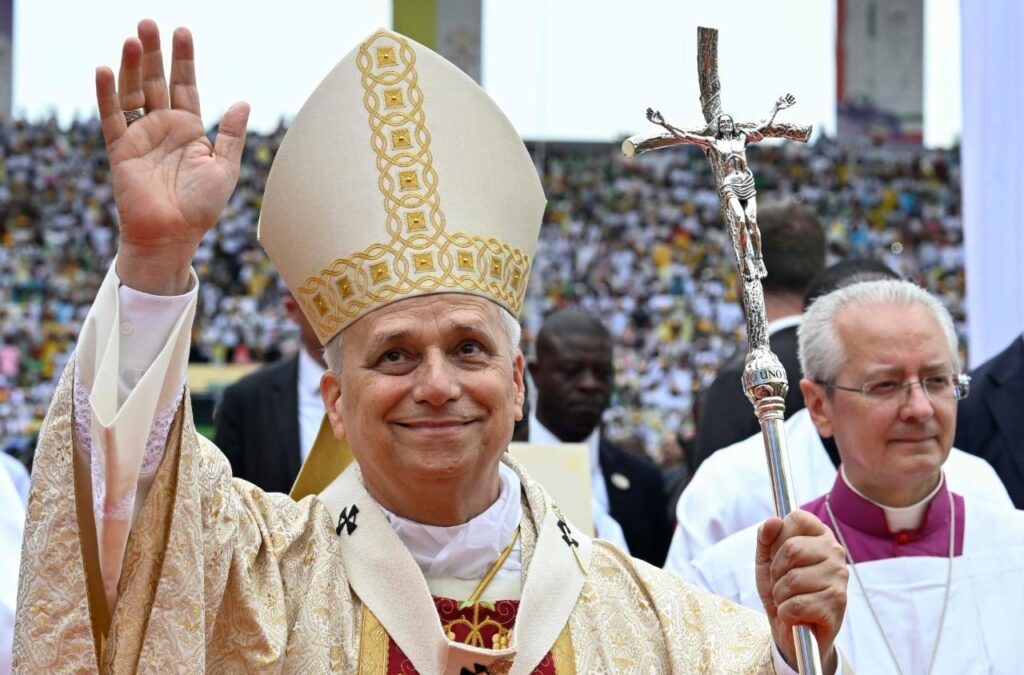
Reflecting on Pope Leo’s visit to Cameroon, Archbishop Andrew Nkea Fuanya of Bamenda posed an urgent question with striking clarity: “The Pope has given speeches and messages. We have all clapped. We are all happy. What next?” This is a question that African Catholic church leaders and theologians must take to heart. Following this successful papal visit, VoiceAfrique proposes that the next steps the Church in Africa takes will determine whether Pope Leo’s African moment will bear enduring fruits or become just another lost opportunity for the continent and the world.
The Church in Africa is profoundly blessed and is experiencing an extraordinary revival. Across our beautiful continent, the Catholic faith is flourishing at an unprecedented rate, attracting more individuals to its teachings, mission, and community.
The Church in Africa is profoundly blessed and is experiencing an extraordinary revival. Across our beautiful continent, the Catholic faith is flourishing at an unprecedented rate, attracting more individuals to its teachings, mission, and community. This growth is not just quantitative; it is also qualitative, as we are witnessing a remarkable surge in vocations to both the priestly and religious life. Our Church is vibrant and alive, energized by a young, high-potential population. These young people bring untapped spiritual gifts, dynamic energy, and a wealth of cultural and material resources that can enrich the Church and society as a whole.
Throughout Africa, one can observe the fervent dedication of God’s people as they engage in various forms of worship and community life. Whether through prayer, singing, dancing, or collaboration on community projects, they are united in their aspirations and hopes. Each action reflects a collective yearning for a brighter future, one that embodies their dreams and divine calling. As they come together in faith, they are not only nurturing their spiritual lives but also working towards a shared vision for a better tomorrow.
Even in sites of pain and violence, and destruction, or amidst failed governments, and even when faced with unmerited suffering and impoverishment, our people continue to hope, to fight, and to resist the forces of entropy as they create alternative possibilities for a new era of history. All over our vast and rich land, we see signs of redemption, movements, and moments of reversal, carried on the shoulders of many agents of hope and in communities of resilience and support who work together against some of the polluting cultural, spiritual, and political vices that have stymied the continent.
The Church in Africa has also produced an abundance of documents, statements, communiques, and publications regarding the desired relationship between the Church and society. At the highest level, the Symposium of the Episcopal Conferences of Africa and Madagascar (SECAM) has worked with its experts and leaders to create two pivotal documents in the last seven years: the Kampala Document (2019) and Vision 2025-2050 (2025). These documents incorporate the teachings of Vatican II, the outcomes of the two African synods, and the Synod on Synodality, providing a clear roadmap for transforming the Church and society in Africa.
A Church that collaborates with governments to promote the common good, constitutional democracy, human rights, religious freedom, and accountable governance. The Church must inspire Catholics to actively participate in politics by voting, running for office, advocating for justice, and infusing public life with Gospel values.—Pillar 12 of SECAM’s Vision 2025-2050
The 12th pillar of SECAM’s Vision 2025-2050 outlines the role of the Church in Africa, stating: “A Church that collaborates with governments to promote the common good, constitutional democracy, human rights, religious freedom, and accountable governance. The Church must inspire Catholics to actively participate in politics by voting, running for office, advocating for justice, and infusing public life with Gospel values.”
God has given to us, as the Church in Africa, all the teaching and theological resources we need to be the Church that is prophetic, pastoral, and pragmatic in walking with God’s people in bringing the abundant life that the Lord promised to his people (John 10:10) and in bringing Africa toward the future which God alone knows. What is often lacking is the ability to translate moments like the recent visit of Pope Leo into concrete pastoral action. Often, there are no theological or pastoral follow-ups and measurable actions to consolidate what the papal visit accomplished magnificently.
We recall many past beautiful papal visits and national, regional, and continental assemblies of bishops and religious leaders celebrated with so much enthusiasm. Yet, they often fail to translate into real action. These significant ecclesial events should have sparked lasting change, but instead, they often fizzle out. Furthermore, powerful statements, policies, and communiqués from various symposia and conferences involving bishops, priests, religious, theologians, and church organizations are released amid much fanfare and hope, only to be neglected and gather dust in chanceries, parishes, houses of formation, and theological libraries.
This trend reveals a troubling reality: producing documents or organizing large events has become an end in itself rather than a catalyst for long-term, enduring, and strategic pastoral action for revival and renewal of the Church.
Organizing a papal visit is not an end in itself; rather, it marks the beginning of a pilgrimage for the Church, particularly in the countries our Holy Father visited. How can we build on the success of this visit?
Organizing a papal visit is not an end in itself; rather, it marks the beginning of a pilgrimage for the Church, particularly in the countries our Holy Father visited. How can we build on the success of this visit, especially when the world was focused on Africa and saw our continent for what it truly is, not as a place of misery, chaos, and despair, as some might portray, but as a land of hope, joy, and faith?
Africa truly shone in the eyes of Pope Leo, revealing itself to be a reservoir of hope and multiple points of light and life. However, this recognition must become a call to action rather than a reason for superficial triumphalism or empty ecclesial rhetoric. As Archbishop Fuanya suggested, follow-up initiatives could include establishing committees and taking practical steps to deepen the theological foundations and practical implementation of the magisterial teachings shared in these countries.
VoiceAfrique proposes that this papal moment calls for an ecclesial reception of its fruits through discernment and concrete action
A similar articulation of the next steps was offered by Cardinal Fridolin Ambongo, President of the Symposium of Episcopal Conferences of Africa and Madagascar (SECAM). His words must also be heard against the painful experience of his own country, the Democratic Republic of Congo, which hosted Pope Francis in 2023, and of South Sudan, which was also part of that apostolic journey. Since then, both countries have continued to face deepening cycles of violence. For Cardinal Ambongo, therefore, Pope Leo’s presence was not merely symbolic; it was a clear affirmation that Africa stands at the heart of the Church’s life and future. While the visit brought encouragement and hope, it also carries an implicit challenge: it must not remain an emotional high. This is why VoiceAfrique proposes that this papal moment calls for an ecclesial reception of its fruits through discernment and concrete action. The task now is to transform this moment of grace into lived commitment, enabling the Church in Africa to defend human dignity more boldly, promote justice and peace, and fulfill its vocation as a credible moral, spiritual, and prophetic voice in Africa and beyond.
Barth Nze
African people are highly cultural and traditional people, but these features hardly show up in their Christian worships and practices. Is it impossible for African church to look African, or will God reject what they can offer; or afraid of what the Pope would say? St. Pope John Paul ll promoted these features in his own days. I prefer an African church to an European or western church in our land. In these last Pope’s visits, only few places featured these elements, but still very slim.
anwuchie augustine
The African Church is not immune to one of the African core problem, the belief that theory is different from practice, that ideology is different from reality, that what is written on paper is divorced from practical experience. Africa is not bereft of transformational ideas and ideals, its lacks the courage and will to implement them. The chaos we see every where is simply the fact that ideas don’t influence how we carry out every activities. The constitution is different from interpretation, laws sound good on paper but looses its power to hold people accountable when the time comes. in a clime like ours, the Pope message risks being swallowed by a structure where ideas is divorced form reality, where theory don’t always meet practice and where leadership chooses narrow interest over a clear vision and transformation.
Charles Palmer-Buckle
As one of the Bishops of the Church in Africa, I will advise that this platform make a deliberate effort to circulate such editorial works to our several Theology institutes for inclusion in student research programmes now. Like a seed that is sown in the ground takes time to germinate, I believe all the goods enunciated in this article also need time and good soil. The Theology institutes have work to do. Please link up and synergize for tomorrow.