
The Church in Africa is one of the most vibrant and rapidly growing communities in global Catholicism today. The Pontifical Yearbook, in its 2024 edition, reports that Africa accounts for 20% of the world’s Catholics and is characterised by a highly dynamic spread of the Catholic Church. From the Second Vatican Council to the Synods on Africa (1994 and 2009), the Magisterium has increasingly recognized Africa not merely as a recipient of evangelization but also as a giver of spiritual, pastoral, and theological gifts to the Universal Church. These gifts arise from Africa’s cultural heritage, historical experience, communal worldview, and vibrant faith life. The contemporary Magisterium presents a coherent and affirming vision of the Church in Africa as a vital and indispensable part of the Universal Church.
Recently, this consistent magisterial assessment is echoed in Pope Leo XIV’s message to the Bishops of Central Africa, in which he affirms that the Church in Africa is indeed a living, strong, and dynamic reality, capable of responding creatively to contemporary challenges while offering enduring spiritual resources to the Universal Church. His affirmation reinforces the long-standing conviction that the vitality of the African Church is not incidental but integral to the Church’s global mission.
Africa is no longer portrayed as a marginal or dependent ecclesial reality, but as a living subject of evangelization shaping the present and future of global Catholicism”
Across successive pontificates, Africa is no longer portrayed as a marginal or dependent ecclesial reality but as a living subject of evangelization whose faith, experience, and vitality shape the present and future of global Catholicism.
Pope Saint John Paul II articulated this vision decisively in his post-synodal apostolic exhortation Ecclesia in Africa (1995). He described Africa as “a new homeland for Christ”. He affirmed that the continent had moved beyond being merely a recipient of missionary activity to becoming a missionary force in its own right (Ecclesia in Africa, no. 41). Central to his teaching was the image of the Church as the Family of God, proposed as Africa’s distinctive ecclesiological contribution, emphasizing communion, reconciliation, solidarity, and mutual care (Ecclesia in Africa, no. 63). He also highlighted the perseverance of African Christians who live their faith amid poverty, suffering, and persecution, presenting their witness as a powerful evangelical testimony for the whole Church (Ecclesia in Africa, nos. 39–41).
Pope Benedict XVI deepened this vision by emphasizing Africa’s spiritual vitality and moral significance in a world marked by secularization. In Africae Munus (2011), he described the Church in Africa as one of the spiritual “lungs” of humanity, capable of offering faith, hope, and moral clarity to a global culture in crisis (Africae Munus, no. 13). He underscored Africa’s strong sense of God, reverence for the sacred, and communal worldview as gifts that can renew Christian life beyond the continent (Africae Munus, nos. 8–9). He further entrusted the African Church with a particular responsibility for reconciliation, justice, and peace, affirming its role as a moral voice for both Africa and the wider world (Africae Munus, nos. 10–22).
Pope Francis continues this trajectory with a strong emphasis on pastoral and missionary work. In Evangelii Gaudium (2013), he presents the Church as a community of “missionary disciples,” a description that resonates deeply with the lived reality of African Christianity (Evangelii Gaudium, no. 27). Through his addresses to African bishops and pastoral encounters, Pope Francis has praised the joyful faith, resilience, and missionary dynamism of African Christians, while cautioning against reducing Africa to a narrative of problems. Instead, he insists that Africa must be listened to as a teacher of humanity, especially in matters of fraternity, solidarity, life care and hope amid suffering (Evangelii Gaudium, nos. 52–54).
One of the most profound gifts the Church in Africa offers to the Universal Church is its lived understanding of the Church as the Family of God. Rooted in African cultural realities where identity is shaped by kinship and communal belonging, this ecclesiological vision emphasizes communion, reconciliation, and shared responsibility. Far from being abstract, it is embodied in parish life, small Christian communities, and pastoral accompaniment. This vision enriches the Church’s global reflection on communion and synodality and resonates strongly with the ecclesiology of Lumen Gentium.
The vision of the Church as Family of God remains Africa’s distinctive ecclesiological gift—embodied in parish life, small Christian communities, and lived communion.”
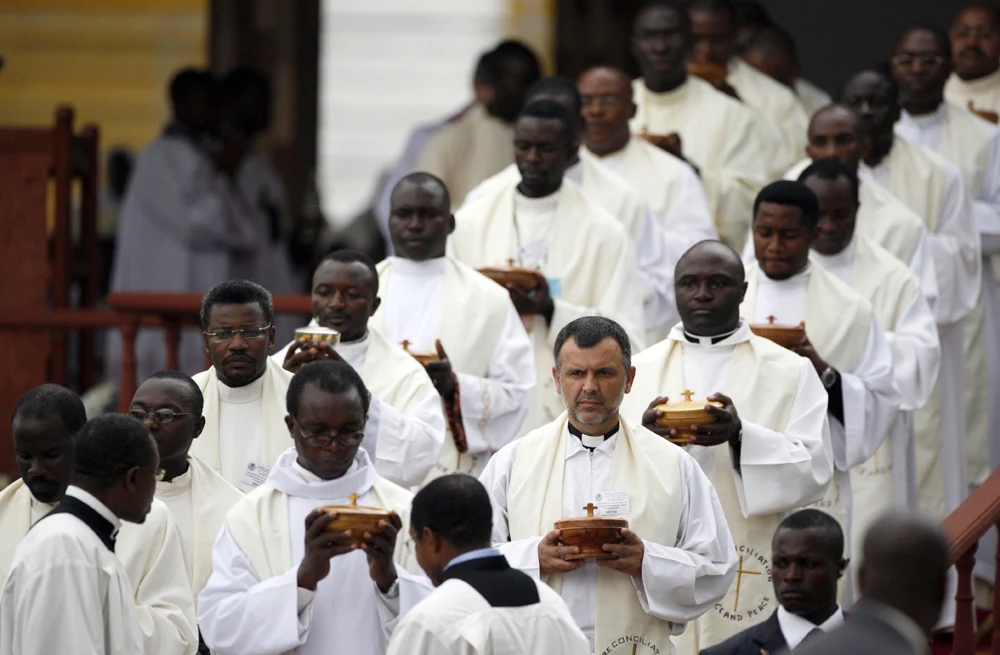
Closely related to this ecclesial vision is Africa’s contribution to the Church’s liturgical life. African liturgy is marked by active participation, symbolic richness, reverence, and joy. Through song, rhythm, gesture, silence, and embodied prayer, worship becomes a holistic encounter involving the whole person. Faithful inculturation within the Roman Rite demonstrates that cultural expression, when guided by the Gospel, deepens rather than diminishes the mystery celebrated, offering the Universal Church a renewed appreciation of liturgy as communal and transformative.
Another significant gift is Africa’s integrated sense of the sacred. God is experienced not as distant but as actively present in daily life. Prayer, sacramental practice, healing, trust in divine providence, and spiritual struggle are woven into ordinary existence. This worldview challenges secular rationalism and practical atheism, reminding the Universal Church that the Gospel must address concrete human realities such as suffering, illness, fear, and death.
The witness of faith amid suffering remains a powerful sign of evangelical faith. Despite poverty, political instability, violence, and persecution, the Church in Africa continues to grow in depth and commitment. This resilience reflects a lived theology of the cross, offering the Universal Church a compelling testimony of hope rooted not in material security but in trust in God.
The youthful and missionary character of the African Church constitutes another major gift. Home to the world’s youngest Catholic population, Africa brings energy, creativity, and openness to vocation. African priests, religious, and lay missionaries now serve across every continent, reversing earlier missionary patterns and affirming that Africa is no longer merely a mission territory but a missionary force. This concrete reality gives lived expression to Pope Leo XIV’s description of the Church in Africa as “living, strong, and dynamic.”
African theological reflection further enriches the Universal Church. Rooted in life, community, narrative, and symbol, African theology engages Scripture and Tradition in ways that address reconciliation, harmony, life, death, and social cohesion. It demonstrates that doctrine is not merely speculative but pastoral and incarnational, illustrating how the one faith of the Church can be authentically expressed within diverse cultural frameworks (Gaudium et Spes, no. 53).
The Church in Africa is not at the margins of Catholicism but at its living heart—missionary, youthful, resilient, and spiritually generative.”
Finally, the Church in Africa contributes a communal ethic that strengthens Catholic Social Teaching. Values such as solidarity, hospitality, respect for elders, care for the vulnerable, and shared responsibility, purified and elevated by the Gospel, offer practical models for social cohesion, peacebuilding, and integral human development. Pope Benedict XVI recognized this potential, affirming Africa’s capacity to help the world rediscover authentic human relationships (Africae Munus, no. 10).
In conclusion, the Church in Africa is not at the margins of the Catholic Church but at its living heart. Pope Leo XIV’s affirmation that the Church in Africa is a living, strong, and dynamic reality succinctly captures what is evident in its life and mission. Through its vision of the Church as Family, vibrant liturgical life, strong sense of the sacred, witness amid suffering, youthful vitality, contextual theology, missionary zeal, and communal ethics, Africa offers gifts that respond directly to the spiritual and pastoral challenges facing the Universal Church today. Thus, as the Church continues its journey toward a more synodal, missionary, and incarnational future, attentiveness to the voice and experience of the Church in Africa is not optional but essential for the renewal of global Catholicism.


