
The Enduring Legacy of Fela Anikulapo Kuti

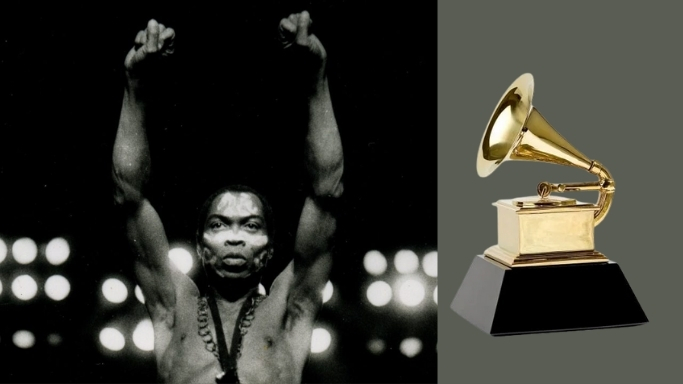
The recent Lifetime Achievement Award given to the Father of Afrobeat, Nigeria’s Fela Anikulapo Kuti, calls for celebration and reflection on his enduring legacy. Fela is the first African to win this award, albeit posthumously. While many of his numerous admirers will wonder why he never received it while he was alive, or why it has taken nearly three decades for him to be recognized, it is, as they say, “better late than never.”
The citation for the award describes Fela’s enduring legacy in these glowing words: “Fela’s influence spans generations, inspiring artists such as Beyonce, Paul McCartney, and Thom Yorke, and shaping modern Nigerian Afrobeats.” The citation also proclaimed that Fela’s influence extended beyond music into politics and culture as Fela was “a political radical and outlaw.”
I am not sure how his family and millions of admirers in Nigeria, Africa, and around the world will celebrate this award, but the silence with which this recognition has been greeted in Nigeria is quite revealing. In my view, it is neither a sign of any critical perspicacity about a Grammy Award that is sometimes criticized for being white-coded, nor is it a sign of protest as to why this music icon was denied such a global award. This is especially so for those who see the Grammy as the institutional Asiwaju in adjudicating what is considered the touchstone of musical excellence and who embodies it on the globe.
The silence that has greeted this award is, among other things, a reflection of what happens when we kill our prophets—not only by denying them honor, but by erasing their memory and refusing to ritualize their message.
The silence that has greeted this award is, among other things, a reflection of what, to use the words of another musical icon, Bob Marley, happens when we kill our prophets. We do so not only by denying them the honor that is their due, but through conscious efforts to erase their legacies by failing to honor their memory or ritualizing their message. This, for Fela, was begun by successive military regimes that pulverized Nigeria, and whose underbellies, oppressive instincts, and practices were vulgarized through Fela’s satirical lyrics such as “Army Arrangement.” Fela’s enduring legacy lies in his understanding and mediation of a counter-establishment narrative through his music, and how he deployed music as an instrument of subalternation to foster critical consciousness among a mass often treated as “zombies” by the ruling class in Nigeria and much of Africa.
Fela became a quintessential representation of the post-colonial vocation of the few thin layers of African professionals who had been liberated. They use their gifts, talents, and art to literally hijack the public space dominated by false historical consciousness, manipulative propaganda, and structural violence and suffering unleashed on the people. They infuse this space with a counter-institutional narrative in order to save the people from sinking into social delirium and the normalization of injustice, misrule, and impoverishment by neo-liberal capitalism, state violence, and an unjust global order.
Fela helped rewrite Black history in a non-violent way, proving that music can be stronger than the military machine and propaganda.
This order is sustained by the extractive state run by conscienceless military husks and their violent systems and institutions, as well as by deceptive messianic narratives of coups and counter-coups.
In his trenchant criticism of the violent state and militarism in Nigeria and the rest of Africa, he fulfilled what Edward Said articulated with such clarity and conviction about the role of the public intellectual in the post-colony. This role is especially vital for cultures, peoples, and races whose history and future have been negatively defined by what Said called occidentalism—the Western contaminating narrative of the non-Western other.
Fela helped rewrite Black history in a non-violent way through his music and advocacy showing that music is stronger than the military machine and propaganda. He was imprisoned several times. His Kalakuta Republic—an alternative space he created for people to find happiness and oneness in a violent and divided country—was constantly attacked and at one point, even burned.
His songs were banned, and his fans were maligned and hounded in those dark days in Nigeria when it was a crime to play some songs at parties. But amidst all these tribulations, he stood firm in his conviction that an African-brewed democracy, the protection of the common good, and the rights of all people, especially the poor, were the path to authentic African emancipation, social cohesion, and social transformation.
Fela was against the weaponization of God, magical notions of religion, and false piety used to keep people as disinherited and despairing clients of both God and the system.”.
In advancing this pathway, he was like a cultural nomad seeking to dismantle established social norms because he wanted a more expansive, open-structured moral framework that was less oppressive and less restrictive of people’s freedom. His lifestyle might be questioned, especially his views on marijuana and multiple sexual partners. But his cultural avant-gardism was fused with a deep sense of spirituality—Afrobeat spirituality—and a holism that transcends caricature.
He was convinced of the saving power of community, and the need for Africans to drink from their own fountain. But that fountain is always convulsing, being refreshed, and gushing every day with new and fresh water.
Fela’s anti-religious critique, clearly captured in Suffering and Smiling, formed the cellular framework of my book Where Is God: An African Theology of Suffering and Smiling. He opposed the weaponization of God and the false religious systems that anesthetize human agency.
Fela is truly my hero. I never met him. But when he died in 1997, more than one million people came to honor him—a testament to a life of total sacrifice to the liberation of his people.
He remained steadfast, never blinking even when guns were pointed at him. His music and message will live beyond the ages. In Fela, we see the enduring value of daring to be different—authentic, rooted, inventive, and free.




Solomon IKIBE
It’s a wonderful piece. The book should be publicized for more people to read.