

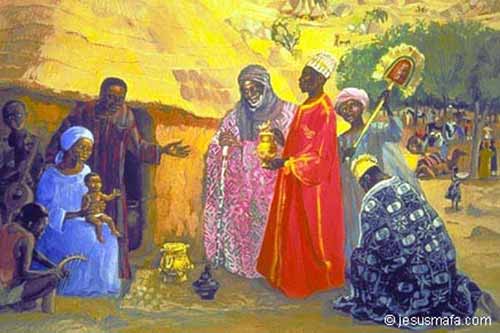
If you are like me, you would want to have some friends who belong to the Orthodox Christian Traditions so that the festivities surrounding the birth of Jesus and his epiphany can continue for a longer period. While the Latin Church tends to traditionally put emphasis on the birth of Jesus Christ, which is celebrated on Christmas Day, the Orthodox Church has traditionally put emphasis more on the Epiphany because of its theological significance of being the revelation of Jesus as God to the world and the sanctification of creation through this process. Both events, Christmas and the Epiphany call for celebrations and feasting because of the wonderful works God has and continues to do throughout our cosmic histories. On that note, it is proper to wish all Orthodox Christians who celebrate this year’s Feast of the Epiphany a lovely celebration. As we remember God’s enduring revelation in Jesus Christ, may our human solidarity with the divine usher God’s transformative peace into our nations, regions, societies, homes, and hearts.
Today, I am conscious of the people of Ukraine who are celebrating in the midst of Putin’s war on their land. May the enduring peace of Christ be a source of comfort at this time of your collective pain and sorrow. The reading from Isaiah (60:1-6) reminds us that even though the earth may be covered with darkness, on those who put their trust in God, the Lord shines, and over you appear his glory. These words ought to be words of comfort for all Ukrainians who are faced with violence.
Even though the earth may be covered with darkness, on those who put their trust in God, the Lord shines, and over them appears his glory.”
Depending on the ecclesial tradition that one belongs to, the date for the Feast of the Epiphany tends to differ. This brief reflection is based on the liturgical calendar of the Roman Church for 2026, which happens to be on Sunday, January 4, 2026. The feast sheds light on a theological significance of the gift of the incarnation as a source of salvation. In other words, though Jesus is born, he is a gift that is to be revealed and encountered by all who are in need of the salvific effect that the gift brings about. This salvific link to that which is revealed in Jesus that the Epiphany instantiates brings all of creation to God. Thus, on this day, the Church celebrates our cosmic connection with God in Christ.
Before delving into the Gospel reading for the day, it is worth noting that the Feast of the Epiphany is intricately linked to the creedal truth of Christianity that teaches that Mary is the Theotokos (God bearer). The gift that is revealed and whose revelatory content binds all of creation to God through Jesus Christ is the same reality that Mary gave birth to. Thus, to celebrate the intimacy that God has revealed through the gift in Jesus Christ is to also uphold Mary as a true witness to this mystery through her act of motherhood. Her vocation as Theotokos reminds the Church and the world how fidelity to God creates a bond of intimacy with God and with all of creation. The story of Jesus Christ will never be complete without that of his earthly mother. Theirs is a story of how God has revealed God to creation and creation to God.
It is the common understanding that this Feast is about the revelation of Jesus to the world who serves as the source of our collective and individual salvations. However, upon closer reflection, one begins to see that there is another richer perspective that one can deduce from this feast itself. The biblical narratives surrounding the birth of Jesus and the Feast of the Epiphany point to the fact that the gift that is revealed grounds itself in its ability to draw humans closer to Jesus. The Matthean Gospel (2:1-12) locates the birth of Jesus within a global narrative. Jesus is born during the reign of King Herod who has forced himself over the biblical Israelites as their king and is willing to abandon the independence of the Israelites for the sake of his personal ambitions as king under the legitimacy of the Roman Empire. The account of Matthew also offers some disruptive moments that must force one to think deeply of the significance of the encounter the infant Jesus had with others. For example, the foreign guests from the East that seek out Jesus seem to practice the ritual of astrology, the reading of the stars to discern the inner meaning of reality. They are given a name, Magi, which was a term related to the priestly caste system of Zoroastrianism.
Reading the Matthean account of the Epiphany as a Nigerian, I am very conscious of how ceremonies surrounding the birth of a child tend to also showcase rituals that are symbolic of the child’s inherent destiny. Elders consult the ancestors and perform rituals that reveal the identity of the child. But such an identity also points to the destiny of the child. Similarly, these priestly visitors from the East, who, most probably, are practitioners of Zoroastrianism, offer significant gifts to Jesus that point to the inherent identity and mission of Jesus. Gold reveals the kingly identity of Jesus, which will come to be understood as beyond the logic of our earthly understanding of kingship. Frankincense speaks to his divinity; for only the divine is worthy of being offered incense. Myrrh speaks to Jesus’s vocation to overcome death. His is not going to be done through the use of embalming spices but through the power of the Holy Spirit that resides in him.
However, what is most striking about this account of the encounter between Jesus and the foreign guests is how Jesus is able to hold in place the diversity that defines the human condition. The guests from the East do not abandon their Magi identities. They do not stop practicing their eastern religions and astrology. In the encounter, they embody an interfaith hospitality. They recognize Jesus. They offer him gifts of hospitality. They acknowledge his cosmic significance. For their generosity and fidelity to their mission, they are gifted with a vision in their dream to avoid Herod who has evil intentions towards the infant Jesus. One can thus conclude that the Epiphany of Jesus is grounded in an interfaith encounter.
One can thus conclude that the epiphany of Jesus is grounded in an interfaith encounter.”
The usual reading of this text is to focus on what the visitors do for Jesus and not what Jesus does for them. I want to offer a different reading that allows us to appreciate more the importance of this feast. The Epiphany is about what God does to us through Jesus. In the revealed Jesus, God’s invitation to all of humanity to encounter God and to discover themselves as beings called to reveal God to each other is realized. In Jesus, all of humanity finds its purpose. It is not to convert others to Christianity. Rather, it is to appreciate the fact that the revealed Jesus stands as a symbol of solidarity of faith that leads to the instantiation of life for all. Practitioners of Zoroastrianism and readers of the stars become witnesses to God’s life and protectors of the vulnerable in the world. In this case, it is the vulnerable infant Jesus.
The Epiphany speaks to the fact that each of us is called to be a star in the world that ought to guide those who may need sight as they journey through life. The ability to realize this truth is not grounded in doctrinal purity or adherence to a particular religion. Rather, it is grounded in authenticity of what one does and to use one’s beliefs to better the world one lives in. Care for the other transcends any particular religion. In fact, it is the inherent mandate that all religions must adhere to.
The Epiphany is not only about God being revealed to the world through Jesus. It is also about the world being revealed to itself through the gift the world has received in Jesus. The visitors from the East discover themselves in the encounter with Jesus. This revelation is received with gratitude and reverence on their part. Thus, one can say that the Epiphany of Jesus is a gift that grounds itself in an ethical turn. In other words, to find oneself in an encounter with Jesus is to take seriously the ethical responsibility to be a source of life and protection for the vulnerable ones in our world. This was exactly what the visitors became. They did not only offer sustaining gifts to Jesus and his parents, but they also became protectors of the vulnerable life of the infant Jesus. They chose to reject the agenda of Herod and follow the command of God instead.
To find oneself in an encounter with Jesus is to take seriously the ethical responsibility to be a source of life and protection for the vulnerable ones in our world.”
In our contemporary world, the Epiphany of Jesus stands as a source of revelation for us to discover ourselves as agents of life for each other and to reject all acts of violence towards others. This truth forces us to ask the question, what is the Epiphany calling each of us to become to our neighbors? Many in our world are hungry. Food has become a scarce commodity for many in Africa and beyond. Many in Sudan are suffering malnutrition as a result of the unjust war playing out in the country. Nigeria is plagued by a culture of corruption and an ethic of violence that is all done in the name of religion and the idolatry of tribalism. A similar reality is being experienced by the people of Central African Republic. Xenophobia is holding many parts of the world captive. The United States is currently held captive by this social vice. Global structures of protection are being done away by the powerful while the powerless are left without protection. The grace of the Epiphany is one that ought to help us to reclaim our purpose in life and to become agents of life for each other while rejecting structures of evil that currently define our social world.
Finally, it is proper to conclude this reflection with a short prayer. May the joy that filled the heart of the visitors from the East be the same joy that fills our hearts when we each discover who we are called to become in the world. May we continuously be transformed into bearers of life for all we encounter as we get to know ourselves as God’s epiphany in the world.
Happy Epiphany Sunday!


