
Ordinary Time is a Period of Altruistic Living
Reflections on the Readings for the Second Sunday of Ordinary Time. January 18, 2026

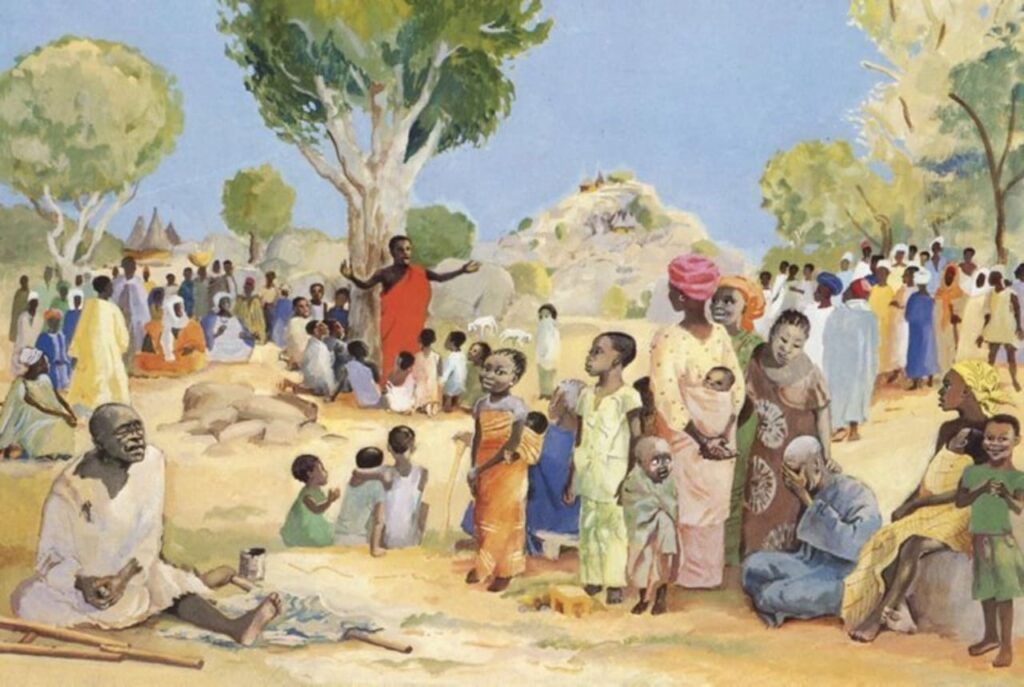
When I think of Ordinary Time in the Church’s liturgical calendar, I am always reminded of the motif of the drudging nature of a life without excitement. For instance, after so many climatic moments, starting from the anticipatory nature of Advent, then the climatic celebrations of Christmas and its Octave, we embrace the glorious gift of the Epiphany. This leads us to the re-enactment of our baptismal promise as we celebrate the Baptism of the Lord. But immediately after all these great celebrations, we are suddenly thrown into the ordinariness of life. I can imagine how that can feel for many who want to remain in the heightened state of celebrations and rejoicing. Yet there is something very spiritual about the period of Ordinary Time. It is a time of altruistic encounters with the world and with ourselves. It is a time to reflect on the content of the gift we have all received during the celebratory period. The ritual praxis of the reception of a gift also involves the process of learning how to embody the gift itself.
Ordinary Time is a period of learning how to become the gift that we have all received. The gift is the union of God and humanity. It is theosis (divinization). But theosis is not some abstract term. It is embodied and must be concretized through the lived encounters we all have with the world. Ordinary Time is the period when we practice how to be divinized beings in the world and to each other. In doing this, we must not be discouraged by the fact that we may make mistakes sometimes as we practice how to be divine with each other. Failure is part of the process of getting better at what we have been called to become in the world to each other—living altruistically.
Ordinary Time is the period when we practice how to be divinized beings in the world and to each other.
Keeping this in mind, as one reads the text from Isaiah (49:3, 5-6), one is forced to ask oneself, how can one understand this text in light of the current realities playing out in our world? The Prophet Isaiah proclaims the word of God to the biblical Israelites of God’s choice of them as the symbol and medium of God’s glory. But how can one receive this text considering the genocidal war that the contemporary State of Israel has carried out on the Palestinian people since the conflict of 2023 began? I also ask myself, how can a Palestinian Christian child who has been orphaned receive this text? Too many innocent lives have been lost as a result of the senseless war between Hamas and Israel.
Perhaps, this is where the real weight of discipleship plays out. Too often, we speak of discipleship when we are comfortable, when things are going our way, when we are the masters of our lives. But what about a time like this? How can a Palestinian child speak of discipleship in light of the prophetic witness of Isaiah? To address this question properly, we must move away from a type of puritanistic understanding of one being the light to the nations or embodying the glory of God. Too often, we think of fidelity to God or being found worthy by God as entailing being always in a state of perfection. Before God, no one can be perfect without the grace of God. In fact, perfection is never realized in a moment. It is always a process. It is a journey with God where each step reveals a new layer of tenderness and intimacy with God and with all that is encountered along the way. Perfection is grounded in an intimate trust in the guiding hand of God, who knows humanity so well and understands that humans have the tendency to rebel against God’s desire for them. Yet the guiding hand of God never abandons humanity until humans get it right. Even when they get it right, the relationship with God always endures as intimate friendship.
In fact, God chooses those who are unworthy of the gift to ensure that the work of God can be fully seen and understood as a gift that comes only from the gift giver, who is God. Biblical Israelites were not chosen by God to be the light to the nations because they were exceptional or special. Rather, it is because of their collective imperfections and unworthiness before God that God chose to show the world the wonderful works of God and to invite the world to never lose hope in their own imperfections. What God has done for the unworthy biblical Israelites, God will also do for all who turn to God.
Haven said this, what one cannot forget as one reads the text from Isaiah is that there is always a covenantal turn in the gift that God bestows on anyone, in this case, on the biblical Israelites. To become the embodiment of God’s glory to other nations and to become the light that leads all to God as does the North Star is to take seriously the content of the covenantal bond of life that any relationship one has with God must instantiate.
To become the embodiment of God’s glory is not a privilege for self-congratulation, but a covenantal summons to become a medium of transformative justice—especially for those who are less fortunate.
Rather than pride itself on being the light of the nations, the biblical Israelites are summoned to become the embodiment of transformative justice in the world. It is summoned by the covenantal bond to become God’s medium of abundant life for all nations, especially those who are less fortunate. Consequently, the covenantal content of the prophetic word of Isaiah is a reminder to all who embrace the gift of being the light to the nations. It is a reminder to become the light that brings abundance to all who gaze their sight on it. Where there is hunger, the light must provide food. Where there is houselessness, the light ought to provide a home. Where there is violence, the light must show the way to enduring peace. And where there is inequality, the light ought to become the source of equity for all.
Where there is hunger, the light must provide food. Where there is houselessness, the light ought to provide a home
Permit me to link this text to two contemporary contexts, the United States and the State of Israel. The United States prides itself on embodying an exceptional ethics, which also is rooted in its belief in having a Manifest Destiny. Hence, it has positioned itself in the world using its militaristic power to intimidate weaker nations. Currently, it is planning to annex Greenland, a weaker territory that cannot resist its militaristic might. The State of Israel has become a bully of its neighbors. It disregards international regulations and bombs at will all it perceives to be its enemies, and it does this with the understanding that the United States has its back. It prides itself on being faithful to its covenantal bond to the land it currently occupies without any intention of trying to embrace a two-state solution to the dispute it has with its Palestinian neighbors. To be chosen is not to exploit others or to take advantage of the weaker nations.
To embody an exceptional ethic or to embody a covenantal bond with God that makes one a light to the nations is to become a voice for global righteousness. It is to consciously work towards global peace and to resist a culture of violence in the world. Without taking this social responsibility seriously, the claim to being exceptional or being chosen is itself an empty one.
Again, an embrace of the Ordinary Time involves a deliberate attempt to work towards sharing the gifts Christians have received throughout the high moments of Advent and Christmas Seasons. What we have all been expecting during Advent has been given to us in and through the birth of Jesus Christ. Now is the time for all of us to actively go out to the crevices of the world, our communities, and neighborhoods and share the content of the gift with all who are God’s creatures. This is the essence of a spirituality that ought to be practiced during this long period of Ordinary Time. It is a spirituality of embodied witnessing to a new way of being a neighbor to each other in this beautiful world that we all call home.
Happy Ordinary Time!




Join the conversation