

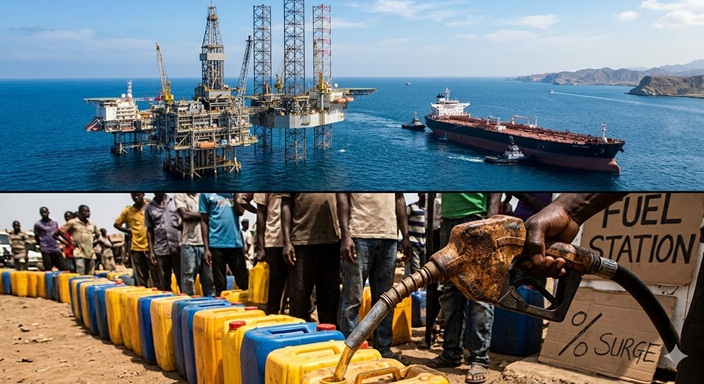
As global oil prices rose following tensions around the Strait of Hormuz, many Nigerians expected relief at the fuel pump. Instead, prices surged. Fuel prices have skyrocketed by 39.5%, plunging Nigeria into yet another fuel crisis. Located between Oman and Iran, the Strait of Hormuz is considered one of the most critical oil chokepoints in the world, with an estimated 20% to 25% of global oil transiting the strait—roughly one out of every five barrels. Its strategic importance is already causing ripple effects across global markets. Overall, Asia receives about 90% of the oil passing through the Strait of Hormuz, with countries such as China, Japan, India, and South Korea receiving a significant share and already feeling the impact. Nigeria is one of the countries benefiting from rising oil prices. But why is Nigeria caught in the dilemma of earning more from crude exports while facing higher fuel prices at the pump
Nigerian Fuel Crisis: More Dollars from Crude Export, High Fuel Prices and Rising Economic Hardship
The Nigerian fuel crisis may appear complex, but it is driven by several structural problems working together. The removal of fuel subsidies ushered in the current energy challenge. For decades, Nigeria kept petrol prices artificially low through subsidies, where the government absorbed part of the cost. Since this was removed in 2023, consumers now bear the full cost and directly feel the impact.
“Nigeria earns more from oil, yet Nigerians pay more for fuel.”
This has placed significant strain on a petroleum-dependent economy that failed to diversify over the years. Crude oil accounts for an estimated 80–90% of Nigeria’s foreign exchange earnings and about 30–40% of federal government revenue. This makes the economy highly vulnerable to oil shocks, compounded by weak local refining capacity, a fragile exchange rate, and inflationary pressures.
Even when global fuel prices remain stable, domestic prices continue to rise due to currency depreciation. Fuel imports are priced in dollars, and a weaker naira means higher costs in local currency. While it is often assumed that higher crude oil prices should benefit Nigeria and lower fuel costs, petrol pricing depends on multiple factors—refining, transportation, exchange rates, and market deregulation.
Since government withdrawal from subsidy regimes, private marketers now dominate fuel importation and distribution. Their pricing is determined by landing costs, exchange rates, and profit margins, resulting in frequent price fluctuations. Logistics and distribution challenges—poor pipeline infrastructure, reliance on trucking, and supply bottlenecks—continue to undermine price stability.
Low production has also compounded the problem, costing Nigeria over ₦28 trillion in oil revenue despite the boom. Although the Dangote refinery is expected to reduce import dependence, it is still ramping up operations, and its pricing remains tied to global market dynamics. Relief, therefore, may be gradual rather than immediate.
The refinery has also faced regulatory tensions with the Nigerian Midstream and Downstream Regulatory Authority (NMDPRA) over import licensing, while disputes with the Petroleum and Natural Gas Senior Staff Association of Nigeria (PENGASSAN) have further complicated operations.
“The crisis is not a lack of oil—it is a failure of structure and coordination.”
In essence, fuel remains expensive in Nigeria not because of crude scarcity, but due to subsidy removal, heavy import dependence, a weakened naira, limited refining capacity, and a weak regulatory framework.
A Crisis Compounded by Corruption and Waste
The pressing question for many Nigerians remains: if subsidy payments have ended, where are the savings?
The government maintains that these funds are being redirected toward stabilising the economy, financing infrastructure, supporting social programmes, and cushioning energy costs. In theory, such funds could improve salaries, infrastructure, healthcare, education, power supply, and industrial development.
However, many Nigerians report seeing little tangible impact. Civil society organisations such as SERAP have alleged that significant portions of these funds remain unaccounted for, raising concerns about transparency and accountability. At the same time, some analysts argue that the savings may not be sufficient to drive transformative economic change at scale.
A Hope Wrapped in a Fragile Thread
Nigeria has experienced oil windfalls before, notably during the 1973 oil boom. However, the long-term effects of that period—often described as “Dutch disease”—continue to shape the present, reflecting missed opportunities for diversification and sustainable economic planning.
Today, many Nigerians face rising economic hardship, insecurity, and governance challenges.
“Without reform, oil wealth will continue to deepen hardship rather than resolve it.”
Breaking this cycle requires decisive action. Nigeria must invest in diversification—particularly in agriculture, manufacturing, and technology—while strengthening transparency and accountability in managing public resources. Short-term relief must also translate into tangible improvements in living conditions.
Without such reforms, Nigeria risks remaining trapped in a cycle where resource wealth fails to translate into broad-based prosperity.


