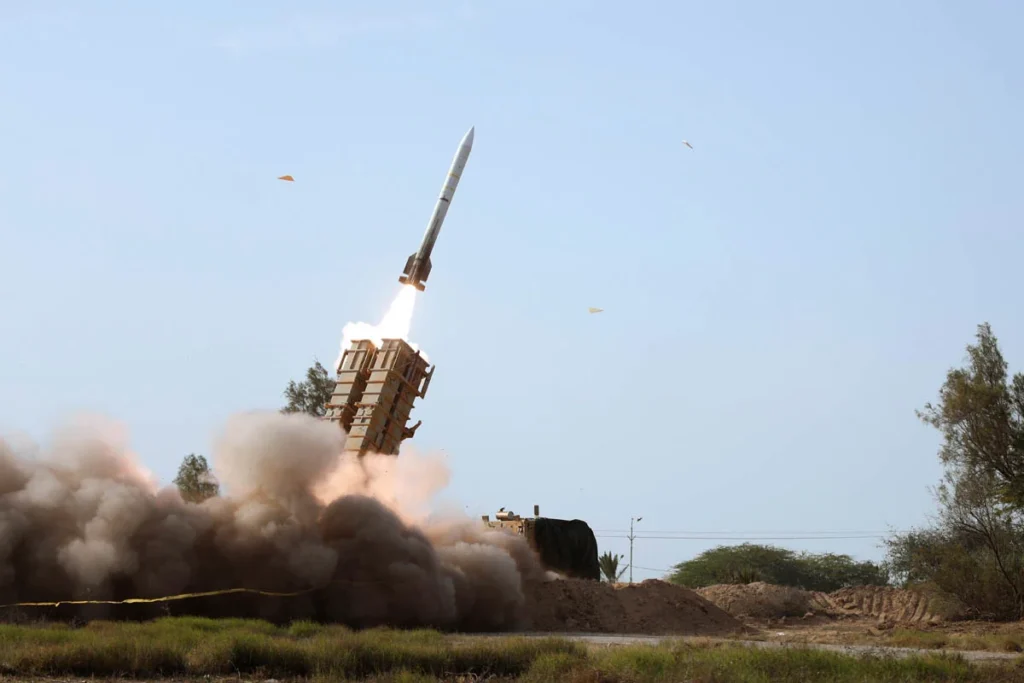
One month into escalating tensions between the United States, Israel, and Iran, the conflict is no longer confined to the Middle East. Its effects are already visible across global markets, supply chains, and political systems.
Yet far from the battlefield—in Juba, Abuja, Lusaka, Algiers, and Nairobi—a different question is taking shape: what does this crisis mean for Africa?
At first glance, the continent appears distant from the missiles and military maneuvers. In reality, it is already feeling the consequences—rising fuel prices, higher shipping costs, strained aid routes, and growing pressure on governments to respond to a crisis not of their making.
“Africa may be far from the battlefield, but it is already paying the price.”
In economies where reliance on imports persists significantly and fiscal capacity is constrained, such shocks are not readily absorbed.
It is tempting to assume that Africa’s oil exporters will benefit from higher prices. Therefore, while some may, briefly, experience advantages, the deeper reality for most countries is exposure to risk. External shocks—particularly those transmitted through energy and trade—have historically had disproportionately severe consequences across the continent.
What makes this crisis globally significant is not just its location, but what it endangers. The Strait of Hormuz, through which a large portion of the world’s oil and liquefied natural gas is transported, has become a major concern. As tensions around Gulf infrastructure escalate, oil prices have surged sharply, surpassing $100 per barrel and occasionally nearing $115 (Reuters, March 2026).
For many African economies, that shift is immediate. Most depend on imported fuel, so higher global prices quickly translate into increased transport costs, rising food prices, and mounting pressure on household incomes. Policymakers across the continent are already warning that this latest oil shock could spread across key sectors and complicate efforts to contain inflation.
Governments now face difficult choices. They can absorb part of the shock through subsidies, placing further strain on already tight budgets, or pass the cost on to citizens, risking social tension. The International Monetary Fund (IMF) has repeatedly warned that many African economies are entering this period with high debt and limited fiscal space, leaving them poorly positioned to absorb external shocks.
The first impact of this crisis is therefore not ideological, but fiscal. It deepens vulnerability for importers while offering uncertain gains for exporters.
“This is not just a war of missiles—it is a war of prices, and Africa is on the frontline of its consequences”
This divide is already visible. In Nigeria, higher oil prices do not necessarily lead to stability. Despite being Africa’s largest oil producer, the country remains heavily reliant on imported refined fuel. Recent subsidy reforms have made households more directly exposed to price fluctuations, causing global increases to lead to domestic hardship quickly.
For net importers, particularly in East Africa, the effects are more immediate. In Kenya, rising fuel prices affect transport, food distribution, and daily living costs. In Nairobi, this distant geopolitical crisis is already becoming a lived economic reality.
Geography sharpens the impact. Countries along the Red Sea corridor—Djibouti, Sudan, Somalia, and Egypt—are at increased risk. Egypt, in particular, is vulnerable through the Suez Canal, a vital route for global trade. World Bank analysis indicates that traffic through the Suez Canal and Bab el-Mandeb Strait drops significantly during times of instability, directly affecting global trade and delivery times.
This is not only an energy crisis. It is also a crisis of trade routes.
As security threats interfere with essential maritime routes, ships are being diverted around the Cape of Good Hope. This detour prolongs travel durations, escalates expenses, and exerts additional pressure on supply chains. The United Nations Conference on Trade and Development has cautioned that these disruptions are already extending shipping distances and escalating costs throughout global trade networks.
Africa is not only paying more for fuel; it is also paying for distance. Longer routes lead to higher freight costs, delays in deliveries, and increased pressure on economies that depend heavily on imports. The strain quickly spreads from ports to markets, transport systems, and households.
African leaders are beginning to acknowledge these pressures. On March 4, South Africa’s President Cyril Ramaphosa warned that escalating tensions in the Middle East were already “putting strain on the African continent’s supply chains and causing higher energy prices.”
The pressure extends into agriculture. Many African countries depend heavily on fertilizer imports routed through the Middle East. Disruptions are driving prices upward, in some cases sharply. For economies already struggling with food security, higher input costs threaten to reduce output and increase food prices.
The consequences are especially severe in places like Sudan, where agricultural systems are already under strain and rising costs risk deepening an existing humanitarian crisis.
This is where geopolitics becomes personal. In numerous African nations, governments are assessed less by their foreign policy stances than by the expenses associated with fuel, food, and transportation. When these three costs simultaneously escalate, pressure on authorities intensifies rapidly. The International Monetary Fund (IMF) has observed that inflationary shocks in low-income economies frequently precipitate social unrest, especially in contexts where living conditions are already delicate.
At this stage, social institutions become essential. In African cities, churches and mosques are more than just places of worship—they serve as support systems. They handle pressure, provide relief, and give purpose to hardship. As economic pressure increases, they often become the first places people turn to.
The humanitarian consequences are increasingly apparent. Disruptions to shipping and logistics are decelerating aid deliveries, elevating costs, and complicating operations in regions already characterized by fragility. For communities dependent on prompt assistance, even minor delays can result in severe consequences.
The crisis did not give rise to these vulnerabilities; however, it is intensifying them—augmenting budgets, overburdening supply chains, and applying additional pressure on already fragile systems.
African governments are responding cautiously. The African Union has called for de-escalation, reflecting a broader preference for stability over alignment. Many states are hesitant to be drawn into geopolitical blocs, even as external pressure grows. Their priority is not to take sides, but to keep manoeuvring space.
The central question is no longer whether Africa is part of this crisis. The question is whether African states can prevent another external shock from turning into a domestic one through rising prices, social pressure, and deeper dependency.
“Until Africa builds its own economic resilience, every distant war will arrive at its doorstep as a domestic crisis”
Africa may be far from the battlefield. But unless it builds resilience from within, it will remain dangerously close to the bill.
Have any thoughts?
Share your reaction or leave a quick response — we’d love to hear what you think!
-
 0
0
-
 0
0
-
 0
0
-
 0
0
-
 0
0
-
 0
0