
Tinubu and the Catholic Politicians from the South-East who Support Him
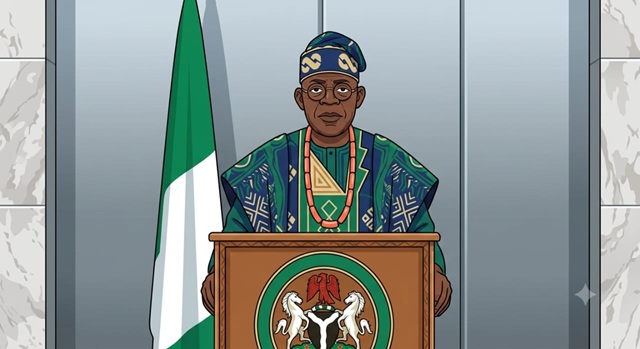
Nigerian Catholic bishops have ignited a fire in Nigeria’s political ecosystem with their prophetic message addressed directly to the President in Aso Rock. They have also forced the nation into a much-needed conversation about the bleeding state of our nation and what citizens and their leaders ought to do to build Nigeria’s future by promoting and protecting the common good from which every citizen should draw, as from a wellspring. The question on everyone’s mind is: what next?
Before we get too excited about this inflection point, let me point out something that is both worrisome and intriguing, one that will determine whether this momentum is built upon or squandered: many Catholic political office holders in Nigeria and notably in my region, the South-East, are staunch Tinubu loyalists.
Are these Catholic politicians thinking with their revered bishops? Are they drinking from the deep wells of Catholic Social Teaching as their pastors? Are they, in the Ignatian sense, sentire cum Ecclesia? Why are the governors from the South-East not working for their own people like the transformative governor of Abia State who has shown that it is possible to be a local leader without swearing fealty to the federal government or selling one’s conscience to any putrid political machine?
In this essay, I want to ask why so many Catholic politicians, particularly in the South-East, support Tinubu.
Why is there no comparable social disapprobation and moral revulsion by church leaders in the South-East against the South-East Catholic politicians who have thrown their full-throated support behind Tinubu? Why is there no public conversation led by the Catholic Church, in Imo, Ebonyi, and Enugu States for instance, on why the APC is running roughshod over the will of the people?
Many citizens of Imo State are crying in silence over a political dispensation where power was stolen from them in broad daylight through the destructive rigging machine of the APC. In Enugu State, the sitting governor, Peter Mbah, decamped in October 2025 from the party under which he was elected, the PDP, to the ruling party, taking the entire political structure of the state with him, without any censure or reprimand from church authorities in the state, or even an invitation to dialogue about it.
Rather than questioning the legitimacy of these political turncoats, we see that state and national legislators in both states have, as always, followed their governors into the APC. In the murky waters of Nigerian politics, as President Tinubu himself has publicly admitted, all is fair. That is as long as you secure and hold on to power and the people are silent the end always justifying the means in the necropolis that Tinubu and his irks have turned our beloved land into.
To be clear, I do not support any political party in Nigeria, nor do I think the APC is worse than the PDP or any of the emerging parties of convenience. As a Catholic priest, my concern is to promote the reign of the Kingdom of God by speaking for the poor and calling all who are given the privilege of leadership to pursue the highest good of the people through good stewardship of the resources with which God has blessed Nigeria.
The priorities of the state and of politicians shift like the weather, driven by expediency, electoral gain, or fear of losing power. The Church’s mission, however, possesses a deeper and more enduring rhythm—the stability of grace, the constancy of divine love, the fruits of God’s coming reign, so that God’s will may be done on earth as it is in heaven.
The Church’s mission possesses a deeper and more enduring rhythm: the stability of grace, the constancy of divine love, and fidelity to God’s coming reign.”
To confuse these orders by aligning the Church’s eternal mission with the transient ambitions of political power, whether in support of a government or in opposition to one, is to betray the heart of the Gospel. As Dean William Ralph Inge warned, “He who marries the spirit of the age will soon find himself a widower,” and a Church that weds itself too closely to any Nigerian politician forfeits its prophetic edge.
The Church endorses no political party or candidate, but she must stand up for good governance and the values of constitutional democracy.”
But while the Church endorses no political party or candidate, she must, in fidelity to the Gospel, stand up for good governance and the values of constitutional democracy that allow people to choose their leaders and hold them accountable.
Pope John Paul II modeled exactly this posture nearly four decades ago, and his words remain the clearest answer to anyone who would tell the Nigerian bishops to keep to the sacristy. Flying into Chile in March 1987, still under the military rule of General Pinochet, he was asked whether the Church should really involve itself in a nation’s politics. His answer: “The people would want to tell us, ‘Stay in the sacristy. Do nothing else.’ They say it’s politics, but it’s not politics.”
If the Church confined itself to purely theological questions, he warned, its entire mission “would be dead.” Asked whether his visit might help restore Chilean democracy, he drew the distinction with precision: “I am not the evangelizer of democracy, I am the evangelizer of the Gospel. To the Gospel message, of course, belong all the problems of human rights, and if democracy means human rights, it also belongs to the message of the Church.”
That is exactly the distinction Nigeria’s bishops are entitled to make today: they are not endorsing a party when they say Nigeria is bleeding; they are refusing to let the Gospel be reduced to a private devotion while the poor are crushed by the very structures their politicians defend.
Popes Francis and Leo have each, in their own idiom, said the same thing since. Francis insisted that “a good Catholic meddles in politics, offering the best of himself, so that those who govern can govern well,” and that politics is “one of the highest forms of charity, because it serves the common good”—precisely the dignity that self-serving politics betrays, as he warned in Fratelli Tutti against leaders who “exploit a people’s culture… for their own personal advantage or continuing grip on power” (FT 159).
Leo carried the same message to Africa itself, earlier this year, on his first African trip as Pope. He told Cameroon’s authorities to break “the chains of corruption,” and defined good government in words that could have been written for Nigeria’s own political class: “To govern means truly listening to citizens, valuing their intelligence and their ability to help build lasting solutions to problems.”
In Angola—a nation as rich in resources as Nigeria, and as familiar with the theft of that wealth from ordinary people—he spoke of building “a country… where the scourge of corruption will be healed by a new culture of justice and sharing,” and challenged its leaders to break the “cycle of interests” that has “plundered and exploited” the continent.
Three popes, four decades apart, saying one thing: that this is not political meddling but the Gospel itself, and it is a template every Catholic bishop, priest, and layperson with access to power in Nigeria, including the Catholic governors of Enugu and Imo, and the Catholic President of the Senate—is now without excuse for failing to hear.
The Church exists to awaken the conscience of the people; to rouse their social consciousness; and to show them the light, so that, walking together as one people, they can make the right choices to build a society where all of God’s people can thrive.
As Church leaders, we are prophets of God, called to show the way as spiritual and moral guides. In that regard, the work of Nigeria’s Catholic bishops has just begun. Calling out the President is not enough. This conversation must now continue within the Catholic community in every parish and every small Christian community, as well as in the seminaries and convents. Nor should it remain an exclusive Catholic conversation.
Calling out the President is not enough. This conversation must continue within the Catholic community—in every parish, seminary, convent, and small Christian community.”
The Church, using its unified national apparatus, must work in concert with other churches and our Muslim brothers and sisters to sensitize citizens to their rights and their power, particularly since the agency of the masses has been voided and their hope shattered by the repeated exploitation and despoliation of the land, and by patron-client cleavages that have reduced the people to beggars before political and religious elites; mere pawns in the mazy chessboard of Nigerian politics that often defies any logic.
But the most important task facing the Church in Nigeria is to convince her own politicians to see things through the lens of their pastors, particularly the politicians in regions like the South-East who have draped Tinubu in the robe of righteousness and anointed him as Savior of the South-East and of Nigeria.
It is worth noting that the President of Nigeria’s Senate, Godswill Akpabio, has himself publicly described being Catholic as one of the privileges of his life and his Catholic upbringing as the compass of his leadership. The governors of both Enugu and Imo are also huge patrons of our churches and regular participants in our Sunday Masses, each surrounded by Catholic chaplains and a chain of advisors from other Christian denominations.
Let me be clear, though, that we have some Catholic politicians from the South-East and elsewhere in Nigeria who have shone like the stars in the heavens. But this essay is not written as a judgment on the quality of South-East Catholic politicians—that is a matter for another day.
The question is whether the bishops’ reprimand of Tinubu will soon be forgotten absent a sustained replication of similar courage by local Church leaders toward Catholic politicians closer to home, calling them to live up to the faith and social doctrine they drank as Catholics. The so-called federal might in Nigeria can only function with the complicity of local governors; without this seamy alliance the complex hydra-headed monster of misrule in Nigeria will not survive a single day.
All politics is local, and it is time our churches faced the local politicians who are destroying the destiny of God’s people, or selling off their future through the shameful and unjust alliances at the federal level that strip them of their right to choose who rules them.
All politics is local, and it is time our churches faced the politicians who are destroying the destiny of God’s people.”
If a pope can stand before a head of state on foreign soil and demand he break the chains of corruption, a bishop can surely find the courage to say the same to the Catholic governor or senator or local government chairman or state party top brass who receives Holy Communion from his hands on Sundays.
