
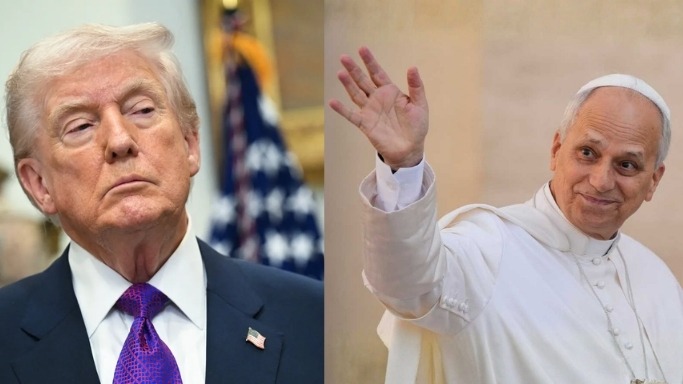
The Holy See confirmed this week, through Cardinal Pietro Parolin, that it will not participate in U.S. President Donald Trump’s proposed “Board of Peace” on Palestine, according to a Reuters report. The Vatican’s reason was simple and consistent with its diplomatic tradition: a crisis of this magnitude must be addressed through legitimate multilateral institutions, above all the United Nations. The Holy See does not believe that any one state, however powerful, should create parallel structures that risk bypassing international law and weakening the fragile architecture of global peace painstakingly constructed after the catastrophe of World War II.
The Holy See’s decision is an act of prudence. It is also a reaffirmation of a Catholic conviction articulated clearly since John XXIII’s Pacem in Terris (1963): that peace among nations must be rooted in law, not unilateral power. It is also an affirmation of the principle of subsidiarity and co-responsibility that could be summed up in the core principle of Catholic social teaching: nothing about me without me.
Peace among nations must be rooted in law, not unilateral power.”
In a recent interview reported in the Italian newspaper Il Sole 24 Ore, the Latin Patriarch of Jerusalem, Cardinal Pierbattista Pizzaballa, rejected the Board of Peace as a “colonialist operation” because it ignores the voices of Palestinians. The United Nations, despite its structural inequalities and the veto power wielded by the so-called great powers in the Security Council, remains the only universally recognized forum for mediating disputes of this scale. It carries legal and moral legitimacy in a way no ad hoc diplomatic board can.
The Israeli–Palestinian conflict is not a conflict without international legal parallels and parameters. The international community has spoken repeatedly. United Nations Security Council Resolution 242 (1967) called for Israeli withdrawal from territories occupied in the Six-Day War and affirmed the right of every state in the region to live in peace. Resolution 338 (1973) reaffirmed 242 and called for negotiations. Resolution 446 (1979) declared that Israeli settlements in the occupied territories have “no legal validity.” Resolution 2334 (2016) described settlement expansion as a “flagrant violation” of international law and an obstacle to peace. These resolutions have not ended the conflict. But they establish that the occupation and settlement question is not morally ambiguous under international law.
In July 2024, the International Court of Justice (ICJ), responding to a request from the UN General Assembly, issued an advisory opinion concluding that Israel’s continued occupation of Palestinian territories is unlawful and must end as rapidly as possible. This followed its 2004 advisory opinion declaring the construction of the separation barrier inside occupied territory contrary to international law. The ICJ does not prosecute individuals; it clarifies legal obligations of states.
The International Criminal Court (ICC) addresses individual criminal responsibility. On May 20, 2024, ICC Prosecutor Karim Khan applied for arrest warrants against Israeli Prime Minister Benjamin Netanyahu and then-Defense Minister Yoav Gallant on allegations including war crimes and crimes against humanity, specifically the use of starvation of civilians as a method of warfare. In the same application, he sought warrants against Hamas leaders Yahya Sinwar, Mohammed Deif, and Ismail Haniyeh for crimes including murder, extermination, and hostage-taking during the October 7 attacks. The legal significance of this parallel application is unmistakable: international criminal law applies to all parties. No state is above it. No armed movement is exempt from it.
The proposed Peace Board risks sidelining established international legal frameworks and seeks to make peace through the implementation of Trump’s 20-point plan, which does not address some of these legal violations by the State of Israel, particularly under the current government.
What happened on October 7, 2023, was a moral rupture. The deliberate killing of Israeli civilians and the kidnapping of hostages was an act of terror that cannot be justified. Catholic moral theology leaves no room for equivocation here. The targeting of the innocent is intrinsically evil. But moral clarity must not be selective.
The response that followed has devastated Gaza at a scale that has shocked the conscience of the world. According to United Nations agencies and humanitarian organizations, tens of thousands of Palestinians have been killed, including large numbers of women and children. Vast portions of civilian infrastructure—homes, hospitals, schools, and water systems—have been destroyed. Severe restrictions on food, medical supplies, and fuel have produced catastrophic humanitarian conditions. Whether one uses the language of genocide, disproportionate warfare, or crimes against humanity, the moral weight of the devastation cannot be dismissed.
Catholic just war theory requires discrimination between combatants and non-combatants and proportionality in the use of force. Collective punishment is forbidden. Starvation of civilians as a method of warfare is prohibited under international humanitarian law.
If terrorism is condemned because it targets the innocent, then state violence that destroys the innocent cannot be morally licit simply because it is carried out by a government.”
One must ask uncomfortable questions. Would it be morally licit to destroy an entire passenger aircraft to eliminate one terrorist on board? Would it be justified to kill hundreds of civilians to eliminate one militant commander or rescue a single hostage? The right of self-defense, affirmed in international law, is not absolute. It is bounded by moral reasoning and humanitarian norms. Gaudium et Spes (79–80) warns that any act of war aimed indiscriminately at the destruction of entire populations is a crime against God and humanity.
President Trump’s proposed peace board reflects a unilateral instinct in American diplomacy that has grown in recent years. But the Holy See’s refusal signals something deeper. Peace between Israel and Palestine cannot be brokered by excluding one of the principal parties or bypassing the legal framework established by the international community.
“Nothing about us without us” is not merely a slogan. It echoes the Catholic principles of participation and subsidiarity. Successive popes—particularly Benedict XVI and Francis—have consistently supported a two-state solution: a secure Israel and a sovereign Palestine living side by side within internationally recognized borders. The two-state solution remains the official position of the United Nations and the Holy See because the alternatives—permanent occupation, annexation, or endless war—offer no moral horizon or just future.
The path forward requires moral courage on all sides. Humanitarian access must be guaranteed without obstruction. Serious negotiations toward a viable Palestinian state alongside Israel and the reconstruction of Gaza must resume under international supervision, not through a Peace Board designed by one nation.
True peace is not manufactured by power but built patiently through justice, accountability, and shared humanity.”
The killing of the innocent—Israeli or Palestinian—is always an offense against God and humanity. The Church’s role is not to align with geopolitical blocs but to insist that every human life bears inviolable dignity. In stepping back from President Trump’s proposed peace board, the Holy See has reaffirmed that true peace is not manufactured by power but built patiently through justice, accountability, and shared humanity. In a world increasingly tempted by unilateralism and raw force, this kind of witness matters.


2 comments
Then why did the UN vote 13 to 0 to support the Board of Peace if the Vatican says the Board is excluding the UN?
A United Nations Security Council resolution endorsed the idea of the Board of Peace in a specific context.
In November 2025, the UN Security Council adopted a U.S.-drafted resolution (Resolution 2803) that welcomed President Donald Trump’s comprehensive plan to help end the Gaza conflict and referenced a “Board of Peace” as part of the framework to support post-war reconstruction and transition in the Gaza Strip. That vote passed with 13 members in favour and abstentions from China and Russi
The United Nations (specifically the Security Council) did support elements of Trump’s peace plan and referenced the Board of Peace in that limited context — particularly for helping implement reconstruction in Gaza. But this does not mean the UN broadly endorses or operates the Board of Peace as a permanent or global UN body or as a parallel body to the UN. The Board exists largely outside the UN system with contested legitimacy and limited and variable international support.