
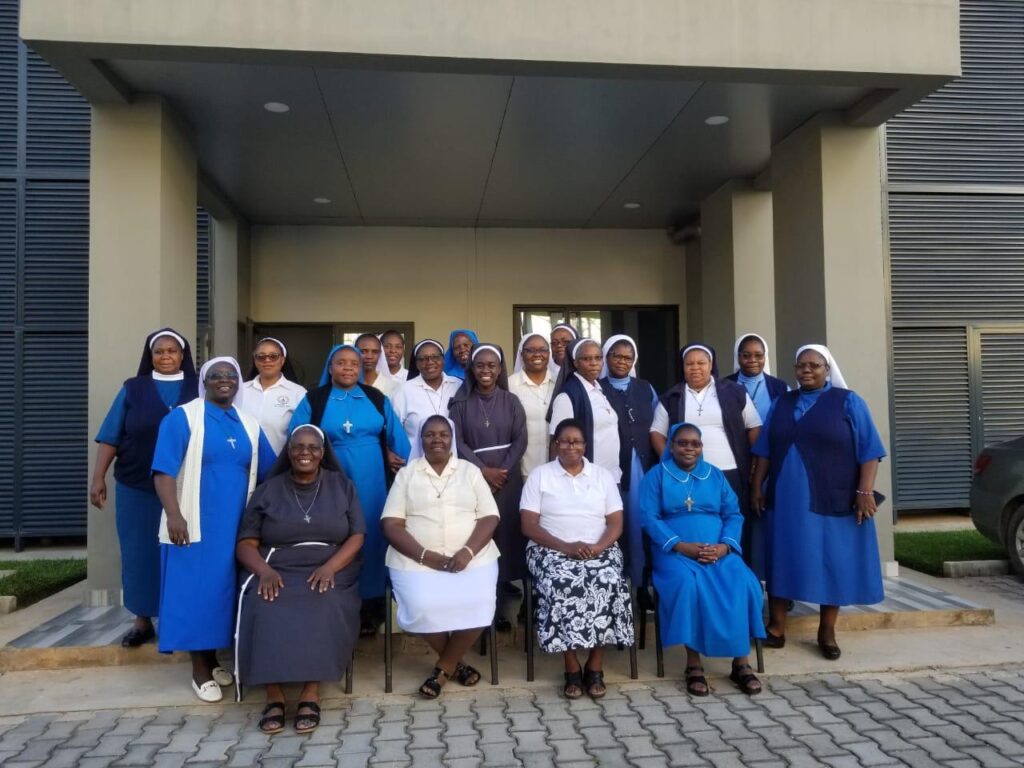
LUSAKA, Zambia – On March 17, 2026, fifteen sisters from seven religious congregations in Zambia completed a week‑long training in chapter facilitation aimed at strengthening leadership and improving the conduct of General Chapters within religious institutes. The workshop, organized by the Association of Consecrated Women in Eastern and Central Africa (ACWECA), took place at the Kalundu Conference Centre in Lusaka and focused on equipping participants with both spiritual and practical skills needed for effective facilitation.
The General Chapter of a religious institute is much more than a mere business meeting or a periodic administrative duty; it is a sacred moment of grace, an ecclesial gathering, and a deep celebration of a congregation’s life. The success of this pivotal occasion often depends on the quality of its guidance.
The training, specifically designed to bridge the regional gap in the number of skilled facilitators, brought together 15 sisters from seven congregations across Zambia. It was not merely a technical seminar but a holistic formation journey, one that challenged, inspired, and transformed participants both personally and communally.
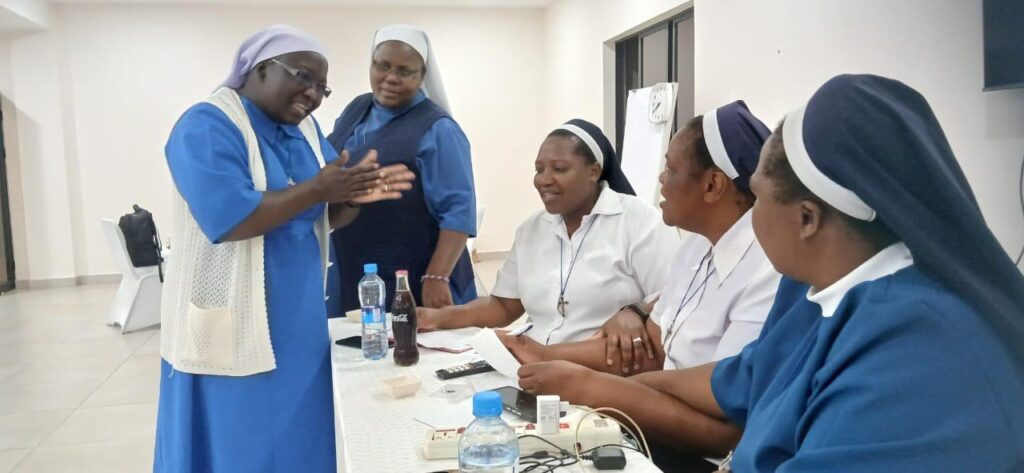
The programme’s curriculum was carefully designed to address the intricacies of contemporary religious experiences. Sr. Theresa Helena Muzeta, a Religious Sister of Charity (RSC), guided the participants in exploring the spirituality of facilitation. She highlighted that a General Chapter serves as a spiritual encounter grounded in discernment, prayer, and mindful listening to the Spirit.
This was complemented by Sr. Lontia Siakalambwa, a Religious Sister of the Holy Spirit (RSHS), who offered practical tools for conflict transformation, helping participants understand that conflict should not be seen as something to be avoided, but as a reality that, when well handled, can generate growth, new values, and deeper communion. She also reminded the participants that a General Chapter is a spiritual encounter grounded in discernment, prayer, and mindful listening to the Spirit.”
Legal and structural integrity remained central to the formation with Sr. Chrisencia Mkume (RSHS), who provided insights from canon law and the five canonical purposes of a Chapter, while Sr. Thérèse Nyoni, the Superior General of the Little Sisters of St. Francis (LSSF), guided participants through the responsibilities of chapter delegates and emphasized the organic relationship between membership and leadership, noting that sound membership naturally gives rise to sound leadership.
For many participants, the workshop dismantled long-held misconceptions about chapters. Sr. Mutinta of the Holy Spirit Sisters described a profound shift in the perspective, saying: “I was inspired by the fact that the Chapter is a celebration of our life and not a battlefield. It is a time of renewal, where we reflect on what has been and look to the future with hope.” She further reiterated that discernment is not optional but essential, not only within Chapters, but in everyday life. Participants also discovered that facilitation begins within the person. Self-awareness, preparation, and a deep understanding of the group being served emerged as critical foundations. As one insight highlighted, a facilitator must never leave things to chance but must engage deeply with the congregation’s life, charism, and constitutions.
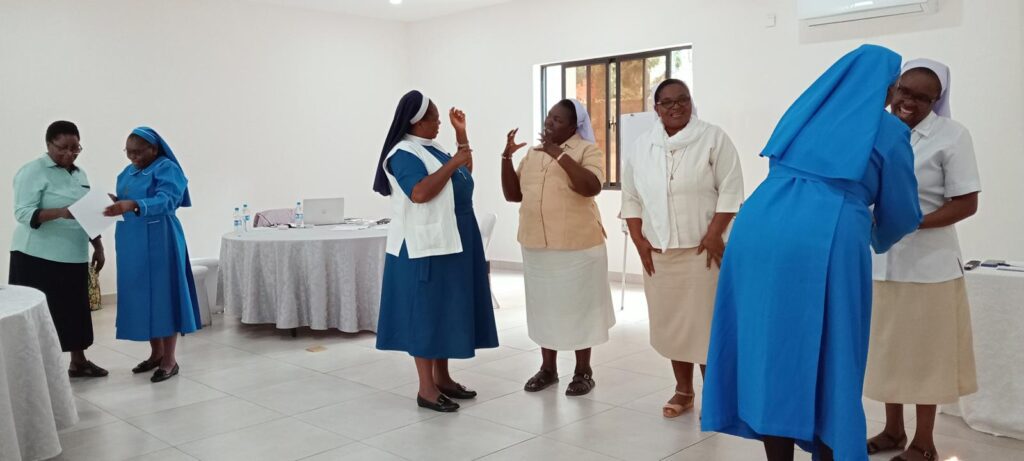
A recurring theme throughout the workshop was the importance of creating environments where every voice is heard and valued. Sr. Clarina Ndona (LSSF) identified creating safe spaces and active listening as the most valuable skills she has gained. In her own words, she said: “This training has taught me to be impartial and to create a space where everyone feels respected and heard.” She also noted that these skills will be immediately applicable—not only in Chapters, but also in community meetings and congregational assemblies—transforming how dialogue and decision-making unfold at every level.
The training also touched the participants on a personal level. Sr. Dr. Christine Mwaka Himoonga (HBVM) described the experience as both challenging and enriching, particularly in learning how to guide rather than control discussions: “Facilitation is less about directing and more about guiding conversations in a way that allows everyone to feel heard.” Through role-play and shared experiences, the sisters practice patience, adaptability, and the ability to manage diverse personalities—skills essential for fostering unity in increasingly diverse communities. “The stronger our facilitation, the stronger our communion; and the stronger our communion, the more credible our witness.”
This initiative responds to a long-identified gap in the region. Sr. Christine Mwangi, outgoing ACWECA Coordinator for Leadership for Mission, explained that the lack of trained facilitators has often limited the effectiveness of General Chapters. A well-facilitated chapter, she noted, leads to deeper understanding, stronger unity, and more fruitful outcomes for congregations. More importantly, it shifts the focus of Chapters from merely electing leaders to becoming authentic moments of communal discernment about the future. Going forward, ACWECA is exploring mentorship programmes, follow-up engagements, and a potential “Master Trainers” model to ensure sustainability and continued growth across the region.
As these sisters return to their respective communities and missions, they carry renewed confidence and strengthened skills to foster unity.
They also believe in the renewed vision of the General Chapter, not as a procedural obligation, but as a sacred space of listening, discernment, and shared responsibility for the future. In the quiet halls of Kalundu, a new generation of “midwives of communion” has emerged, women ready to guide their congregations towards a future grounded in hope, unity, and faithful witness.


