
The African Church’s Prophetic Response to Dilexi Te

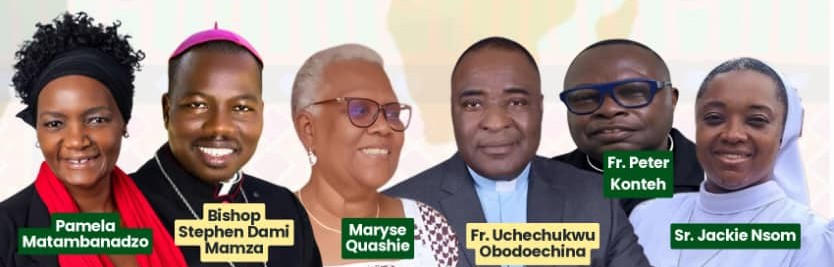
On November 14, 2025, PACTPAN and SECAM hosted a pan-African palaver to present Pope Leo XIV’s Pastoral Exhortation Dilexi Te (I Have Loved You). The event brought together scholars, clergy, activists, lay members of Christ’s faithful, and change agents from across the continent and beyond.
Among the most striking voices was Bishop Stephen Dami Mamza of Yola—known for living shoulder-to-shoulder with displaced families. His message cut through the room: Africa no longer needs charity alone; it needs justice.
For him, the gathering was not academic theory but a “synodal encounter of hearts and minds.”
This is not a call for pity but a demand for prophetic justice.
The Eucharistic Logic: Defining Love Anew
Bishop Mamza, who also serves as Vice President of the Symposium of Episcopal Conferences of Africa and Madagascar (SECAM), frames Dilexi Te by contrasting Pope Francis’s “He loved us” (Dilexit Nos) with Pope Leo XIV’s more intimate declaration, “I Have Loved You.” This shift builds a bridge between the love we receive and the active love we are called to embody.
Love that does not feed, educate, or liberate is not yet love in full
He insists that true holiness is measured by our capacity to love society’s discarded. The Exhortation urges the African Church to translate every act of care into a “fragment of the Eucharist lived in the world,” meaning the Body received at the altar must become the body served in the street.
Drawing From the Camps of Yola: Love Made Credible
Drawing from his humanitarian work in Yola, Bishop Mamza speaks from lived experience. Since 2014, following waves of Boko Haram violence in northern Nigeria, the Diocese of Yola has sheltered tens of thousands of internally displaced persons (IDPs). Mamza, through the Yola Diocesan Commission for Justice, Development and Peace/Caritas (JDPC/Caritas Yola), has coordinated emergency food distribution, trauma healing programs, interreligious peace initiatives, and the reconstruction of destroyed villages—most notably the rebuilding of Ngalda and Kojoli, where entire communities were able to return home.
His credibility, he tells the Church, does not come from episcopal insignia or diocesan infrastructure but from tenderness and humility forged in the dust of the IDP camps.
Confronting the Chains of Structural Sin: The Political Dimension
A central challenge raised during the palaver discussions concerns the structural barriers to authentic love. For the Church in Africa, the deepest chains binding the poor are systemic failures.
Fr. Uchechukwu Obodoechina, Vice-Secretary General of SECAM and Coordinator for Justice and Peace, described Africa as a “continent bleeding at various points from conflicts, poverty, migration, and human trafficking,” driven by “poor governance, corruption, and mismanagement of resources.”
Father Peter Conte, Executive Director of Caritas, responsible for communications, and serving as President of the Priests’ Council in Sierra Leone and Vice President for Priests in West Africa, highlighted internal sins such as “selfishness and tribalism,” which hinder the just distribution of God-given resources and expose a crisis.
Dr. Maryse Quashie—one of the presenters, a retired lecturer, and charitable worker—amplified this critique:
The Church must confront the political and collective dimension of poverty
She argued that these failures are systemic, not merely individual moral lapses, and require the Church’s direct engagement.
The Church’s Internal Mirror: Accountability and Humility
The Exhortation also served as a mirror, prompting the Church to scrutinize its own priorities and lifestyle.
Pamela Matambanadzo, a former ITVP (International Territorial Vice President for America 1), approached the document personally:
It is not enough for our love to be beautiful in liturgy and documents if it is not equally truthful and concrete in our projects and our reports
Fr. Uchechukwu challenged the Church even more directly, asking: Do our structures, clerics, and religious belong to the category of the poor?
He argued that the Church must “re-examine her priorities” to align with the Gospel’s call to justice.
A Call for Partnership, Not Pity: The Way Forward
The PALAVER gathering insisted that the Church’s path must be grounded in self-reliance and justice, not perpetual dependency.
Participants emphasized that Africans must be taught “how to catch the fish, not just receive the fish from foreigners.”
The stakes of this dual conversion—internal and external—are profound. A Church that remains in a charitable comfort zone, without confronting the systems that necessitate charity, risks becoming functionally irrelevant: a compassionate bystander in a world drowning in injustice. Conversely, a Church that embraces this prophetic, self-reliant vision does not merely offer aid; it offers Africa a renewed soul.
Bishop Mamza’s ministry in Yola—providing shelter to tens of thousands of displaced persons and rebuilding homes—stands as a living blueprint for Dilexi Te.
“Will we remain complicit in the disordering of love—or will we reorder our lives, ministries, and politics to serve as midwives of Africa’s aspirations for peace and dignity?”


FRÈRE LUCIEN KAMON YOMI, DIPLÔMÉ EN MISSIOLOGIE ET PRAXIS PASTORALE, DIPLÔMÉ EN PASTORALE CLINIQUE
L’Eglise en Afrique, après plus 100 ans d’existence doit pouvoir maintenant être capable de son autonomie : autonomie en terme de la qualité des agents pastoraux et non les professionnels ritualistes faiseurs de sacrements, les porteurs des insignes religieux séducteurs mais dont les guerres intestins, fratricides dénaturent la glorieuse rédemption accordée par le Fils de Dieu à l’humanité entière. Si cette autonomie se veut d’abord anthropologique, elle nous ouvre à la crédibilité d’amour du prochain par le biais des projets et des actions concrets. C’est une autonomie développementaliste et non plus livresque. Elle est le déjà et l’aujourd’hui de la pratique évangélique. La metanoia
de cette autonomie humaniste et développementaliste est le reflet exigent de l’agape christique pour l’humanité sans rien vouloir pour un soi égoïste et égocentrique mais animée par un altruisme sacrificiel et oblatif où chaque personne humaine prise dans sa singularité, s’extasie devant l’infinie bonté de Dieu sans discrimination aucune. Pour moi c’est ce à quoi nous invite Dilexi te.