
ACWECA Pledges Continued Partnership with AMECEA in Accompanying Young People
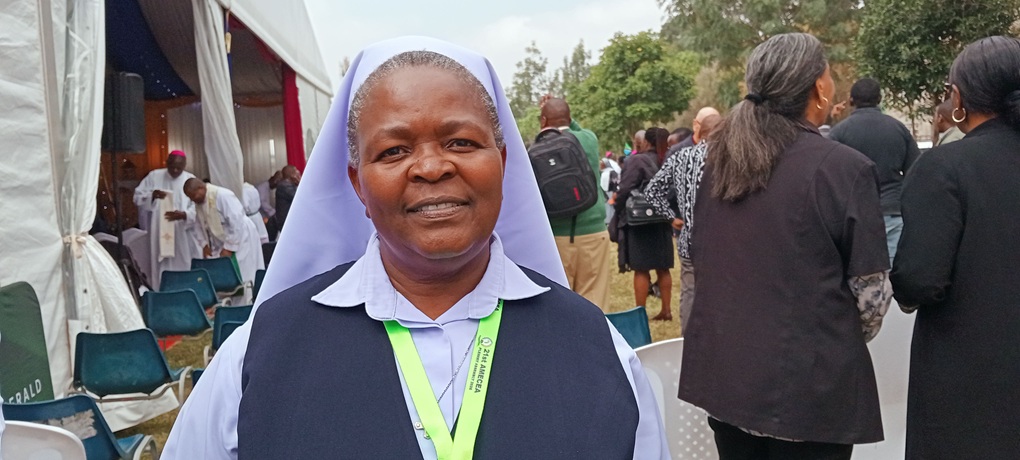
NAIROBI, Kenya – The Association of Consecrated Women in Eastern and Central Africa (ACWECA) has reaffirmed its solidarity with the Church in Eastern Africa, delivering a message of support to bishops gathered for the 21st Plenary Assembly of the Association of Member Episcopal Conferences in Eastern Africa (AMECEA) in Nairobi.
While delivering the message on behalf of consecrated women across the region, ACWECA President Sr. Grace Kyomugisha congratulated AMECEA on its 65 years of pastoral leadership, calling the milestone a celebration of the Church’s enduring commitment to evangelization and the growth of the local Church in Eastern Africa.
Reflecting on the Assembly’s theme of journeying with young people by building bridges of communion, hope, justice, and good governance, Sr. Kyomugisha said that young people remain central to the Church’s mission. Despite the many social, economic, political, and environmental challenges they face, she noted, they continue to be agents of transformation whose potential can be nurtured through intentional accompaniment and meaningful participation.
Together, we must create a Church where young people are not passive observers but active protagonists in shaping a future rooted in communion.”
She emphasized that responding to these realities requires stronger collaboration among bishops, clergy, consecrated women and men, and laypeople so that the Church’s pastoral initiatives remain rooted in the lived experiences of communities and responsive to the aspirations of the younger generation.
“Our shared synodal journey calls us to model the justice and good governance we wish to see in society,” Sr. Kyomugisha said.
Our shared synodal journey calls us to model the justice and good governance we wish to see in society.”
In the same message, Sr. Kyomugisha conveyed the solidarity of the Centre for Research in Religious Life and Apostolate in Africa (CERRA-Africa), highlighting its contribution to the Church through evidence-based research and pastoral reflection.
She underscored the importance of research, discernment, and long-term commitment in developing pastoral responses to the realities young people face. Such knowledge, she said, can assist bishops, consecrated persons, and other pastoral agents in making informed decisions in support of the Church’s mission of evangelization across the region.
“By combining the pastoral leadership of AMECEA with the grassroots presence and maternal care of consecrated women, we can build stronger and more resilient bridges of hope for our young people,” she said.
By combining the pastoral leadership of AMECEA with the grassroots presence and maternal care of consecrated women, we can build stronger and more resilient bridges of hope for our young people.”
As the Assembly continues, ACWECA’s message underscores the importance of collaboration among bishops, consecrated persons, clergy, and laypeople in translating synodality into concrete pastoral action. At the heart of this shared mission is a commitment to accompany young people—not as passive recipients of pastoral care, but as active partners in shaping the future of the Church and society.
