

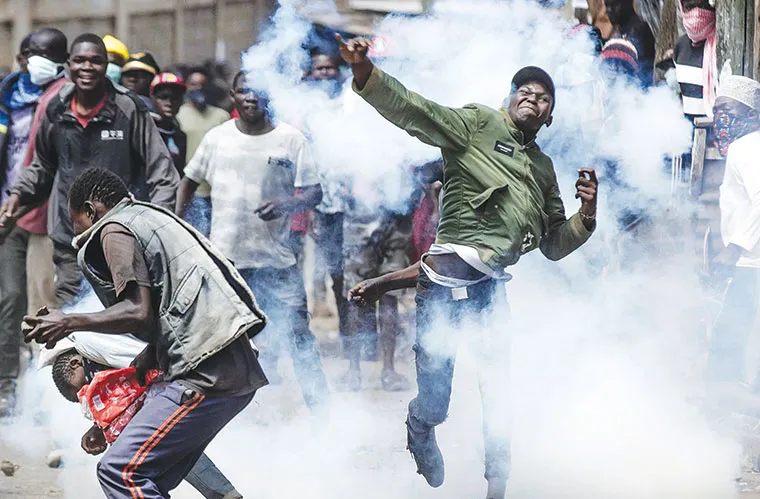
Le 3 octobre 2025, le président de Madagascar Andry Rajoelina a pris Facebook Live avec une revendication extraordinaire. Après une semaine de manifestations menées principalement par des activistes du Gen Z dans les rues d'Antananarivo et d'autres villes, Rajoelina a rejeté le mouvement comme une tentative de coup orchestrée par des forces obscures. Il a accusé "une frange de l'opposition" et sans nom "agences étrangères" de payer les jeunes pour se lever—non pas pour rechercher la justice ou la réforme, mais pour le renverser. Il a même suggéré que des « cyberattaques » et des « robots » étaient déployés pour manipuler la jeunesse malgache en rébellion. Le président n'a rien donné.
Ce qu'il a fait était une image de leadership qui voit les jeunes non pas comme des citoyens, mais comme des pions, incapables de penser pour eux-mêmes. La réaction était rapide. "Il nous infantilise", a déclaré un manifestant à RFI. « Son discours montre qu'il prend les jeunes pour des idiots, manipulés par des forces obscures, comme si nous ne pouvions pas penser par nous-mêmes. » Un autre a souligné la blessure culturelle plus profonde: "Il y a une fracture générationnelle à Madagascar—Les anciens croient toujours qu'ils savent mieux que les jeunes. En quelques heures, les médias sociaux se sont remplis de mèmes se moquant de la théorie Rajoelina—preuve encore une fois que les jeunes d'Afrique savent transformer même la répression en ironie et résistance. Ou pour emprunter le sous-titre de mon dernier livre, les Africains savent sourire tout en souffrant.
Ce moment à Madagascar n'est pas seulement une manifestation locale. C'est un miroir tenu par l'Afrique sur les échecs du leadership à vivre à la hauteur des espoirs et des rêves des pères fondateurs et des mères de l'Afrique moderne. Nous manquons à nos jeunes et trahissons le continent par la mauvaise gouvernance, la corruption, la répression et le refus de construire des États inclusifs où chaque Africain peut prospérer. En Afrique, les jeunes s'élèvent—agité, créatif, en colère, plein d'espoir et impatient avec les élites qui s'accrochent au pouvoir. Et à travers le continent, les dirigeants répondent avec le même livre de jeu fatigué: nier, rejeter, réprimer et blâmer les étrangers. Madagascar appartient aujourd'hui à la même phrase que le Maroc, le Nigéria, le Kenya, le Soudan et la Tunisie.
Au Maroc, le mécontentement des jeunes s'est effondré dans les manifestations contre le chômage, la corruption et l'inégalité. Comme à Madagascar, les dirigeants rejettent les jeunes comme naïfs ou manipulés, et réagissent avec une police lourde plutôt qu'avec le dialogue. Mais les racines du mécontentement sont claires : une génération enfermée hors de l'avenir, privée de participation à la vie publique et privée de la dignité du travail. Les soulèvements au Maroc font écho à ceux de la Tunisie, où en décembre 2010 Mohamed Bouazizi, un vendeur de rue de 26 ans humilié par la police, s'est mis en feu. Son acte désespéré a enflammé le Printemps arabe, renversé les dictateurs, remodelé les paysages politiques, et montré que le désespoir et la détermination d'un seul jeune pouvait déclencher la révolution. La Tunisie lutte aujourd'hui pour maintenir son expérience démocratique, avec de nombreuses promesses non tenues, mais le Printemps arabe reste un témoignage du pouvoir de la colère des jeunes et de l'aspiration à redessiner des cartes politiques. On pourrait aussi établir un parallèle avec le récent soulèvement des jeunes au Népal, qui a réussi à renverser un gouvernement corrompu, insensible et oppressif.
L'Afrique subsaharienne a été témoin de mouvements parallèles. Au Kenya, les jeunes sont devenus la force centrale dans les mobilisations répétées contre l'injustice économique, la corruption et la manipulation électorale. Les manifestations sur le coût de la vie de 2023 ont révélé une génération capable d'utiliser les plateformes numériques non seulement pour le divertissement, mais aussi pour la coordination, la documentation et l'amplification de la dissidence. Les jeunes kényans n'attendent plus la permission des partis politiques ou des chefs religieux; ils scénarisent leur propre participation à la vie nationale.
Au Nigeria, le mouvement #EndSRAS 2020 contre la brutalité policière est devenu l'un des signes les plus évidents de l'éveil des jeunes africains. Les jeunes Nigérians occupaient les rues, organisaient l'entraide et utilisaient des hashtags pour unir une génération contre la violence de l'État. Le gouvernement a réagi avec force, jusqu'au massacre de la porte des péages de Lekki. Pourtant, l'héritage de #EndSRAS n'est pas mort. Il a approfondi la solidarité et la conscience politique parmi les jeunes nigérians, qui se considèrent de plus en plus non pas comme des sujets passifs mais comme des façonneurs actifs du destin de la nation.
Le Soudan offre le cas le plus sobre. En 2019, des manifestations dirigées par des jeunes ont renversé Omar al-Bashir après trente ans de dictature. Pendant un moment, la jeunesse soudanaise s'est tenue comme des icônes mondiales du courage et de la libération. Pourtant, l'euphorie a été trahie lorsque les militaires ont détourné la révolution, plongeant le pays dans une répression renouvelée et une guerre civile. La tragédie du Soudan n'est pas la faiblesse de sa jeunesse, mais l'intransigeance des élites qui ne pouvaient imaginer partager le pouvoir. Et pourtant, même au milieu de la dévastation, les réseaux de jeunes qui ont organisé la révolution restent en vie clandestine, soutenant la solidarité, l'entraide et d'autres visions de la gouvernance. La jeunesse soudanaise nous rappelle qu'un soulèvement consiste non seulement à éliminer les tyrans, mais aussi à cultiver la citoyenneté, la résilience communautaire et l'imagination politique.
Pris ensemble, ces exemples montrent à la fois la continuité et la nouveauté en Afrique. Les dirigeants ont longtemps sous-estimé l'intelligence, la résilience et la détermination de leurs jeunes citoyens. Les licenciements sont toujours les mêmes : les jeunes sont immatures, manipulés, une menace pour la stabilité. Mais les médias numériques ont donné aujourd'hui à la génération des outils sans précédent de mobilisation et de connexion. Comme l'a déjà fait observer feu l'économiste ghanéen George Ayittey, la « génération du guépard » de l'Afrique a le potentiel de conduire l'Afrique vers un nouvel avenir en brisant le cycle de décroissance qui a maintenu le continent en bas depuis des siècles. Un tweet à Lagos résonne à Nairobi; un meme à Antananarivo se répand dans toute l'Afrique francophone; des vidéos de Khartoum circulent à Casablanca et au-delà. Les jeunes africains s'enseignent les uns les autres, apprennent les uns des autres les luttes, et tissent un récit intercontinental de résistance qui va bientôt s'effondrer avec un effet transformateur.
Au cœur de ce conflit générationnel n'est pas seulement la pauvreté ou le chômage, bien qu'il s'agisse de réalités écrasantes. Il n'y a pas non plus d'ingérence étrangère, bien que les puissances mondiales transplantent souvent leurs batailles géopolitiques sur le sol africain, traitant les dirigeants africains comme des pions tout en videant les ressources du continent. La question plus profonde est le refus des élites dirigeantes africaines d'écouter. Les dirigeants infantilisent les jeunes, imaginant que la répression garantira la stabilité. Pourtant, l'histoire prouve le contraire : la répression radicalise, le silence engendre la rage et la violence sème les graines de la future révolte.
Ici Augustin d'Hippo parle avec une signification étrange. Dans la tourmente de la fin de l'Empire romain, Augustin a soutenu que les sociétés sont définies par leurs amours: amor sui usque ad méprisum Dei—amour de soi au point de mépriser Dieu—crée la ville terrestre de domination, tandis que amor Dei usque ad méprisum sui—amour de Dieu jusqu'à l'oubli de soi—crée la ville de justice. La politique africaine aujourd'hui est marquée par la première. Les leaders s'accrochent au pouvoir pour leur propre intérêt, pratiquant ce que Jean-François Bayart appelait la politique du ventre—la politique de l'estomac—se protéger de la responsabilité alors que les gens souffrent. Pourtant, dans les voix croissantes de la jeunesse africaine, on entrevoit le second : un désir de justice, de dignité, d'Ubuntu et de solidarité. L'histoire, pour Augustin, n'est pas statique. Il est façonné par le amours et choix des gens. Les cultures changent parce que les cœurs changent, et l'avenir politique est redessiné quand les amours sont réorienté de l'ego vers le bien commun.
Les soulèvements de jeunes en Afrique ne sont pas seulement des perturbations politiques. Ce sont des signes d'une plus grande faim de réorientation : une génération à la recherche de sens, de dignité et d'un avenir digne d'habiter. Les jeunes malgaches se moquaient des Rajoelinas en parlant de "robots" parce qu'ils savent trop bien que ce qui les conduit à la rue n'est pas la cyber manipulation mais la réalité vécue—la frustration de la pauvreté forçant beaucoup à l'exil périlleux à travers le Sahara et la Méditerranée, la piqûre de l'exclusion, l'humiliation d'être traité comme des enfants dans leur propre patrie. Les jeunes nigérians sous la bannière #EndSAR n'ont pas été manipulés; ils répondaient à des années d'extorsion et de brutalité. Les jeunes soudanais ne sont pas des pions; ils reprennent un avenir volé. En 2011, les jeunes tunisiens ne sont pas des agents étrangers; ils réclament le pain, la dignité et la liberté.
Continuer à rejeter la jeunesse africaine comme incapable d'une pensée politique sérieuse est de refuser la réalité. Réprimer leurs mouvements, c'est déclarer la guerre à l'avenir. L'Afrique a besoin d'une nouvelle imagination politique—Celui qui reconnaît la jeunesse non pas comme des leaders de demain mais comme des leaders d'aujourd'hui, ou comme le pape François insiste, l'église de Maintenant. Ils façonnent déjà le discours, mobilisent les communautés et redéfinissent la citoyenneté. Ils sont la conscience du continent.
L'Église et les établissements d'enseignement ne peuvent rester neutres. Trop souvent, ils ont pris parti pour le pouvoir ou se sont repliés dans le silence. Pourtant Augustin nous rappelle que l'histoire est une toile de signes à lire avec sagesse et amour. Lire les signes des temps d'aujourd'hui est de reconnaître les jeunes africains agités non pas comme une menace à réprimer mais comme un cadeau à recevoir. Leurs exigences de responsabilité et de justice font écho à la justice de Dieu inscrite dans le cœur humain. La foi qui diabolise les dysfonctionnements de la protestation, tout comme les cultures sans foi s'effondrent dans le cynisme. De la même façon, vivre une vie d'acquiescement et de résignation à la politique toxique actuelle dans de nombreux pays africains et au cycle ininterrompu d'ennui social d'un État client et d'une prise d'État face à l'Afrique, c'est échouer dans notre engagement prophétique en tant qu'Église.
La question qui se pose maintenant à l'Afrique est de savoir si ses dirigeants apprendront à écouter avant qu'il ne soit trop tard. S'ils continuent de réprimer, ils alimenteront l'instabilité qu'ils craignent. S'ils continuent d'infantiliser, ils aggraveront la rage et accéléreront la crise avec l'effondrement dévastateur des sociétés africaines. Il est temps pour les dirigeants africains de repenser leur leadership transactionnel et extractive. Ils doivent choisir le dialogue sur le déni, l'humilité sur l'orgueil, le partenariat sur la répression et ouvrir un changement de paradigme générationnel qui est absolument nécessaire pour changer la trajectoire de l'histoire sur notre continent bien-aimé.
L'Afrique est à la croisée des chemins. Les élections se déroulent en Côte d'Ivoire, au Cameroun et en Ouganda, avec les mêmes vieux qui s'accrochent au pouvoir comme si c'était leur droit d'aînesse. Les hommes qui n'ont plus d'idées et qui sont maintenant des obstacles à l'avenir de l'Afrique. De Antananarivo à Lagos, de Nairobi à Khartoum, de Rabat à Tunis, les jeunes africains disent d'une seule voix qu'ils ne seront plus réduits au silence. La question qui reste est de savoir si l'Eglise et la société civile accompagneront les jeunes africains résilients et ambitieux afin qu'ils puissent maintenant passer de la protestation à l'activisme politique capable de remplacer une classe politique ratée et libérer l'avenir de l'Afrique.


3 commentaires
Yes Professor Stan Chu Ilo. I firmly and highly agree with you that “Culture change because hearts change” Excellent expresdion of progressive thoughts.
African leaders’ egocentrism blinds them to realities beyond their power, drunkenness, and kleptomania. These are walls that prevent them from seeing that the world is tilting toward young people. In a global culture defined by a technological race, our oligarchs, who cling to power, have failed to accept the painful truth: their backs are too weak to bear the burden of the next generation, their feet too feeble to navigate the intricate landscape of contemporary global politics, and their hands too powerless to rewrite Africa’s checkered and unfortunate history. Moreover, their outdated mindsets prevent them from harnessing the transformative winds of digital culture that are reshaping global politics and development.
What we witness is an Africa trapped in the shadow of stagnant leadership—pushed forward by its vibrant youth but held back by the ego, wickedness, and corruption of predominantly oligarchic leaders. It is time for African youth to take their destiny into their own hands. Demanding change, accountability, and transparency is no longer optional—it is a sacred duty.
Thanks for this insightful commentary.
Merci prof. Fr Stan pour cette belle analyse. C’est dommage ce qui se passe sur le continent Africain actuellement et surtout le mutisme ainsi que la sourde oreille, la négligence des aspirations du peuple en particulier de la jeunesse. C’est négligence va certainement amplifier l’instabilité de nos nations parce que, dans la revendication active des jeunes, la répression conduira à une violence certaine et continue si rien n’est fait. Vive l’Afrique et les aspirations légitime des jeunes Africains. Au Burkina Faso, malgré les agitations, nous espérons que la stabilité sera pour bientot.