
Save Her Future: The Girl-Child, Breast Cancer Awareness and the Responsibility ofEvery Community

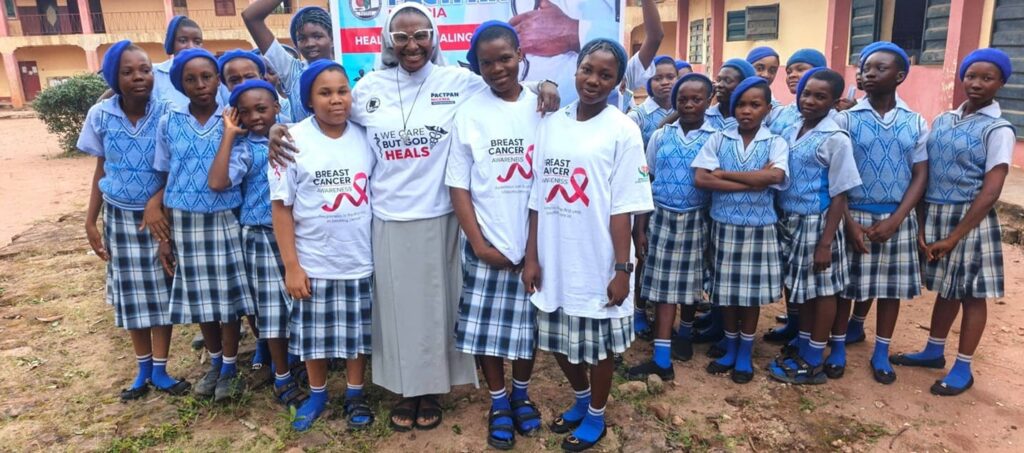
Imagine a young girl sitting in a classroom at Ekwereazu Girls Secondary School in Mbaise, Nigeria, dreaming of a bright future. She hopes to become a doctor, a teacher, a mother or a leader who transforms her community. But has anyone taught her the importance of understanding her body, caring for her health and seeking medical advice when she notices unusual changes?
Each October, communities across the globe observe Breast Cancer Awareness Month. The pink ribbon has emerged as a symbol of awareness, hope, solidarity, and support for individuals impacted by breast cancer. It serves as a reminder of women living with the disease, of survivors, and of families and communities united in their support. The significance of the ribbon is further enhanced when it encourages not only expressions of solidarity but also the pursuit of knowledge, the challenging of misconceptions, and the initiation of proactive measures.
Breast cancer develops when abnormal cells in breast tissue grow uncontrollably. Although it is more common in adult women, young girls also need age-appropriate health education to help them understand their bodies and know when to seek medical advice. Many breast changes during adolescence are part of normal development and are not cancerous. However, unusual or persistent changes should not be ignored because of shame, fear or misinformation. Every girl should feel comfortable speaking to a trusted adult and seeking advice from a qualified health professional.
The scale of the disease shows the urgent need for awareness and access to care. According to the International Agency for Research on Cancer (IARC), Nigeria recorded an estimated 44,196 new breast cancer cases and 21,309 deaths from the disease in 2024, making it the leading cause of cancer-related death in the country. In the WHO African Region, a 2022 assessment reported an estimated 146,130 new cases and 71,662 deaths, meaning roughly half of those diagnosed died from the disease.
These figures are made more urgent by late diagnosis: between 70% and 80% of breast cancer patients in Nigeria present at an advanced stage (Stage III or IV). Research from the National Institute for Cancer Research and Treatment also points to a high prevalence of aggressive subtypes, such as triple-negative breast cancer, in younger African women. Awareness must therefore go hand in hand with timely diagnosis, appropriate treatment and support for those affected.
Unfortunately, many women face not only the disease itself but also stigma, financial hardship and limited access to health services. Some remain silent because they fear other people’s reactions, while others believe that a breast cancer diagnosis is a death sentence. These misconceptions must be challenged. Women affected by breast cancer deserve respect, compassionate care, encouragement and the support of their families and communities.
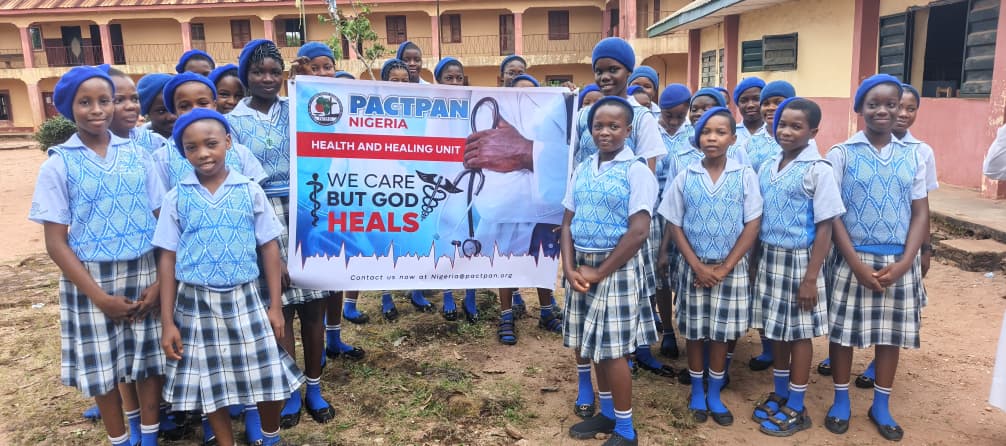
Protecting the future of the girl-child must therefore be everyone’s responsibility. Parents need to create safe environments where girls can ask questions about their health without embarrassment or fear. Schools should promote age-appropriate health education and guide students towards reliable information. Health professionals must provide accurate advice and appropriate care. Churches, community leaders and civil society organisations also have an important role in challenging stigma and addressing the misconceptions that prevent people from seeking medical attention. We must not wait until a woman is already ill before showing her care and support.
It was with this responsibility in mind that, on 28 October 2026, we brought breast cancer awareness to Ekwereazu Girls Secondary School in Mbaise. The outreach was organised by the Health and Healing Unit of the Pan-African Catholic Theology and Pastoral Network (PACTPAN) Nigeria, in collaboration with Amaraya Foundation and Akumi4Christ Global Care.
We reached 220 students and 25 teachers through educational talks and a practical demonstration of breast self-examination. During the session, some students expressed fear of dying from breast cancer. We reassured them of the importance of early detection and timely medical care. Their concerns reminded us how important it is to give young people reliable health information and a safe space to ask questions and voice their fears.
One student expressed her determination to continue raising awareness. “Sister, I will keep fighting and telling people about breast cancer…” she said. Her words encouraged us to keep empowering young people to share knowledge and help others understand the importance of breast health.
Our message also addressed body shaming. A community that upholds the worth of every person cannot tolerate mockery of the body, so we encouraged participants to speak out and say no to it. No one should be made to feel ashamed of their body or treated unfairly because of illness or physical changes. We must build communities where compassion replaces judgement and no one feels isolated.
As part of the initiative, the Health and Healing Unit of PACTPAN Nigeria established a health club for students interested in careers in Medicine and Surgery, Nursing and Medical Laboratory Science. Through it, we hope to nurture their interest in health-related professions and encourage greater awareness of health issues within the school community.
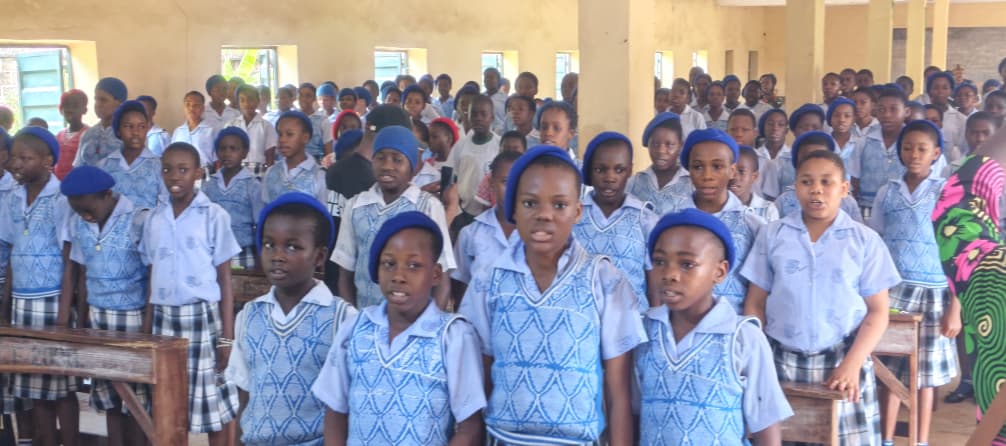
Our commitment must not end with a single outreach or with the close of Breast Cancer Awareness Month. As I often emphasise in this campaign, “We must keep saving the future of our girls, we will keep wearing pink for survivors…” Wearing pink should be more than a seasonal gesture; it should remind us of our continuing responsibility to educate girls, support survivors and challenge the stigma surrounding breast cancer.
As Breast Cancer Awareness Month draws to a close, let us see the pink ribbon as more than a symbol we wear. Let it become a pledge to educate, protect, support and act. Together, through PACTPAN Nigeria, Amaraya Foundation and Akumi4Christ Global Care, we invite our school community, the wider Mbaise community, and people across Africa and beyond to join us in building a future where breast cancer is met with knowledge, understanding and compassion.
SAVE HER FUTURE: Educate the girl, promote breast cancer awareness, empower her voice and build a community that cares.


Join the conversation