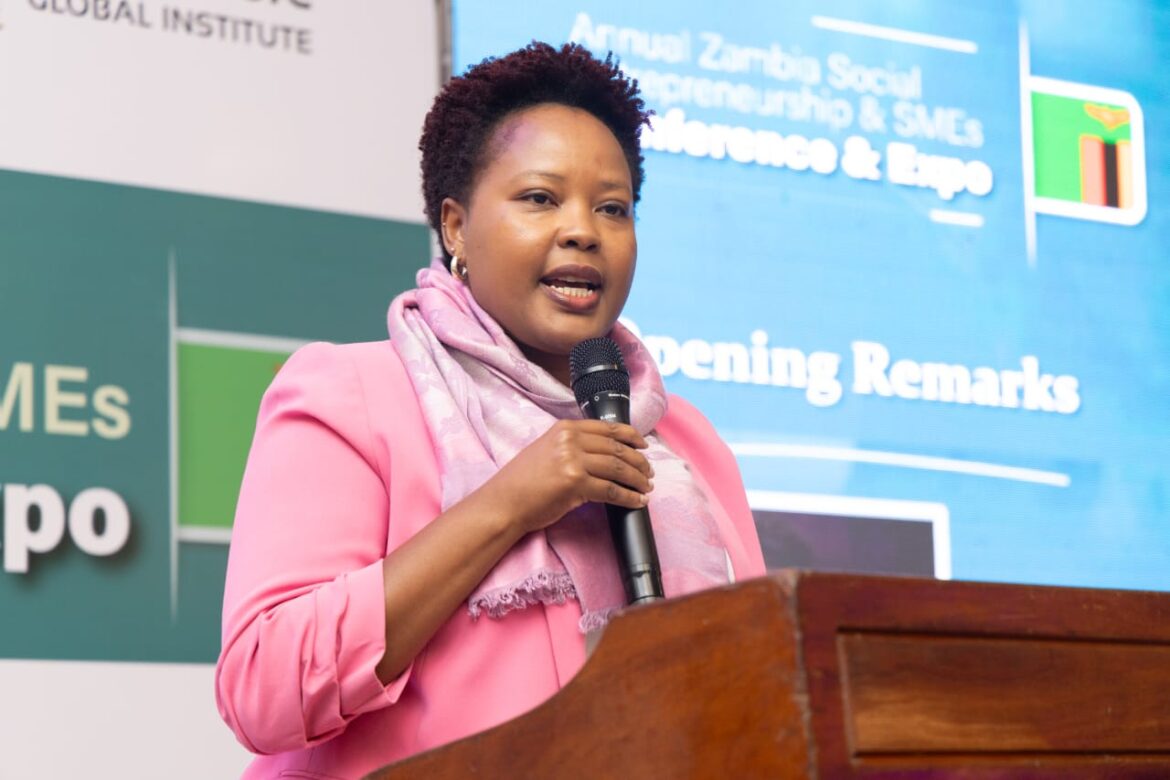
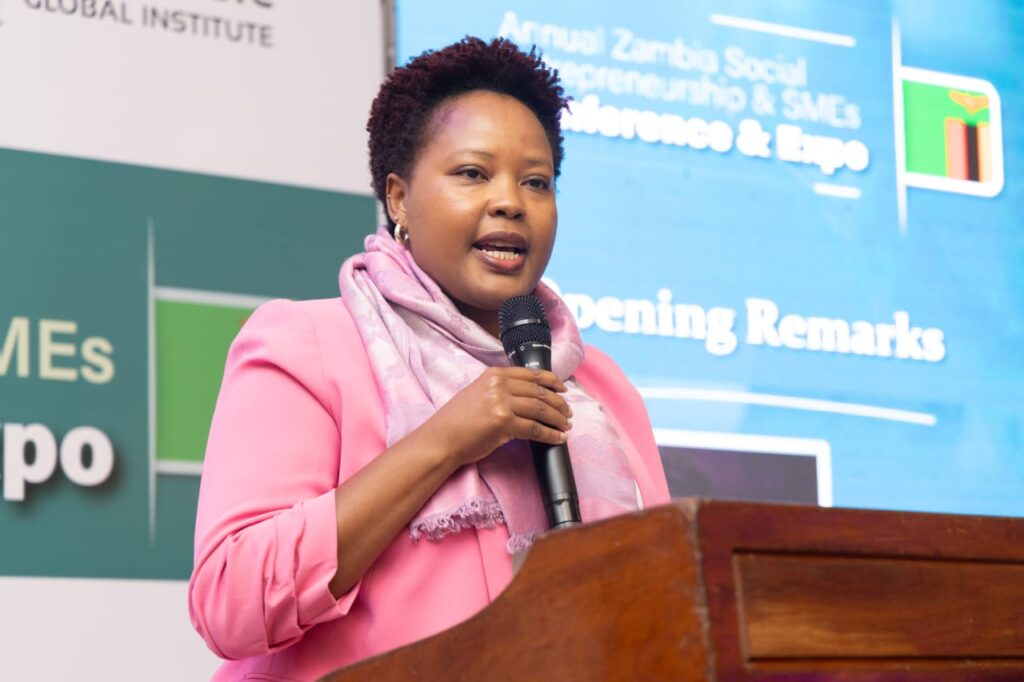
Dr. Angela Ndunge has called on consecrated women to forge meaningful partnerships and strengthen market-ready enterprises that support their social ministries.
By Helen Kasaka, LSMI and Alex Okoth
LUSAKA, Zambia — Catholic Sisters have been encouraged to engage purposefully with financial institutions, investors, business leaders, and other stakeholders to strengthen enterprises that support their health, education, and social ministries.
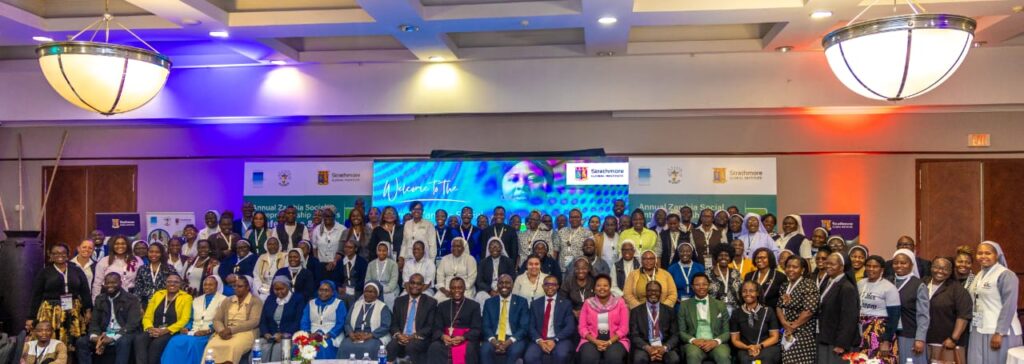
Dr. Angela Ndunge, Principal Investigator of the Sisters Blended Value Project (SBVP) and a senior academic at Strathmore University Business School, made the call during the Annual Zambia Social Entrepreneurship and SMEs Conference and Expo, held at the Taj Pamodzi Hotel in Lusaka on September 10, 2026.
The conference, convened under the theme “Sustaining Impact in Social Enterprises and SMEs: Building Resilience in Finance and Market Readiness,” brought together Catholic Sisters and representatives from the financial, academic, business, and other sectors.
In her address to Catholic Sisters, civic partners, and corporate leaders, Dr. Ndunge urged consecrated women to move beyond “business as usual” and develop enterprises that demonstrate financial resilience, innovation, and readiness to adapt to evolving markets.
“To operate effectively within today’s rapidly changing economic landscape necessitates a departure from conventional practices to achieve lasting impact. Our enterprises must cultivate robust financial resilience, embrace innovation, and attain genuine market readiness,” she said.
Dr. Ndunge said long-term sustainability requires intentional collaboration across sectors, encouraging Catholic Sisters to develop meaningful partnerships with individuals and institutions that can contribute to the growth of their enterprises.
“Achieving long-term sustainability cannot occur in isolation. A prosperous enterprise ecosystem relies on active and deliberate collaboration among stakeholders,” she stated.
She also urged participants to explore ways of strengthening cross-sector partnerships that could facilitate access to affordable finance and open new market opportunities for social enterprises.
Dr. Ndunge challenged the sisters to view the conference as a practical opportunity for engagement rather than merely as a gathering.
“My challenge to each of us is straightforward: engage actively and intentionally,” she remarked, inviting participants to establish at least one meaningful connection that could lead to further collaboration after the conference.
SBVP Outcomes
The appeal comes amid ongoing efforts by the sisters Blended Value Project to strengthen the capacity of Catholic Sisters to manage enterprises connected to their ministries.
According to Dr. Chilumba Bwalya, the project has trained more than 1,053 Sisters and awarded seed grants to 61 congregations, representing approximately 90 percent of applicants. The initiative has also reached 304 congregations and generated more than 50 research outputs, according to figures presented during the conference.
These figures reflect a growing emphasis on strengthening religious congregations’ capacity to manage and develop enterprises while sustaining their social missions.
The Sisters Blended Value Project is an ACWECA initiative, implemented in partnership with Strathmore University Business School, with operations across Kenya, Uganda, Tanzania, Malawi, and Zambia.
Dr. Bwalya highlighted the range of stakeholders participating in the Lusaka event, including Catholic Sisters and representatives from financial institutions, banks, investors, and other sectors.
Exhibitions and Panel Discussions
The conference provided a platform for these groups to engage directly and build relationships intended to extend beyond the event.
Participants showcased their enterprises during an exhibition, giving the sisters an opportunity to present their work and engage with others about their products and services.
Panel discussions formed another important part of the programme, enabling participants to examine issues relevant to social enterprises and SMEs, including finance, market readiness, and growth opportunities.
For Dr. Ndunge, the primary challenge remains translating such engagement into practical outcomes. Her call for intentional collaboration frames enterprise development within the broader mission of Catholic Sisters, urging them to strengthen the financial and operational foundations of their work as they serve their communities.
The conference concluded with a focus not only on the ideas exchanged in Lusaka, but also on the relationships, knowledge, and opportunities that participants could carry forward into their respective congregations and enterprises.