
What Spain’s World Cup Victory Reveals about the Catholic Factor in Football Success


The World Cup final between Spain and Argentina may not be remembered as the best expression of the beautiful game’s artistry. While Spain was trying to win, Argentina was surprisingly trying not to lose, perhaps playing for a penalty shootout. In the end, however, the Spanish national team, La Roja, prevailed through Ferran Torres’s extra-time goal. Spain won 1–0 and became world champion for the second time. For the first time in history, the same country now holds both the men’s and women’s World Cup titles.
Spain’s triumph was not an accident. What we saw in Spain’s dismantling of France in the semi-final, and in its ability to make a great Argentine team look so ordinary in the final, was the result of a long, deliberate and strategic process. Spain’s football culture adheres to the artistry of possession football popularized by the legendary Dutch coach and former FC Barcelona manager Johan Cruyff through Total Football and positional play—or juego de posición.
Cruyff adapted these concepts from his mentor, Rinus Michels, who developed the foundations upon which what later became known as tiki-taka was built. In this possession-based football, every player—including the goalkeeper—moves, receives and participates. The system requires each player to understand space, movement, timing, and the positions of teammates and opponents. Coaches such as Pep Guardiola and Luis Enrique have since reinvented and adapted it to devastating effect.
The success of clubs such as Manchester City and Paris Saint-Germain has roots in this style of footballing artistry, which, to be fair, requires artists to implement it. Spain invested heavily in developing such artists as Lamine Yamal, Andrés Iniesta, Xavi Hernández, Dani Olmo, Rodri and Pedri, to name but a few. Many honed their skills within Spain’s football system and academies, the most famous of which is Barcelona’s La Masia. Spain’s adoption of a method developed by two Dutch football legends, and its subsequent transformation into the bedrock of Spain’s dominance, shows the osmotic transmission of ideas across cultures. Theologically understood, human creativity itself can be a gift mediated through one culture, received by another and refined for new circumstances.
We must give credit to Spain’s deliberate and strategic approach, which has now seen the country win two World Cups—its first in 2010 and its second in 2026. Spain’s return to the summit was not seamless. Disappointing campaigns in 2014, 2018 and 2022 exposed weaknesses, but Spain’s football institutions learned valuable lessons that were implemented under coach Luis de la Fuente. The 2026 triumph came after a remarkable unbeaten run and a defensive performance in which the team conceded only one goal in eight matches. The eventual succession from the class of 2010 to another incredibly talented, coherent, and all-conquering squad reflects the extraordinary capacity of the Royal Spanish Football Federation (RFEF) to think and act collaboratively and consistently. It has made the right choices about who coaches the national team, how young players are developed, and how the team gels as a collective. Spain has built a men’s and women’s football culture, an identity, and a collective belief that its players can overcome any team by trusting the system they have inherited and refined. Spain did not simply assemble a collection of stars. It formed a community of players capable of interpreting the game together.
Spain did not simply assemble a collection of stars. It formed a community of players capable of interpreting the game together.
As a soccer coach and referee, I know that football philosophies, skills, tactics and techniques do not arise in a vacuum. Nigeria, my country, has an extraordinary pool of talent, but it has struggled to sustain a coherent football philosophy, stable administration and a long-term player-development system. These weaknesses have contributed to Nigeria missing two successive World Cups. Football philosophies are sustained by cultures that shape how people understand discipline, community, human agency, hope, cooperation and collective efficacy. Beyond tactics, academies, coaching and preparation lies another often-overlooked factor, even in an increasingly secular country such as Spain. I call it the Catholic factor in success in sports or in any other aspect of life.
I wish to be clear: by the Catholic factor, I do not claim that God supports one football team against another, nor that Catholic countries will always defeat non-Catholic countries in competitive sports. The Catholic factor is not a magical explanation for sporting success or a totalizing explanatory theory for success in football. It is, rather, a way of understanding how a Catholic worldview can shape the human imagination and cultivate dispositions that support excellence. At the heart of this worldview is the principle of mediation: God works through created persons and realities, engaging human freedom while opening possibilities beyond what human agency can accomplish alone. This principle underlies Catholicism’s sacramental economy and its use of sacramentals.
The Catholic factor is not a magical explanation for sporting success. It is a way of understanding how a Catholic worldview can shape the human imagination.
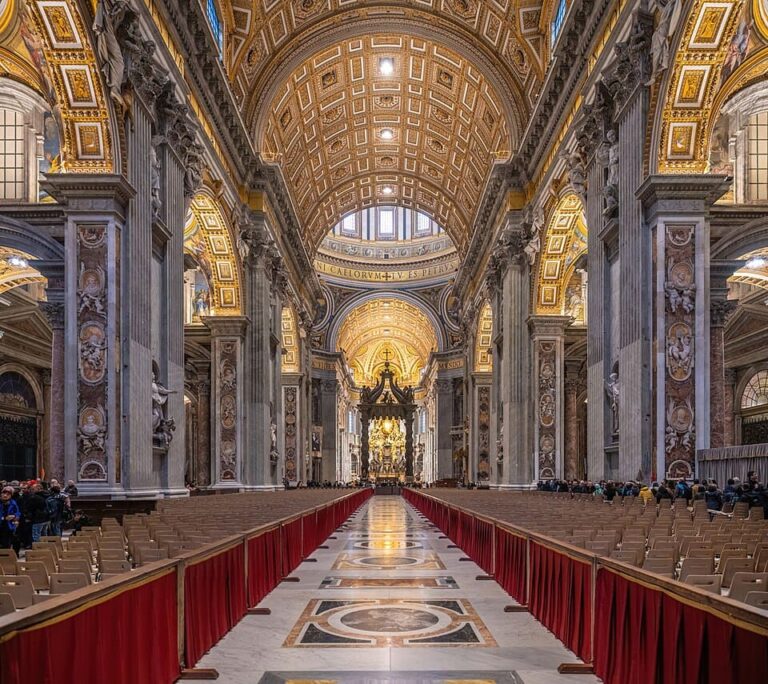
Catholicism holds, for instance, that in baptism ordinary water becomes the sacramental sign through which the Holy Spirit communicates new life. Bread and wine, consecrated in the Eucharist, become the means through which Christ gives himself to the Church. Oil, touch, words, human gestures, communities and material realities can become bearers of divine grace. Tertullian captured this sacramental conviction when he described the flesh as the hinge of salvation (De Resurrectione Carnis, 8). The majesty of God’s action in history is reflected precisely in God’s ability to use ordinary things to produce extraordinary effects.
This principle of mediation gives Catholics—even those who may not fully name this principle or articulate it as I have done here—a disposition toward the necessary consequence of this principle: the perfectibility of the human person. As St. Thomas Aquinas taught, grace does not nature but heals, elevates, and perfects it (Summa Theologiae, I, q. 1, a. 8, ad 2). Human beings, families, institutions and even nations are therefore never entirely imprisoned by their present condition. God continually invites creation beyond itself. Human communities are not fossilized in time. Communities of faith that believe God acts in their lives beyond what they can fully articulate or bring about by themselves can transcend their limitations and move beyond the restrictions imposed by failure, history and temporality. This vision heightens rather than diminishes the place of human freedom within divine providence in a contingent world.
The principle of mediation is also reflected in the Church’s understanding of the Word of God. Pope St. Gregory the Great taught that Sacred Scripture grows with the one who reads it (see Benedict XVI, Verbum Domini, no. 30). The reader grows in the Word, and the Word grows in the reader. The Word remains the same, but its meaning unfolds more deeply as the reader is transformed. In sports, as in every other competitive cultural reality, people face opposition, uncertainty, failure, injury and threats to their confidence. These require self-belief, hope, perseverance and an openness born from faith in the possibility that God can perfect what is human and fallible.
The logic of Catholicism, expressed in the principle of mediation, opens the believer to the possibility of change and triumph rooted in the perfectibility of human beings, who are called by God into a life that stretches beyond the merely human horizon. This principle moves believers to hold firmly to the conviction that God always offers us more than we can offer ourselves. Christ himself promises a hundredfold—even amid persecutions—to those who surrender themselves to God’s call (Mark 10:29–30).
What, then, does the principle of mediation—and the movement it inspires toward the boundlessness of what God offers—have to do with football? How does it illuminate the World Cup final between two historically Catholic nations, Argentina and Spain? What I saw were two teams shaped, in different ways, by a Catholic cultural imagination. Their different fortunes, however, were finally determined by technique, tactics and footballing artistry forged through long preparation, as Spain demonstrated.
The Catholic character of the final was not merely symbolic. Players and coaches on both sides openly expressed their faith. Reports from the tournament described how Argentina’s kit manager, Mario Di Stéfano, set up a small Catholic altar in the dressing room before every match, featuring the Our Lady of Lujan, patroness of Argentina, alongside images of Mary, Undoer of Knots, and St. Expedite. Before the tournament, sports journalist Walter Queijeiro also took a pair of Lionel Messi’s boots to the Basilica of Our Lady of Luján, where the shrine’s rector blessed them. These gestures reflected Argentina’s Catholic devotional culture; they did not guarantee a result. On the other hand, Spain’s coach, Luis de la Fuente, has spoken frequently about his Catholic faith, explaining that the Sign of the Cross before matches “is not superstition; it is faith.” But he also insists that he does not pray for victory over an opponent. Rather, he prays in gratitude, asking for health, strength and perseverance, because asking God to make one team defeat another would be unfair.
This captures an important Catholic insight: grace builds on nature. Faith does not replace preparation, tactical discipline or hard work. Prayer cannot compensate for poor organization or inadequate training. Rather, grace perfects human effort by placing it within a larger horizon of meaning. Spain demonstrated this principle throughout the final. The team dominated possession and registered the first 20 attempts of the match before Argentina managed its first shot in extra time. Only the brilliance of goalkeeper Emiliano Martínez kept Argentina in the contest.
Faith does not replace preparation, tactical discipline or hard work. Grace perfects human effort by placing it within a larger horizon of meaning.
Both teams reflected elements of this Catholic factor, but Spain played with greater freedom and collective purpose. In the final, Argentina appeared more dependent on moments of Lionel Messi’s individual brilliance, whereas Spain drew more consistently on the strength of the whole team. This in no way diminishes Argentina’s remarkable football tradition. Yet the 2026 final also reinforced a striking historical pattern. Brazil has won the men’s World Cup five times, Italy four, Argentina three, Uruguay two, France two and Spain two. Together, these historically Catholic nations account for 18 of the 23 World Cup titles—more than three-quarters of all tournaments played since 1930.
This arithmetic does not prove that Catholicism causes football success. It suggests, rather, that Catholic cultures often cultivate qualities football rewards: strong communal identity, embodied ritual, respect for authority and tradition, disciplined cooperation, and an understanding that individuals flourish within a larger, united community. In other words, Catholic sacramental and communitarian traditions offer one vocabulary through which such dispositions may be understood and cultivated.
The principle of mediation is therefore not magical divine intervention but a partnership between grace and human effort. Prayer, devotion, the Sign of the Cross, and confidence in God’s presence do not score goals. They shape the moral and spiritual imagination with which athletes approach struggle, sacrifice, and success. Ferran Torres, who scored the winning goal, reflected this perspective by thanking God for the strength to persevere through criticism while insisting that the victory belonged not to himself alone but to the Spanish people. These beliefs did not replace his training, positioning, or technical ability. They provided the horizon within which he understood perseverance and triumph.
Prayer, devotion and confidence in God’s presence do not score goals. They shape the moral and spiritual imagination with which athletes approach struggle, sacrifice and success.
The deeper question extends far beyond football. What might this Catholic imagination achieve in education, governance, economics, family life, evangelization, African development and the renewal of our institutions? Catholicism teaches that the ordinary can mediate the extraordinary, that grace transforms rather than replaces human effort, and that individual gifts flourish within strong communities. When these principles are cultivated and translated into disciplined practice, they offer a powerful framework for interpreting and cultivating disciplined human agency, collective efficacy, and human flourishing.


Kinikonda
Bravo Fr. Stan always on top of events. I would never have linked football to Catholic faith. He has connected and blended the two so well.