
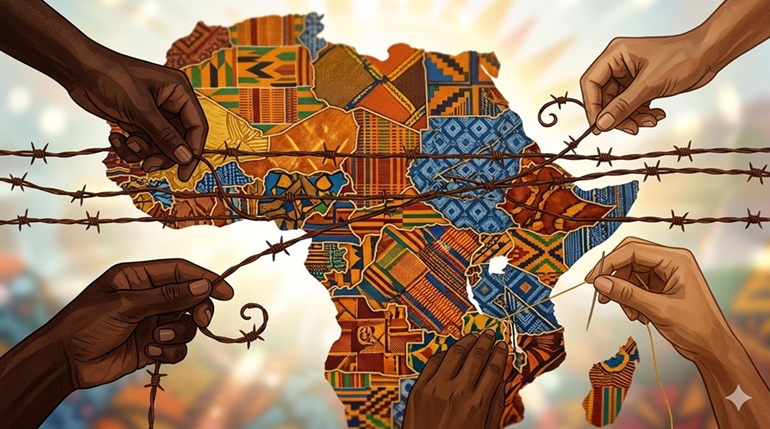
The periodic flares of xenophobia in South Africa—most notably the 2008 riots and subsequent attacks on Somali, Zimbabwean, and Nigerian nationals—are often viewed as isolated incidents of local frustration. However, these eruptions reveal a deeper fracture within the African continent. To understand the violence, we must examine the history of intra-African divisions, the artificial borders left by colonialism, and the urgent need to reclaim an African ethic of solidarity, dignity, and belonging.
A Recurring Pattern of Intra-African Expulsion
South Africa is not unique in its hostility toward “foreign” Africans. Post-independence Africa has repeatedly seen nations turn against their neighbors during times of economic or political stress. In 1969, Ghana’s Aliens Compliance Order led to the expulsion of hundreds of thousands of Nigerians, accused of dominating retail trade. Nigeria, facing its own economic crisis, retaliated dramatically in 1983, expelling over two million migrants, mostly Ghanaians — an event that popularized the bitter phrase “Ghana Must Go,” referring to the checkered bags carried by those fleeing the country. Equatorial Guinea and Gabon have similarly deported West Africans and Cameroonians, citing job protection and security.
Even within countries, divisions persist, such as the anglophone-francophone tensions in Cameroon. The pattern is clear: when internal pressures mount, fellow Africans across the border (or across ethnic lines) become the first scapegoats.
“The ‘foreigner’ in Africa today is largely a colonial hangover that the continent is still struggling to sleep off.”
A Division with Deep Colonial Roots
This form of institutionalized hostility was largely intensified and formalized through colonial rule and is rooted primarily in the 1884 Berlin Conference, where European powers carved up the continent with arbitrary borders that split ethnic communities and lumped rivals together. Colonial administrations introduced rigid concepts of “indigeneity” and citizenship tied to specific territories, creating the modern legal category of the “foreigner.”
Colonialism replaced the African philosophy of fluid movement and shared identity with a rigid, competitive, market-based identity in which neighbours are viewed as “competitors” for scarce resources. In Africa, the stranger was often welcomed as a potential source of skills and trade, and integration followed respect for local customs and contributions to the community. Frontiers were ecological and social rather than hard political lines. “Foreignness” was temporary, not a permanent barrier.
Newly independent states inherited the borders and the jurisprudence of exclusion. The attitude toward migrants shifted from pre-colonial hospitality, through colonial segregation, to post-colonial political scapegoating. The “foreigner” in Africa today is largely a colonial hangover that the continent is still struggling to sleep off.
Political Entrepreneurship and the Scapegoat Strategy
Contemporary politicians have further weaponized the colonial “foreigner” for short-term gain. When governments fail to deliver jobs, housing, or services, it is politically easier to blame visible outsiders than to admit systemic shortcomings. Rhetoric about ‘our people first,’ reclaiming cities, or militarized border operations often becomes political theatre designed to redirect public frustration.
This marks a troubling shift away from the Pan-African vision of leaders such as Kwame Nkrumah and Julius Nyerere toward narrow micronationalism. Such rhetoric ignores the deep interdependence of African economies. Attacking a Nigerian trader in Johannesburg or a Zimbabwean worker in Limpopo undermines the regional stability on which all nations depend.
“When internal pressures mount, fellow Africans become the first scapegoats.”
A Christian and Moral Response
Catholic Social Teaching offers a powerful framework for healing. Pope Leo XIII’s 1891 encyclical Rerum Novarum placed the dignity of the human person and the common good above narrow national interests. Later popes developed the principle of the “Universal Destination of Goods” — that the earth’s resources are intended for all humanity, not just those within a specific border.
The Church affirms the right of nations to regulate borders but insists on a prior duty to welcome the stranger, especially those fleeing poverty or violence. Every person bears the “Imago Dei” — the image of God. Violence against a migrant is therefore an offence against the Creator.
Pope John Paul II described xenophobia, when embedded in laws and systems, as a “structure of sin.” He reminded Africans that baptismal identity transcends national passports and that solidarity is a commitment to the good of others. In an African context, this mirrors the philosophy of ‘Ubuntu’ — “I am because we are.”
Pope Benedict XVI warned that globalization without ethics turns neighbors into strangers and called on governments to protect the right of others to flourish. For South Africa, this means moving beyond “tolerance” to “integration.”
Pope Francis’ 2020 encyclical, Fratelli Tutti, directly confronts the “culture of walls” and criticizes the populist rhetoric that uses fear of the “other” to gain political power.
“Africa cannot reclaim its soul while Africans continue to fear and reject one another.”
The Way Forward: Spiritual Reparation and Practical Change
Overcoming xenophobia demands both policy reform and a conversion of heart. It also demands more than border control or political speeches. Governments must confront the structural realities of poverty, unemployment, corruption, and exclusion that fuel resentment.
African leaders must also reject colonial definitions of belonging, recover a more authentic Pan-Africanism, shift political discourse from competition to complementarity, and ensure regional accountability by speaking out against xenophobia.
Churches, schools, and civic institutions have a responsibility to form consciences capable of seeing migrants not as threats to fear, but as neighbours to welcome.

1 comment
Wow beautiful congratulations to you my dear Sr Jackie