
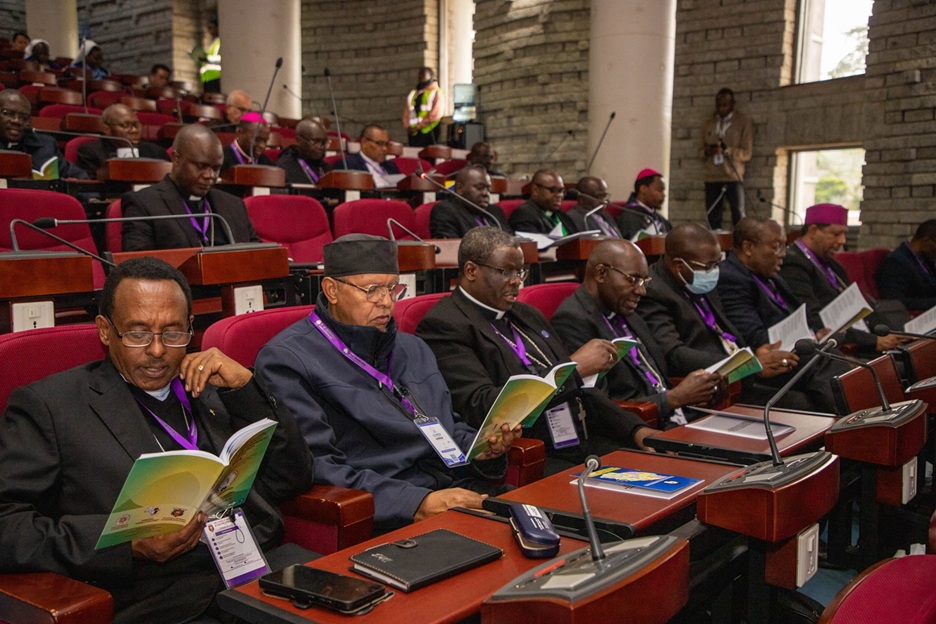
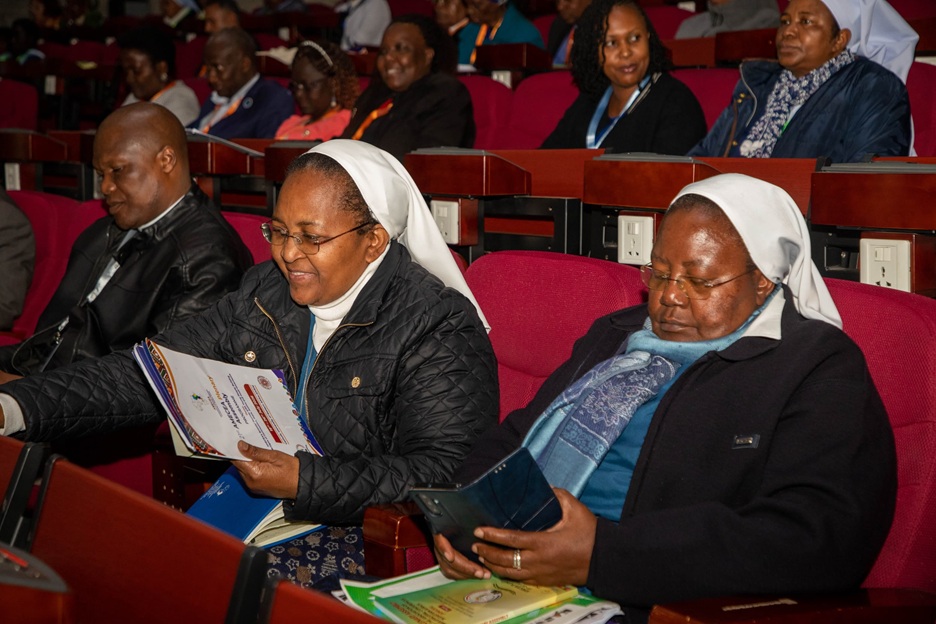
NAIROBI, Kenya – Prayer, song, traditional African rhythms, and the celebration of the Eucharist marked the opening of the 21st Plenary Assembly of the Association of Member Episcopal Conferences in Eastern Africa (AMECEA), as bishops, clergy, religious, lay faithful, and young people from across Kenya and the AMECEA region gathered at the Catholic University of Eastern Africa (CUEA) on Sunday, July 19, 2026.
The Assembly, which runs through July 26, is being held under the theme “AMECEA’s synodal journey with young people: Building bridges of communion, hope, justice and good governance” and brings together bishops from AMECEA’s member episcopal conferences and affiliate members to reflect on the Church’s mission in Eastern Africa, with particular attention to accompanying young people in the spirit of synodality.
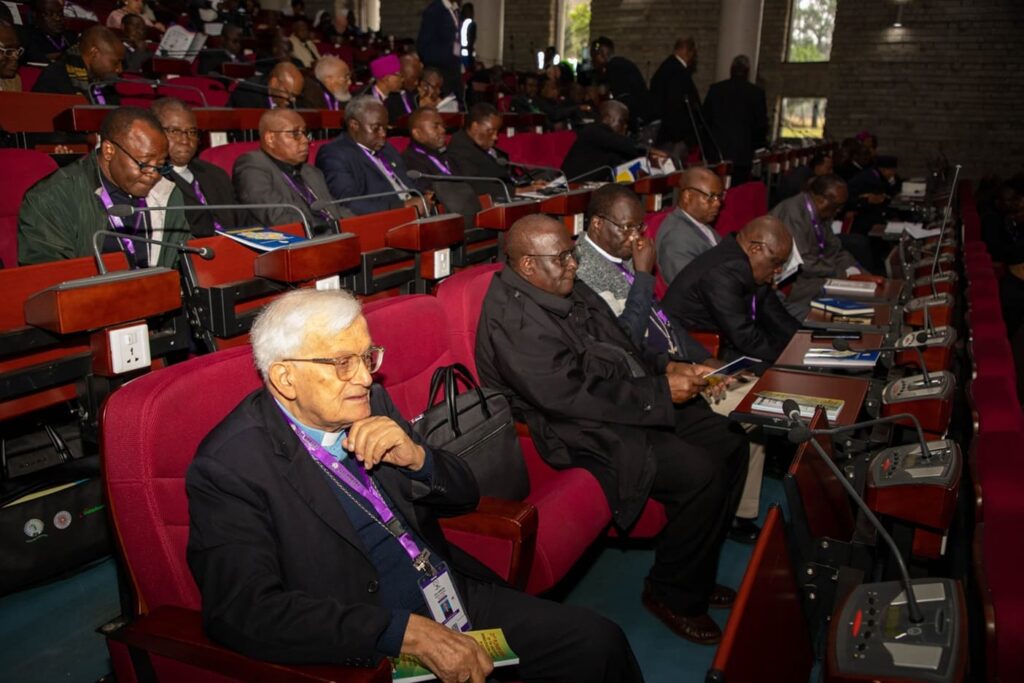
The opening Eucharist, presided over by Cardinal Michael Czerny, Prefect of the Dicastery for Promoting Integral Human Development and the Holy Father’s representative at the Assembly, brought together approximately 140 bishops from across AMECEA’s member conferences, together with representatives from the affiliate regions of Djibouti and Somalia, a visible expression of the communion that continues to define the Church in the region.
A Kingdom that begins like a seed
Cardinal Czerny drew on the Gospel parables of the wheat and the weeds, the mustard seed, and the yeast to invite the faithful to recognize that the Kingdom of God is neither distant nor abstract but already present among those willing to participate in God’s work.
He also drew on Pope Leo XIV’s first encyclical, Magnifica Humanitas, to remind the congregation that Christians are called not merely to observe the coming of God’s Kingdom but to become “servants of the coming kingdom.”
The parable of the mustard seed, he said, calls Christians to embrace a hope that refuses to be overwhelmed by suffering, conflict, or uncertainty.
“Our Christian perspective is not limited to denouncing evil,” he said, citing the Holy Father’s words. “We view history in the light of the crucified and risen Lord… We believe in the power of the kingdom which grows from the tiny size of a mustard seed.”
Against what Pope Leo describes as “false realism”—an attitude of resignation and passivity—the Cardinal urged participants to recognize the new paths that God continually opens, even in the most difficult circumstances.
He then turned to the young people gathered for the celebration and repeated an appeal made by Pope Francis in a 2013 homily.
“Do not let yourselves be robbed of hope.”
Cardinal Czerny described the Assembly itself as “a seed brimming with hope and new life” and encouragedparticipants to become builders of hope through both prayer and action.
Do not let yourselves be robbed of hope.”
Building bridges with patience and wisdom
The parable of the wheat and the weeds led the Cardinal to highlight the patience of the landowner who allows both to grow until harvest rather than risking the destruction of the good through hasty judgment.
He said such patience should characterize Christians in their relationships within the Church and society.
Cardinal Czerny then quoted Pope Benedict XVI:
“The world is redeemed by the patience of God. It is destroyed by the impatience of man.”
He explained that building bridges of communion, hope, justice, and good governance—central concerns of the Assembly—requires discernment, humility, and a willingness to resist quick and divisive judgments.
The world is redeemed by the patience of God. It is destroyed by the impatience of man.”
The final image of yeast, he continued, offers a model for Christian witness: quietly transforming society from within through the action of the Holy Spirit rather than through displays of power or self-promotion.
“Living in the world,” he said, “we Christians are called to transform and transfigure it from within.”
The Cardinal concluded by invoking the Blessed Virgin Mary and praying that the Church become “weavers of hope,” sharing its gifts generously, especially with young people, so that Christ’s Kingdom may continue to grow throughout the region.
A joyful welcome from the host Church
Archbishop Maurice Muhatia Makumba of Kisumu, chairman of the Kenya Conference of Catholic Bishops (KCCB), welcomed delegates and expressed gratitude for the opportunity to host the Assembly, describing it as a blessing for both the Church in Kenya and the wider AMECEA family.
Archbishop Muhatia then addressed the young people and reaffirmed the Church’s confidence in them.
“AMECEA loves you,” he said. “AMECEA recognizes your potential. AMECEA recognizes your strength. AMECEA recognizes your love for the Church.”
AMECEA loves you. AMECEA recognizes your potential. AMECEA recognizes your strength.”
He encouraged them to participate fully in the life and mission of the Church and in the development of their respective countries, calling on them to help build societies rooted in love, justice, unity, faith, and enduring Christian values.
Archbishop Philip Anyolo of Nairobi also welcomed participants to the Kenyan capital, assuring delegates of the local Church’s hospitality and expressing the hope that the Assembly would deepen faith while reflecting the warmth and vibrancy of the Church in Kenya.
Young people at the heart of AMECEA’s pastoral vision
AMECEA Chairman Bishop Charles Joseph Sampa Kasonde of the Diocese of Solwezi described the Assembly as a continuation of the region’s 65-year journey of faith while looking confidently toward the future.
Bishop Kasonde thanked Cardinal Czerny for representing Pope Leo XIV and said the Cardinal’s presence had reminded young people that they matter to the universal Church.
He then turned to the Assembly’s theme and explained that the bishops had chosen to make young people their pastoral priority for the next four years.
He said the decision is intended to strengthen young people’s sense of belonging within the Catholic Church, respond to Africa’s youthful population, and continue AMECEA’s longstanding commitment to youth ministry, now enriched by the vision of synodality.
“The Synod on Synodality has taught us that the Church discerns God’s will by listening,” he said, adding that journeying with young people means accompanying them rather than merely speaking about them.
The Church discerns God’s will by listening.”
He concluded by entrusting the Assembly and the region to the intercession of Mary, Queen of Peace, praying especially for countries affected by conflict, displacement, and violence.
The Holy Father’s encouragement
The opening celebration also included a message from Pope Leo XIV, delivered by Monsignor Luciano Labanca, Chargé d’Affaires of the Apostolic Nunciature in Kenya.
In the message, conveyed through Cardinal Pietro Parolin, the Holy Father congratulated the bishops for recognizingyoung people “not only as the future of the Church, but as an essential part of her present.”
Pope Leo acknowledged the many challenges facing the region, including poverty, conflict, and uncertainty, and encouraged renewed confidence in Christ, urging the Church to continue building bridges of communion through dialogue, formation, and integrity in leadership.
The Holy Father entrusted the Assembly to the maternal protection of Mary, Mother of the Church, and imparted his Apostolic Blessing as a pledge of peace and hope for all participants.
As deliberations continue through July 26, the opening Eucharist has given the Assembly a clear spiritual and pastoral direction: to accompany young people, patiently nurture communion, and become a source of hope and transformation in the Church and society.
