
“And With Your Spirit”: Liturgical Translation, Ecclesial Reception, and the African Question
In October 2011, in a small parish in Kenya, a group of priests gathered for what was expected to be a routine preparation meeting on the new English translation of the Roman Missal. The diocesan liturgy coordinator had invited priests, catechists, and pastoral leaders involved in liturgical formation to reflect on the changes before the implementation of the revised texts.
We arrived from the city carrying printed booklets, explanatory notes, and official documents from Rome. The atmosphere was cordial and expectant. Most assumed that the meeting would simply clarify several textual revisions and provide pastoral guidance on how to introduce the changes to the faithful.
However, as the discussion unfolded, attention quickly focused on one change that would become the most recognizable sign of the new translation: the replacement of the familiar response, “And also with you,” with the more literal and theologically precise translation, “And with your spirit.”
Other revisions were also discussed, including the reaffirmation of prescribed expressions such as “The Word of the Lord,” in place of alternative formulations that had become familiar in some local communities. The explanation offered was that these changes were intended to bring the English translation into closer fidelity with the Latin original and to recover the theological richness contained within the Church’s liturgical language.
At first, there was silence.
Then came resistance.
One elderly priest, who had served the same parish for more than thirty years, leaned back and shook his head. “We have prayed ‘And also with you’ since our people learned English,” he said slowly. “Now you want to change the faith of the people with words? Is this Vatican Council III?”
His question, although expressed with some humor, revealed a serious pastoral concern. For many of the faithful, liturgical language is not merely a collection of words. It becomes part of memory, prayer, identity, and spiritual experience. The phrase “And also with you” had accompanied generations of Catholics in their celebration of the Eucharist. To change it appeared, to some, as though something familiar and sacred were being taken away.
Liturgical language is not merely a collection of words. It becomes part of memory, prayer, identity, and spiritual experience.”
Another younger priest, formed in Rome but serving in rural Africa, responded more cautiously. “This is not a change of faith,” he explained. “It is a correction of translation. The Latin has always said et cum spiritu tuo. We are recovering a formula preserved across the Roman liturgical tradition.”
Yet the room remained uncertain.
Some worried that the faithful would be confused. Others questioned whether ordinary worshippers would understand the meaning of “spirit.” Some asked whether Rome fully understood the pastoral realities of African communities, where faith is often transmitted through oral tradition, repetition, communal participation, and familiar expressions. One priest asked: “Will people not feel that they were praying wrongly for many years? Will they not think that the Church is correcting them rather than accompanying them?”
These concerns were not simply resistance to change. They reflected questions that African theologians and Church leaders have raised for decades: Who determines the language through which African Christians worship? How can fidelity to the Roman liturgical tradition coexist with the rhythms, symbols, and communal patterns through which African peoples encounter the sacred? When translation is directed principally from outside the worshipping community, does it communicate the faith more faithfully, or can it unintentionally distance people from the mystery being celebrated?
The issue, therefore, is not whether the Church in Africa should remain faithful to the Roman liturgy, but whether African local Churches are sufficiently involved in shaping the language through which that fidelity is expressed.
The issue is not whether the Church in Africa should remain faithful to the Roman liturgy, but whether African local Churches are sufficiently involved in shaping the language through which that fidelity is expressed.”
These questions reveal a deeper issue in liturgical renewal: the relationship between the universal character of the Roman liturgy and the concrete cultural realities of local Churches. Liturgical texts must faithfully preserve the theological tradition of the Church, but they must also be received by communities whose faith is lived within particular histories and cultures.
The coordinator listened patiently. He opened the introduction to the Roman Missal and explained that the purpose of the revision was not to change the faith of the people but to recover the theological depth of the Church’s inherited tradition. Liturgical translation, he explained, is not simply a linguistic exercise; it is an act of theological interpretation. The words prayed by the Church shape the faith of the Church.
The words prayed by the Church shape the faith of the Church.”
That evening, when Mass was celebrated, the new response was introduced. When the priest said, “The Lord be with you,” the assembly responded hesitantly: “And with your spirit.”
There was a brief silence.
Some voices were uncertain. Others responded confidently. A few lips still moved according to the old habit, quietly forming “and also with you,” before correcting themselves. Yet something significant had already begun. The community was learning to pray again.
The same liturgical dialogue was heard in cathedrals, village chapels, and basilicas throughout the world. Yet in that small African parish, it carried a renewed theological weight. It opened a path towards rediscovering the scriptural roots of the greeting, the witness of the early Church, and the Church’s understanding of ordained ministry.
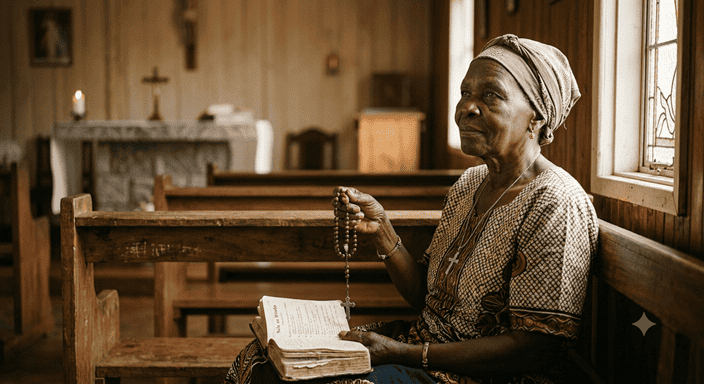
After Mass, an elderly woman approached one of the priests.
“Father,” she asked gently, “why did the Church change the words again?”
The priest paused before answering.
“Perhaps,” he said, “the Church did not simply change the words. Perhaps she helped us hear them again.”
Perhaps the Church did not simply change the words. Perhaps she helped us hear them again.”
In that simple question, the deeper theological journey of “And with your spirit” began to unfold.
The experience of that Kenyan parish raises important questions for the Church today, particularly for the local Churches of Africa. How should liturgical renewal take place? How can the Church preserve the richness of the universal tradition while respecting the pastoral experience of local communities? How can translation become not a source of confusion but a moment of deeper participation and understanding?
These questions formed part of a wider ecclesial debate concerning the relationship between the Holy See and episcopal conferences in the translation of liturgical texts. In 2017, Pope Francis issued the apostolic letter Magnum Principium, modifying Canon 838, particularly sections 2 and 3. The revised canon clarified that episcopal conferences are responsible for preparing, approving, and publishing vernacular translations within the limits established by the Church, after receiving confirmation from the Apostolic See. The change did not remove the Holy See from the process, but it gave clearer recognition to the pastoral and doctrinal responsibility of local bishops for the language in which their communities worship.
For the Church in Africa, this conversation remains particularly important. Africa has rich traditions of communication, ritual expression, communal participation, and symbolic language. The challenge is not simply to translate Latin liturgical texts into African languages, but to ensure that the mystery of Christ’s presence is celebrated faithfully and meaningfully within African cultures.
The experience of “And with your spirit” therefore invites a broader reflection: How can the Church introduce liturgical developments in a way that respects both tradition and reception? How can communities be prepared so that changes are experienced not as interruptions but as invitations into deeper participation in the mystery of Christ?
Part II will explore the biblical and theological foundations of this ancient dialogue and consider the ritual significance of greeting as an invocation of presence, relationship, and community, with particular attention to African traditions of encounter.
