
Beyond power and prestige: Christ the King, African traditional kingship and the politics of service
An African reflection on Christ’s kingship, indigenous political wisdom and the search for transformative leadership.

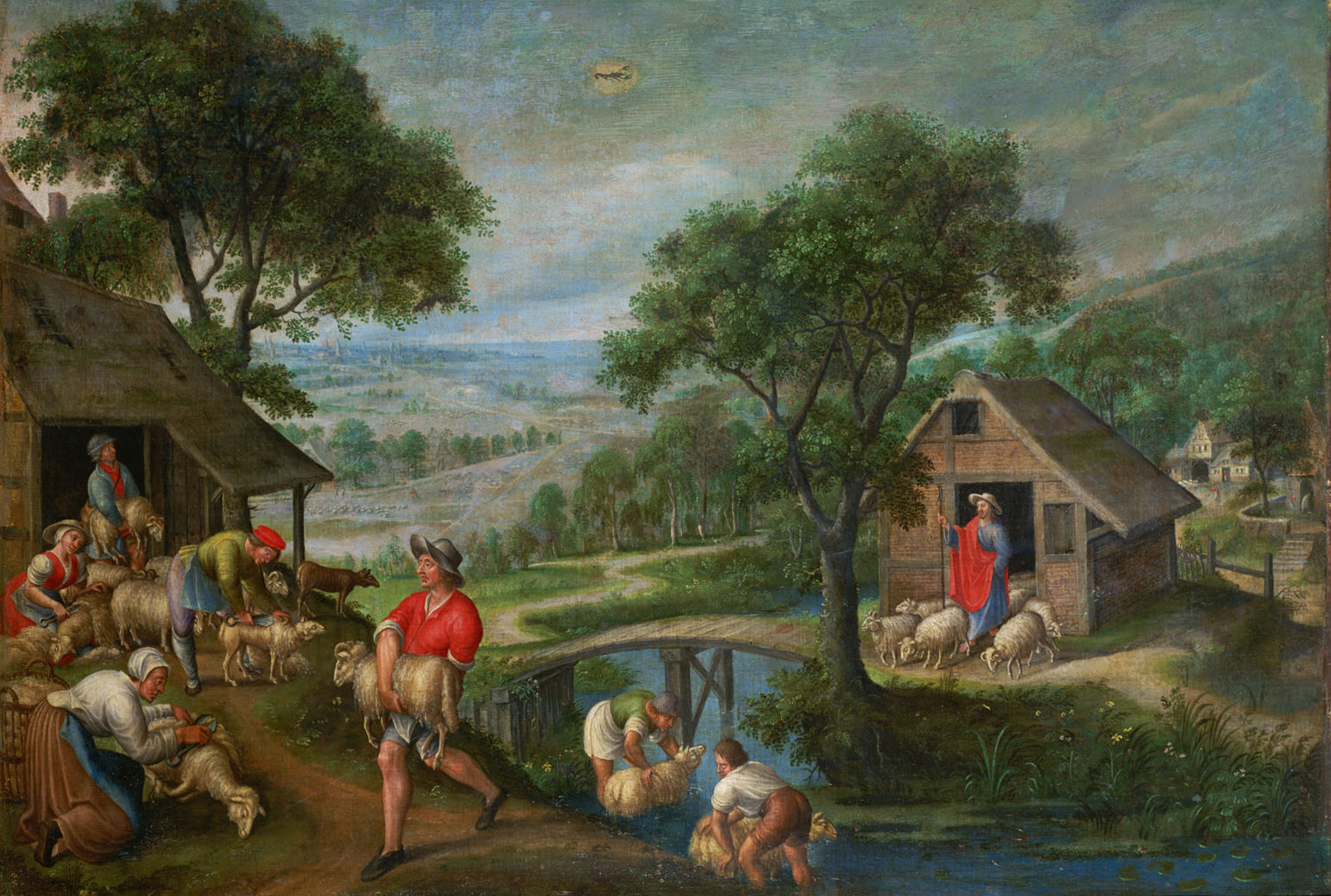
On Sunday, the Church celebrated the Solemnity of Christ the King, and I find myself returning to the image of Christ as the King of Peace. The liturgy celebrates his triumph and the hope of a kingdom founded on peace. Yet this joy sits uneasily alongside Africa’s realities: conflict, insecurity, poverty and leadership too often preoccupied with prestige rather than service.
The readings for the solemnity offer a compelling vision of leadership. In Ezekiel, God seeks the scattered sheep, rescues them, binds their wounds and strengthens the weak (Ezek. 34:11–17). Psalm 23 presents the Lord as shepherd, while in Matthew’s Gospel the King identifies himself with the hungry, the stranger, the sick and the imprisoned (Matt. 25:31–46). Christ’s kingship is not an exhibition of privilege; it is authority exercised through care, justice and accountability.
This message has particular urgency in Africa, where Christianity continues to grow in demographic significance. According to a new projection by the Pew Research Center, published on 18 November 2026, the Democratic Republic of the Congo is projected to overtake the United States and have the world’s largest Christian population by 2070, with approximately 299 million Christians, representing roughly one in ten Christians worldwide. More than half of the world’s Christians are also projected to live in sub-Saharan Africa by 2070. These are demographic projections, not guarantees of social transformation. (Pew Research Center, 2026)
From Kinshasa to Lagos, the credibility of Christian faith is tested by realities that sermons alone cannot resolve. In eastern Congo, armed violence has displaced communities and disrupted essential services. In Nigeria, corruption, insecurity and economic pressures continue to undermine the wellbeing of citizens. Across the Sahel and the Horn of Africa, conflict and displacement expose the distance between the dignity of the human person and the daily experience of ordinary people. The question is not simply how many people identify as Christians, but whether Christian values are shaping public life.
African Christians know the language of the messianic age: wisdom, understanding, counsel, might and the fear of the Lord. They know the vision of a world in which the wolf lives with the lamb and weapons are transformed into instruments of cultivation (Isa. 11:1–10; 2:4). Yet many continue to live under systems marked by authoritarianism, patronage and concentrated power in several countries, from Yaoundé and Lomé to Malabo. Each year, the solemnity offers a glimpse of a different order. Then the procession ends, the hymns fall silent, and familiar burdens return.
Why does the kingdom proclaimed as near seem so distant from people’s lives?
Some question Christianity’s capacity to transform society. Others point to the colonial legacy of the Church or argue that African Christians continue to hold traditional beliefs beneath a Christian exterior. These debates deserve serious engagement. Yet I am struck by another omission: in searching for an African future, theologians, thinkers, scholars and activists do not always give sufficient attention to the constructive political and ethical resources found in parts of Africa’s own history and traditions.
The claim that precolonial Africa was simply a Hobbesian landscape of chaos, warfare and tribal conflict is too sweeping. Some societies experienced warfare, slavery and injustice; others developed institutions and practices for mediation, social regulation and the pursuit of peace. Acknowledging these achievements is not an attempt to romanticise the past. It is a refusal to tell African history only through the language of disorder, as though Africans lacked the capacity to develop meaningful political institutions and systems of governance.
Joseph Conrad’s Heart of Darkness remains an important literary work in discussions of European imperialism, particularly because of its portrayal of the violence and moral corruption of colonial exploitation. However, its representation of Africans became the subject of Chinua Achebe’s influential essay, “An Image of Africa: Racism in Conrad’s Heart of Darkness” (1977). Achebe challenged the dehumanising racial imagery through which Africans were denied full humanity. Although Conrad’s novella is not a political treatise on African self-government, it became part of a wider colonial discourse that often portrayed Africa as a place without meaningful history or institutions. Such assumptions deserve to be challenged.
Nor is the answer an uncritical return to the past. Traditional institutions were not uniformly just or peaceful, and they must be examined in the light of human dignity, equality and the common good. Rejecting their abuses does not require us to discard every indigenous value. The task is one of discernment: identifying what can be renewed, corrected and brought into fruitful conversation with the Gospel.
The Nri Kingdom of present-day southeastern Nigeria offers an important point of reflection. In An Igbo Civilization: Nri Kingdom and Hegemony, the anthropologist M. Angulu Onwuejeogwu examines the distinctive character of Nri political and religious authority. Unlike many systems of kingship associated with military conquest and territorial domination, the influence of the Eze Nri, the priest-king, rested substantially on ritual and spiritual authority. Nri’s influence extended beyond its immediate community through ritual specialists who travelled among Igbo settlements, performed rites of purification, helped settle disputes and exercised authority through shared religious and social norms. Nri’s influence is therefore often understood as a form of ritual hegemony rather than a modern centralised state governed through military force.
Accounts of Nri traditions also describe restrictions and ritual prohibitions intended to protect sacred obligations, regulate conduct and preserve social order. Some historical interpretations associate Nri’s authority with the rejection of certain forms of violence and the protection of people vulnerable to enslavement. These claims require careful attention to their historical context and should not be understood as evidence that Nri was a conflict-free society or that its influence amounted to a universal abolition of war and slavery. What remains significant is the possibility that authority could be exercised through moral and spiritual influence, mediation and the regulation of communal life rather than through military domination alone.
Here, a conversation with Christ the King becomes possible. Nri was not a Christian kingdom, and its priest-kings were not equivalent to Christ. Yet aspects of its peace-oriented authority resonate with the biblical vision of leadership that protects life, restrains violence and seeks reconciliation. Isaiah’s vision of swords beaten into ploughshares (Isa. 2:4) gives theological expression to the aspiration that power should make peace possible rather than organise domination. This is not an equation between two traditions; it is an invitation to discern values that the Gospel can purify, challenge and deepen.
When I see African thinkers, scholars, theologians and activists searching for transformative solutions, I am struck by how easily these traces of indigenous political wisdom can be overlooked. We debate imported models and development prescriptions, yet we do not always ask what our own histories can contribute to the conversation. Africa needs accountable institutions, the rule of law and a moral imagination rooted in service, reconciliation and responsibility.
The Solemnity of Christ the King should be more than a celebration of heavenly triumph; it should also be an examination of earthly leadership. Christ measures greatness not by the number of subjects who obey, but by the lives protected and the vulnerable served. The Nri experience is no ready-made blueprint for modern democracy, but it reminds us that African political imagination included alternatives to rule by the sword. The challenge is to bring the best of that inheritance into critical dialogue with the Gospel and democratic values.
Africa does not need kings who merely wear crowns, nor presidents who treat public office as personal property. It needs leaders who understand authority as a trust. If Christ is truly our King, the hungry, the displaced, the wounded and the forgotten must become the measure of our politics. Only then will the joy of the solemnity echo in the life of the continent.
References
Achebe, Chinua. (1977). “An Image of Africa: Racism in Conrad’s Heart of Darkness.” The Massachusetts Review.
Conrad, Joseph. Heart of Darkness.
Onwuejeogwu, M. Angulu. (1981). An Igbo Civilization: Nri Kingdom and Hegemony. Ethiope Publishing Corporation.
Pew Research Center. (2026, November 18). The Future of the Global Christian Population, 2020–2070. https://www.pewresearch.org/religion/2026/11/18/the-future-of-the-global-christian-population/

Join the conversation