
After MINURSO: Preventing a Human-Rights Vacuum in Western Sahara
After a Russia-US standoff ended MINURSO, Nnaemeka Ali, OMI, asks how Africa can stop a human-rights vacuum opening in Western Sahara.

On October 30, 2026, the United Nations Security Council failed to renew the mandate of the United Nations Mission for the Referendum in Western Sahara —MINURSO. Its mandate ended the next day, bringing to an end a 35-year peacekeeping presence established to help the Sahrawi people determine their political future.
The closure of the United Nations special mission in Western Sahara did not reflect an end to the need for international mediation. Rather, competing proposals from the United States and Russia undermined one of the world’s longest-running peacekeeping missions. Russia vetoed a resolution that would have maintained the mission while reorienting it towards negotiations based on Morocco’s 2027 autonomy proposal. Likewise, a counterproposal from the Russians that would have extended the mandate for another year was torpedoed by the United States of America.
When elephants fight, the grass suffers. In this case, the principal victims are the Sahrawi people, whose right to self-determination remains unresolved. Meanwhile, Morocco controls most of the territory, and hostilities with the Polisario Front, the Sahrawi liberation movement backed by Algeria, continue.
Spain began colonizing parts of Western Sahara in 1884. Later known as Spanish Sahara, the territory remained under Spanish rule until 1976. Spain’s 1975-1976 withdrawal sparked a conflict that MINURSO (established in 1991) sought to resolve through a referendum. According to Jeffrey J. Smith, Spain’s withdrawal and transfer of the territory to conflicting parties under the 1975 Madrid Accord “were contrary to international law, for Spain did not have the right to transfer away the Saharawi people’s territory or delegate the conduct of their self-determination to others”.
After Madrid’s withdrawal, Mauritania and Morocco disputed the territory, while the Polisario Front sought Sahrawi independence. The conflict continued even after Mauritania withdrew its claim in 1979, leaving Morocco in control of most of the territory. In 1988, a UN–Organization of African Unity mediation led Morocco and the Polisario Front (the Sahrawi Liberation Movement, based in Algiers) to accept proposals for a ceasefire and a referendum in which the Sahrawi population would choose between remaining an independent nation and integration with Morocco.
On 29 April 1991, Security Council Resolution 690 established MINURSO to monitor the ceasefire, identify eligible voters, assist refugee repatriation, and organize the referendum. Although MINURSO helped monitor the ceasefire and performed other stabilizing functions, it did not carry out its defining political objective of organizing a referendum for the Sahrawi.
During these years, Madrid had formally supported a UN-led settlement while avoiding recognition of Moroccan sovereignty until its 2022 policy shift. In April 2021, when the leader of Polisario was hospitalized in Spain, Rabat escalated the tension. Then, in May of the same year, Morocco relaxed its border controls, resulting in mass crossings at the Ceuta border into Spain’s territory. It took only a few months for Madrid to break its 46 years of neutrality by backing Rabat’s claim in March 2022. In a letter to King Mohammed VI, Spanish Prime Minister Pedro Sanchez declared Madrid’s support for Rabat’s 2007 Autonomy Plan, which proposes limited self-rule under strict Moroccan Sovereignty. Despite these failures, the MINURSO mission remained until Washington and Russia disagreed on its terms of operation, forcing its mandate to expire on October 31, 2026.
As the participating nations fold their tents, it is worth asking if a ceasefire can be considered a peace agreement when it preserves territorial control while indefinitely postponing a people’s promised political agency. Although the international community may terminate MINURSO, it cannot extinguish the Sahrawi people’s right to participate meaningfully in determining the future of their land.
MINURSO’s failure did not begin this year, as the mission survived for decades after the referendum ceased to be considered paramount for many of the states shaping the diplomatic process. The United States had already recognized Morocco’s claim over this mineral-rich former Spanish colony in 2020, in return for Morocco’s rapprochement with Israel.
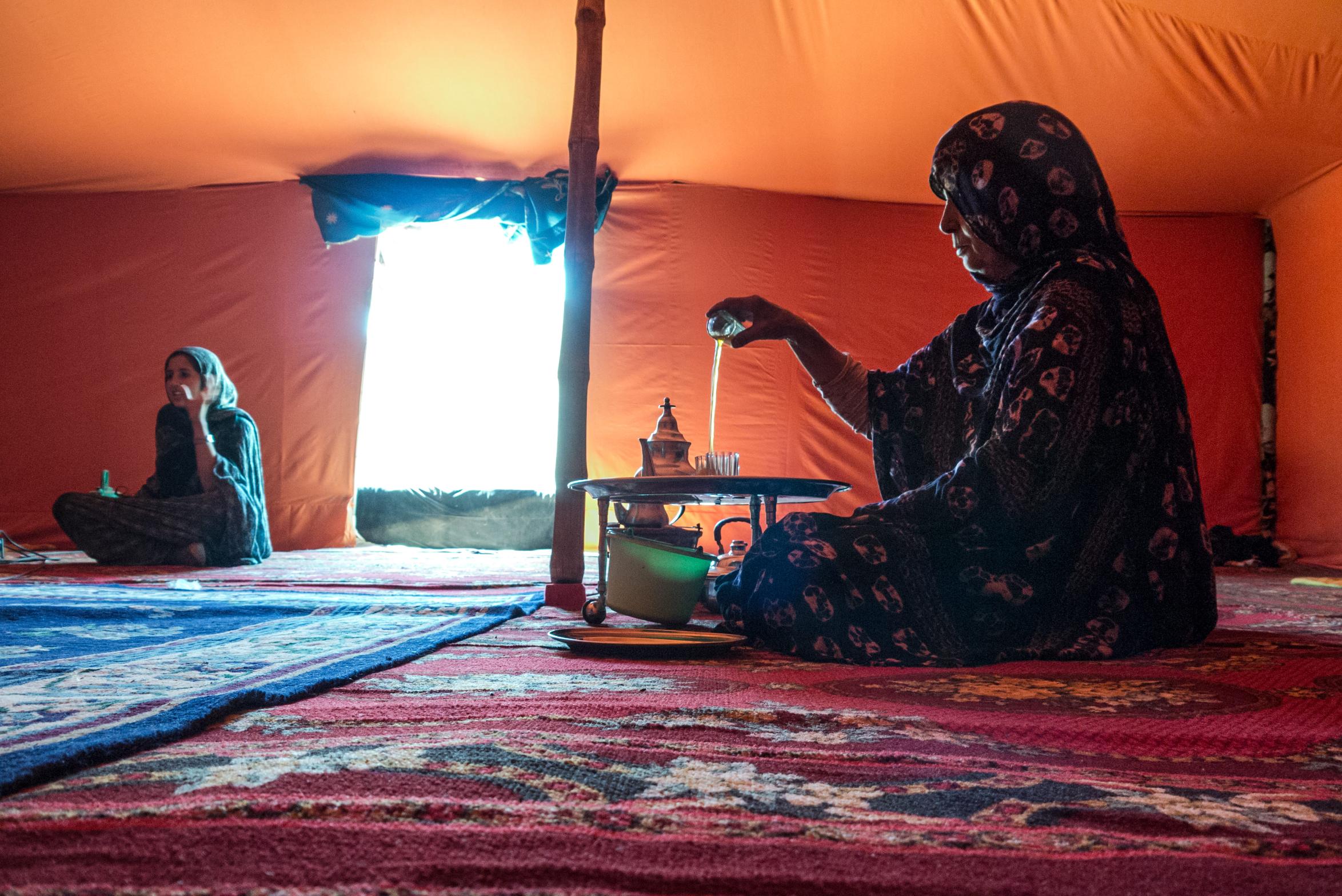
As the mission withdraws, more than 173,600 Sahrawis remain in five refugee camps in Algeria after 50 years of displacement, making this the world’s second-longest-standing refugee situation. The camps are in Tindouf, an isolated town in western Algeria, where temperatures can exceed 50 degrees Celsius, and sandstorms are frequent. The mission’s departure further diminishes their prospects of returning home through an internationally supervised political process.
Despite these conditions, the Sahrawi refugees remain committed to independence. In an Africanews report published in April this year, 75-year-old Salima Bent Elghifri Ahmed affirmed that they would reject Morocco’s autonomy plan and make whatever sacrifices independence required, with or without international support.
Natural resources and displacement
Western Sahara’s strategic location and economic resources make it important to Rabat. Another important factor that fuels the fight to control Western Sahara is its vital assets to global food security, rich maritime industries, and substantial clean energy potential. According to Jeffrey J. Smith, the territory’s principal natural resources include phosphate rock from the Bu Craa mine, fish from highly productive Atlantic waters, and potential petroleum reserves on land and beneath the seabed.
Yaguta El Mokhtar, Coordinator of the Sahrawi Observatory for Natural Resources and Environmental Protection (SONREP) and a member of the Working Group on Natural Resources, likewise highlights this resource wealth. El Mokhtar claims that Western Sahara holds approximately 22 percent of the world’s phosphate reserves, significant deposits of iron ore and high-quality sand, abundant fisheries potential, and promising oil and gas prospects.
While Western Sahara’s natural resources are exploited, displaced Sahrawis face starvation in the desert, far from their homeland. The territory’s Atlantic coastline extends for more than 1,150 kilometres and borders one of the world’s richest fishing grounds. Yet those displaced from it endure severe sandstorms and depend on UN refugee agencies receiving enough aid to provide their next meal.
Unfortunately, one after the other, international support is dwindling for the cause of the Sahrawi as the Gulf Cooperation Council has expressed their support for Morocco’s policy of autonomy for the territory under its sovereignty, adding its name to that of the United States (2020), Spain (2022), France (2024), the UK (2025) and another coalition of 40 States.
This begs the question, “What really changed?” The Western Sahara Resources Watch, an international organization that monitors and challenges companies and governments involved in advancing Moroccan interests in occupied Western Sahara, underlines that, in seven consecutive rulings from 2016 to 2021, the Court of Justice of the European Union has concluded that Morocco has no sovereignty over Western Sahara, nor any international mandate to administer it, as the territory is separate and distinct from Morocco.
Within the Continent, the situation in the African Union (AU) is ambivalent. Although it admitted the Sahrawi Arab Democratic Republic (SADR) as a full member state in 1984, today, not all members support its membership. This means the cause of the Sahrawi is no longer drawing much sympathy among African nations. It is a new development because, even though Rabat protested and withdrew from the union for 33 years, it did not weaken AU members’ support when it returned to the union in 2017. They even lobbied to have the SADR expelled, but the AU refused. Today, the AU’s position has weakened, and it could trigger a motion to force SADR to withdraw from the union.
Such a retreat would reflect poorly on the African Union and constitute a serious institutional problem. Although Article 30 of the AU Constitutive Act permits the suspension of governments that come to power through unconstitutional means, it does not provide a mechanism to expel a member state when other members dispute its status. Moreover, the Act provides for cessation of membership through voluntary withdrawal, not involuntary expulsion. Sidelining the Sahrawi Arab Democratic Republic would therefore require a legal and political justification that the Union’s existing rules do not readily supply.
For the Catholic Church, this situation has been delicate, as both the Apostolic Prefecture of Western Sahara, which operates in areas 89% controlled by Rabat, and the churches around Morocco have maintained a non-political position. They have upheld the standard set by Pope Leo XIV during his visit to Algeria by denouncing the danger of exploiting religion for conflict, praying for peace, and calling all parties to the table of dialogue. This is especially critical for missionaries working directly in the affected territory. They have always operated under a very tight framework which only permits spiritual care for the expatriate workers and Sub-Saharan migrants, with no interference with sovereignty matters.
As MINURSO withdraws, the African Union should establish procedures to prevent escalation to war. Such procedures could include monitoring mechanisms, claim documentation, movement restrictions, and all manner of migrant maltreatment by all parties involved.
The procedures must include Sahrawi women, youth representatives, African human-rights specialists, refugee agencies, religious leaders and independent observers. They must regularly publish their findings. Though their monitoring might not resolve the sovereignty dispute, it can prevent the diplomatic vacuum from becoming a human-rights vacuum.
Also, religious leaders, both Christian and Muslim, as well as African civil-society organizations can support community legal education, oral-history preservation and platforms through which refugees and residents inside the territory document their relationships with the land. These activities must strengthen political agency, not substitute humanitarian assistance for a political settlement.
The United Nations must take concrete steps to address the precarious circumstances of Sahrawi refugees, who have now been in exile for more than 50 years. Their plight deserves greater international attention, comparable to that afforded to other situations of similar scale. Sahrawi refugees should be included in negotiations to ensure that their voices, experiences, and perspectives are represented, rather than those of Morocco, Algeria, and the Polisario Front alone.
Finally, the AU should encourage the UN Security Council to return to the negotiating table and make a decisive decision that reflects the intentions of the parties involved in this conflict. In addition, the Council should place an embargo on Western Sahara’s natural resources to bring all parties involved back to the negotiating table.

Join the conversation