
The Calabash That Held Water Again: Atonement as Restoration

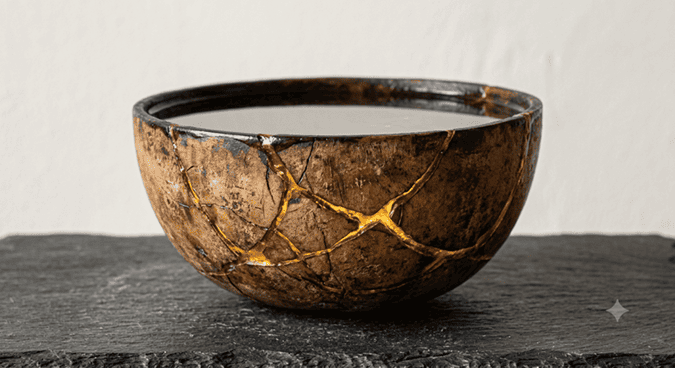
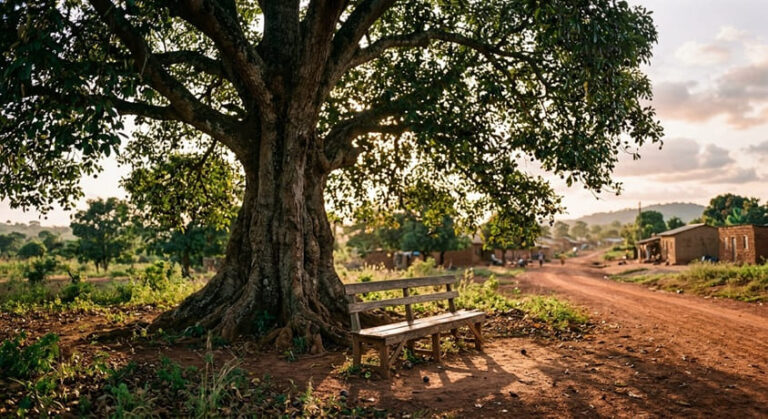
I recall a moving story from an Igbo village in Nigeria. Grandma Nneka stood beneath the ancient Ogbu tree; the shattered pieces of her calabash lay scattered before her like memories. The vessel – inherited from her late mother some thirty years past – lay ruined, broken by a stray stone kicked by children playing near her kitchen.
The guilty children gathered round her, frozen with fear. They did not even dare apologize, bracing themselves for the whipping they expected. Instead, the elderly woman opened her arms to the trembling ones.
“Ngozi, bịa nụ,” she called softly. “You have broken what I cannot afford to replace. But you can offer me your hands to mend it.”
Little by little, one broken piece at a time, the children picked up the shards and handed them to Grandma Nneka. They knelt beside her, gathering fragments as she worked: piece by piece, she fitted the fragments together and sealed the cracks with a natural plant resin gathered nearby. By sunset, the calabash held water again, though cracks remained visible – like lines of memory across an ageing face, bearing witness to what had been broken and restored.
That broken calabash was restored not through punishment alone, but through truth, responsibility, shared labour and patient love. This is not merely a story about a pot. It is a story about us – about the pieces of our lives that we have scattered, hidden, and feared to bring into the light.
It is a story about a God who does not cast us out when we break something sacred, but who kneels beside us and shows us how to mend. It is a story about atonement – not as a distant theological concept, but as the daily, humble, painful, and beautiful work of putting our lives back together, piece by piece, crack by crack, until we can hold water again.
The broken calabash was restored not through punishment alone, but through truth, responsibility, shared labour and patient love.
Mending Fractures in African Societies
That story should resonate deeply across the African continent. Today, we are overwhelmed by fractures within and among us. Individuals lose inner coherence; families splinter under the weight of feuds; communities stand bewildered, asking: how has everything fallen apart?
Some respond by assigning blame – eager to condemn, to punish, to find someone to carry the guilt. But others see a deeper invitation: to probe beyond the surface, to ask not merely who is at fault, but what has been broken in all of us, and how we might begin the slow work of restoration.
Yet if we are to mend what is broken, we must first understand how brokenness is named, ritualized, and healed in traditions that have long confronted the problem of human fracture. Here, the Jewish rite of atonement offers a compelling model – one that resonates with African communal sensibilities and provides a structured pathway from fragmentation to wholeness.
The Old Testament Understanding of Atonement: A Model for Communal Healing (Leviticus 16)
The story of Grandma Nneka resonates powerfully with the Jewish rite of atonement, most fully embodied in Yom Kippur. This was no mere ritual performance, but a communal act of restoration by which Israel confronted the accumulated moral and ritual pollution that threatened the very presence of a holy God in their midst.
The rite offered a structured, sacred response to the need for pause and repair: purification of the sanctuary and altar, priestly mediation, sacrificial blood, and the dramatic removal of sin through the two goats—one sacrificed as a purification offering to the Lord, the other sent into the wilderness bearing the people’s transgressions.
Yet atonement was never about erasing the past. It did not pretend that Israel had not sinned, nor did it undo what had been done. Instead, it cleansed what had been defiled, carried away what had accumulated, and restored the covenantal conditions that made God’s continued dwelling possible.
Sin and impurity were not given the final word. And in this, the rite echoes the mended calabash: the people were not made flawless, but they were made whole enough to hold life again – not innocent but forgiven; not untouched but reconciled; not unchanged but restored to the possibility of carrying forward. As the law itself declares:
“This shall be an everlasting ordinance for you: on the tenth day of the seventh month, every one of you, whether a native or a resident alien, shall mortify himself and shall do no work. Since on this day atonement is made for you to make you clean, so that you may be cleansed of all your sins before the Lord” (Leviticus 16:29–30, The African Bible).
The people were not made flawless, but they were made whole enough to hold life again—not innocent but forgiven; not untouched but reconciled.
Ubuntu and Communal Healing: The Communal Nature of Atonement
Human existence is perpetually beset by forces that threaten its integrity. In a world riven by conflict, few dimensions of life remain immune to decay; tensions simmer, and upheaval is never far from the surface.
The English word, atonement, sometimes evocatively rendered here as “at-one-ment,” can help us imagine the recovery of a relationship fractured by wrongdoing. The rite of atonement—with its call to self-denial, priestly mediation, purification and the symbolic removal of transgression—offers a theological framework for addressing socio-political trauma, conflict resolution, and ethnic reconciliation across the continent.
Why should atonement be communal rather than individualistic? One compelling answer lies in the relational ontology prevalent across many African societies: “A person is a person because of other people” (Ubuntu). Personhood is not atomistic but inherently interdependent. Consequently, the fragmentation of the self is never merely an individual crisis – it is a communal rupture, and its restoration demands collective ritual, reconciliation, and reintegration.
Igbo religious and moral traditions provide a direct cultural illustration of this principle. Nwosu (1989) demonstrates how sin in Igbo culture affected both the offender and the community. An abomination by an individual (aru), such as incest, murder, or a serious violation of the land’s customs, was never a private matter. It was believed to defile the earth goddess, Ala, the custodian of public morality, and to bring divine wrath – such as famine or disease – upon the entire community.
As a result, whenever a taboo was broken, the community demanded a public ritual of purification known as ikpu-ala (or ikpu aru). This was not merely a punishment for the culprit but a necessary sacrifice to cleanse the land, reconcile the offender with the ancestors and gods, and restore the cosmic and social harmony that had been disrupted.
The individual’s fate was inextricably tied to the community’s well-being, and the well-being of all depended on each person’s moral integrity. (Nwosu, L. Ugwuanya. “The Concept of Sin and the Igbo Idea of Moral Perfection.” Africana Marburgensia: Sonderheft 13 (1989): 24–44).
The sin is never solely personal; the healing is never solely private.
Thus, atonement flows in both directions: individual misdeeds summon communal response, and communal rituals reshape individual identity. The sin is never solely personal; the healing is never solely private. Wholeness emerges not from isolation but from the constant, corrective interplay between self and society – each bearing the marks of the other’s brokenness, each instrumental to the other’s restoration.
The apostle James recognizes that conflicts within the human heart can contribute to conflicts between persons and communities:
“Where do the wars and where do the conflicts among you come from? Is it not from your passions that make war within your members? You covet but do not possess. You kill and envy, but you cannot obtain; you fight and wage war. You do not possess because you do not ask. You ask but do not receive, because you ask wrongly, to spend it on your passions” (James 4:1–3, The African Bible).
James’s claim is radical, but it should not be read as reducing war to individual psychology. Rather, it reveals one dimension of the reciprocal relationship between personal desire and social disorder. Envy, greed, fear and anger can contribute to social destruction when they are normalized, mobilized and embedded in communal or political structures.
Healing Within the Human Person
The peace cultivated within persons can contribute to the healing of society, just as peaceful and just communities can sustain the healing of their members. Neither movement is sufficient by itself. The inner and the outer are not sequential but cyclical: each shapes the other, for better or for worse.
The calabash can hold water again – but only when both the community and the person are mended together in Christ. The fractures are many, the scars of sin remain visible, and the journey of conversion is gradual.
Yet grace remains: to kneel before Christ, the great High Priest who offers himself once for all (Hebrews 4:14–16; 9:11–14, 26–28); to extend our hands in penitence and faith; and to cooperate with the Spirit in God’s work of reconciling and gathering all things in Christ (Ephesians 1:10; Colossians 1:20), until the Church is presented holy and without blemish before him (Ephesians 5:27).


Dr Olefolu Ngozi
This is a very insightful and timely article. It addresses issues that are highly relevant in today’s world and offers valuable perspectives. I truly appreciate the time, effort, and knowledge the author put into writing this piece. Thank you for sharing such an important contribution.