
Faith Weaponized: The Crisis of Religion and Africa’s Deepest Political Fault Line

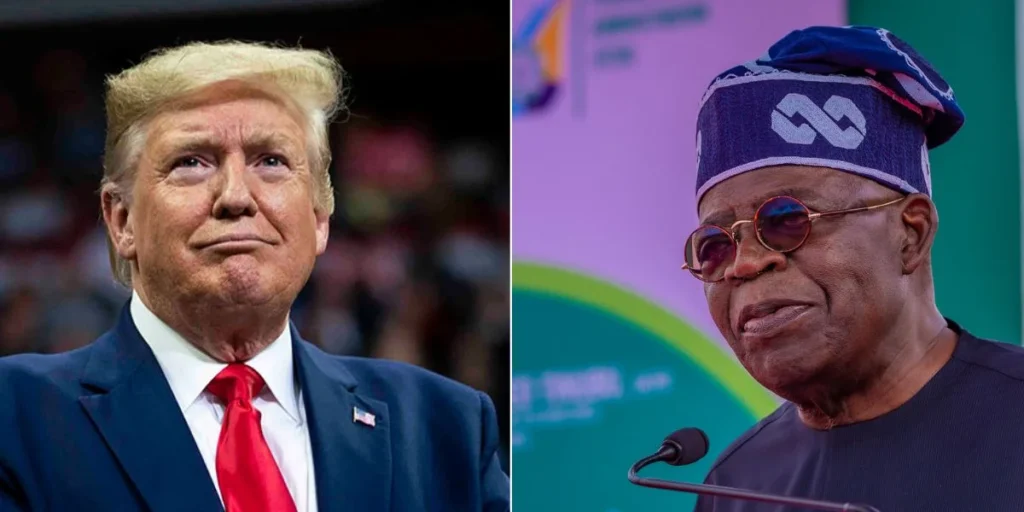
The accusation is stark: the spectre of genocide against Christians. This inflammatory claim, initially levelled by the United States government against Nigeria, has ricocheted across international media, amplified by figures like U.S. Senator Ted Cruz. The concern is not new; it dates back at least to President Donald Trump’s 2018 White House meeting with then-President Muhammadu Buhari, where Trump reportedly asked, “Why are you killing Christians?” Washington’s unease crystallized in December 2020 when the U.S. State Department designated Nigeria as a “Country of Particular Concern” over severe violations of religious freedom, citing the government’s failure to protect religious minorities or effectively address the root causes of violence. Amnesty International, too, has documented persistent attacks and criticized the resultant culture of impunity that shatters communal divisions.
The Denial and the Undeniable Evidence
Unsurprisingly, the Nigerian government vehemently rejects these allegations. Presidential spokesperson Daniel Bwala insisted that insecurity affects all citizens regardless of creed, while Minister for Information Mohammed Idris dismissed Senator Cruz’s claims as a “gross misrepresentation of reality.” Yet, for many Nigerians—particularly in the predominantly Christian South and North-Central regions—the international spotlight is a welcome validation. For them, it confirms their long-held fear that the state has willfully ignored systematic persecution and marginalization.
They cite chilling and incontrovertible evidence: the establishment of Sharia law in several northern states in direct opposition to Nigeria’s nominally secular constitution; the disparate treatment of insurgents versus victims; and the open tolerance of mob violence against Christians. The repeated failures to prosecute perpetrators in landmark killings underscore this injustice. Consider the cases of Bridget Agbahime (Kano, 2016), a Christian trader murdered by a mob over alleged blasphemy, and Deborah Samuel (Sokoto, 2022), a student beaten and burned to death by her classmates for a perceived insult to the Prophet Muhammad. In both instances, justice remains conspicuously elusive.
The Weaponization of Faith
While it is an oversimplification to label Nigeria’s pervasive insecurity as purely an anti-Christian genocide—Muslims suffer grievously from terrorism and banditry as well—it is intellectually dishonest to deny the profound religious undertones of much of the violence. The Nigerian state has, over time, tolerated, politicized, and even enabled this volatility. This crisis is best described as the politicization of religion and the religionization of politics—a betrayal of sacred trust.
The fateful introduction of Sharia law in 1999 by northern political elites, heedless of Nigeria’s fragile religious balance, sharply worsened these tensions. It followed decades of simmering volatility, including the 1980 Maitatsine uprising, which claimed between 3,000 and 5,000 lives in Kano. When implementation efforts reached Kaduna State—a region almost equally divided between faiths—violent riots erupted, claiming thousands more. Since that pivotal moment, Nigeria’s political sphere has become hopelessly entangled with the spiritual, transforming faith itself into a weaponized political identity.
Systemic Discrimination and State Bias
Today, Christian minorities in the Sharia-governed North endure systemic discrimination. They navigate dual legal systems in which Sharia courts operate alongside secular ones, often with unequal protections. Hostile mobs surround them, quick to invoke religious laws to justify violence. Furthermore, government policies frequently appear to favour predominantly Muslim herders in ongoing conflicts against Christian farmers in the Middle Belt, cementing the perceptions of state bias. Though extremist groups like Boko Haram and ISWAP target both Muslims and Christians, the existential predicament of northern Christians is uniquely precarious: they face prejudice, political exclusion, and physical danger within a system that consistently fails to defend them. This failure of protection amounts to complicity. When a government treats insurgents with leniency while ignoring the cries of its victims, it actively cultivates the environment for religious persecution to thrive—making accusations of genocide impossible to dismiss.
An African Pandemic
This toxic pattern of religious manipulation is not confined to Nigeria; it is an African pandemic. In the Central African Republic, political actors deliberately exploited faith to mobilize militias—the Muslim-dominated Seleka rebels and the Christian anti-Balaka groups—plunging the nation into a brutal civil war. Similarly, during Ethiopia’s Tigray conflict, both the government and rebel factions invoked divine rhetoric: officials described their campaign as a “holy war,” while rebels accused the state of persecuting religious communities. Across the continent, sacred language has become the currency used to sanctify political violence and deepen chronic mistrust, leaving behind a trail of broken communities.
The Imperative of Impartial Justice
African leaders must urgently confront this dangerous fusion of religion and politics, or the continent’s social fabric will remain irreparably fractured along faith lines. Political elites routinely invoke religious sentiments to mask chronic issues of corruption, inequality, and injustice, leveraging divine justification to advance personal power while manipulating believers as instruments of division.
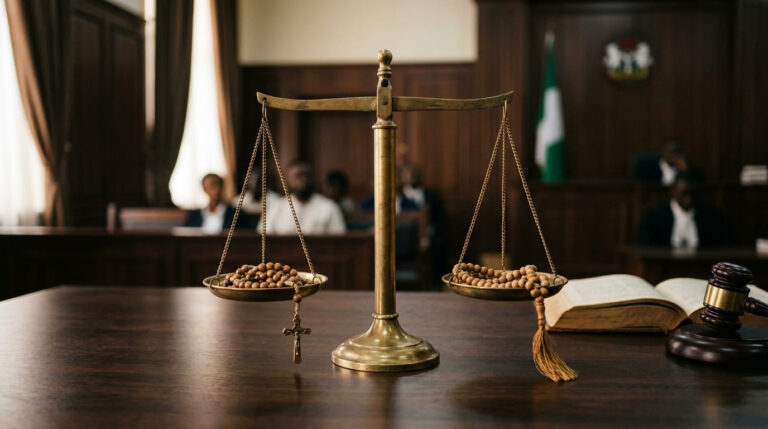
If Nigeria and other African nations are to heal these deep fractures, accountability and impartiality, rooted in human dignity, must become the unshakeable cornerstone of governance. Justice must not merely be discussed, but swiftly, visibly and vigorously enforced. Governments must act transparently, punish offenders without fear or favour, and demonstrate through undeniable action—not mere political rhetoric—that the sanctity of human life transcends all religious and political loyalties. The state’s moral authority depends on it. Until that happens, Africa’s greatest spiritual strength—its deep religiosity—will tragically remain its most volatile and dangerous political fault line.
Join the conversation