
From Lagos to Gaza: How Religious Identity Shapes Nigerian Opinions on Global Politics

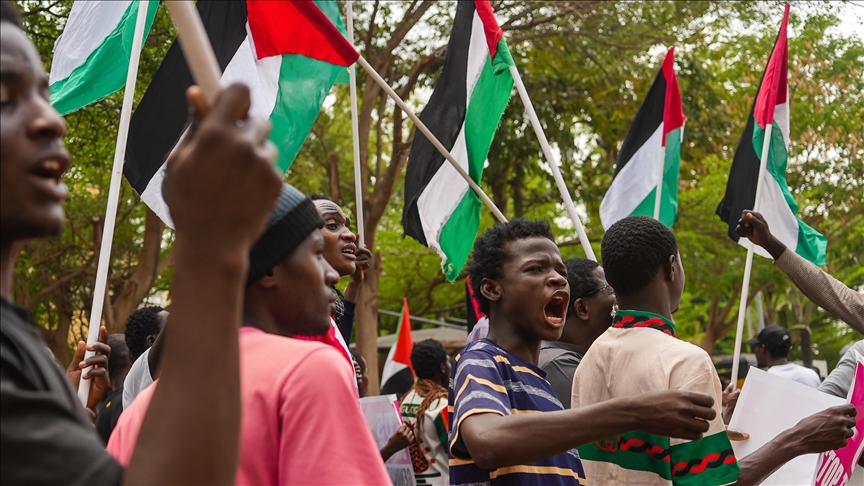
Online debates in Nigeria rarely reflect the complexity of the Middle East; centuries of shared history are reduced to memes, and religion itself is wrongly cast as the enemy.
According to BBC News (22 November 2025), renewed Israeli airstrikes killed 22 Palestinians in northern and central Gaza on Saturday—bringing the post-ceasefire death toll to more than 310. Yet while violence escalates in the Middle East, another kind of fracture is quietly deepening thousands of miles away in Nigeria.
While Nigerians themselves face relentless violence from bandits, insurgents, and kidnappers, the Gaza–Israel war has ignited a dangerous religious polarization at home. On Facebook, X, TikTok, and WhatsApp, Christians and Muslims are no longer merely debating the conflict—they are taking sides, often with bitterness and suspicion: many Christians instinctively align with Israel, many Muslims with Palestine, and only a few voices insist on a non-sectarian, humanitarian reading of the crisis. But these online passions do not arise in a vacuum—they draw deeply from global religious currents.
This divide mirrors the broader religious and political fault lines in Nigeria. Pro-Israel sentiment predominates among many Christians in the South and North Central regions, while pro-Palestinian affinity is strongest among Muslims in the North. On social media, many Muslim youths share hashtags, memes, and posts like #FreePalestine and #StandWithGaza, linking local identity with global Muslim concerns. Conversely, pro-Israel Nigerian Christians are often influenced by evangelical Zionist movements in the West.
Support for either side is frequently accompanied by zealotry and confirmation bias—a tendency to favour information that reinforces existing beliefs—and sometimes, outright religious fanaticism. It also reflects longstanding religious tensions between Nigeria’s Muslim and Christian communities, where the politicization of religion has bred distrust. For example, Christians typically cite the establishment of Sharia law in northern states as evidence of attempts to “Islamize” the nation. One Reddit commentator summarized this mindset: “Christians are sympathetic to Israel because Israel was God’s people in the Bible.”
Recent developments illustrate these divisions. A coalition of Christian advocacy groups in Nigeria publicly endorsed stronger ties with Israel, framing it as a matter of national security, while drawing criticism from Muslim organizations (Vanguard, 2025). A widely circulated video of Pastor Enoch Adebayo of the Redeemed Christian Church, first published on his X handle, praying for Israel during the Israel-Hamas conflict, drew rebuke from both Muslims and Christians—some questioned why local violence and insecurity were ignored in favour of a foreign conflict.
Nigerians, it seems, wear their religion like a badge of identity. Christian communities, disproportionately targeted by extremist groups such as Boko Haram, ISWAP, and armed groups commonly described as Fulani militias, particularly in the Middle Belt and northern states, often feel neglected by the government. This fuels both fear and suspicion. Many Christians frame support for Israel in theological terms, viewing the Jewish state as God’s chosen people and seeing alignment with Israel as participation in biblical prophecy. Some also interpret Israel’s defence of Christianity’s birthplace as a spiritual duty. Others approach it through a geopolitical lens, seeing Israel as a symbol of civilization, security, and Christian alliance. Among youth, support for Israel has become an identity marker, intertwined with narratives of Christian persecution at home.
For Nigerian Muslims, the support for Palestine rests on religious and spiritual grounds. Many emphasize the significance of Al-Aqsa Mosque in Jerusalem, the third-holiest site in Islam, associated with the Prophet Muhammad’s Night Journey (Isra and Mi’raj). Protecting Palestine is framed as a sacred duty of the global Muslim community. Several Islamic organizations in Nigeria have condemned Israel’s attacks on Gaza as “genocide,” criticizing the international community for failing to intervene (Nigerian Tribune, 22 August 2025).
Yet, in both cases, these allegiances often overlook the broader realities of the Middle East. Christianity originated there, and Islam has a deep and lasting presence in Israel. According to the U.S. Department of State (2023), Iran has between 500,000 and 800,000 practicing Christians, many worshipping underground but experiencing growth. Palestinian Christians number around 47,000, primarily in Bethlehem and Gaza (Palestinian Central Bureau of Statistics, 2017). In Israel, Muslims constitute approximately 18% of the population, living, studying, and working alongside Jewish neighbors (Israel Central Bureau of Statistics, 2023–2024). According to PBS News, Iran is home to at least 15,000 Jewish population with a history stretching back 3,000 years. These realities complicate simplistic religious binaries, revealing a region where identities overlap far more than Nigerian rhetoric allows.
These realities complicate simplistic religious binaries; the Middle East refuses to fit the tidy categories Nigerian partisans try to impose on it.
Thus, when Nigerian Muslims call for attacks on Israel, they risk harming Israeli Muslims. Likewise, Christians calling for Israel to defeat its enemies disregard the millions of Christians living across the Middle East. Online debates rarely reflect these nuances. Centuries of shared history are reduced to memes, and religion itself is wrongly cast as the enemy. Yet beneath the noise of Gaza and Israel, a deeper truth emerges: the crisis is also Nigerian.
What this conflict exposes is the depth of Nigeria’s own religious polarization—a sickness threatening the nation’s unity. The ease with which Nigerians direct energy toward foreign conflicts while ignoring local religiously motivated killings reflects both hypocrisy and the urgent need for reflection. It calls for sincerity, compassion, and a re-evaluation of how faith informs public discourse.
If we cannot learn to mourn Gaza, Tsefa, and Yelewa with equal sincerity, our faith has become tribal rather than transformative.
Until Nigerians confront the manipulation of religion for political ends and cultivate empathy beyond sectarian lines, both national cohesion and responsible engagement with global issues will remain elusive.
Join the conversation