
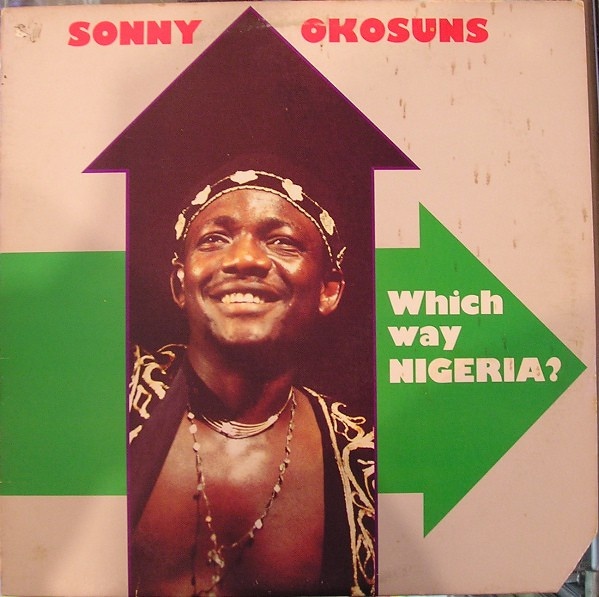
At one of the lowest moments in Nigeria’s history in 1984, when the country faced political instability, economic hardship, and corruption under an oppressive military government, the famed Nigerian musician, Sonny Okosun, sang that iconic protest song, “Which way Nigeria?” asking us Nigerians to reflect on which way Nigeria is heading. Today, that question has become more pressing because the condition of life has become more depressing for the masses of our people.
And for me, the Catholic Church in Nigeria is one institution that can help effect an urgent course correction for Nigeria. However, it must also answer the fundamental question: which way for Nigerian Catholics? In other words, are we as a Church capable of leading the country in a different direction, or are we unthinkingly following this precipitous path with the rest of the country into the valley of darkness? Is the Catholic Church in Nigeria led by Catholic doctrine, by Catholic Social Teaching, by Catholic liturgical tradition, by the Catholic intellectual tradition, and by her time-tested principles on the relationship between the Church and the state? Or are Nigerian Catholics heedlessly following the dysfunctional values of a blind and selfish political class, whose extractive appetite has stripped the nation of its material and natural resources, impoverished our citizens, and nailed God’s people to a permanent cross of pain and misery?
“And for me, the Catholic Church in Nigeria is one institution that can help effect an urgent course correction for Nigeria. However, it must also answer the fundamental question: which way for Nigerian Catholics?”
Many Nigerians are watching helplessly as an irresponsible and insensitive political class ravages their beautiful nation. Most Nigerians have disengaged from the political process, and others have sought refuge in different forms of religiosity and religious enchantment as a coping strategy, hoping in God, who, they believe, cannot fail them when everything around them shows signs of instability and decay. Other Nigerians put their hope in a sudden emergence of a saviour, perhaps Peter Obi or any other putative messiah, to rewrite our broken history and heal our wounded land. Yet others, surprisingly, put their hope in external agents, such as Trump, for redemption and liberation. Wherever anyone stands as a Nigerian citizen today, the reality that faces us is shocking and worrisome: how do we unmake the current Nigerian state; how do we radically reform our institutions; how do we cleanse our polluting ethical and social norms, and develop the virtues and practices of an inclusive state that is governed by civic and ethical culture that are transformative and generative of life and social transformation for everyone.
The current state of Nigeria continues to shock the conscience as to how a greatly blessed nation with the most extraordinarily gifted citizens can be so poor, so unsafe, and so hopeless because a few thin top layers of religious and political elites have held the country in an internal perpetual bondage for decades now. Nigeria today stands as a troubling paradox of immense potential weighed down by deep structural crises that touch nearly every dimension of our national life. With an unemployment rate hovering around 22.6% and inflation exceeding 30% in recent years, millions of our people are pushed into precarity, reflected in the reality that roughly one-third of the population survives on less than $2.15 a day.
This unacceptable manufactured economic fragility is compounded by systemic corruption and patron-client relations between those in power and Nigerian citizens, through an unethical governance structure that has become a transactional cesspool of impunity operated by rogues dressed in agbada, whose extractive leadership is all about the politics of the stomach;emi lókàn—(it is my turn to chop the national cake). According to Transparency International, Nigeria scores just 26 out of 100, ranking about 140th out of 180 countries, a stark indicator of weak institutions and compromised governance.
“How do we unmake the current Nigerian state; how do we radically reform our institutions; how do we cleanse our polluting ethical and social norms and develop the virtues and practices of an inclusive state that is governed by civic and ethical culture that are transformative and generative of life and social transformation for everyone.”
Insecurity has further eroded public confidence and daily life; the U.S. Department of State maintains a Level 3 travel advisory for Nigeria, with several regions designated “Do Not Travel” due to terrorism, kidnapping, and armed violence, conditions that have normalized fear as part of everyday existence and weakened national and international trade and movements of peoples severely hampering productivity, social innovation, and social connectivity for business and collaborative partnerships.
At the same time, Nigeria hemorrhages its most vital resource: more than 100,000 barrels of oil are stolen daily, translating into billions in annual losses in a sector that should anchor national prosperity. Even in moments of global opportunity, such as price spikes linked to conflicts in the Gulf, Nigeria struggles to benefit meaningfully because production shortfalls, subsidy burdens, and theft by conscienceless gatekeepers of our oil wealth offset potential gains. This is not new but part of a troubling continuity. The $12.4 billion Gulf War windfall of 1990, effectively embezzled under the Ibrahim Babangida regime, set a pattern of opaque management of extraordinary oil revenues. The Okigbo Panel noted that this sum alone could have provided water, electricity, and nationwide road and rail links, yet no one was held accountable. Today, a similar dynamic persists: windfall gains from global price shocks remain insufficiently accounted for, while leakages through theft and mismanagement continue, even as Nigeria accumulates rising debt at both federal and state levels despite vast oil earnings.
“Nigeria hemorrhages its most vital resource: more than 100,000 barrels of oil are stolen daily, translating into billions in annual losses… Nigeria struggles to benefit meaningfully… ”
The human cost of this systemic dysfunction is stark. Life expectancy remains low at about 54 to 55 years. In contrast, the disease burden—measured in DALYs—remains among the highest globally, reflecting a population weighed down by preventable illness and premature death. How many of our citizens, both the high and the low, die every day from treatable diseases because of medical malpractice, clinical deserts, and ill-equipped hospitals? Nigeria accounts for roughly 31% of global malaria deaths, continues to grapple with an HIV prevalence of about 1.5% among adults, and is witnessing a growing incidence of non-communicable diseases such as diabetes and hypertension. Communicable diseases still account for nearly two-thirds of all deaths, underscoring persistent public health challenges.
Furthermore, educational deficits deepen our national crisis, with literacy levels around 62%, limiting both economic mobility and civic participation. With its high population density, largely composed of young people under 35, Nigeria should be one of the best places to incubate ideas, foster social innovation, and harness talent, where a ladder of social mobility is available to all. Still, with low educational standards, poor quality and monitoring, and under-staffed, underpaid teachers, researchers, and scholars, Nigeria’s youthful population, rather than becoming an asset, is becoming a threat to the nation. The youth bulge without employment will turn into a national curse in rising crime rate, including cybercrime, bioterrorism, terrorism, and greater violence. Taken together, these data tell a sobering story: a nation rich in human and natural resources yet constrained by governance failures, insecurity, and social inequities, leaving its people to navigate a landscape where hope persists, but against formidable odds.
The only institution that remains today, which is capable of saving Nigeria, in my judgment, is the Catholic Church. This statement must be qualified. The Catholic Church in Nigeria faces numerous internal problems. It continues to be affected by the country’s dysfunctional moral and spiritual bankruptcy. In addition, some of us clerics continue to genuflect to politicians and fall fealty to wealthy people, without regard for the sources of their money, in this inexcusable quest for money and unconscionable thirst for empty social or political relevance. Prostituting around state houses and social connections to the high and mighty has, in sad ways, become an ecclesial currency circulating in our social ecosystem as legal tender for relevance, power, and social acceptability.
Viewed in this light, it must be stated in the most obvious way that the Catholic Church in Nigeria cannot carry out this task of national redemption without cleaning its own house of the filth that has putrefied our ecclesial spaces, poisoned our ecclesial life, and weakened our prophetic voice. In addition, the Catholic Church in Nigeria cannot carry out this task of national salvation alone. It will work with other Christians and Muslims in this saving, liberating, and healing mission that God is placing before it.
“The Church can offer the nation a new ethical lens for seeing our collective destiny as intertwined. It can offer a new spirituality through which to see each other as siblings with a common destiny as a people. It can foster a new political culture that helps us see our common good as truly common.”
The unique standing of the Catholic Church in our national redemption stems above all else from its unity. The Catholic Church alone has the national structure of unity, a centralized system of governance and accountability, and a global moral tradition that has stood the test of time, exemplified recently for the world in the prophetic presence of Pope Leo in Africa, which the Church in Nigeria can tap into to save our country from this darkling plain and terrible descent into the valley of despair, destruction, and decay. With its capillaries coursing through all aspects of our national life in education, civic culture, health services, and social agencies, the Catholic Church in Nigeria is deeply embedded in the life of the nation. Its ecclesial arteries are linked to other religious and political actors and institutions in Nigeria. In this position, the Church can offer the nation a new ethical lens for seeing our collective destiny as intertwined. It can offer a new spirituality through which to see each other as siblings with a common destiny as a people. It can foster a new political culture that helps us see our common good as truly common. It can also awaken a new sense of history about the unjust structures that hold us all victims to our own follies and foibles. And it can call forth a renewed sense of urgency and responsibility to take up again, even when we are all exhausted by the persistent cycles of hope and dashed hope, this important task of national salvation.
To save, heal, and liberate Nigeria, the Catholic Church in Nigeria must attend to three urgent and interrelated tasks, both within her own life and in her mission to society.
First is the question of identity. We must confront anew the call of Ecclesiam Suam (9-11), in which Pope Paul VI insists that the Church must deepen her self-awareness and ask: Who are we as a Church? In our own context, this becomes a pressing question: who are we as the Church in Nigeria, and who do we wish to be for the Lord and for our society? Are we truly a Church of brothers and sisters who recognize one another as one in Christ, or are we a Church fractured by the ancient prejudices of tribe and tongue? If ‘tribes and tongues’ differ in our churches and we resist the Holy Spirit’s gift of unity; if we in the Church are wounded by the same tribalism and clannishness that have disfigured our nation, breeding mistrust, sustaining injustice, and deepening historical pain, then we cannot hope to heal Nigeria. The renewal of the nation must begin with the conversion of the Church.
Second is the question of mission, which flows from identity. What is the mission of God for Nigeria today through the Church? What is God asking of us in this moment of national crisis? The Catholic Church in Nigeria must understand its mission as both ecclesial and political, not partisan, but profoundly engaged with the nation’s moral and social fabric. We cannot pray ourselves out of this political quagmire. Prayer for a nation in distress is necessary, but it is not sufficient. We must also imagine, articulate, and embody a vision of the Nigeria we seek. This vision must be mediated through our ecclesial life through the way we worship, govern, relate, and serve, and offered to the nation not merely in words, nor in proximity to power, but as a viable alternative. Can Nigerians, looking at the vitality of our communities and the love among Catholics in our churches, see, without mistrust due to ethnic or clannish considerations, a credible image of what the nation could become? Can the Church serve as a school of justice, a workshop of reconciliation, and a foretaste of a healed society? In other words, can we say that by looking at our Church, Nigerians of all stripes can see what Nigeria would look like if it were run like our churches?
Finally, there is the question of history and human agency. We profess that God holds the future, and this is true. But the future does not emerge solely from divine intervention. The mystery of the Incarnation reveals that God acts in history by drawing us into that work. The God who created the world by being present in history and forming all things through God’s own hands now calls us to participate through the works of our hands and daily effort to sow seeds of hope in Nigeria and by working together in sewing the broken pieces of our national politics, ethics, and economics. We cannot fold our hands in passive hope while our nation bleeds. The future we long for must be forged through moral courage, political responsibility, and social action. No external power will rebuild Nigeria for us, and no miracle will substitute for our responsibility. God has already entrusted us with the gifts, vision, and moral resources needed for this task. Here, the riches of Catholic social teaching offer a sure foundation: principles of human dignity, the common good, solidarity, and subsidiarity that can guide national renewal. We also have examples within Nigeria and across the world of courageous Christian witness, where the Church has walked the costly path of truth, justice, and sacrifice for the sake of the people. That path remains open to us.
“Can Nigerians, looking at the vitality of our communities and the love among Catholics in our churches… see a credible image of what the nation could become?”
We, too, as Church, must be willing to walk this path: to renounce privilege, to resist the seductions of power and money, and to stand naked in solidarity with our suffering people who have been stripped today of their humanity and dignity by an irresponsible and corrupt government. The Church in Nigeria must be ready to die with God’s people in Nigeria so that the nation might rise—renewed, reconciled, and restored. Only then can Nigeria awaken from its long night and become, in truth, the giant of Africa and a beacon of hope for the Black world in our time.
