
Op-Ed The Footprints of God in Africa
Will Pope Leo XIV’s Vote Count?

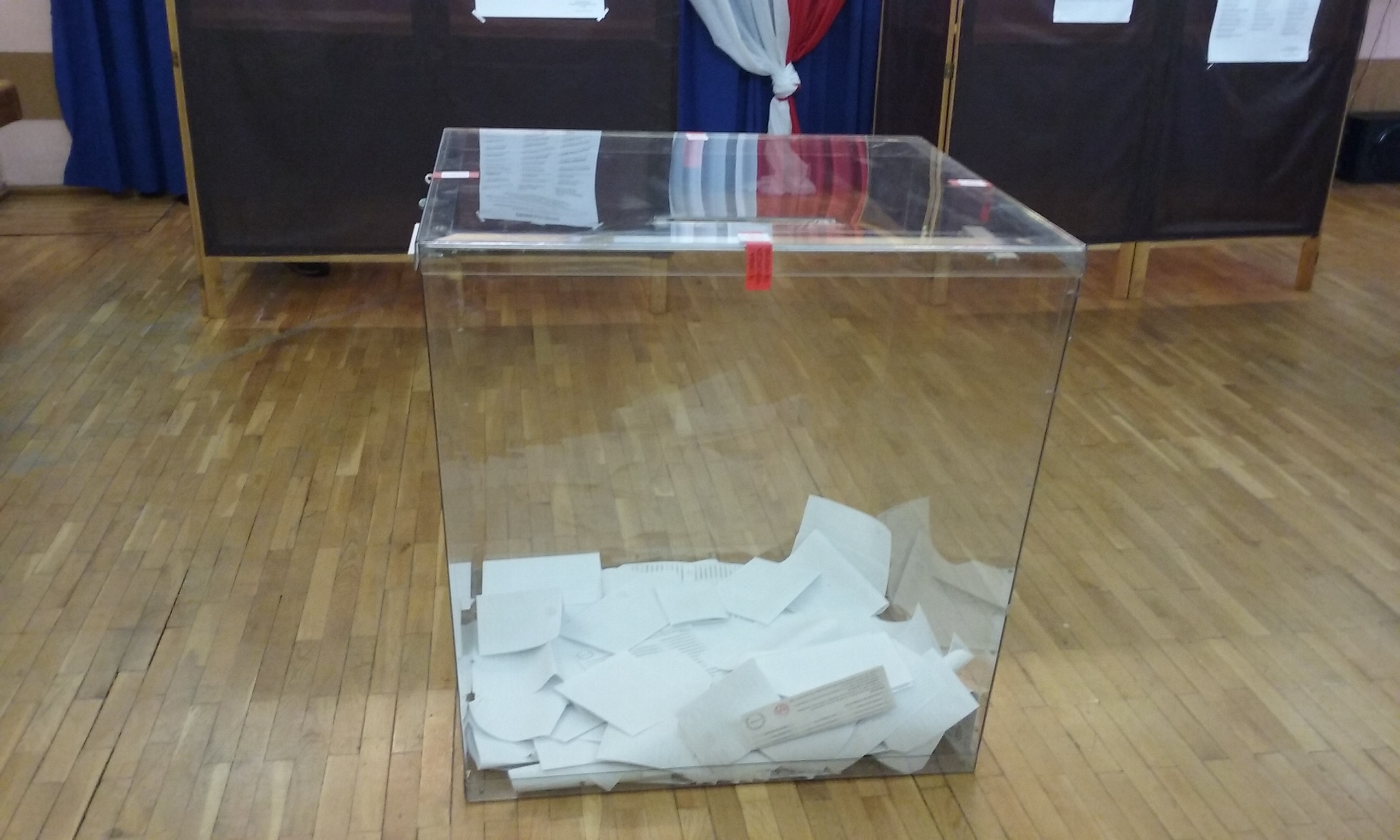
On October 30, 2026, the Holy See Press Office confirmed that Pope Leo XIV, an American citizen, exercised his right to vote and mailed his ballot to Chicago. The statement said the Holy Father believes in “the right and the duty of citizens to participate in democratic processes,” and noted that he also voted during his years of residence in Peru. Leo XIV is the first pope known to have voted in a national election.
No one expects a single papal ballot to decide a midterm. But his voting was not performative. It carries a significant message: By allowing this private civic act to be confirmed publicly, the Pope teaches the world, and especially those Catholics who treat politics with apathy, that every vote counts. It also shows how he reads Catholic social teaching on participation, and on the obligation of citizens to shape the direction of their societies and secure good governance.
By allowing this private civic act to be confirmed publicly, the Pope teaches the world, and especially those Catholics who treat politics with apathy, that every vote counts.
Leo XIV has always separated prophetic witness from partisanship. On the flight to Algiers that opened his African journey on April 13, 2026, he responded to public criticism from President Donald Trump by saying he feared neither the Trump administration nor proclaiming the Gospel openly, and that he was “not a politician.” Public records also show that he has voted in both Democratic and Republican primaries in Illinois. Pope Leo is quietly but symbolically teaching that civic engagement is not merely the exercise of political rights but an expression of moral responsibility for the common good. The Church’s duty to speak truth to power must never be confused with partisan loyalty, and his vote should not be read as an endorsement of any party. But the distinction does not mean withdrawal from political life. Leo XIV is quietly and symbolically teaching that to cast one’s vote is both a civic and moral responsibility of each individual.
Modern democracy rests on the social contract tradition: citizens choose their governments under a constitution they freely adopt to establish the social order they seek. Governments exist to advance the rights, freedom, and well-being of every citizen, not just some. Citizens must therefore be able to choose their leaders periodically through free and fair elections, without the state or its agents undermining voting rights, manipulating votes, or rigging elections. Catholic social teaching likewise regards participation in civil life as a foundation of our common life. The Catechism of the Catholic Church (# 2240) identifies exercising the right to vote as a moral obligation. In keeping with this teaching, Catholic social justice groups and national and diocesan commissions on development and peace in many countries provide political education and voter awareness programs, monitor elections, and advocate for good governance.
In his short papacy, Pope Leo XIV has shown that being a good Christian includes choosing governments, speaking publicly, and organizing to advance the common good. It also means resisting arrangements that harm people, threaten life, or foster exclusionary politics, war, and violence. Grounded in the Gospel and the Church’s social tradition, this understanding of political life measures the social order by its commitment to peace, justice, social friendship, truth, human dignity, citizen participation, and the common good. It calls rulers, citizens, and institutions to conversion so that the reign of God may take shape in history. The common good means more than the absence of war or the maintenance of social stability: it is both a moral and spiritual horizon of justice and the sum of the social conditions that enable all God’s children and creation to flourish. It is a shared wellspring from which all citizens draw equally; promoting and preserving it protects and advances each person’s dignity and vocation. The mark of a good Christian includes treating every citizen, especially the poor and marginalized, as an end in themselves—not as a means to be manipulated through the transactional patron-client relationships and extractive leadership that have sadly come to define modern illiberal democracies around the world.
In casting his vote, Pope Leo also makes a moral statement: preaching good governance from the pulpit is not enough. Catholics and Church leaders must also exercise their civic responsibility directly, through voting and other concrete acts, so that the people of God can see that the Church cares about politics and about who governs them. This is urgent now, when the compact between politicians and citizens has grown fragile. Added to this is the rise of autocrats, the fraying of social safety nets, and the erosion of democratic culture and practice of separation of powers, free and fair elections, and checks and balances.
In casting his vote, Leo XIV also makes a moral statement: preaching good governance from the pulpit is not enough. Catholics and Church leaders must also exercise their civic responsibility directly, through voting and other concrete acts, so that the people of God can see that the Church cares about politics and about who governs them.
In many countries, government agencies and democratic institutions meant to guarantee freedom and advance the common good have instead become instruments of oppression. Across many parts of the world, ruling parties have increasingly suppressed opposition voices, marginalized minorities, and turned state institutions, especially the security agencies and the courts, into instruments of political control, depriving citizens of their freedoms and undermining the foundations of democracy. The social context in many modern states today reveals troubling tendencies: truth is often sacrificed to chicanery, while megalomaniacal political demagogues and false political messiahs foul public life with misinformation. In such an atmosphere, public discourse shrinks to deceptive soundbites, dialogue turns into monologue, parliaments become echo chambers for foul language, and the common good is traded for transactional deals to hold on to power. Citizens are treated as clients. Elections, meant as periodic reviews in which people renew or end their compact with leaders, have become bitter contests carried out by a well-oiled political machine and money, in which the winner takes everything and the poor are consigned to eating the crumbs that fall from the master’s table.
Facing the disorienting and dysfunctional political culture and socialization taking hold across the world, the Church and its leaders cannot be political spectators or settle for a pietistic political engagement that often stays at the level of fasting and praying. The Church today cannot remain a passive observer of political life while a narrow class of political and economic elites, aided by powerful media interests, thrives in opulence and influence, even as most of God’s people are left to navigate the turbulent waters of poverty, insecurity, and violence.
Across the world, many politicians continue to promote what Amartya Sen calls choiceless identity politics, pitting one group against another in many states. Many failed and failing governments, unable to deliver on their promises to the people, clothe themselves in pretentious righteous and religious rage against the state as mavericks or disruptors, even as they exploit the state and its apparatus to advance their narrow political and economic interests. Young people have become agitated by the falsehood of modern states. This is why they have taken to the streets around the world in Nepal, Madagascar, Tanzania, Morocco, Peru, France, Germany, and India, to name a few.
The grievances of these young people differ, but a common thread runs through them: institutions that fail the people they serve, a vanishing horizon of hope, and narrow identity politics that undermines social cohesion, pits groups against each other, and allows those in power to exploit the state for narrow interests. Prayers, statements, and occasional pulpit commentary are not enough. A prophetic act like the Pope’s can shake entrenched power, encourage weary citizens to take a stand, and awaken the social conscience to see that one simple act like voting matters, and that we are not powerless against those who have made life unbearable for God’s people.
Not many of us will have the Pope’s visibility, but his courageous exercise of a civic right can model what we should do, especially religious leaders, this writer included, who often do not vote for reasons too many to list here. Pope Leo is not the only teacher on this matter. Many religious leaders are political activists. Others quietly mobilize God’s people for civic engagement. In a few other instances, some religious leaders show prophetic realism by correctly reading the signs of the times and showing people the right way to fight the good fight in today’s world. These prophets show that it is possible to hold political leaders accountable and contribute, no matter how small, to bringing about the fruits of God’s reign through social transformation.
One such religious leader is a colleague of mine from Brazil who recently left our conference in Rome early to fly home and vote. He backed Lula, who won the October 25 run-off after trailing Flávio Bolsonaro in the first round three weeks earlier. Did one vote change the result? No. Lula won by about 4.4 million votes. But my colleague is deeply satisfied to have played a small part. Flávio Bolsonaro has refused to concede, objecting to a court-ordered extension of voting hours, and has asked for the election to be annulled, although his party has since recognized the result.
Ultimately, we change governments by taking part in elections, among other civic actions. We are therefore not powerless against political actors, even those who seem entrenched in state capture. Politicians can hold power only if the people support them. Without that support, no politician can hold power. Through elections, people withdraw that support when they feel elected officials have sacrificed the common good. The Pope has given us an example for all to follow; the ball is now in your court.
Join the conversation