
A Call for the Church in Africa to Walk Together

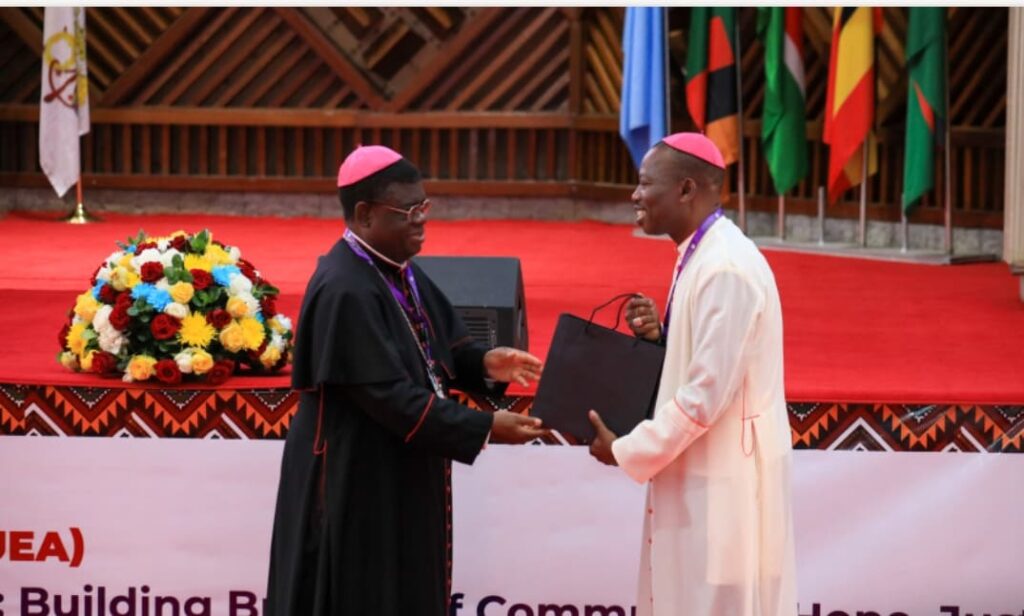
NAIROBI, Kenya — The message from the Symposium of Episcopal Conferences of Africa and Madagascar (SECAM) to the 21st Plenary Assembly of the Association of Member Episcopal Conferences in Eastern Africa (AMECEA) was brief, but its horizon was continental.
As bishops gathered at the Catholic University of Eastern Africa (CUEA) in Nairobi under the theme, “AMECEA’s Synodal Journey with Young People: Building Bridges of Communion, Hope, Justice and Good Governance,” SECAM invited them to see beyond the boundaries of the Assembly and recognize a wider responsibility: the Church in Africa must confront the challenges facing the continent together.
The message, delivered by SECAM’s First Vice-President, Bishop Stephen Dami Mamza of the Diocese of Yola, Nigeria, expressed appreciation for AMECEA’s contribution, encouraged continued leadership within SECAM, and offered a vision of an Africa transformed by the values of the Gospel.
Before turning to continental challenges, Bishop Mamza also commended AMECEA’s Small Christian Communities, its commitment to accompanying young people, and its progress in strengthening institutional structures and financial sustainability.
But beneath those words was a more demanding question: What does it mean for the Churches of Africa to walk together when the realities confronting their people are so deeply interconnected?
From appreciation to responsibility
SECAM began by expressing sincere gratitude for AMECEA’s consistent contribution to the common mission of the Church in Africa. It specifically recognised the region’s pastoral experience, theological reflection and spirit of collaboration, noting their contribution to strengthening SECAM and deepening the bonds of communion among the Churches of Africa.
The acknowledgement was significant, but it did not end there.
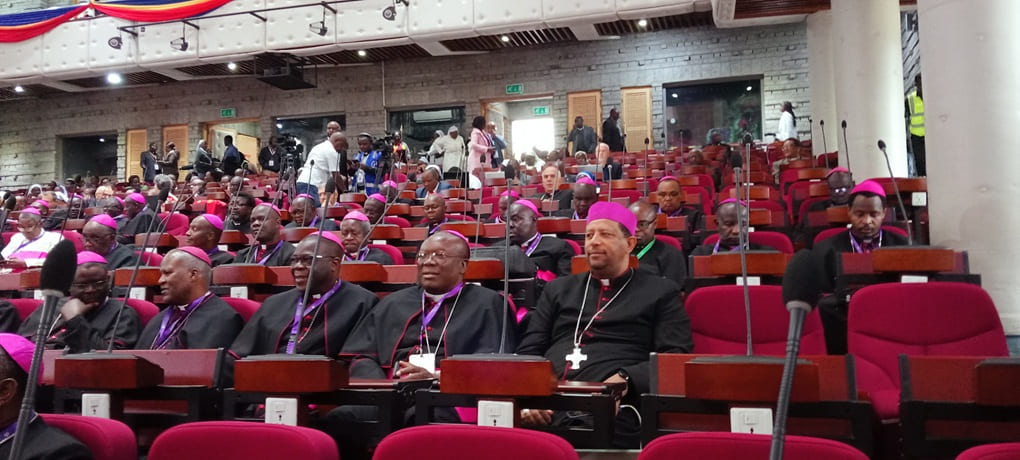
SECAM encouraged AMECEA to continue offering leadership within the continental body as the Church responds to the many challenges confronting Africa, including poverty, armed conflict, forced displacement, ecological degradation, poor governance, youth unemployment, religious intolerance and rapid social change.
These are not distant concerns.
They are realities that affect the lives, security and dignity of millions of people. They also demonstrate how closely the challenges facing African societies are connected. Conflict can drive people from their homes. Poverty can deepen vulnerability. Displacement can fracture families and communities. Ecological degradation can threaten livelihoods and the wellbeing of future generations.
For the Church, such realities cannot be viewed only through social, political or economic lenses. They touch the dignity of the human person and therefore belong to the Church’s pastoral concern.
That is why the call for greater collaboration carries such weight.
By walking together as one Family of God, we can bear a stronger witness to the Gospel and contribute more effectively to justice, peace, reconciliation, and integral human development.
The image of one Family of God gives the message its ecclesial centre.
It suggests that communion is not simply a principle to be affirmed during assemblies. It must find expression in how Churches respond to suffering, share their experience, support one another and contribute to the search for justice, peace and reconciliation.
A vision beyond the present crisis
SECAM did not allow the challenges facing Africa to become the final word.
Instead, its message looked towards the Africa the Church hopes to see.
Our shared hope is for an Africa increasingly transformed by the values of the Gospel, an Africa reconciled within itself, united in its diversity, respectful of the dignity of every person, committed to good governance and care for our common home, and firmly centred on Christ who remains our hope and also our peace.
There is a great deal contained in that vision.
An Africa reconciled within itself points towards a continent capable of confronting division and pursuing peace. An Africa united in its diversity recognises that differences can exist without becoming causes of exclusion or conflict. Respect for the dignity of every person places the human being at the centre of the Church’s concern.
The reference to good governance adds another important dimension. Governance affects the lives of ordinary people, the protection of rights and the distribution of opportunities and resources. For the Church, a commitment to the common good cannot be separated from concern for how societies are led.
Likewise, the call to care for our common home places ecological responsibility within the wider vision of human development.
Yet SECAM ultimately places this vision within the Gospel. The Africa it hopes for is firmly centred on Christ, who remains, in the words of the message, “our hope and also our peace.”
That is the foundation from which the rest of the vision flows.
The continental meaning of Synodality
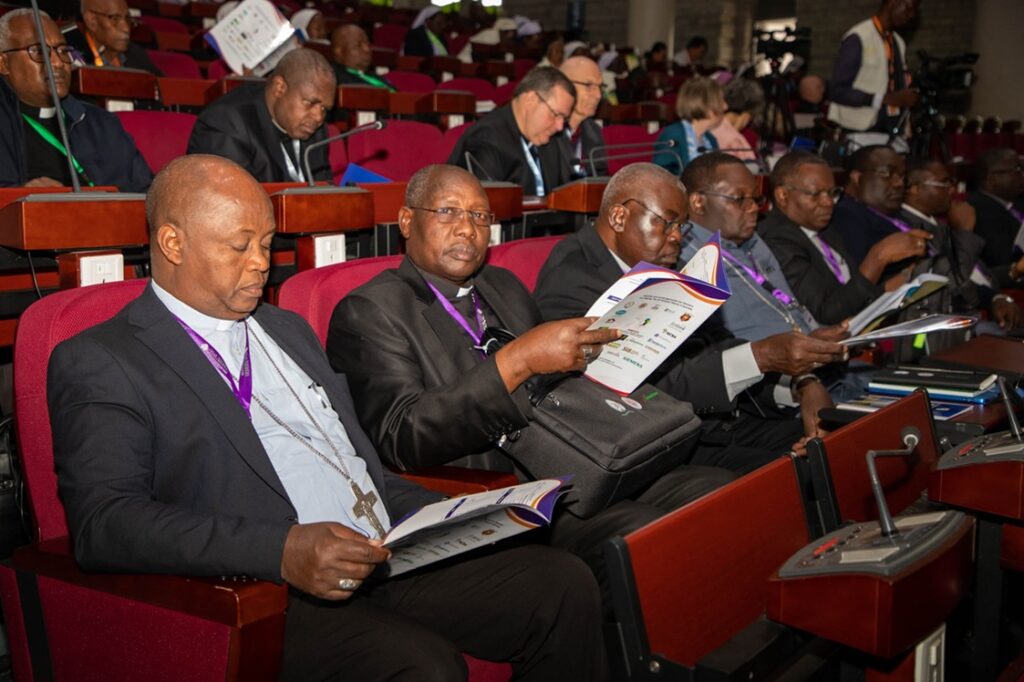
The official SECAM message also called for a deeper commitment to the synodal journey of the Church in Africa.
As the bishops continued their deliberations, SECAM prayed:
“May the Holy Spirit grant you wisdom, courage, and the grace for authentic discernment. May your decisions strengthen the communion of your local Churches, renew your missionary zeal, and deepen your commitment to the synodal journey of the Church in Africa.”
The prayer places discernment at the heart of the Assembly.
This gives particular depth to AMECEA’s chosen theme.
A synodal journey with young people, understood within the wider continental mission described by SECAM, cannot be separated from the call to communion, hope, justice and good governance. The concerns of one generation are part of the wider pastoral reality of the Church, just as the Church’s response to Africa’s challenges belongs to the shared responsibility of its local Churches.
Discernment is a responsibility
There is also something important in the way SECAM prayed for wisdom, courage and authentic discernment.
Discernment is more than arriving at decisions. It requires attentiveness, prayer and the courage to respond faithfully to what the Church is being called to do.
For bishops gathered to deliberate on matters affecting the life and mission of their Churches, that responsibility is considerable. Their decisions can influence the direction of pastoral work and the way local Churches respond to the realities before them.
SECAM’s prayer therefore placed the Assembly’s deliberations within a spiritual framework. The bishops were not simply being asked to make decisions; they were being encouraged to seek the wisdom necessary to make decisions that strengthen communion, renew missionary zeal and deepen the synodal journey of the Church in Africa.
A prayer for the Church in Africa
The message concluded not with another analysis of Africa’s problems, but with prayer.
SECAM entrusted the Assembly to the maternal intercession of the Blessed Virgin Mary, Mother of the Church and Queen of Africa, and invoked the prayers of the African saints and martyrs.
There was a certain fittingness to this conclusion.
The challenges identified in the message—poverty, conflict, displacement and ecological degradation—are immense. The vision proposed in response—reconciliation, unity, dignity, good governance, care for creation and a continent centred on Christ—is equally demanding.
The Church therefore needs both the courage to act and the humility to recognise its dependence on God’s grace.
The final blessing brought the message back to its most fundamental point:
May God bless AMECEA. May God bless SECAM. And God bless the Church in Africa.
The message beyond the assembly
The significance of SECAM’s message will not ultimately be determined by what was said at CUEA. It will be determined by what the Church does with it.
The challenge is substantial.
Can the Churches of Africa strengthen their collaboration in responding to poverty, conflict, forced displacement and ecological degradation? Can they deepen communion while remaining attentive to the diversity of the continent? Can they contribute more effectively to justice, peace, reconciliation and integral human development? Can their decisions renew missionary zeal and strengthen the synodal journey of the Church?
These questions extend beyond AMECEA.
They belong to the wider Church in Africa.
Perhaps this is what gives the SECAM message its lasting significance. It did not present solidarity as a ceremonial gesture between ecclesial bodies. It placed solidarity within the mission of the Church itself.
To work together as one Family of God is to recognise that the Church’s mission is shared.
The suffering of one part of the continent cannot simply remain someone else’s concern. The search for peace, justice and reconciliation cannot be confined to one region. And the hope for an Africa transformed by the Gospel cannot be carried by one episcopal conference alone.
The road ahead will not be simple. But the message from Nairobi offers a clear direction: deeper communion, shared responsibility, courageous discernment and a renewed commitment to the mission of the Church in Africa.
And at the centre of that journey stands the conviction with which SECAM concluded its message—that Christ remains our hope and our peace.
This feature is based on the official SECAM solidarity message addressed to the 21st AMECEA Plenary Assembly and Bishop Stephen Dami Mamza’s presentation of the message at the Catholic University of Eastern Africa (CUEA), Nairobi, Kenya.

Join the conversation