
Beyond Funding: Why the Church in Africa Needs Partnerships Built on Trust, Not Transactions
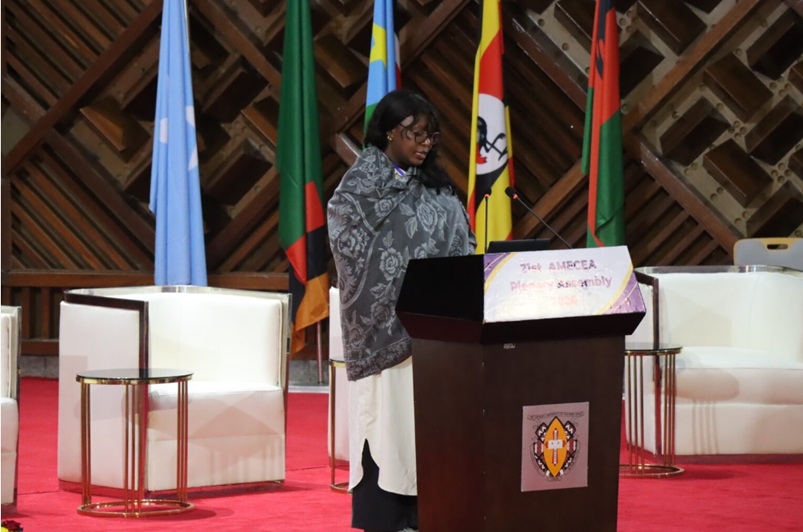
Mwila Mulumbi of CAFOD challenged the Church to rethink partnership—not as a relationship defined primarily by funding, but as a shared journey rooted in trust, listening, youth leadership, and synodality. Her reflections at the 21st Plenary Assembly of the Association of Member Episcopal Conferences in Eastern Africa (AMECEA) offer timely lessons for the Church’s mission in Africa.
The strongest partnerships are not built on funding alone. They are built on trust, listening, and shared responsibility.”
For decades, many development partnerships between the global North and the Church in Africa have been measured by the amount of money committed, projects implemented, or reports submitted. Yet at the 21st AMECEA Plenary Assembly, a different vision emerged—one that places relationships before resources and shared mission before institutional interests.
Speaking on behalf of CAFOD—the Catholic Agency for Overseas Development and the official aid agency for the Catholic Church in England and Wales—Mwila Mulumbi, Programme Manager for the Africa Church Advocacy Programme, offered more than a message of solidarity. She presented a compelling case for a new model of partnership—one grounded in listening, mutual trust, shared leadership, and synodality.
Her message resonated deeply with the Assembly’s theme of journeying together with young people in building a Church rooted in communion, hope, justice, and good governance. It was also a reminder that the Church’s mission in Africa will not be strengthened through financial support alone, but also through relationships that recognise the dignity, wisdom, and leadership already present within local communities.
Mulumbi also underscored the importance of collaboration among bishops, women, young people, and the laity, arguing that lasting change is possible only when it is built on genuine partnership and shared leadership.
According to Mulumbi, CAFOD’s relationship with AMECEA spans more than three decades. Over those years, the partnership has evolved beyond donor-recipient dynamics into a collaborative journey aimed at strengthening the prophetic mission of the Church across Eastern Africa. Through a regional programme dedicated to supporting the Church’s mission, CAFOD has sought to accompany rather than direct, recognising that authentic transformation begins with those closest to the realities they seek to address.
That philosophy reflects the agency’s strategic framework, Our Common Home, inspired by the vision of Pope Francis. The framework challenges CAFOD itself to ask difficult but necessary questions: Are we truly listening to our partners? Are these relationships based on equality and trust? Are we walking together, or merely imposing priorities from a distance?
These questions extend beyond one organisation. They speak to every institution engaged in mission, development, and evangelisation. Genuine partnership demands humility. It requires patience, dialogue, and a willingness to allow local voices to shape priorities rather than simply implement externally designed programmes.
Genuine partnership demands humility. It requires patience, dialogue, and a willingness to allow local voices to shape priorities.”
Perhaps nowhere is this more evident than in the Church’s response to the ecological crisis.
Mulumbi explained that, through the Laudato Si’ Project, implemented jointly with AMECEA over the past three years, communities across the region have strengthened environmental advocacy while embracing practical actions to care for creation. Yet the initiative has never been solely about climate change. It has recognised that caring for creation is fundamentally a spiritual and social responsibility—one that transforms humanity’s relationship with God, with one another, and with the earth entrusted to our care.
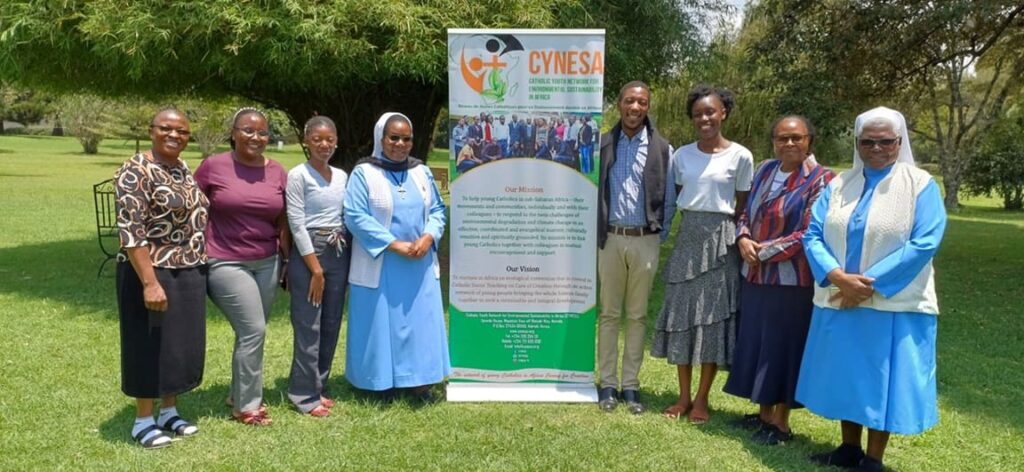
One of the most encouraging fruits of this shared journey has been the growing collaboration between AMECEA and the Catholic Youth Network for Environmental Sustainability in Africa (CYNESA). Through this partnership, young Catholics across the region are educating their peers, mobilising communities, advocating for climate justice, and inspiring practical environmental action in parishes, schools, universities, and local communities. Their witness demonstrates that young people are not waiting to inherit the future—they are already helping to shape it.
Their example challenges a persistent misconception that young people are merely the future of the Church.
They are already shaping its present.
Young people are not simply the future of the Church—they are already shaping its present.”
That insight carries significant implications.
If the Church is genuinely committed to walking with young people, their participation cannot be limited to conferences, consultations, or symbolic representation. Their perspectives must influence how programmes are designed, how resources are allocated, and how pastoral priorities are determined.
Listening must lead to leadership.
Participation must lead to responsibility.
Dialogue must lead to action.
CAFOD’s commitment to supporting women and young people within its regional Church programme reflects that conviction. Technical assistance and financial support remain important, but they are meaningful only when they enable local leadership rather than replace it.
The true measure of any assembly lies not in the quality of its speeches but in the courage to translate its discernment into action.”
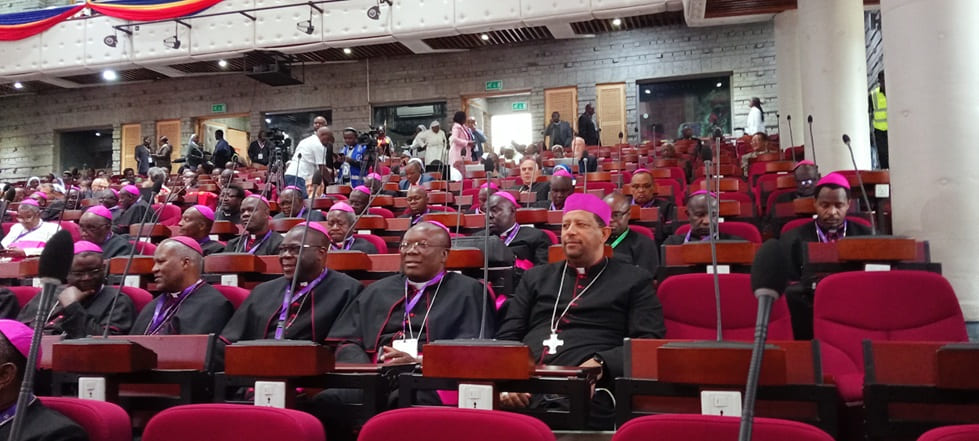
Another notable aspect highlighted during the Assembly was the growing collaboration between AMECEA’s bishops and women religious. Mulumbi observed that Eastern Africa offers a noteworthy example of bishops and women religious working closely together in a spirit of shared mission—an experience from which other regional episcopal conferences across Africa may learn.
That collaboration offers a powerful witness to a synodal Church—one that values the vocation and gifts of every member of the People of God. The synodal vision promoted by Pope Francis continues to call the universal Church to become more participatory, attentive in listening, and inclusive. Such partnerships demonstrate what synodality can look like in practice.
As the current phase of the Laudato Si’ Project draws to a close, AMECEA and CAFOD are discerning what the next chapter of their collaboration should look like. The timing could hardly be more significant. The conversations held throughout the Assembly generated practical recommendations that deserve to shape future collaboration, particularly in relation to youth participation, environmental stewardship, and the strengthening of ecclesial partnerships.
The challenge now is to ensure that these conversations do not remain confined to conference halls.
The true measure of any assembly lies not in the quality of its speeches but in the courage to translate its discernment into action.
The Church in Eastern Africa has already demonstrated that collaboration among bishops, women religious, lay faithful, and young people is not merely possible—it is fruitful. The next step is to deepen that culture of encounter so that every partnership reflects the Gospel values of mutual respect, shared responsibility, and hope.
Ultimately, the strongest partnerships are not those sustained by contracts or funding cycles.
They are sustained by trust.
In a world increasingly marked by division, inequality, and environmental crisis, trust may well become the Church’s most enduring contribution—not only to stronger institutions, but also to stronger communities and a more hopeful future.
