
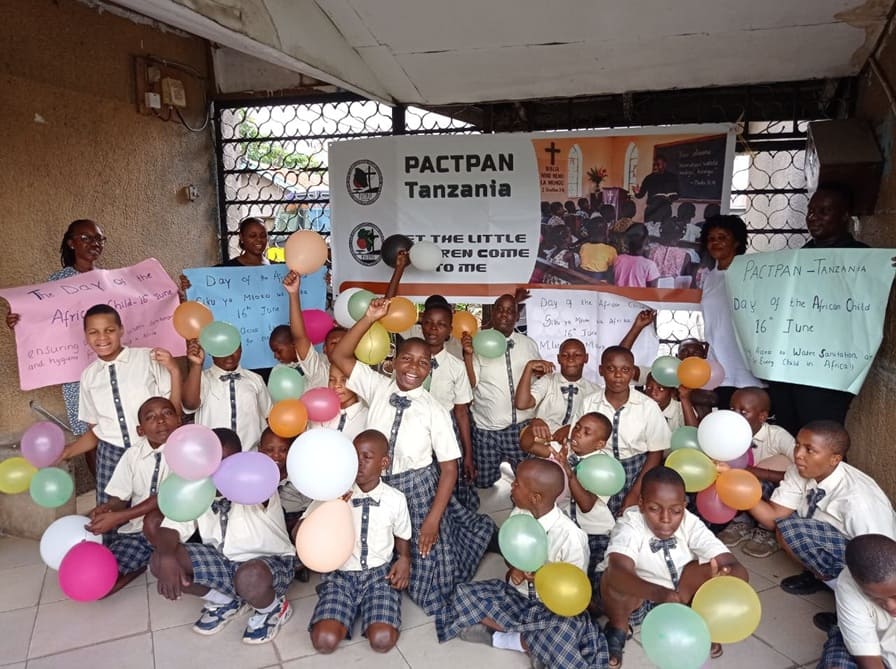
Nairobi, Kenya — Participants at the Pan-African Catholic Theology and Pastoral Network (PACTPAN) virtual forum have called on world and African Church leaders, as well as governments, to work together to provide water and sanitation for African children. The call was made during a virtual forum commemorating the Day of the African Child on June 16, 2026, convened to address the critical issue of ensuring universal access to water, sanitation, and hygiene for every child across the African continent.
The urgency of this mandate is underscored by the devastating statistics that frame Africa’s water, sanitation, and hygiene (WASH) crisis. Currently, one in three African children lacks basic water at home, and two in three lack basic hygiene. Across just ten African countries, 190 million children remain structurally vulnerable, with more than 1,000 children under the age of five dying every single day from preventable waterborne diseases like diarrhea, cholera, and typhoid. The educational toll is equally severe, as approximately 20% of primary-school girls miss three to five days of school every month simply because safe toilets are either nonexistent or unavailable.
Across just ten African countries, 190 million children remain structurally vulnerable, with more than 1,000 children under the age of five dying every single day from preventable waterborne diseases.”
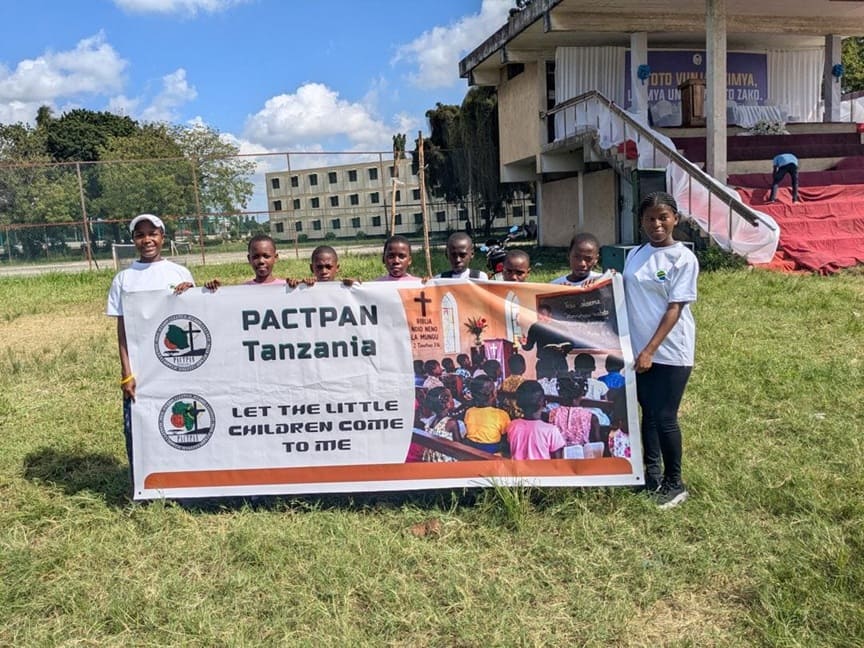
This event, organized by PACTPAN’s Children’s Unit under the theme “Let the Little Children Come to Me”—a concept developed during the foundational network assemblies and formally established at the 2nd PACTPAN Congress in Nairobi—was moderated by Sister Josephine Bertha Bakhita Awino from the Sisters of Mary of Kakamega. The forum facilitated a collaborative dialogue among religious sisters, priests, scholars, and advocates from across Africa to explore the direct impact of inadequate WASH systems on the fundamental rights, safety, and dignity of Africa’s youngest population.
Roots of Resistance and Modern Realities
The webinar commenced with a profound historical context regarding the origins of the Day of the African Child, presented by Sister Sylvia Ruambo, the coordinator of PACTPAN’s Children’s Unit. Established by the Organization of African Unity in 1991, this observance honors the schoolchildren who lost their lives during the 1976 Soweto Uprising in South Africa while peacefully protesting the apartheid education system.
Connecting this history to the present, the forum emphasized that while children in 1976 marched for intellectual freedom, today’s children are fighting a quiet crisis of survival. With more than 60% of Africa’s population under 25, the continent’s future depends heavily on how it protects its youth. Yet, the current statistics present a devastating picture of structural neglect.
The Devastating Toll of Failed WASH Systems
The keynote address, delivered by Perpetual Tudyaliwe Chakwiya, a child health nurse and climate justice advocate from Malawi, stripped away any complacency regarding the daily struggles of African children. Chakwiya reframed the WASH crisis not as a matter of charity or development but as a severe violation of Article 14 of the African Charter on the Rights and Welfare of the Child.
“A failed WASH system is an economic failure.”
— Perpetual Tudyaliwe Chakwiya, Child Health Nurse and Climate Justice Advocate
Chakwiya emphasized that WASH is a fundamental human right rather than a privilege. The speaker illuminated how water scarcity forces children to walk long distances, leaving them exhausted and unable to concentrate in school. Furthermore, failed infrastructure creates a vicious economic cycle where parents deplete their meager resources on medical treatments for waterborne diseases, entrenching families deeper into poverty.
Echoes from the Palaver: Regional Crises and the Call to Action
Following the keynote presentations, Sister Bertha Bakhita Awino seamlessly opened the floor for the traditional “palaver”—a communal dialogue—inviting participants from various regions to bring forward heartbreaking local realities that underscored the multifaceted dangers children face.
Sister Jane Kimathi, the Program Director of PACTPAN, speaking from Nairobi, expressed deep concern over the overlapping crises of water scarcity and child security, noting that children forced to walk miles in search of water are left profoundly vulnerable to human trafficking and abduction. Echoing this, Claire Kirau noted the bitter irony that the very adults charged with protecting these children are often the ones exploiting their vulnerability.
Desderi Wangaa from Tanzania highlighted the alarming condition of school infrastructure, noting that it is not uncommon for a single, inadequately maintained toilet to serve more than 100 students. This situation compels young children to either withhold their needs or resort to open defecation. He advocated implementing cost-effective, immediate solutions, such as rainwater harvesting systems, eco-friendly sanitation facilities, and separate private areas for girls.
The discussion also turned sharply toward accountability and governance. Father Ogato, drawing on experiences from rural Zambia and Kenya, underscored the reality of corruption and misplaced political priorities. He pointed out that it does not cost much to drill a borehole in rural communities, adding that it is painful to preach about Christ as the “living water” when the congregation lacks clean water for daily survival. Consequently, he urged religious institutions to step into the gap by securing independent partnerships with non-governmental organizations.
It is painful to preach about Christ as the ‘living water’ when the congregation lacks clean water for daily survival.”
During the discussion, Sister Miriam Nkole, coordinator of anti-child-trafficking advocacy in Zambia, offered a compelling pastoral perspective, underscoring the necessity for the Church’s mission to be intrinsically connected to the physical well-being of young people. She emphasized that spiritual nourishment cannot be dissociated from fundamental human survival. Sister Nkole urged the network to recognize that defending the dignity of children requires a proactive, daily commitment to addressing structural injustices.
The safety crisis was further elevated by Sr Helen Eluagu, a participant from Nigeria, who shared a devastating report from the ground. Visiting a special education school in a rural area, she found that both existing boreholes were broken, leaving disabled children with no choice but to use the surrounding bush. She also reminded the network of the terrifying security threats looming over Nigerian youth, pointing to the ongoing trauma of school abductions by terrorists. Explaining that fear has forced churches to cancel night vigils and states to shut down schools entirely, she warned that no one in Nigeria is truly safe, least of all women and children.
Moving from Reflection to a Tangible Action Plan
The call for structural transformation resonated deeply within the forum’s interactive channels. Contributing to the live forum chat, Father Stan Chu Ilo, the Coordinating Servant of PACTPAN, urged a profound shift in how the Church addresses these material realities:
Clean water is not a luxury or a charity project; it is a fundamental pro-life issue. If the Church is to be a champion for the sanctity of life in Africa, we must recognize that protecting life begins with ensuring that the water a child drinks does not kill them.”
Father Stan challenged the network’s national chapters to bridge the gap between academic theology and pastoral practice by actively tracking public development funds and holding local municipalities accountable for failed infrastructure.
The commitment to action extended beyond the webinar. On the same day, PACTPAN Nigeria formally launched the #BringThemHome campaign, pledging to ensure that “every kidnapped child is remembered, not forgotten.” The chapter vowed to advocate with national security authorities, provide trauma care to affected families, and raise awareness until every abducted child is returned.
PACTPAN Nigeria described the grim reality of these abductions, noting that some children have been held for months or years, forced to carry guns, forced into marriages, and starved, beaten, or silenced. The theologians vowed that, unlike the shifting news cycles, they would not “move on” from this plight.
As the webinar drew to a close, Sister Bertha Bakhita Awino synthesized the shared insights into a unanimous consensus: the Day of the African Child must no longer be marked merely by annual webinars but by concrete pastoral and political action. Milliam Kayange called on all PACTPAN national chapters to establish clear, localized action plans—including awareness campaigns, environmental cleanups, and direct funding for school water projects.
To systematically address this crisis, PACTPAN is calling for accountable governance—tracking public funds and holding local municipalities responsible for failed infrastructure—alongside immediate, low-cost interventions such as rain-harvesting tanks, eco-sanitation toilets, and private spaces for girls in schools. Crucially, advocates stressed that children themselves must be given a seat at the table to design solutions, ensuring that their voices shape the policies that affect their lives. Finally, the safety of children from abduction and trafficking must be treated as a non-negotiable priority by both state and religious institutions.
The Day of the African Child must no longer be marked merely by annual webinars but by concrete pastoral and political action.”
The session concluded with a vote of thanks from Sister Sylvia Ruambo, who invoked a powerful African proverb: “When spider webs unite, they can tie up a lion.” Guided by a closing prayer and blessing from Father Ogato, the members left with a renewed mandate to join forces, challenge political leaders, and aggressively advocate for the infrastructure needed to enable Africa’s children to live, learn, and grow in true dignity.
