
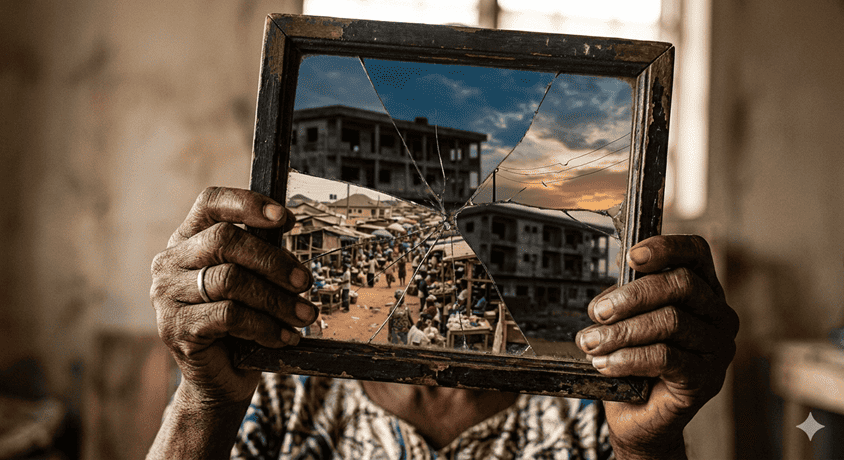
Following his recent visit to Africa, Pope Leo XIV stood within the historic space of the Great Mosque of Algiers. He called on Christians and Muslims to reject fear and build societies together grounded in justice, peace, and mutual respect. His appeal was a theological intervention at a time in human history increasingly defined by hardened identities and weaponized narratives. It is particularly important, as Nigeria begins another election season, to critically reexamine how religious narratives are used for political motives, and how political narratives have been used as false religious motivations by Nigerian politicians in their quest to deploy every available identity marker to access political power and influence.
In this light, I write to challenge a dominant discourse: that Nigeria is witnessing a systematic religious persecution of Christians, even a genocide. This essay also responds to the deeply personal and unmerited attacks directed at Matthew Hassan Kukah, who has insisted rightly that Nigeria’s crisis cannot be reduced to a simplistic narrative of Christian victimhood under Islamic aggression. In a world saturated with outrage, few are willing to do the harder work of careful analysis. Yet without such work, we risk replacing truth with ideology.
In this analysis, I propose that what is needed is not the denial of Christian suffering, but its proper contextualization. Christians in Nigeria are not suffering because they are Christians per se. They are suffering because they are citizens of a state that has failed to guarantee security, justice, and the rule of law. Muslims suffer in similar ways in different contexts. The poor and defenseless Nigerians, regardless of religion, bear the brunt of this systemic failure of a failing state. To insist on this truth is not to minimize suffering. It is to honor it by seeking its real causes to confront reality, which is greater than ideas, sentiments, ideologies, and demonization of one religion or religion itself as the source of violence and social pollution. One of the most troubling consequences of the persecution narrative is that it inadvertently deepens religious polarization within Nigeria.
“Christians in Nigeria are not suffering because they are Christians per se. They are suffering because they are citizens of a state that has failed to guarantee security, justice, and the rule of law.”
Furthermore, I argue that by framing violence as inherently religious, it encourages communities to retreat into defensive identities. It fosters suspicion between Christians and Muslims who have lived together for generations. It risks turning local conflicts into self-fulfilling prophecies of religious war. Yet the Nigerian reality resists such reduction. In many parts of the country, Christians and Muslims continue to coexist, intermarry, and collaborate. Religious leaders often work together to mediate conflicts and promote peace. These everyday practices of coexistence rarely make headlines, but they are the true foundation of Nigeria’s social fabric.
Total Picture, Hidden Transcript, and National Humiliation
How can we understand the Nigerian state today? I approach this question through three methodological lenses that guide my scholarship.
First is what I call the total picture approach, this model insists that African realities must be interpreted through a holistic framework that resists isolating any single variable—religion, ethnicity, economics, or politics—as the sole explanatory factor. Africa’s crises are layered, historically sedimented, and structurally entangled. Any serious analysis must therefore account for multiple factors in dynamic relationships.
Second, I employ what may be called a postcolonial hermeneutic of a hidden transcript. This approach seeks to uncover the unspoken forces behind dominant narratives: the power interests, historical distortions, and ideological constructions that shape how Africa is represented and understood. It asks not only what is being said, but who is saying it, for what purpose, and what remains concealed beneath the surface. If we are to understand Nigeria’s crisis, we must listen to the voices on the ground rather than impose external frameworks. History must be read from the people’s lived experience. The most enduring insights often emerge from the margins of history, where lived experience often challenges dominant narratives. It is here in the stories of ordinary Nigerians that we find a more accurate diagnosis of the crisis. These voices speak not of a religious war, but of abandonment by the state, economic hardship, insecurity, and the daily struggle to survive. If you asked any Nigerian today from the margins how they are doing today, he or she will tell you that “Tinubu has killed us. This government has destroyed this country.” The sad thing is that we have been saying this of successive governments in Nigeria for a long time, and nothing seems to be changing.
The third method, borrowed from Max Scheler’s reflection on ressentiment, offers an important framework for understanding the moral psychology of the Nigerian condition. Scheler used the concept of ressentiment to describe a social and spiritual condition that arises when people experience prolonged powerlessness, humiliation, and frustration, yet are unable to overcome the structures responsible for their suffering. Over time, suppressed anger and wounded dignity seek expression through moral judgments, emotional hostility, and the search for enemies to blame. Ressentiment thus becomes not merely personal bitterness but a collective social force capable of shaping public narratives, politics, and religion.
“A humiliated people become vulnerable to narratives of resentment, fear, revenge, and scapegoating”
Nigerians are a humiliated people because of bad government, widespread poverty, and social misery. A humiliated people become vulnerable to narratives of resentment, fear, revenge, and scapegoating, particularly because the authors of the people’s misfortune, the political and some religious elites, are so remote that ordinary citizens cannot direct their anger against them. Our national humiliation reduces national tragedy to a religious war in which one community becomes the sole victim and another the permanent enemy. In this atmosphere, religion, rather than serving as a prophetic political theology of protest, resistance, and national renewal, becomes a container for accumulated resentment and the externalization of blame.
This insight is particularly relevant in Nigeria, where millions live under conditions that systematically erode human dignity. Poverty is not simply the absence of material resources. It is public humiliation: the humiliation of graduating from universities into unemployment; of seeing political leaders display obscene wealth while citizens struggle for food, electricity, healthcare, security, and education; of parents unable to provide for their children despite years of hard work; of young people who no longer believe effort and honest labor guarantee opportunity; and of communities abandoned to violence while political elites continue endless struggles for power.
The cumulative effect of these realities is the gradual collapse of national hope. Citizens lose confidence not only in the state but also in the possibility of a shared future. Under such conditions, ressentiment flourishes because people seek explanations for their pain and symbolic targets for their anger. Legitimate anger against entrenched systems of political and economic failure is redirected toward simplified narratives of ethnic and religious hostility. Such narratives divide the world into victims and enemies while obscuring the deeper realities of governance failure, elite manipulation, poverty, unemployment, arms proliferation, and institutional decay.
The danger is that religion itself becomes an instrument through which political frustrations are moralized and redirected against rival communities, deepening polarization rather than healing.
“Legitimate anger against political and economic failure is redirected toward simplified narratives of ethnic and religious hostility”
When these three methods are applied to the Nigerian situation, the concept of “religious persecution and genocide” emerges as an incomplete and inadequate narrative.
The Inadequacy of “Religious Persecution” as an Analytical Category
The language of religious persecution appears compelling at first glance. Churches have been attacked. Clergy have been kidnapped. Christian communities have suffered grievous losses. These are undeniable facts. Yet the deeper question remains: does the category of “religious persecution” adequately explain the nature and causes of that suffering?
A more critical reading of this category reveals three interrelated problems that call its adequacy into question. First, the idea of “religious violence” itself is not as neutral or self-evident as it appears. It emerges from a particular intellectual history that artificially separates religion from the broader fields of politics, economics, and social power. By isolating religion as the primary cause of violence, this framework obscures the complex forces that actually produce conflict. What is presented as “religious” often masks struggles over land, resources, governance, ethnicity, unaddressed national trauma, injustice, and the struggle for survival. The label does not illuminate; it simplifies.
Second, the very concept of “religion” that undergirds this analysis is historically constructed and culturally specific. It is shaped by Western modernity and carries assumptions that do not easily translate into non-Western contexts, such as Nigeria. When this category is imposed uncritically, it distorts lived realities. It forces complex social and cultural phenomena into a framework that was not designed to contain them. As a result, what is experienced locally as intertwined realities—faith, identity, politics, and livelihood—is artificially disaggregated in ways that misrepresent the whole.
Third, and perhaps most significantly, the language of religious persecution operates within a global economy of power. It is not simply descriptive; it is performative. It privileges certain narratives while silencing others. It elevates particular forms of suffering, often those that align with Western geopolitical or ideological interests, while rendering other histories invisible. In this sense, the discourse of persecution can function as a political tool, shaping international perception, mobilizing advocacy, and legitimizing intervention, even when it fails to capture the full truth of the situation.
Taken together, these three insights about the constructed nature of “religious violence,” the historical contingency of “religion” itself, and the power dynamics embedded in the discourse of persecution invite a more cautious and critical engagement with the category. They compel us not only to question whether the persecution narrative is accurate, but to ask what work it is doing, whose interests it serves, and what realities it leaves unspoken.
“The discourse of persecution can function as a political tool, shaping international perception, mobilizing advocacy, and legitimizing intervention, even when it fails to capture the full truth of the situation.”
In the Nigerian context, this is not merely an academic concern. It is a matter of truth, justice, and responsibility to which I will return in my next essay.
