
From Fragmentation towards Wholeness: The Journey of Healing
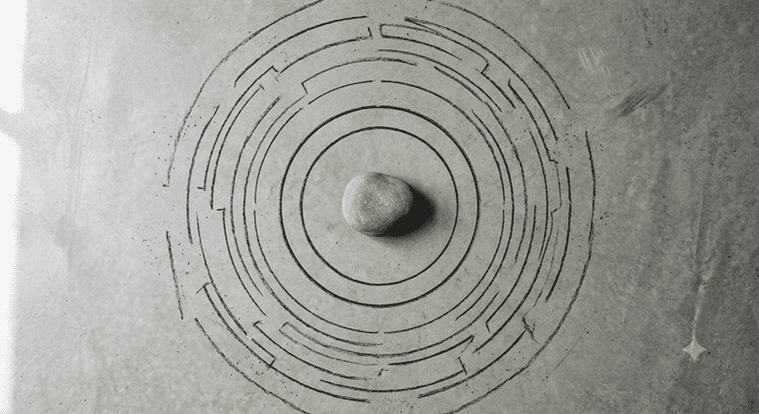
We have traced in Part I the contours of fragmentation – how the African communal fabric has been torn by colonial disruption, ethnic division, and the erosion of traditional kinship structures; how this external fracture has become internalized as personal dislocation, identity crisis, and the war of desires within the human heart. We saw that atonement, properly understood, is not punishment but restoration – a return to at-one-ment with God, with community, and with the self. The Old Testament ritual of Yom Kippur, the African philosophy of Ubuntu, and the mending of the calabash all point to the same truth: healing is both communal and personal; neither is complete without the other.
Healing is both communal and personal; neither is complete without the other.”
But the question that remains – the question that haunts every broken person and every fractured community – is this: How does healing actually happen within the human person?
If fragmentation is not merely a theological concept but a lived reality – etched into neural pathways, encoded in traumatic memory, expressed in the daily struggle between what we want and what we do – then restoration must be more than a metaphor. It must be a process. It must have mechanisms, stages, and practices. It must engage the body, the psyche, the community, and the transcendent in a single, integrated movement.
Mapping the Terrain of Inner Fragmentation
Before we can speak of healing, we must first name the wound: the habits that corrupt us, the overwhelming experiences that shatter us, and the internal divisions that leave us at war with ourselves.
Cognitively, fragmentation manifests as dissonance – the painful awareness that our beliefs, values, and actions do not align. We know what is good, yet we choose what is harmful. We hold competing worldviews that cannot be reconciled. We tell ourselves stories about who we are, only to act in ways that contradict those stories. The mind becomes a house divided, unable to settle on a coherent narrative of the self. This is not mere confusion; it is a condition that saps energy, erodes agency, and leaves us feeling like strangers to ourselves.
Emotionally, fragmentation shows itself in turbulence – contradictory feelings that surge simultaneously, leaving us overwhelmed and unmoored. Grief and anger, love and resentment, hope and despair – they coexist without resolution, pulling us in opposite directions. The fragmented self cannot hold these warring emotions with integrity; it either suppresses them into numbness or is flooded by them into chaos. Neither state is conducive to healing.
Volitionally, fragmentation expresses itself as paralysis – the chronic inability to commit, to choose, to follow through. Parts of the self are at war, each vetoing the other’s desires. We want to change, but we cannot sustain the effort. We make promises to ourselves and break them. We set intentions and abandon them at the first sign of difficulty. This is not laziness or moral failure; it is the symptom of a self that lacks integration, a will that has no unified centre from which to act.
Spiritually, fragmentation is experienced as disconnection – a sense of being cut off from meaning, purpose, and transcendence. The self feels orphaned, adrift in a universe that offers no anchor. Prayer becomes hollow; ritual feels empty. The transcendent dimension of life, which once provided orientation and hope, now seems distant or silent. This spiritual fragmentation is not separate from the cognitive, emotional, and volitional dimensions – it is their deepest expression, the wound beneath the wounds.
Critically, this inner fragmentation does not remain private. It spills outward into relationships, communities, and nations. The person who cannot integrate his or her own desires becomes the neighbour who cannot sustain a friendship, the parent who cannot provide stable attachment, the citizen who cannot participate in building a just society. Inner fragmentation is the seedbed of outer conflict (James 4:1) that become the wars between us. This is why the healing of the self is not a luxury or an indulgence; it is a moral and social imperative.
Yet even as we map this terrain of brokenness, we must resist the temptation to despair. Fragmentation is real, but it is not final. The very act of naming it – of tracing its contours with honesty and compassion – is already the beginning of integration. For the self that can observe its own fragmentation is already more than the sum of its fractured parts. There is a witness within us, a centre of awareness that can hold the fragments without being torn apart. This witness is the seed of wholeness, the ground upon which healing can grow.
Fragmentation is real, but it is not final.”
Neuroscience confirms what spiritual traditions have long taught: the brain is capable of remarkable change. Neuroplasticity – the brain’s ability to rewire itself in response to experience – means that the patterns of fragmentation are not permanent. With sustained intention, supported by safe relationships and meaningful practices, new neural pathways can be forged. Old patterns of reactivity can weaken. The divided self can begin to gather around a new centre.
Atonement as Personal Restoration: Conversion and Expiation
If fragmentation is both inner and outer, then restoration must address both dimensions. Conversion marks the beginning of a new outlook – something old must rupture so that something new can emerge. Psychologically, this involves a radical refocusing of attention, turning away from alienating influences while empowering the spirit toward higher development. Neuroscience can describe some changes associated with attention, habit, and repeated practice: neural pathways may strengthen or weaken over time. Yet religion must be brought in with its unique insight: conversion is not merely cognitive restructuring, but a redrawing of the interior topography – a moral and spiritual reorientation that engages the whole person. Religion names the enabling force behind this transformation as grace (2 Corinthians 12: 9–10) – working at the very springs of human action, often through the same neural and social mechanisms that science studies. The possibility of conversion assures us that we are more than bystanders in the struggles that shape our destiny; we are active participants in a transformation that is biologically embodied and spiritually interpreted.
Expiation names the cleansing dimension of atonement. Yet cleansing should not imply that a wounded person is contaminated or that wrongdoing can simply be wiped away. It entails confronting harm, accepting responsibility, seeking forgiveness, and repairing relationships so that reconciliation with God, others, and self may become possible.
Atonement as Social Restoration: The Jubilee Vision (Leviticus 25)
But atonement cannot stop at the personal. The communal logic of Ubuntu and the biblical vision of Jubilee demand that restoration extend to social structures. Leviticus 25 presents the Day of Atonement within the context of the Jubilee Year – a time when debts were cancelled, slaves freed, and property returned to original owners. No one should forever remain a slave, be crushed by debt, or be obliged to sell off dignity without the possibility of redemption.
Atonement, therefore, functioned as both a religious and a social mechanism – a theological vision of periodic restoration intended to protect land, kinship, and dignity. It involved sacrifices, guilt offerings, and purification rites, all aimed at maintaining or re-establishing right relationship between the divine and the community, and among community members themselves. The Jubilee vision integrates spiritual reconciliation with economic restitution – a model that speaks directly to Africa’s post-colonial struggles for land restitution, economic justice, and political reconciliation.
Thus, the journey toward at-one-ment in Africa must address not only the inner soul but also the outer structures of injustice, marginalisation, and historical wounding. The inner and the outer, the personal and the political, are not separate tracks but a single spiral of restoration.
The inner and the outer, the personal and the political, are not separate tracks but a single spiral of restoration.”
The Christian Framework: Christ as Unifying Centre
For Christians, the ultimate atoning sacrifice is the redemptive death of Christ – an act that rescues humanity from enslavement to fragmentation and makes it possible to live “according to the Spirit” (Romans 8:5). Yet this is not a flight from the physical; it is a transfiguration of it. As Paul writes: “The impulses of nature and the impulses of the spirit are at war with one another; either is clean contrary to the other” (Galatians 5:16–17).Neuroscience maps this ancient insight onto the brain’s architecture – the conflict between the amygdala’s reactive fear and the prefrontal cortex’s reflective regulation. The Spirit, in religious terms, is precisely the enabling power that integrates these warring impulses, much as mindfulness-based therapies train the brain to move from reactivity to response.
In the Gospels, Jesus frames his mission as the redemption of the fragmented, divided person: “The spirit of the Lord is upon me, for he has anointed me to bring the good news to the afflicted. He has sent me to proclaim liberty to captives, sight to the blind, to let the oppressed go free” (Luke 4:16 – 21). With Christ – or with whatever overarching centre of value one names – every human experience is capable of being transfigured and lived in a unified manner. The whole of life can be sanctified and bonded together: “Make every effort to preserve the unity which has the spirit as its origin and peace as its binding force. There is but one body and one Spirit” (Ephesians 4:3 – 5).
The Call to Wholeness
The experiences of fragmentation, division, and conflict give us grounds for complaint – but they can equally become the context for the search for wholeness. There is in every heart an unrelenting thirst for unity. Humanity desires to live at a centre where communication and integration become possible. Atonement is the process of picking up the scattered pieces of our lives – not to return to a pristine original, but to create a new vessel, strong at the broken places, capable of holding life again.
No one escapes life without cracks. Wholeness does not mean perfection. The mended calabash held water – it functioned again. But the cracks remained. True atonement does not erase the past; it transforms it into something that can carry life forward. As the prophet Hosea declares: “Come, let us return to the LORD, for it is he who has torn, but he will heal us; he has struck down, but he will bind our wounds” (Hosea 6:1, NABRE).
True atonement does not erase the past; it transforms it into something that can carry life forward.”
Religion names the healer; science studies the healing. The tearing and the mending are not merely spiritual metaphors – they are experienced in the nervous system, in the chemistry of grief and recovery, in the slow rebuilding of trust after betrayal. Grace provides the direction and the meaning; effort provides the practice; community provides the environment; and biology participates in the embodied process. Together, they weave the fabric of wholeness.
The mended calabash of Grandma Nneka sits on the earthen floor. The cracks remain visible, tracing the geography of its breaking like tribal marks on an old man’s face – testifying to what was broken and what was restored. It holds water again. Not flawlessly. Not perfectly. But truly.
And that is enough.

1 comment
Kudos to the author once more.. So inspiring 👍