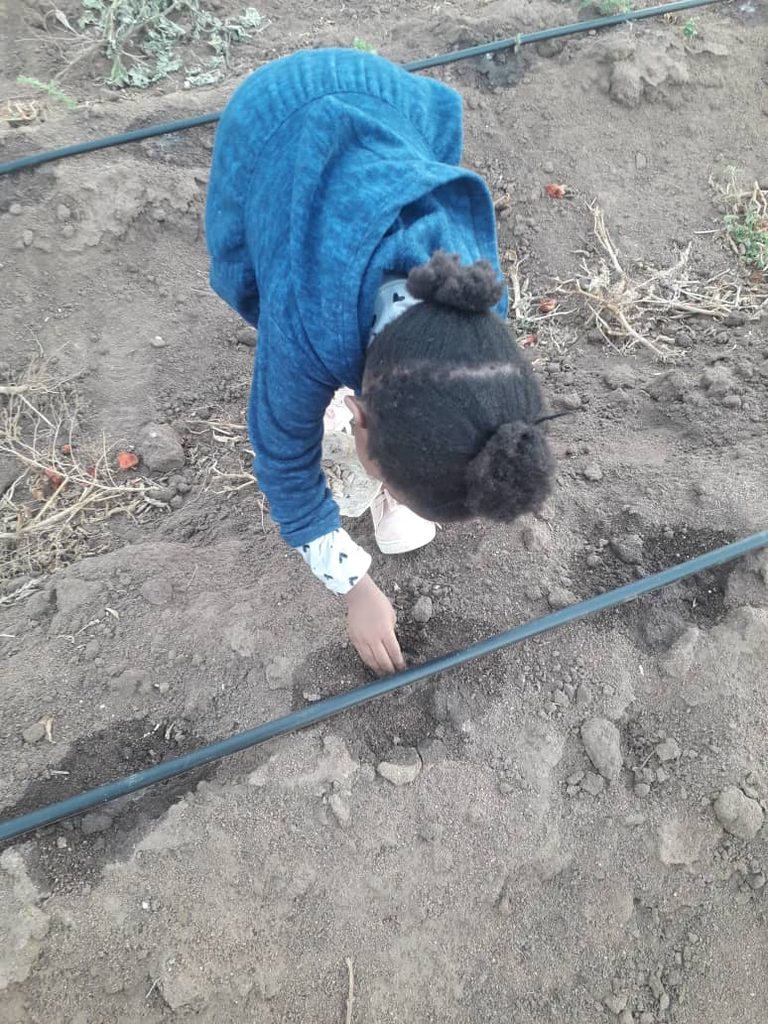
An ancient tale is told in different versions across many lands. It tells of two brothers who lived in a village at the edge of a great forest. Their father, a man wise with age and experience, was dying. He called his two sons to his bedside and placed in each of their hands a single seed – the seed of a rare tree said to bear fruit that could heal the sick and feed the hungry for generations: “Plant these seeds,” the old man whispered, “and care for them. What you do with them will determine your legacy.”
Then he breathed his last.
The elder brother was a dreamer. He spent his days beneath the shade of the forest’s great trees, imagining the magnificent tree his seed would become. He envisioned its branches reaching the heavens, its roots anchoring the earth, its fruit nourishing thousands. He composed songs about the tree, told stories of its future glory, and debated with the village elders about the best ways to cultivate it.
His thoughts were beautiful. His visions were abundant. But he never planted the seed.
The younger brother was a doer. He rose before dawn each day, his hands blistered by the hoe, his back bent beneath the sun. He chose a patch of earth near the river, cleared the weeds, and planted his seed. He watered it in drought, protected it from pests, and pruned it in season.
Days came and went. Weeks flew by, turning into months, and months into years.
The elder brother continued to dream. The younger brother kept cultivating his seed.
One day, a great famine swept through the land. The rains failed, the crops withered, and the people grew desperate. They came to the two brothers seeking help.
The elder brother had nothing to give. His seed still sat in its pouch, untouched, unplanted. His beautiful visions could not feed a single child. The younger brother led the people to his tree – now grown tall and strong, its branches heavy with fruit. Its roots had held the soil against the floods. Its shade offered refuge from the scorching sun. Its fruit fed the hungry.
The people ate, were healed, and gave thanks.
His thoughts were beautiful. His visions were abundant. But he never planted the seed.”
Thoughts and Deeds
The two brothers live in each of us. Every day, we choose which brother we will be – not all at once, but in a hundred small moments that rarely announce themselves as choices at all. Sometimes the alternatives arrive in stark relief: Will we hold the seed in our minds, or plant it in the earth? Will we dream of the harvest, or labour in the field? But more often the choice is quieter and harder to name. It is the difference between planning and preparing, between admiring someone who acts and becoming someone who acts, between the satisfaction of a perfect idea and the risk of an imperfect attempt.
Johann Wolfgang von Goethe, ever the humanist, has a maxim from his novel Wilhelm Meister’s Journeyman Years: “Knowing is not enough; we must apply. Willing is not enough; we must do.” The maxim reflects Goethe’s ideal of the unity of knowledge and action, emphasizing that theoretical knowledge and good intentions remain incomplete unless translated into concrete practice.
That message needs to be underlined in every generation and forms the fulcrum for our reflection here.
Our world today, for example, is filled with many who dream of justice but do not act justly. It is crowded with many who speak of love but do not put love into practice. It is abundant with many who imagine mercy but do not show mercy.
But the Kingdom of God that we all expect to dawn in our world is built only by those who plant their seeds, those who water them to grow, those who tend the soil of the world with their own hands, their own sweat, their own sacrifice. The seed of good intention must fall into the soil of action. Otherwise, it remains a seed – full of potential, but never bearing fruit; full of promise, but never fulfilling it; full of life, but never giving life.
The seed of good intention must fall into the soil of action.”
In many African cultures, the talking drum offers a vivid image: it does not merely break the silence of the village with its sound; it is the living voice of history, community, and spirituality. The talking drum is more than an instrument – it is a means of communication, a keeper of memory, a summons to responsibility. When the drum speaks, the community listens and responds. It calls the young to gather, the elders to counsel, the whole village to act in concert.
The drum embodies the truth that action is not merely individual but communal, that deeds are woven into the fabric of shared life, and that memory and responsibility are passed down through generations by the rhythm of faithful action. So too must our faith be – not a silent thought echoing in the hollow chambers of the mind, but a deed that resounds through generations, a rhythm that shapes the destiny of peoples, a catalyst that accelerates the emergence of God’s kingdom on earth.
The talking drum is more than an instrument – it is a means of communication, a keeper of memory, a summons to responsibility.”
At the beginning of time in Genesis 1–2, the Creator did not breathe life into dust merely to watch it contemplate – He fashioned humanity to act, to build, to become His steward: “Be fertile and multiply; fill the earth and subdue it” (Gen. 1:28); “In the beginning was the Word” (John 1:1), “and the Word became flesh” (John 1:14) – not thought, not intention, but flesh. This is the central tenet of our Christian faith: God Himself did not leave love at the level of words or intentions. He entered history not as a philosophy but as a person who touched lepers, fed multitudes, and wept at gravesides.
None of the distinctions above dismisses thought. Rightly ordered, thought is the seedbed of responsible action; only sterile thought that never ripens into deed is what the Scriptures call barren.
Have any thoughts?
Share your reaction or leave a quick response — we’d love to hear what you think!
-
 0
0
-
 0
0
-
 0
0
-
 0
0
-
 0
0
-
 0
0