
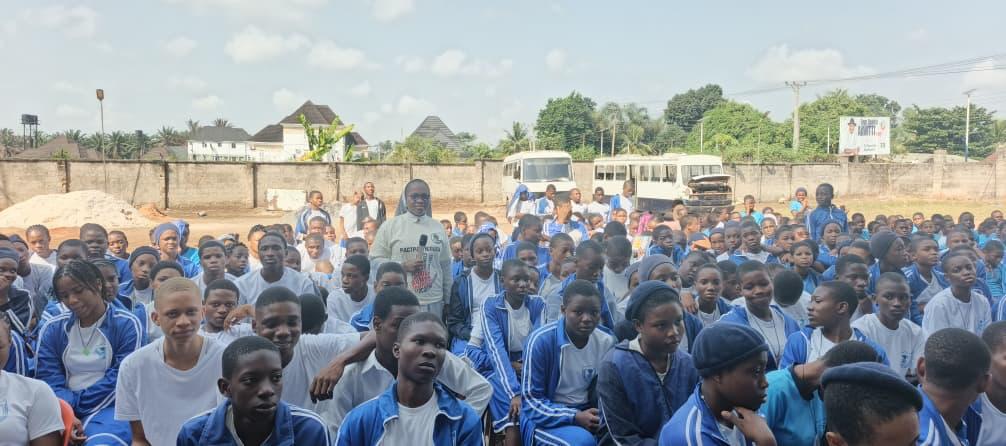
At the 2026 Global Women’s Health Summit, African women are not just lending their voices; they are reshaping the global health discourse. Sr. Grace Akunna John-Emezi is among those redefining how we think about breast cancer care on the continent. By offering a profound reflection on silence, inequality, faith, and survival, she brought to light the harsh realities that continue to shape the experiences of countless rural African women confronting illness with limited support and even fewer choices.
For many women, the greatest danger is not only the disease itself, but the inability to speak openly about it, seek timely treatment, or participate fully in decisions concerning their own health
The tragedy, as Sr. Grace emphasized, is that many of these deaths are entirely preventable. Yet, across rural communities in Nigeria, breast cancer continues to claim lives at alarming rates, largely because it is often detected too late. Behind every statistic lies a deeply human story—a mother who ignored a lump out of fear, a wife who waited for permission before seeking medical help, or a woman who chose silence because cancer in her community is associated with shame, spiritual attack, or inevitable death.
While awareness campaigns have increased over the years, awareness alone has often failed to translate into action. Many women may know about breast cancer in general terms, yet very few consistently practice self-examinations or attend screening services. Information exists, but confidence, access, and social support often do not, while healthcare remains distant—geographically, financially, and psychologically.
To speak of self-advocacy, she said, is to speak about far more than individual confidence. It is about giving women the courage and freedom to take ownership of their health in societies where their voices are frequently minimized. It means encouraging women to ask questions without fear, to seek medical care without shame, and to understand that protecting their health is neither selfish nor sinful.
In many communities, cultural expectations still encourage women to endure suffering quietly. Decisions about healthcare may rest with husbands or family elders, while myths surrounding cancer continue to fuel fear and misinformation. Some women avoid hospitals because they believe a diagnosis automatically means death. Others turn exclusively to prayer houses or traditional remedies, not necessarily out of ignorance, but because formal healthcare systems often feel inaccessible, expensive, or emotionally intimidating.
Medicine as an Act of Faith
She challenged the false divide often created between faith and medicine, arguing persuasively through the lens of faith and reason that seeking treatment should never be interpreted as a lack of faith. Instead, she stressed that choosing medical care is itself an act of faith—an affirmation that life is sacred and worth protecting.
Choosing medical care is itself an act of faith—an affirmation that life is sacred and worth protecting.
She suggested that faith communities possess enormous potential to reshape conversations around women’s health. A simple parish gathering can become a space where women learn about breast self-examination, hear survivor testimonies, and receive encouragement to seek screening before symptoms worsen.
“In such moments, the Church becomes more than a spiritual refuge; it becomes a bridge between compassion and healthcare,” she said.
A Call for Community and Structural Change
Sr. Grace insisted that women should not face this struggle alone, calling on communities to create environments where women feel safe to speak about illness without stigma or judgment. In societies where men often control healthcare decisions, engaging husbands and community leaders becomes essential to improving women’s access to timely care.
The presentation also highlighted the urgent need for structural change, emphasizing that self-advocacy cannot flourish where healthcare infrastructure is weak, cancer centers are scarce, and treatment costs remain beyond the reach of ordinary families. She called for a system that not only encourages women to speak up but is also capable of responding with dignity, affordability, and care.
Rather than reducing women to victims, the conversation portrayed them as agents of transformation, capable of changing not only their own outcomes but also the attitudes of their families and entire communities. In doing so, survivors become sources of courage for others still living in fear and silence.
When women are denied information, discouraged from asking questions, or prevented from making decisions about their own bodies, healthcare itself becomes unequal
Ultimately, this was a wider reflection on gender, dignity, and social justice. It demonstrated that breast cancer care is not merely a medical issue, but a deeply human one. When women are denied information, discouraged from asking questions, or prevented from making decisions about their own bodies, healthcare itself becomes unequal.
Sr. Grace’s presentation served as both a warning and a call to action. It called on governments to invest more seriously in accessible cancer care, healthcare professionals to communicate with greater empathy and clarity, faith leaders to help dismantle harmful myths, and communities to finally replace stigma with support.
