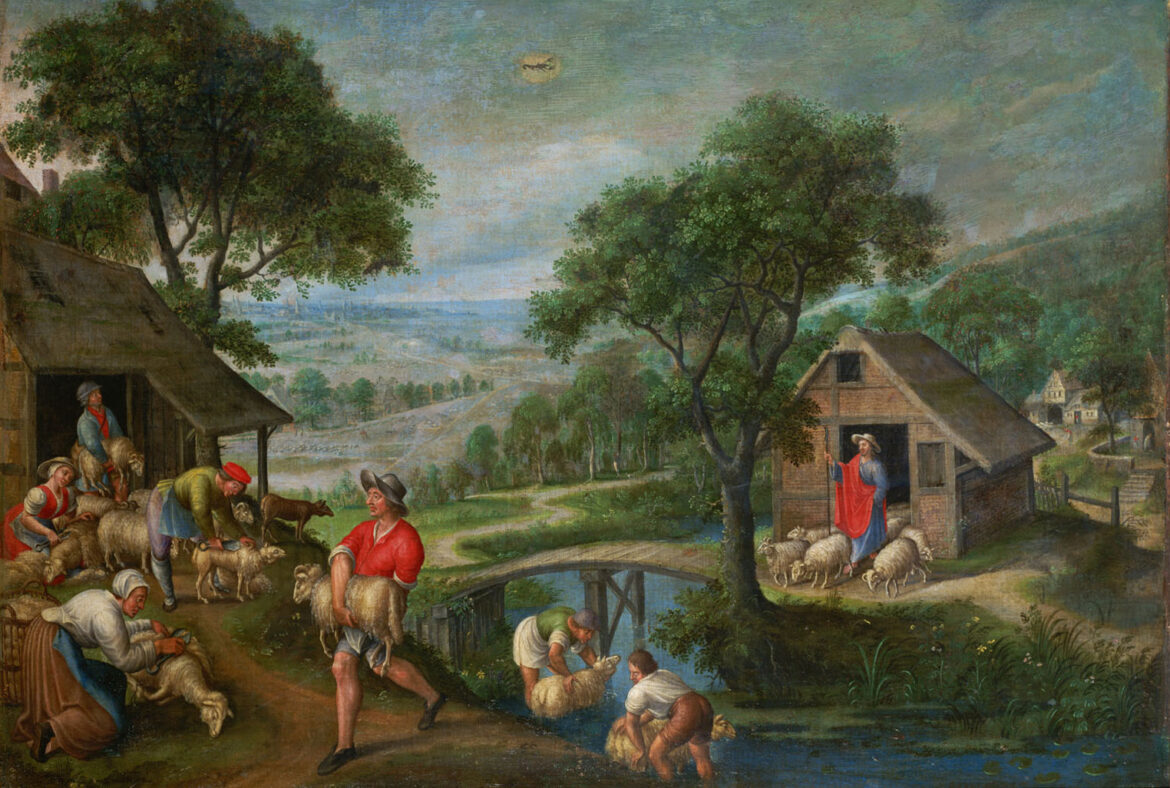
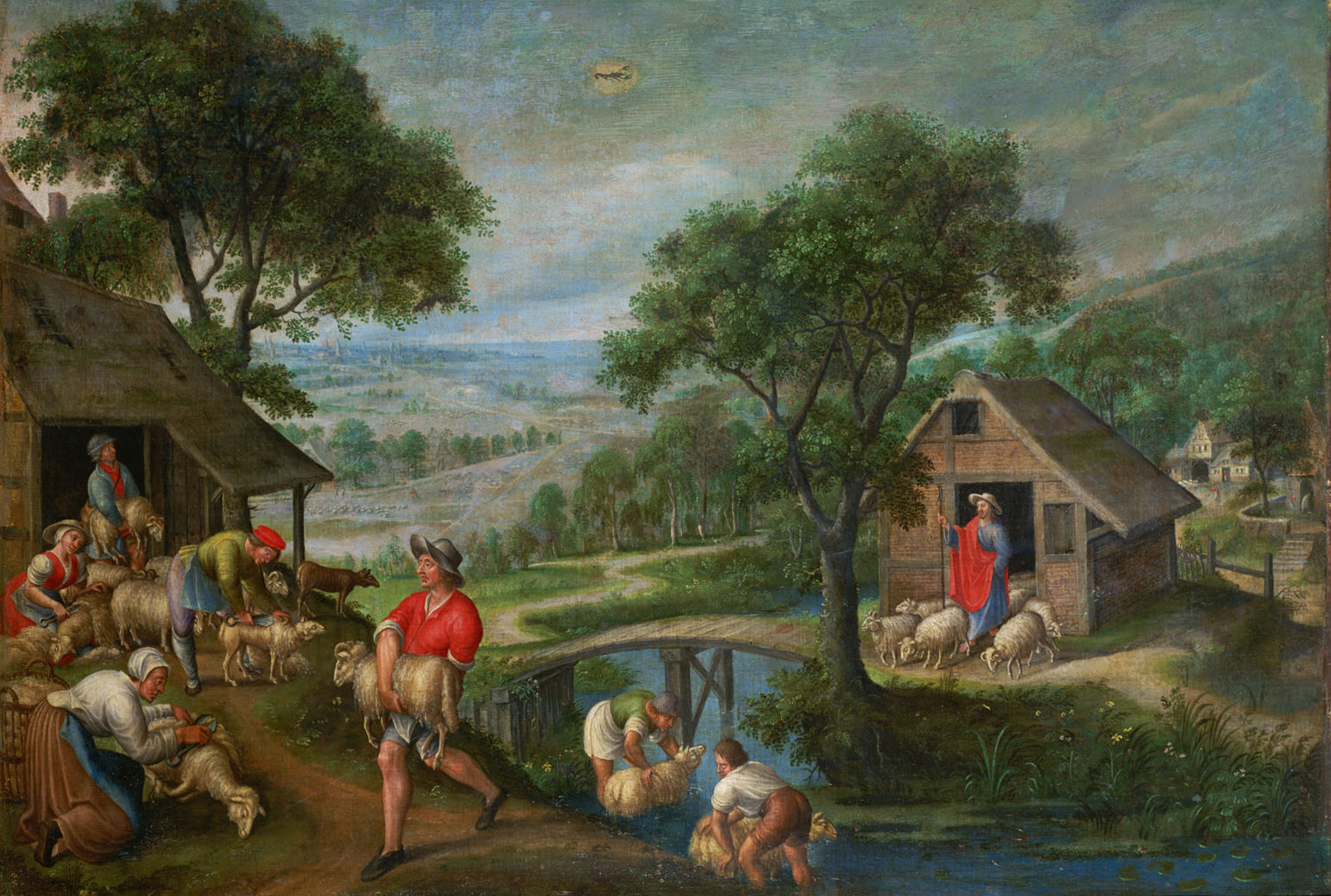
A 16th-century Flemish painting of Christ as the Good Shepherd tending sheep in a pastoral landscape
Marten van Valckenborch, Parable of Christ as the Good Shepherd (June), 16th century. Public domain, via Wikimedia Commons.

On Sunday, the Church celebrated the Solemnity of Christ the King, and I find myself returning to the image of Christ as the King of Peace. The liturgy celebrates his triumph and the hope of a kingdom founded on peace. Yet this joy sits uneasily alongside Africa’s realities: conflict, insecurity, poverty and leadership too often preoccupied with prestige rather than service.

The readings for the solemnity offer a compelling vision of leadership. In Ezekiel, God seeks the scattered sheep, rescues them, binds their wounds and strengthens the weak (Ezek. 34:11–17). Psalm 23 presents the Lord as shepherd, while in Matthew’s Gospel the King identifies himself with the hungry, the stranger, the sick and the imprisoned (Matt. 25:31–46). Christ’s kingship is not an exhibition of privilege; it is authority exercised through care, justice and accountability.

This message has particular urgency in Africa, where Christianity continues to grow in demographic significance. According to a new projection by the Pew Research Center, published on 18 November 2026, the Democratic Republic of the Congo is projected to overtake the United States and have the world’s largest Christian population by 2070, with approximately 299 million Christians, representing roughly one in ten Christians worldwide. More than half of the world’s Christians are also projected to live in sub-Saharan Africa by 2070. These are demographic projections, not guarantees of social transformation. (Pew Research Center, 2026)

From Kinshasa to Lagos, the credibility of Christian faith is tested by realities that sermons alone cannot resolve. In eastern Congo, armed violence has displaced communities and disrupted essential services. In Nigeria, corruption, insecurity and economic pressures continue to undermine the wellbeing of citizens. Across the Sahel and the Horn of Africa, conflict and displacement expose the distance between the dignity of the human person and the daily experience of ordinary people. The question is not simply how many people identify as Christians, but whether Christian values are shaping public life.

African Christians know the language of the messianic age: wisdom, understanding, counsel, might and the fear of the Lord. They know the vision of a world in which the wolf lives with the lamb and weapons are transformed into instruments of cultivation (Isa. 11:1–10; 2:4). Yet many continue to live under systems marked by authoritarianism, patronage and concentrated power in several countries, from Yaoundé and Lomé to Malabo. Each year, the solemnity offers a glimpse of a different order. Then the procession ends, the hymns fall silent, and familiar burdens return.

Why does the kingdom proclaimed as near seem so distant from people’s lives?

Some question Christianity’s capacity to transform society. Others point to the colonial legacy of the Church or argue that African Christians continue to hold traditional beliefs beneath a Christian exterior. These debates deserve serious engagement. Yet I am struck by another omission: in searching for an African future, theologians, thinkers, scholars and activists do not always give sufficient attention to the constructive political and ethical resources found in parts of Africa’s own history and traditions.

The claim that precolonial Africa was simply a Hobbesian landscape of chaos, warfare and tribal conflict is too sweeping. Some societies experienced warfare, slavery and injustice; others developed institutions and practices for mediation, social regulation and the pursuit of peace. Acknowledging these achievements is not an attempt to romanticise the past. It is a refusal to tell African history only through the language of disorder, as though Africans lacked the capacity to develop meaningful political institutions and systems of governance.

Joseph Conrad’s Heart of Darkness remains an important literary work in discussions of European imperialism, particularly because of its portrayal of the violence and moral corruption of colonial exploitation. However, its representation of Africans became the subject of Chinua Achebe’s influential essay, “An Image of Africa: Racism in Conrad’s Heart of Darkness” (1977). Achebe challenged the dehumanising racial imagery through which Africans were denied full humanity. Although Conrad’s novella is not a political treatise on African self-government, it became part of a wider colonial discourse that often portrayed Africa as a place without meaningful history or institutions. Such assumptions deserve to be challenged.

Nor is the answer an uncritical return to the past. Traditional institutions were not uniformly just or peaceful, and they must be examined in the light of human dignity, equality and the common good. Rejecting their abuses does not require us to discard every indigenous value. The task is one of discernment: identifying what can be renewed, corrected and brought into fruitful conversation with the Gospel.

The Nri Kingdom of present-day southeastern Nigeria offers an important point of reflection. In An Igbo Civilization: Nri Kingdom and Hegemony, the anthropologist M. Angulu Onwuejeogwu examines the distinctive character of Nri political and religious authority. Unlike many systems of kingship associated with military conquest and territorial domination, the influence of the Eze Nri, the priest-king, rested substantially on ritual and spiritual authority. Nri’s influence extended beyond its immediate community through ritual specialists who travelled among Igbo settlements, performed rites of purification, helped settle disputes and exercised authority through shared religious and social norms. Nri’s influence is therefore often understood as a form of ritual hegemony rather than a modern centralised state governed through military force.

Accounts of Nri traditions also describe restrictions and ritual prohibitions intended to protect sacred obligations, regulate conduct and preserve social order. Some historical interpretations associate Nri’s authority with the rejection of certain forms of violence and the protection of people vulnerable to enslavement. These claims require careful attention to their historical context and should not be understood as evidence that Nri was a conflict-free society or that its influence amounted to a universal abolition of war and slavery. What remains significant is the possibility that authority could be exercised through moral and spiritual influence, mediation and the regulation of communal life rather than through military domination alone.

Here, a conversation with Christ the King becomes possible. Nri was not a Christian kingdom, and its priest-kings were not equivalent to Christ. Yet aspects of its peace-oriented authority resonate with the biblical vision of leadership that protects life, restrains violence and seeks reconciliation. Isaiah’s vision of swords beaten into ploughshares (Isa. 2:4) gives theological expression to the aspiration that power should make peace possible rather than organise domination. This is not an equation between two traditions; it is an invitation to discern values that the Gospel can purify, challenge and deepen.

When I see African thinkers, scholars, theologians and activists searching for transformative solutions, I am struck by how easily these traces of indigenous political wisdom can be overlooked. We debate imported models and development prescriptions, yet we do not always ask what our own histories can contribute to the conversation. Africa needs accountable institutions, the rule of law and a moral imagination rooted in service, reconciliation and responsibility.

The Solemnity of Christ the King should be more than a celebration of heavenly triumph; it should also be an examination of earthly leadership. Christ measures greatness not by the number of subjects who obey, but by the lives protected and the vulnerable served. The Nri experience is no ready-made blueprint for modern democracy, but it reminds us that African political imagination included alternatives to rule by the sword. The challenge is to bring the best of that inheritance into critical dialogue with the Gospel and democratic values.

Africa does not need kings who merely wear crowns, nor presidents who treat public office as personal property. It needs leaders who understand authority as a trust. If Christ is truly our King, the hungry, the displaced, the wounded and the forgotten must become the measure of our politics. Only then will the joy of the solemnity echo in the life of the continent.

References

Achebe, Chinua. (1977). “An Image of Africa: Racism in Conrad’s Heart of Darkness.” The Massachusetts Review.

Conrad, Joseph. Heart of Darkness.

Onwuejeogwu, M. Angulu. (1981). An Igbo Civilization: Nri Kingdom and Hegemony. Ethiope Publishing Corporation.

Pew Research Center. (2026, November 18). The Future of the Global Christian Population, 2020–2070. https://www.pewresearch.org/religion/2026/11/18/the-future-of-the-global-christian-population/

0 comments
0 FacebookTwitterPinterestEmail
A tall saguaro cactus stands among desert shrubs in the Sonoran Desert, Arizona, with mountains behind it

I visited Phoenix, Arizona, a few weeks ago. With friends, I toured the Desert Botanical Garden, a conservation site in the Sonoran Desert that houses thousands of desert plant species. What struck me most was the cactus and the strategies it has evolved to survive in one of the Earth’s harshest environments.

The Phoenix area endures intense heat and receives roughly seven inches of rain annually. A volunteer at the garden explained some of the cactus’s adaptations. Unlike many plants, cacti have evolved spines in place of broad leaves. These spines protect the plant from animals and, together with other adaptations, help minimise water loss. Equally fascinating is Crassulacean Acid Metabolism (CAM), a process in which the plant’s pores remain closed during the day and open at night, when temperatures are cooler and humidity is higher. Together, these mechanisms allow cacti to conserve water with extraordinary efficiency. Some species, such as the iconic saguaro, can live for nearly two centuries.

The wisdom here does not lie in the hardship the cactus faces but in its capacity to organise its existence around the realities of its environment. Rather than resisting the desert, it has adapted to it. This offers a powerful metaphor for Africa and the challenges it faces today: societies develop not by abandoning their historical and cultural foundations, but by adapting them to new circumstances.

Although the cactus’s story cannot be transferred directly to human societies, it offers an important insight. Every people is shaped by a particular history, geography and cultural inheritance. Many Africans, whether living on the continent or in the diaspora, possess distinctive traditions and ways of understanding the world. Across the continent’s diversity, one recurring theme is the emphasis on community, interconnectedness and mutual responsibility. Many African traditions understand human beings not as isolated individuals but as members of an interdependent network that includes family, community, ancestors and future generations.

Among the Igbo, for example, the proverb Igwe bụ ike expresses the principle that strength comes from unity, while onye aghala nwanne ya reminds us not to abandon one another. Although such principles have often been applied within clans, ethnic groups or regions, they carry broader implications for social and political organisation. They point towards a vision of society grounded in cooperation, solidarity and shared responsibility.

However, colonialism, Western educational systems and decades of dependence on foreign political models have often led Africans to measure themselves against external standards. Political institutions, economic theories and social ideals originating outside Africa have largely become the principal benchmarks for measuring progress. This has generated a subtle cultural estrangement in which Africans are encouraged to flourish according to assumptions developed in contexts very different from their own.

To bloom where one is planted does not mean rejecting engagement with the wider world. It means recognising the value of one’s own intellectual and cultural inheritance and using it as a foundation for development. Genuine growth begins with understanding the soil from which one emerges.

Learning to grow from our own roots

Nature offers a useful parallel. While cacti are indigenous to the Americas, Africa has its own desert-adapted plants, particularly euphorbias. Although some euphorbias closely resemble cacti, they belong to a completely different botanical family. Through convergent evolution, unrelated species have developed similar characteristics because they face similar environmental pressures. Both cacti and many euphorbias store water, bear protective spines and survive in arid conditions. Yet each arrived at these adaptations through its own evolutionary pathway.

This example suggests a useful lesson for political and social development. The central question for Africa is not which foreign institutions are most advanced and therefore worthy of imitation, but what resources already exist within African societies to address contemporary challenges.

African communities possess rich traditions of governance, justice, leadership and social organisation, refined through centuries of practical experience. Such traditions should not be dismissed or discarded simply because they did not emerge from modern Western political thought. In this respect, Africa is not an empty landscape awaiting the importation of ideas from elsewhere. The continent has a long and complex history of intellectual reflection, much of it preserved orally rather than in written form.

The legacy of colonial domination continues to privilege European intellectual traditions as universal standards while relegating indigenous African systems of knowledge to the margins. Consequently, many Africans are more familiar with Western political traditions than with the intellectual foundations of their own societies.

Another botanical example illustrates the dangers of uncritical transplantation. During the eighteenth century, European settlers introduced the prickly pear cactus (Opuntia) into South Africa. Initially valued as a living fence and an emergency source of food and water for livestock, the plant eventually spread uncontrollably because the local environment lacked the predators and diseases that kept it in check in its native habitat in the Americas.

By the early twentieth century, prickly pear had become one of South Africa’s most serious ecological challenges, covering extensive areas and displacing indigenous vegetation. Imported without sufficient consideration of local conditions, an apparently useful solution became a major problem. It remains classified as an invasive weed in South Africa, although spineless cultivars are grown for fruit and fodder, and its spread requires ongoing control.

Political institutions, when transplanted across cultural contexts without careful adaptation, can follow a similar pattern. Following independence, many African nation-states inherited constitutions, administrative structures, legal systems and electoral arrangements designed in Europe for European circumstances. These institutions reflected particular social conflicts, economic developments and cultural assumptions that were not always present in African societies.

Transplanted without sufficient adaptation, they have sometimes produced tensions and unintended consequences. Winner-takes-all electoral systems, for example, have in some cases intensified ethnic competition rather than fostered national unity. Highly centralised structures have also disrupted older traditions of local participation and accountability. As a result, many citizens experience the state as a distant institution rather than as an expression of their collective values and aspirations.

Africa’s democratic and social inheritance

This observation should not be interpreted as a rejection of foreign ideas. Societies have always borrowed from one another, and no civilisation develops in complete isolation. The crucial issue is not whether borrowing occurs, but how it occurs. Productive borrowing requires discernment: ideas should be adapted to local realities rather than accepted as universally applicable simply because they work well in the contexts where they originated.

African intellectual history offers resources for this kind of adaptation. Consider democratic governance. In his 1995 essay, Democracy and Consensus in African Traditional Politics: A Plea for a Non-Party Polity, Ghanaian philosopher Kwasi Wiredu argued that the Western model of multi-party, majoritarian democracy is fundamentally adversarial and may be ill-suited to some African societies.

Wiredu observed that many precolonial African societies prioritised consensus-building over adversarial political competition. Decisions were often reached through extended consultation aimed at securing broad agreement rather than relying on majority rule alone. He therefore suggested that these traditions could contribute to forms of democracy better suited to societies in which rigid party competition often reinforces ethnic and regional divisions.

Critics point to Uganda’s Movement system (1986–2005), under which political parties were prohibited from fielding candidates, as a cautionary example of the limitations of non-party political arrangements. Wiredu’s proposal is therefore better understood as an invitation to rethink democratic institutions than as a ready-made blueprint.

Another example is Botswana’s kgotla system. The kgotla is a public assembly in which citizens engage with community leaders. Participants are encouraged to express criticism and contribute to deliberations. Although modern Botswana is not governed solely through this institution, the kgotla demonstrates how indigenous traditions can inform contemporary political practice and strengthen public accountability.

Botswana continues to elect its National Assembly through a first-past-the-post electoral system inherited from British colonial rule. The kgotla therefore operates alongside imported institutions rather than replacing them.

Several African societies developed sophisticated mechanisms to limit power and encourage participation. Among the Igbo of southeastern Nigeria, many communities historically operated without centralised kingship. Governance frequently involved councils of elders, age-grade associations, village assemblies and other institutions that distributed authority across multiple centres. This arrangement is captured in the expression Igbo enwe eze (“the Igbo have no king”).

Among the Asante of Ghana, the Queen Mother, known as the Asantehemaa, exercised significant political influence, including the authority to nominate rulers and, in certain circumstances, remove them. This system introduced an important dimension of accountability into governance.

Likewise, the Gadaa system of the Oromo people of Ethiopia is a sophisticated leadership and judicial system organised around rotational cycles, defined terms of office and orderly transitions of power. In 2016, UNESCO inscribed it on its Representative List of the Intangible Cultural Heritage of Humanity as an indigenous democratic socio-political system.

These examples challenge the assumption that constitutionalism, accountability and participatory governance are exclusively Western achievements. Although their forms differ from those of modern democratic systems, they demonstrate that African societies developed their own mechanisms for limiting authority, preventing abuse and involving citizens in public life.

Justice offers a similar insight. Following the 1994 genocide, Rwanda faced an unprecedented legal challenge. Conventional courts lacked the capacity to process the immense number of cases arising from the violence. In response, the state revived and formalised the Gacaca court system, drawing on local traditions of communal adjudication. The courts operated nationally from around 2002 until 2012.

Although the process remained controversial and imperfect, it reflected an effort to address an extraordinary crisis through institutions rooted in local social practices. The courts closed in 2012 after hearing nearly two million cases, although human rights organisations criticised limitations on defendants’ rights.

Underlying many African approaches to justice is the recognition that wrongdoing damages relationships as well as legal norms. Restoring social harmony therefore often receives as much emphasis as punishment. This restorative emphasis offers important lessons for societies seeking reconciliation after conflict.

Sankofa and the future of African development

Recovering these traditions is not an exercise in romantic nostalgia. Rootedness should not be confused with rigidity. The cactus survives precisely because it adapts continuously to changing conditions. Cultural traditions remain relevant only when they are critically examined and renewed.

Many African intellectual traditions acknowledge this principle. The Akan concept of sankofa encourages communities to retrieve what is valuable from the past while leaving behind what is no longer useful. Tradition is not a museum artefact but a living inheritance.

African thinkers throughout the twentieth century sought to embody this approach. Figures such as statesmen Kwame Nkrumah and Julius Nyerere, and historian Cheikh Anta Diop, attempted, in different ways, to reconcile indigenous values with modern political and economic realities. Nyerere’s concept of Ujamaa, for instance, drew on the moral language of extended family and communal responsibility as a foundation for national development. Whatever one’s assessment of its results, it represented an important effort to formulate policy from African cultural premises rather than relying solely on imported ideological frameworks.

The challenge facing Africa today is twofold.

First, Africa must recover and critically evaluate its intellectual traditions. This means identifying the elements that remain relevant while reforming those that no longer serve contemporary needs. Consensus-based systems, for example, may need to be adapted to ensure the inclusion of women and marginalised groups and to foster cooperation across ethnic lines. Local forms of participation may also require modification to function effectively within large, modern African nation-states. Such changes do not betray tradition; they keep it alive.

Second, Africa must reconsider its educational priorities. In many schools and universities, students encounter Plato, Aristotle, Locke, Hobbes and Rousseau long before they are introduced to African philosophers and political traditions. The result is often a curriculum that presents Africa primarily as an object of study rather than as a source of knowledge.

African philosophies preserved in proverbs, oral traditions, literature and political institutions often receive minimal attention. A more balanced curriculum would not replace global knowledge with parochialism. Instead, it would place African intellectual contributions alongside those of other civilisations, enabling students to engage with the world from a position of cultural confidence rather than intellectual dependency.

The image of the cactus returns us to a profound lesson. The saguaro does not apologise for being shaped by the desert. It neither denies its environment nor seeks to imitate a rainforest tree. Instead, it draws life from the conditions in which it is planted and develops forms of resilience uniquely suited to its surroundings. Its strength lies not in escaping its habitat but in understanding it and adapting to it.

Africa faces a similar challenge. The continent inherits a rich legacy of communal responsibility, consensual deliberation, distributed authority, restorative justice and social solidarity. These traditions should neither be romanticised nor discarded. They should be critically retrieved, refined and brought into dialogue with the modern world.

The task before Africa is not to choose between tradition and modernity, but to reconcile the two. Africa must turn its own intellectual, cultural and moral inheritance into foundations for development.

The future of Africa will not be secured through imitation alone. No society fully becomes itself by borrowing another people’s answers without first asking its own questions. Lasting progress emerges when a people has enough confidence in its identity to engage with the wider world as contributors rather than mere recipients.

The challenge is not simply economic or political; it is civilisational. A continent that knows itself can adapt without losing its soul, innovate without abandoning its roots and participate in shaping global civilisation as an equal partner.

Like the cactus that flourishes in the desert not despite its environment but because it has learned how to live within it, Africa’s greatest future lies not in becoming someone else, but in becoming more fully itself.

0 comments
0 FacebookTwitterPinterestEmail
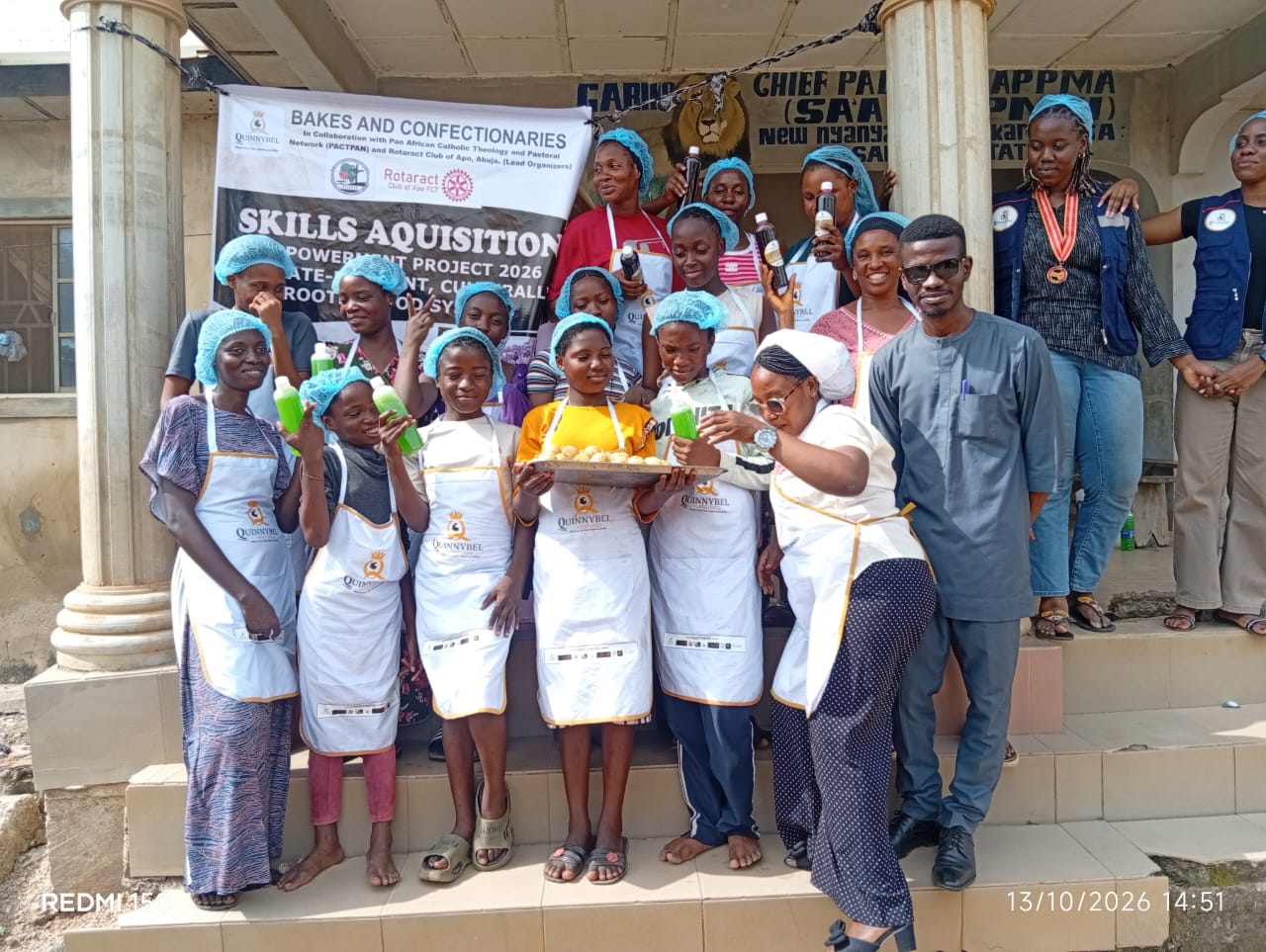
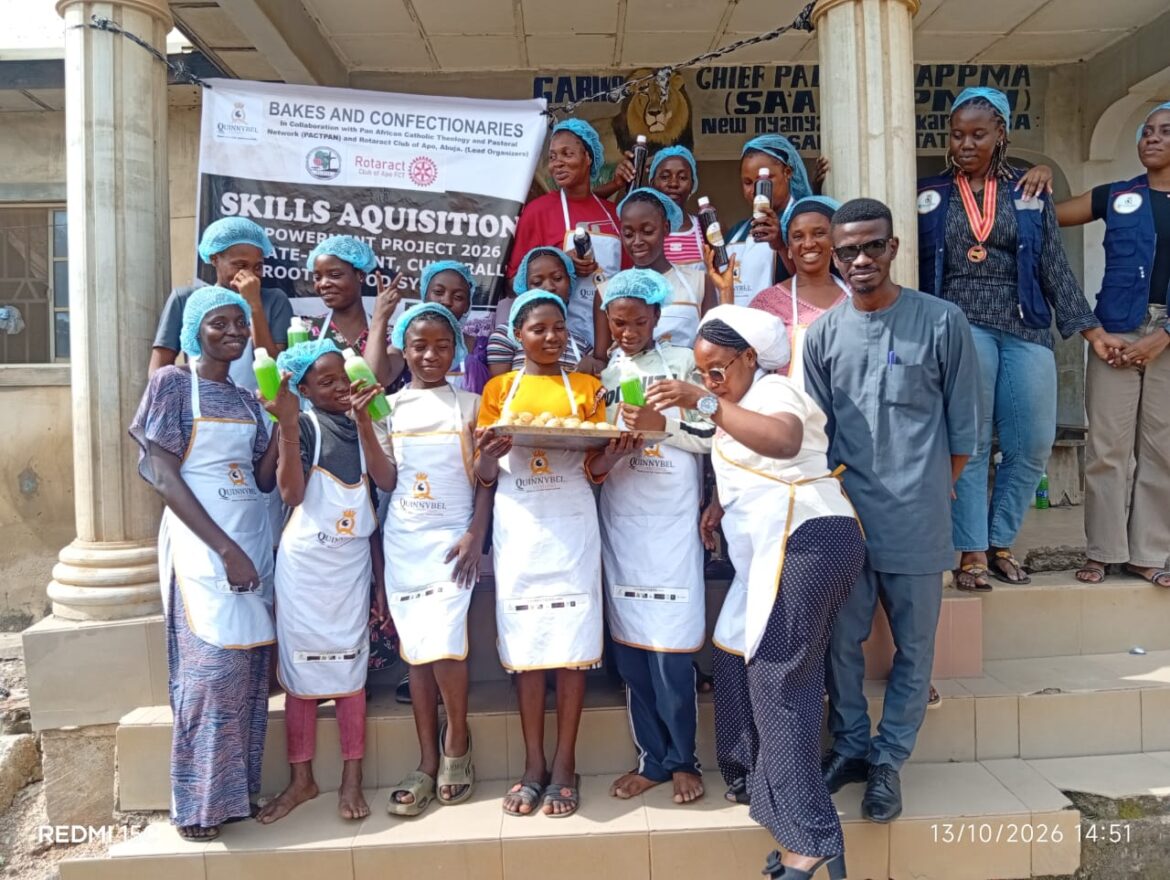
Women and girls in hairnets and Quinnybel aprons hold bottles of zobo and iced tea and a tray of buns at the Angwan Barrister training in Karu

KARU, Nasarawa State, Nigeria: Sixty women and girls have acquired practical skills in baking, beverage production, and liquid soap making through a six-day empowerment project aimed at helping them establish small businesses. The second edition of the Quinnybel Ventures Skills Acquisition and Women’s Economic Empowerment Project ran from October 12 to 17, 2026, in the Karu Local Government Area. This initiative was organized by Quinnybel Ventures Bakes & Confectioneries in collaboration with the Pan-African Catholic Theology and Pastoral Network (PACTPAN) and the Rotaract Club of Apo, Abuja.

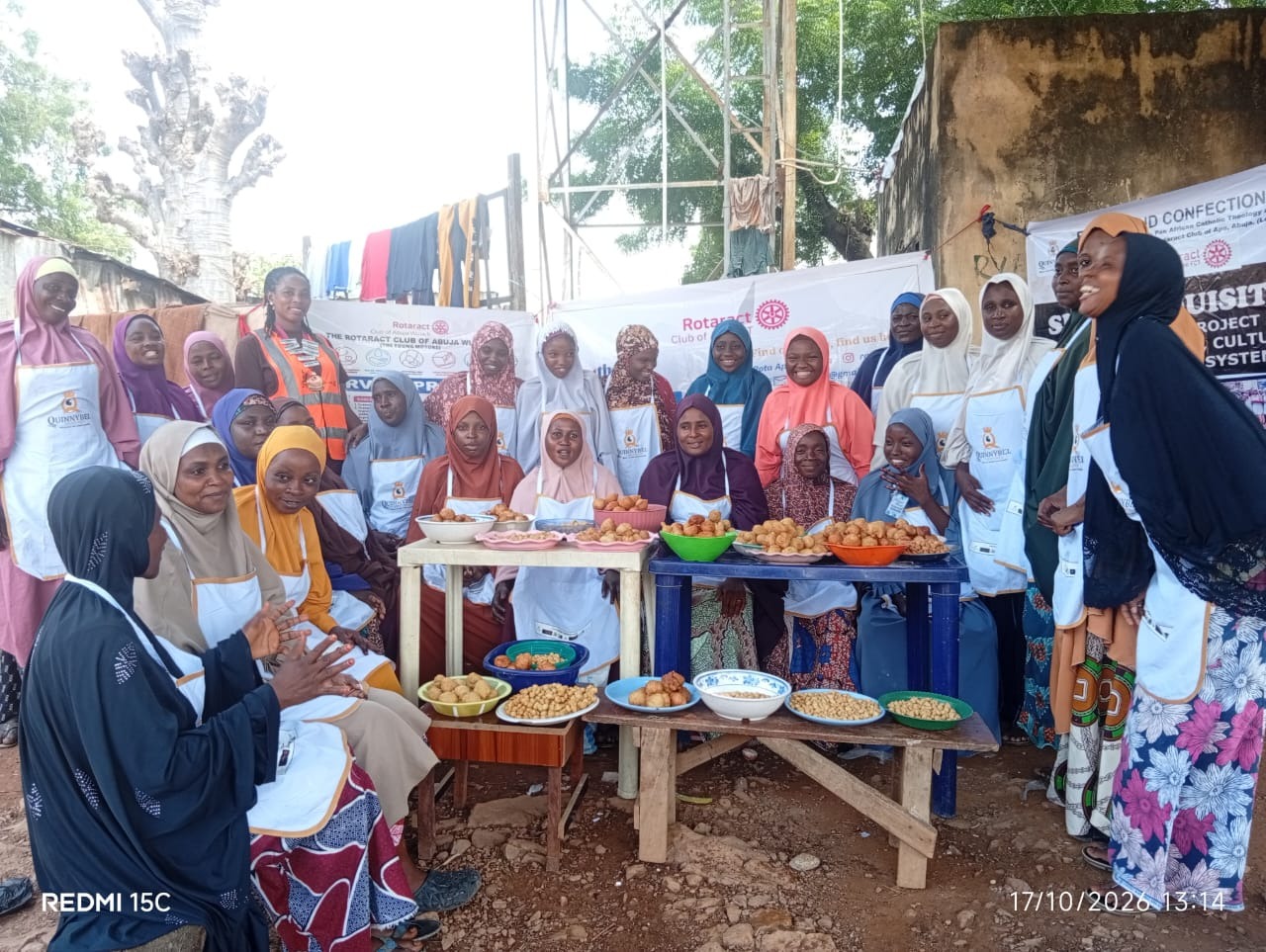
The training took place in two communities. Thirty participants from Angwan Barrister, also known as Appman Village, attended sessions from October 12 to 14, while another 30 from Angwan Hausawa participated from October 15 to 17.

Women and girls in hairnets and Quinnybel aprons hold bottles of zobo and iced tea and a tray of buns at the Angwan Barrister training in Karu
Participants from Angwan Barrister display the beverages and snacks they prepared during the training.

Themed “Food for Tomorrow: Cultivating Climate-Resilient, Culturally Rooted Food Systems,” the project aimed to promote self-reliance and entrepreneurship among women and young people. In keeping with the theme, participants were introduced to the use of locally available ingredients and resources.

Practical sessions covered the preparation of chin-chin, buns, puff-puff, iced tea, and zobo drinks, as well as liquid soap production. Participants also received training in product costing and marketing to help them turn their newly acquired skills into viable businesses.

Rotaractor Edelquinn Clementina Akighir facilitated the sessions on pastry and beverage production. She is the founder of Quinnybel Ventures Bakes & Confectioneries, Project Chair of the Rotaract Club of Apo, and Deputy Director of Programmes at PACTPAN. Mr. Elisha Roberts led the sessions on marketing and product costing, while Rotaractor Chinelonma Agudosi, President of the Rotaract Club of Apo, facilitated the practical sessions on liquid soap production. The Rotaract Club of Apo and PACTPAN also supported the coordination and implementation of the program across the two communities.

For some beneficiaries, the training provided an opportunity to strengthen existing skills and explore new vocational avenues. Gloria Peter, a school leaver from Angwan Barrister, stated that she joined the program to build upon skills she had previously acquired. She plans to establish her own business and encouraged other women and young people to embrace self-empowerment rather than depend solely on the search for formal employment.

Hauwa Mohammed, a homemaker from Angwan Hausawa, expressed her gratitude to the organizers for this opportunity. “I learned many important skills, and I enjoyed the program. We honestly appreciate you for such a program, and we thank God,” she said. She explained that the training had equipped her with practical skills that could help her establish a small business and contribute to her household income. “I can start a business with the skills I have learned. I can also bake at home for my family’s consumption and render my services to others who want to produce for sale or for events,” she added.

Women in hijabs and Quinnybel aprons stand behind tables of chin-chin, puff-puff and buns at the Angwan Hausawa training in Karu
Participants from Angwan Hausawa with the snacks they produced during the training.

At the end of the program, participants received certificates of participation in recognition of their involvement. Ms. Akighir reaffirmed her commitment to women’s economic empowerment, emphasizing the importance of equipping women with practical skills and opportunities to improve their livelihoods. “When a woman is equipped with the right skills and opportunities, she is better positioned to transform her life and contribute meaningfully to her community,” she stated.

The 2026 edition builds on the inaugural program held in 2025. According to the organizers, the combination of vocational training, entrepreneurship education, and the use of locally available resources is intended to strengthen household resilience and expand women’s economic participation. The broader vision is to empower women and young people to become economically self-reliant and active contributors to the development of their communities.

0 comments
0 FacebookTwitterPinterestEmail
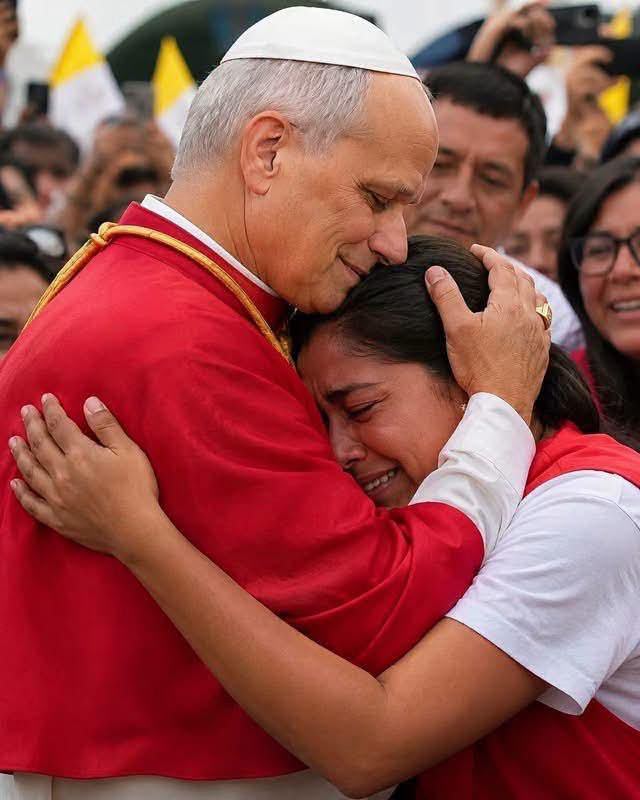
Pope Leo embraces a woman weeping with emotion during his visit to Chiclayo, Peru, as pilgrims look on
Photo credit: Vatican News

Pope Leo’s visit to his adopted homeland, Peru, has been deeply moving, especially his homecoming to Chiclayo. This is the beauty of the Catholic Church. An American-born cleric and missionary finds a home among a people because they share one love, one faith, one God, and one Church. St. Paul describes this mystery: “There is one body and one Spirit… one Lord, one faith, one baptism, one God and Father of all” (Ephesians 4:4–6). The Pope’s own motto, taken from St. Augustine, says the same thing in four words: In Illo uno unum, “In the One, we are one.”

The people’s love for him is real and moving. His love is just as true and beautiful: for the land that shaped his missionary spirit and pastoral tenderness, and for the people who showed him Christ’s face. In Chiclayo, nobody treats him as a foreigner. Peru made him one of its own long before it gave him citizenship, and he knows it. As he told the nation in Lima on his return, he spoke movingly of how much of this land remains with him and how much of his own story belongs to its people.

Sometimes we as Catholics forget this beautiful heritage of Catholicity that we have received. Our faith can bring out the very best in all of us when we live the fullness of Catholicity: universal love and openness to God and to all people because of God; unity in diversity without uniformity. St. Ignatius of Antioch wrote at the start of the second century, “Wherever Jesus Christ is, there is the Catholic Church” (Letter to the Smyrnaeans, 8:2). Catholicity is a quality of love before it is a measure of size, population growth, or geographical or quantitative extension.

With such a large population worldwide, the Catholic Church, inspired by the missionary gift exchange we see, for instance, between Peru and Pope Leo, can build bridges across cultures and peoples. Through its prophetic voice and its presence among the forgotten, the marginalized, and those who suffer, it can restore hope. In this way, we can show the world a different way of living. Our religion can have a face marked by love, kindness, tears, respect, and tenderness, and by a courageous fight against evil, violence, injustice, and sin. And our way of being Church in this inclusive and Trinitarian key will invite people to come and see. This invitation is not the work of a few specialists in mission; it is the calling of every baptized person. Preaching to some half a million people in Chiclayo, the diocese he once led, Pope Leo put it plainly: “All Christians, whether ordained ministers or lay faithful—regardless of the degree of formation we have received in the faith—are missionary disciples.” Such discipleship begins with an encounter with Christ and reaches out to embrace the whole human family. The Second Vatican Council put this vocation unforgettably in an incarnational key this way: “The joys and the hopes, the griefs and the anxieties of the men of this age, especially those who are poor or in any way afflicted, these are the joys and hopes, the griefs and anxieties of the followers of Christ” (Gaudium et Spes, 1).

With such a large population worldwide, the Catholic Church, inspired by the missionary gift exchange we see, for instance, between Peru and Pope Leo, can build bridges across cultures and peoples. Through its prophetic voice and its presence among the forgotten, the marginalized, and those who suffer, it can restore hope. In this way, we can show the world a different way of living.

As Pope Leo shows on this trip, the heart of Catholicism is a transforming closeness to all people and a clear testimony that everyone counts. By being with God’s people in this simple way, he proclaims the Gospel credibly and convincingly to a world that needs healing and unity around a common purpose. Pope Francis asked for shepherds “living with the smell of the sheep.” Pope Benedict XVI reminded us that “being Christian is not the result of an ethical choice or a lofty idea, but the encounter with an event, a person” (Deus Caritas Est, 1). Pope Leo carries this same conviction across South America. He does not treat closeness as a pastoral strategy; he sees it as the Gospel’s own demand. Speaking to the bishops of Argentina in Buenos Aires, he spoke of the many faces that challenge us and call us to share in the joys and sufferings of our people, inviting us to respond with the closeness and deeds demanded by the Gospel. In Chiclayo, people are meeting the Lord Jesus through the nearness of a shepherd they have known for years.

It moves the heart to see a Pope who cries with the people and smiles with the people. His tears reveal our common humanity and the deep bond of love, faith, and solidarity that unites the Pope with God’s people. In these moments of shared joy and sorrow, he is living out St. Paul’s beautiful instruction to the Christian community: “Rejoice with those who rejoice, weep with those who weep” (Romans 12:15). Tears purify the heart, free the mind, soften our judgments, and bind hearts together. They bring us closer to God and to one another because they open our eyes to the suffering, hopes, and joys of others. Indeed, tears are not a sign of weakness but a profound expression of our shared humanity and our capacity to love, to be moved by the suffering of others, and to enter into communion with them.

Pope Francis expressed this truth beautifully during his pastoral visit to the Philippines in January 2015. At his encounter with young people at the University of Santo Tomas in Manila on January 18, he was deeply moved by the testimony of a young girl, Glyzelle Palomar, who spoke about the suffering of abandoned and exploited children and, through her tears, asked why God allows innocent children to suffer. Pope Francis departed from his prepared remarks to reflect on the meaning of tears, reminding the young people that certain realities of life can be seen only through eyes cleansed by tears. He said compassion requires more than intellectual understanding: we must let the suffering of others touch our hearts. There is a wisdom of tears and a closeness that only tears can bring between people. When people cry together, they learn to see the world through the eyes of those who suffer and to respond not merely with words but with tenderness, solidarity, and love.

Tears are a Christian act of self-surrender to God. God, in Christ, sheds the first tear: at the tomb of his friend Lazarus, “Jesus wept” (John 11:35), and as he approached Jerusalem, “he wept over it” (Luke 19:41). God meets us through our tears and treasures every one of them: “You have kept count of my tossings; put my tears in your bottle” (Psalm 56:8). The Desert tradition saw tears as a second baptism. St. John Climacus went so far as to write that “greater than baptism itself is the fountain of tears after baptism” (The Ladder of Divine Ascent, Step 7).

Our tears are signs of authentic freedom and the radical humility of a heart free to love. Tears are not a sign of weakness or emotional fragility, as many may say. They are an act of self-surrender and self-donation. A heart that cries is free for God and free to embrace the dear neighbour with unrestricted love, free to encounter the other without barriers. Tears show our openness, at the deepest level of our human vulnerability, to a divine caress. They show our longing for a holy intimacy that moves our hearts into transcendence and mystery. Whether one tears up because one is confronted by suffering; because one is confronted by radical evil; because one has received a gift beyond measure; because of a sense of loss; in the presence of God and amidst the splendour of transcendence in a mystical experience; because one is wrapped up in a holy intimacy; or because one is seized by an experience or memory that captures the imagination, tears are a channel through which humans connect to their inner selves, release energy, and bond with one another or with the reality that connects people at that moment—whether good or bad, mystical or puzzling, positive or negative, or a bit in-between.

Tears are not a sign of weakness or emotional fragility, as many may say. They are an act of self-surrender and self-donation. A heart that cries is free for God and free to embrace the dear neighbour with unrestricted love, free to encounter the other without barriers. Tears show our openness, at the deepest level of our human vulnerability, to a divine caress.

As Pope Leo concludes a very successful and deeply significant apostolic visit, may we continue to pray for him. On his flight back to Rome, he acknowledged that he is still recovering from his surgery. This visit shows that when God gives us a mission, he gives us the means and the grace. Pope Leo continues to teach the Church and the world the virtue of good leadership and the sacrifice leaders need today, especially those who put their own needs above others. As the leadership principle associated with Simon Sinek reminds us, “Leaders eat last.” Church leaders and everyone in a position of leadership can also learn from Pope Leo that leadership is not aloofness, emotional detachment, or standing on a height. It is the way of the One who “came not to be served but to serve” (Mark 10:45). That is why the Bishop of Rome has long been called Servus servorum Dei, “servant of the servants of God.”

As Pope Leo concludes a very successful and deeply significant apostolic visit, may we continue to pray for him. On his flight back to Rome, he acknowledged that he is still recovering from his surgery. This visit shows that when God gives us a mission, he gives us the means and the grace. Pope Leo continues to teach the Church and the world the virtue of good leadership and the sacrifice leaders need today, especially those who put their own needs above others.

Pope Leo wears his papacy lightly because it came to him as both a gift and a surprise. Five years ago, he was a faithful and caring pastor among these people before God surprised him, the people of Chiclayo, and the world with the heavy responsibility of the papacy. As St. Paul writes, “What do you have that you did not receive?” (1 Corinthians 4:7). This realization of unmerited gift is what motivates the Pope, and his experience with his health is obviously an added impetus for him to live this way without drawing attention to himself, but pointing us all to God and to love, kindness, unity, friendship, respect, and the joyful embrace of our magnificent humanity. As a son of St. Augustine, he carries his office the way his spiritual father did: “For you I am a bishop; with you I am a Christian” (Sermon 340, 1). He keeps surprising everyone except the Peruvians, who knew him up close for two decades.

Let us pray that all Church leaders follow this example. May they love the people genuinely, care for them tenderly, and accompany them compassionately, rejoicing with them in their joys and weeping with them in their sorrows. Peru has shown the way in the saints it has given the Church: St. Toribio de Mogrovejo, the archbishop who walked the length of his vast diocese to reach his people; St. Martin de Porres, the humble friar of mercy; and St. Rose of Lima, who reminds us that “apart from the cross there is no other ladder by which we may get to heaven” (cf. Catechism of the Catholic Church, 618).

Peru has given us a Pope with the smell of the sheep, who makes it possible for many to believe that something greater than the ordinary exists in our ancient faith. My prayer is that, together with Pope Leo, we may become a Church that is close to its people, humble in its leadership, and unafraid of tears or our magnificent humanity in all its complexities, wonders, and fragility; a Church that is truly Catholic, where love is real.

Peru has given us a Pope with the smell of the sheep, who makes it possible for many to believe that something greater than the ordinary exists in our ancient faith. My prayer is that, together with Pope Leo, we may become a Church that is close to its people, humble in its leadership, and unafraid of tears or our magnificent humanity in all its complexities, wonders, and fragility; a Church that is truly Catholic, where love is real. When we act in this way of love, friendship, and respectful mutual gift exchange, we will, in small ways, make it possible for people to believe in our religion and help in the much-needed resistance against the idols of race, money, power, nation, militarism, and the self, which continue today to wage war against the kingdom of God and are sometimes clothed in religious robes.

1 comment
0 FacebookTwitterPinterestEmail
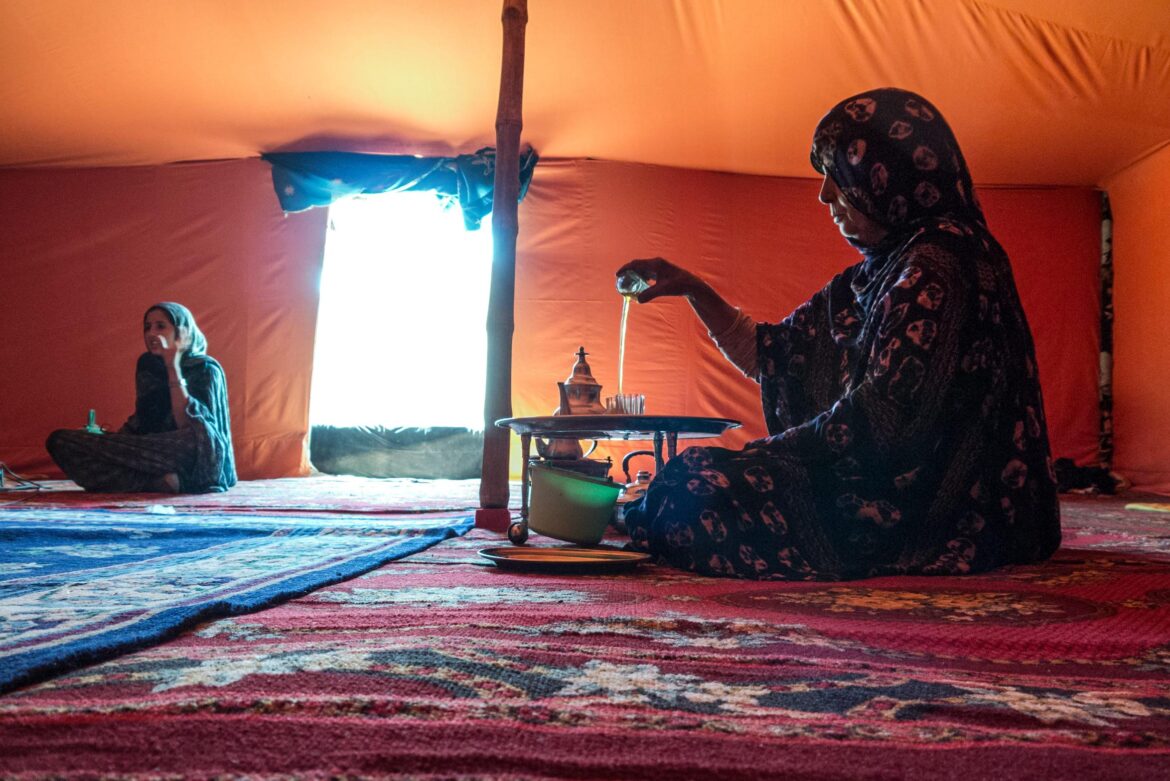
A Sahrawi woman in a blue robe prepares tea inside a traditional tent furnished with colourful carpets and cushions.

On October 30, 2026, the United Nations Security Council failed to renew the mandate of the United Nations Mission for the Referendum in Western Sahara —MINURSO. Its mandate ended the next day, ending a 35-year peacekeeping presence established to help the Sahrawi people determine their political future.

The closure of the United Nations special mission in Western Sahara did not reflect an end to the need for international mediation. Rather, competing proposals from the United States and Russia undermined one of the world’s longest-running peacekeeping missions. Russia vetoed a resolution that would have maintained the mission while reorienting it towards negotiations based on Morocco’s 2007 autonomy proposal. Likewise, a counterproposal from the Russians that would have extended the mandate for another year was torpedoed by the United States of America.

Indeed, the African adage that when elephants fight, the grass suffers, squarely applies in this scenario. In this case, the principal victims are the Sahrawi people, whose right to self-determination remains unresolved. Meanwhile, Morocco controls most of the territory, and hostilities with the Polisario Front, the Sahrawi liberation movement backed by Algeria, continue.

Some Background into the Issues

When Spain began colonizing parts of Western Sahara (later known as Spanish Sahara) in 1884, the territory remained under Spanish rule until 1976. Spain’s 1975-1976 withdrawal sparked a conflict that MINURSO (established in 1991) sought to resolve through a referendum. According to Jeffrey J. Smith, Spain’s withdrawal and transfer of the territory to conflicting parties under the 1975 Madrid Accord “were contrary to international law, for Spain did not have the right to transfer away the Saharawi people’s territory or delegate the conduct of their self-determination to others”.

After Madrid’s withdrawal, Mauritania and Morocco disputed the territory, while the Polisario Front sought Sahrawi independence. The conflict continued even after Mauritania withdrew its claim in 1979, leaving Morocco in control of most of the territory. In 1988, a UN–Organization of African Unity mediation led Morocco and the Polisario Front (the Sahrawi Liberation Movement, based in Algiers) to accept proposals for a ceasefire and a referendum in which the Sahrawi population would choose between remaining an independent nation and integration with Morocco.

On 29 April 1991, Security Council Resolution 690 established MINURSO to monitor the ceasefire, identify eligible voters, assist refugee repatriation, and organize the referendum. Although MINURSO helped monitor the ceasefire and performed other stabilizing functions, it did not carry out its defining political objective of organizing a referendum for the Sahrawi.

During those years, Madrid formally supported a UN-led settlement while avoiding recognition of Moroccan sovereignty until its 2022 policy shift. After the hospitalization of Polisario Front leader Brahim Ghali in April 2021, Rabat escalated the tension. Then, in May of that same year, Morocco relaxed its border controls, resulting in mass crossings at the Ceuta border into Spain’s territory. It took only a few months for Madrid to break its 46 years of neutrality by backing Rabat’s claim in March 2022. In a letter to King Mohammed VI, Spanish Prime Minister Pedro Sanchez declared Madrid’s support for Rabat’s 2007 Autonomy Plan, which proposes limited self-rule under strict Moroccan Sovereignty. Despite these failures, the MINURSO mission remained until Washington and Russia disagreed on its terms of operation, forcing its mandate to expire on October 31, 2026.

MINURSO’s failure of resolving these tensions did not begin this year. The mission had survived for decades after the referendum ceased to be considered paramount for many of the states shaping the diplomatic process. The United States had already recognized Morocco’s claim over this mineral-rich former Spanish colony in 2020, in return for Morocco’s rapprochement with Israel.

Now, as the participating nations fold their tents, it is worth asking if a ceasefire can be considered a peace agreement when it preserves territorial control while indefinitely postponing a people’s promised political agency. Although the international community may terminate MINURSO, it cannot extinguish the Sahrawi people’s right to participate meaningfully in determining the future of their land. As the mission withdraws, more than 173,600 Sahrawis remain in five refugee camps in Algeria after 50 years of displacement, making this the world’s second-longest-standing refugee situation. The camps are in Tindouf, an isolated town in western Algeria, where temperatures can exceed 50 degrees Celsius, and sandstorms are frequent. The mission’s departure further diminishes their prospects of returning home through an internationally supervised political process. Despite these conditions, the Sahrawi refugees remain committed to independence. In an Africanews report published in April this year, 75-year-old Salima Bent Elghifri Ahmed affirmed that they would reject Morocco’s autonomy plan and make whatever sacrifices independence required, with or without international support.

Although the international community may terminate MINURSO, it cannot extinguish the Sahrawi people’s right to participate meaningfully in determining the future of their land.

Fr. Nnaemeka Ali, OMI

Natural resources and displacement

Western Sahara’s strategic location and economic resources make it important to Rabat. Another important factor that fuels the fight to control Western Sahara is its vital assets to global food security, rich maritime industries, and substantial clean energy potential. According to Jeffrey J. Smith, the territory’s principal natural resources include phosphate rock from the Bu Craa mine, fish from highly productive Atlantic waters, and potential petroleum reserves on land and beneath the seabed.

Yaguta El Mokhtar, Coordinator of the Sahrawi Observatory for Natural Resources and Environmental Protection (SONREP) and a member of the Working Group on Natural Resources, likewise highlights this resource wealth. El Mokhtar claims that Western Sahara holds approximately 22 percent of the world’s phosphate reserves, significant deposits of iron ore and high-quality sand, abundant fisheries potential, and promising oil and gas prospects.

While Western Sahara’s natural resources are exploited, displaced Sahrawis face starvation in the desert, far from their homeland. The territory’s Atlantic coastline extends for more than 1,150 kilometres and borders one of the world’s richest fishing grounds. Yet those displaced from it endure severe sandstorms and depend on UN refugee agencies receiving enough aid to provide their next meal.

While Western Sahara’s natural resources are exploited, displaced Sahrawis face starvation in the desert, far from their homeland.

Fr. Nnaemeka Ali, OMI

Unfortunately, one after the other, international support is dwindling for the cause of the Sahrawi as the Gulf Cooperation Council has expressed their support for Morocco’s policy of autonomy for the territory under its sovereignty, adding its name to that of the United States (2020), Spain (2022), France (2024), the UK (2025) and another coalition of 40 States. This begs the question, “What really changed?” The Western Sahara Resources Watch, an international organization that monitors and challenges companies and governments involved in advancing Moroccan interests in occupied Western Sahara, underlines that, in seven consecutive rulings from 2016 to 2021, the Court of Justice of the European Union has concluded that Morocco has no sovereignty over Western Sahara, nor any international mandate to administer it, as the territory is separate and distinct from Morocco.

Within the Continent, the situation in the African Union (AU) is ambivalent. Although it admitted the Sahrawi Arab Democratic Republic (SADR) as a full member state in 1984, today, not all members support its membership. This means the cause of the Sahrawi is no longer drawing much sympathy among African nations. It is a new development because, even though Rabat protested and withdrew from the union for 33 years, it did not weaken AU members’ support when it returned to the union in 2017. They even lobbied to have the SADR expelled, but the AU refused. Today, the AU’s position has weakened, and it could trigger a motion to force SADR to withdraw from the union.

Such a retreat would reflect poorly on the African Union and constitute a serious institutional problem. Although Article 30 of the AU Constitutive Act permits the suspension of governments that come to power through unconstitutional means, it does not provide a mechanism to expel a member state when other members dispute its status. Moreover, the Act provides for cessation of membership through voluntary withdrawal, not involuntary expulsion. Sidelining the Sahrawi Arab Democratic Republic would therefore require a legal and political justification that the Union’s existing rules do not readily supply.

Sidelining the Sahrawi Arab Democratic Republic would therefore require a legal and political justification that the Union’s existing rules do not readily supply.

Fr. Nnaemeka Ali, OMI

For the Catholic Church, this situation has been delicate, as both the Apostolic Prefecture of Western Sahara, which operates in areas 89% controlled by Rabat, and the churches around Morocco have maintained a non-political position. They have upheld the standard set by Pope Leo XIV during his visit to Algeria by denouncing the danger of exploiting religion for conflict, praying for peace, and calling all parties to the table of dialogue. This is especially critical for missionaries working directly in the affected territory. They have always operated under a very tight framework which only permits spiritual care for the expatriate workers and Sub-Saharan migrants, with no interference with sovereignty matters.

Renewed Negotiations

As MINURSO withdraws, the African Union should establish procedures to prevent escalation to war. Such procedures could include monitoring mechanisms, claim documentation, movement restrictions, and all manner of migrant maltreatment by all parties involved.

The procedures must include Sahrawi women, youth representatives, African human-rights specialists, refugee agencies, religious leaders and independent observers. They must regularly publish their findings. Though their monitoring might not resolve the sovereignty dispute, it can prevent the diplomatic vacuum from becoming a human-rights vacuum.

Though their monitoring might not resolve the sovereignty dispute, it can prevent the diplomatic vacuum from becoming a human-rights vacuum.

Fr. Nnaemeka Ali, OMI

Also, religious leaders, both Christian and Muslim, as well as African civil-society organizations can support community legal education, oral-history preservation and platforms through which refugees and residents inside the territory document their relationships with the land. These activities must strengthen political agency, not substitute humanitarian assistance for a political settlement.

The United Nations must take concrete steps to address the precarious circumstances of Sahrawi refugees, who have now been in exile for more than 50 years. Their plight deserves greater international attention, comparable to that afforded to other situations of similar scale. Sahrawi refugees should be included in negotiations to ensure that their voices, experiences, and perspectives are represented, rather than those of Morocco, Algeria, and the Polisario Front alone.

Finally, the AU should urge the UN Security Council to return to the negotiating table and reach a clear decision that reflects the intentions of the parties to the conflict. The Council should also impose an embargo on Western Sahara’s natural resources to bring all parties back to the negotiating table.

0 comments
0 FacebookTwitterPinterestEmail
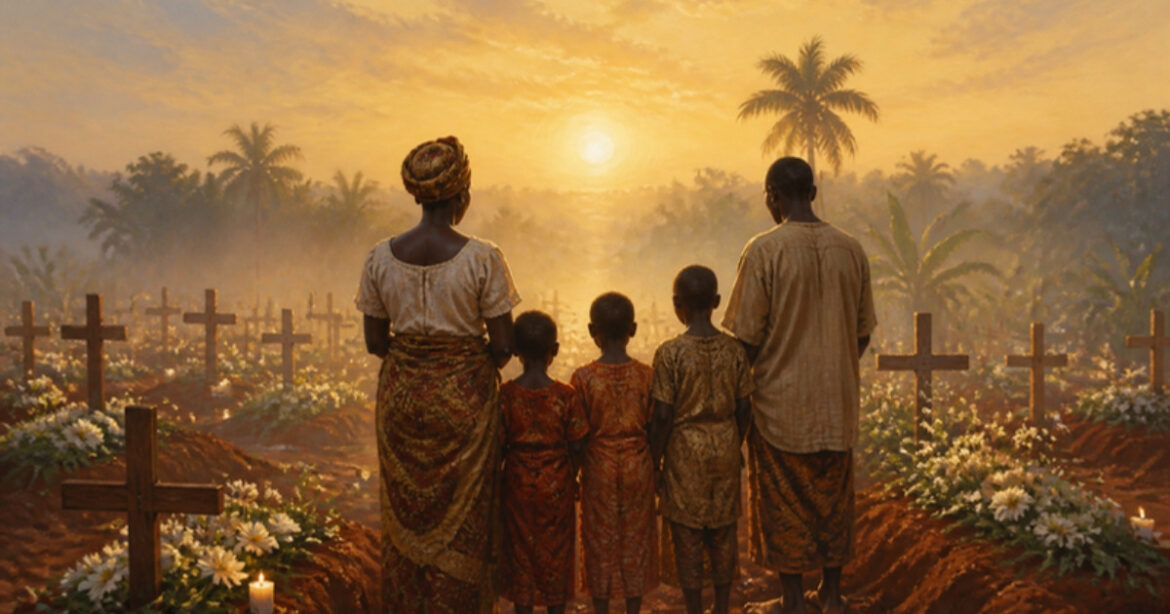
An African family stands in prayer among graves marked with crosses, candles and white flowers at sunrise

Whenever we celebrate the Solemnity of All Saints and the Commemoration of All the Faithful Departed (All Souls), something strikes at the heart of my faith as a Christian and my identity as a priest and an African: many Africans have a deep reverence for departed souls, especially their ancestors. Christianity and African Traditional Religion approach the dead from different theological perspectives, yet there is a remarkable connection in their understanding that death does not necessarily end the relationship between the living and those who have departed.

In traditional Igbo cosmology, the universe comprises both visible and invisible realities. In the hierarchy of being, there is God, the spirits, both benevolent and malevolent, the divinities of the land and the ancestors. Emefie Ikenga-Metuh, in African Religions in Western Conceptual Schemes (1985), provides an important framework for understanding this worldview.

The ancestors are not merely dead relatives. The benevolent ones, in particular, are believed to continue their existence in the spiritual world, watch over their descendants and, in certain traditions, intercede on their behalf. They are remembered and invoked during prayers, family and community gatherings, communal ceremonies and the preservation of oral history. The ancestors never truly die in the consciousness of the community; they live and endure. As Francis Cardinal Arinze explains in Sacrifice in Ibo Religion (1970), sacrifices and offerings to ancestors form an important part of the traditional religious relationship between the living and the departed. Such offerings express the belief that the ancestors remain interested in the affairs of their descendants.

This reverence is not exclusive to Africa. In Latin America, particularly Mexico, Día de los Muertos (Day of the Dead) is marked by flowers, family altars, candles, food and prayers in honour of departed relatives. Families gather to remember those who have gone before them, expressing the conviction that death does not erase the bonds of family and love. The African experience, however, has its own distinctive expressions.

Among the Izzi people of Abakaliki, in Ebonyi State, Nigeria, there is a traditional feast called Otu Utara, literally understood as a day of feeding the dead, usually celebrated around October. Families prepare sumptuous meals, which they take to the graves of their departed relatives, symbolically feeding them. According to the traditional understanding, failure to honour the dead in this manner may attract ancestral displeasure, sometimes believed to manifest in sickness or even death.

Growing up in this culture, I recall a woman who had recently converted to Christianity abandoning her home in fear and trembling when the period of this feast approached. She was afraid that the ancestors would kill her because she could no longer participate in the ritual, having become a Christian.

It was my mother, a pillar of Christian faith, whose voice and encouragement came to her rescue. She welcomed the frightened woman into our home, where she stayed for about a week. My mother strengthened her faith and helped her overcome the fear that had taken hold of her. Eventually, the woman discovered something that became a powerful lesson in her Christian journey: the ancestors had not killed her. Her conversion to Christianity had not made her vulnerable to the dead. That experience raises an important question for African Christianity: must becoming a Christian mean abandoning every form of reverence for one's ancestors?

The Christian origins of All Saints and All Souls

The celebrations of All Saints and All Souls grew out of early Christian memorial practices and the reverence shown to martyrs. From the second century, Christians commemorated those who had died for their faith. They gathered at their tombs, decorated them and celebrated their birth into eternal life. Their death was understood not as defeat but as victory through fidelity to Christ.

The biblical foundation for this understanding of sainthood finds a beautiful expression in Revelation 7:2–14. St John describes the 144,000 and, subsequently, an innumerable multitude from every nation, tribe, people and language, standing before God's throne, clothed in white robes and holding palm branches. They are identified as those who have survived the great tribulation. The passage explains: "They have washed their robes and made them white in the blood of the Lamb" (Revelation 7:14).

This imagery captures the Christian understanding of sainthood: those who have overcome suffering and remained faithful to Christ. The white garments symbolise purification, while the palm branches signify victory. This multitude represents the countless men and women, known and unknown, whose faithfulness has brought them into God's presence. It is this multitude that the Solemnity of All Saints celebrates.

The Church gradually developed common celebrations to honour groups of martyrs and eventually all the saints. The Western celebration of All Saints developed over several centuries, with 1 November becoming its established date. All Souls' Day developed through the initiative of St Odilo of Cluny in 998, who encouraged the commemoration of all the faithful departed on 2 November.

The Communion of Saints: A family that death cannot separate

The celebrations of All Saints and All Souls express the Communion of Saints. According to the Catechism of the Catholic Church (CCC 954), the Church exists in three states: those who are pilgrims on earth, those undergoing purification after death and those already in glory, contemplating God. Traditionally, these are called the Church Militant, the Church Suffering and the Church Triumphant. These are not three separate churches but one Church united in Christ. The Catechism (CCC 955) explains that the union between those journeying on earth and those who have died in Christ is not interrupted by death.

The New Testament does not reserve the word "saints" exclusively for those who have died and been canonised. St Paul addresses living Christians as saints (1 Corinthians 1:2). Through baptism, we are united with Christ in his death and resurrection (Romans 6:3–5), called to holiness and to become the salt of the earth and the light of the world (Matthew 5:13–16). Throughout history, the Church has also recognised particular Christians whose lives reflected Christ through their love of God and neighbour, sacrifices and heroic virtues. Through canonisation, they are proposed as models of holiness and intercessors for the living (CCC 828).

A point of clarity is needed here. Catholics pray for the faithful departed, asking God's mercy on them, and ask the canonised saints to intercede for us. These are different acts, and neither is worship, which belongs to God alone.

African ancestors and the Communion of Saints

Here lies an interesting meeting point between African religious consciousness and Christian theology. African ancestors are remembered not simply because they existed but because of the values they represented: courage, justice, generosity, hospitality and commitment to the community. This offers an important cultural starting point for appreciating the Communion of Saints.

Of course, the ancestors of African Traditional Religion cannot automatically be equated with canonised saints. Nevertheless, the Church recognises that God's grace is not restricted to those who have received explicit knowledge of the Gospel. In Lumen Gentium 16, the Second Vatican Council teaches that those who, through no fault of their own, do not know Christ but sincerely seek God and follow the dictates of conscience can attain salvation. St Justin Martyr, through his teaching on the Logos spermatikos, also recognised the seeds of the Word among human beings, even before the coming of Christ. The fullness of truth belongs to Christ, but traces of goodness and truth can be found beyond the visible boundaries of Christianity. St Paul teaches that such persons, who do good and choose the truth even though they do not know Christ, will be judged according to the law of their conscience (Romans 2:14–15).

Africa has had ancestors who defended the vulnerable, upheld justice, protected their communities and sacrificed themselves for the common good. Their goodness should not be dismissed simply because they lived before Christianity reached their communities. We can entrust them to the mercy of God.

Africans do not have to abandon their ancestors to become Christians

Perhaps the greatest pastoral challenge is helping African Christians distinguish between reverence for ancestors and the worship of ancestral spirits. Worship belongs to God alone. We must not worship ancestors or live in terror of their supposed powers. But neither must we despise them, erase their memories or abandon the moral values they transmitted to us. We can honour our departed parents, preserve their histories, visit their graves, celebrate their lives and pray for them.

What Christianity must reject is the idea that the dead should be appeased through sacrifices motivated by fear, or that our survival depends on satisfying ancestral spirits. A family meal organised in memory of a departed grandfather, for example, need not be an act of feeding his spirit. It can become an expression of gratitude, family unity and remembrance, accompanied by prayers for the deceased and acts of charity.

God is the God of the living, not the dead

Ultimately, the Christian understanding of death changes the way we relate to our ancestors. When Jesus challenged the Sadducees over their denial of the resurrection, he declared that God is not the God of the dead but of the living, for to him all are alive (Luke 20:38). St Paul, in 1 Corinthians 15:42–44, explains that the body is sown perishable but raised imperishable, sown in weakness but raised in power. This is the victory of Christ over death.

The African Christian, therefore, does not have to approach the grave with terror of ancestral retaliation. We approach it with reverence, gratitude, prayer and hope in the resurrection. We can remember our ancestors without fearing them, preserve our family heritage without worshipping them and entrust their eternal destiny to the mercy of God.

The African tradition of remembering ancestors, despite the shadows and ambiguities that accompany some of its practices, reveals a profound human yearning: that love, family and human relationships should not simply disappear at death. Christianity does not destroy that yearning; it gives it a fuller meaning through the resurrection of Jesus Christ.

The celebrations of All Saints and All Souls invite African Christians to rediscover something important about their cultural heritage. We do not have to abandon our reverence for the departed to embrace the Christian faith. We must rather allow the light of Christ to purify our understanding of death, transform our relationship with the ancestors and lead us towards the Communion of Saints.

Our ancestors are not gods. They are not to be worshipped or feared. They are human beings whose lives formed part of our history and whose eternal destiny belongs to the judgement and mercy of God. In Christ, death does not have the final word, and the bonds of love are not destroyed by the grave.

That, perhaps, is the deepest connection between African reverence for ancestors and the Christian celebrations of All Saints and All Souls: our final hope is not in the power of the ancestors but in the resurrection of Jesus Christ.

0 comments
0 FacebookTwitterPinterestEmail

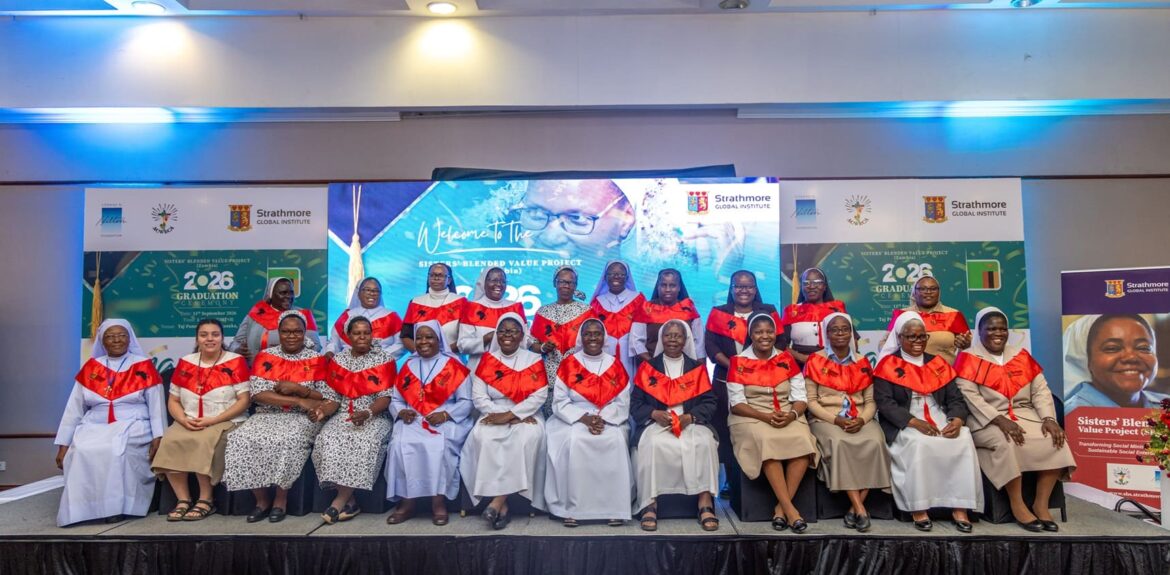
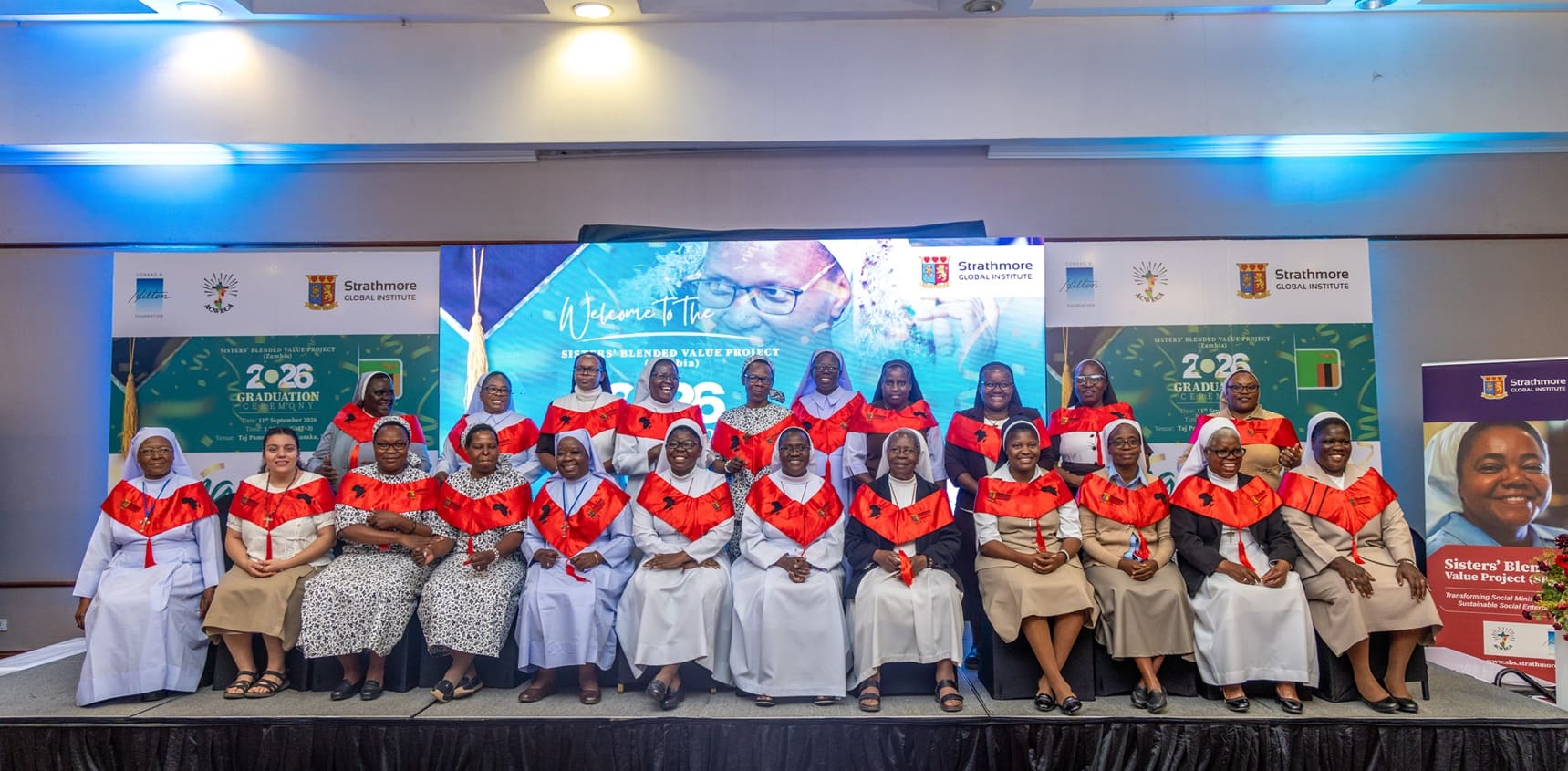
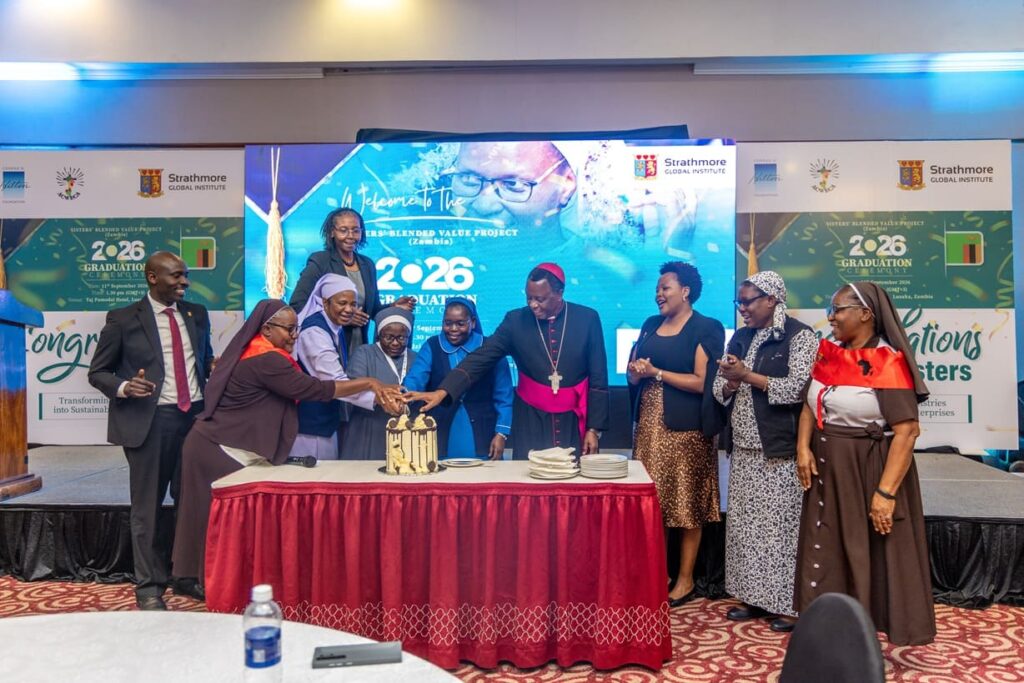
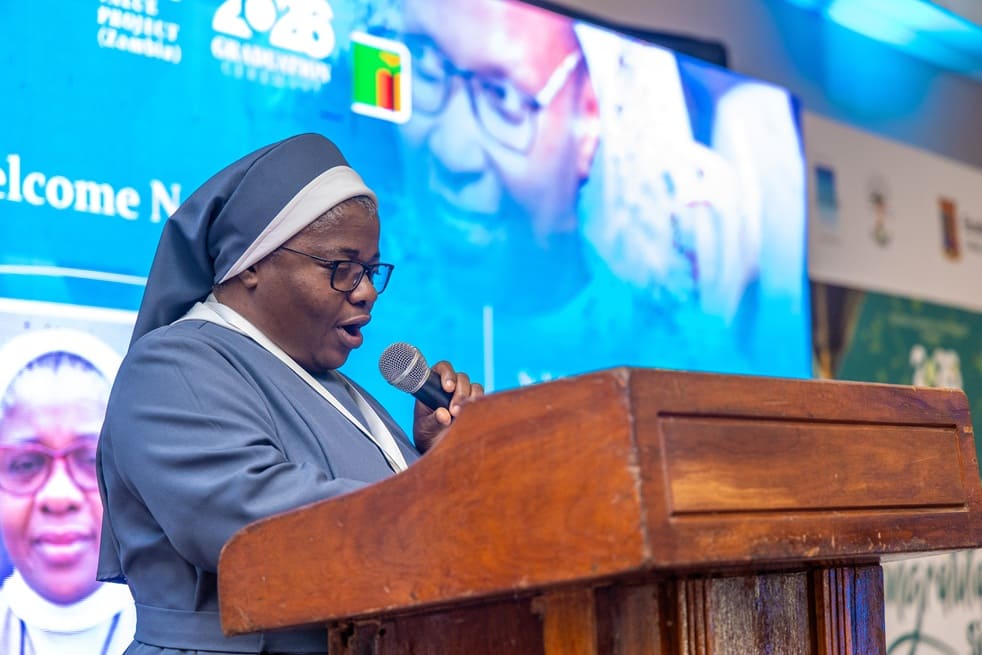
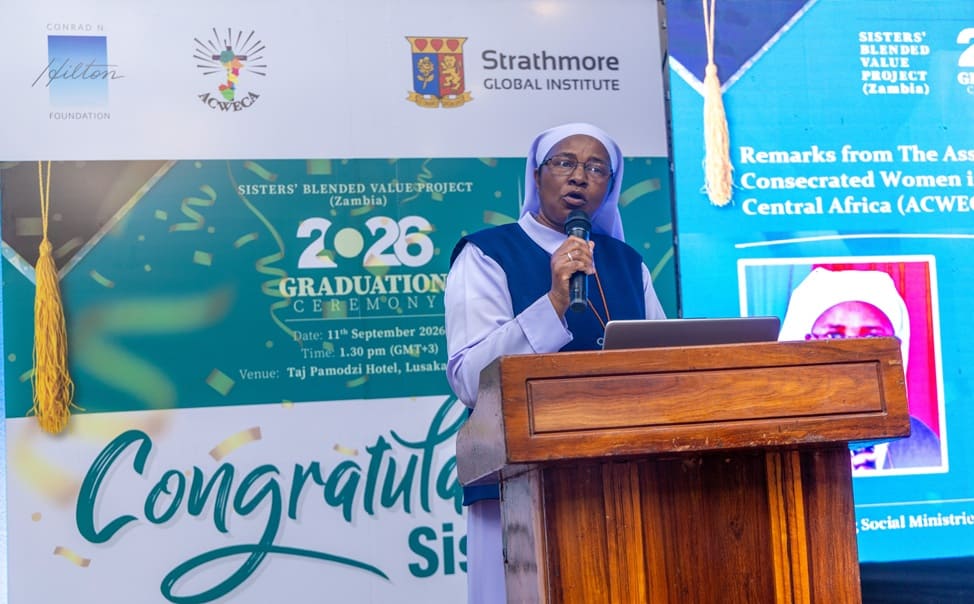
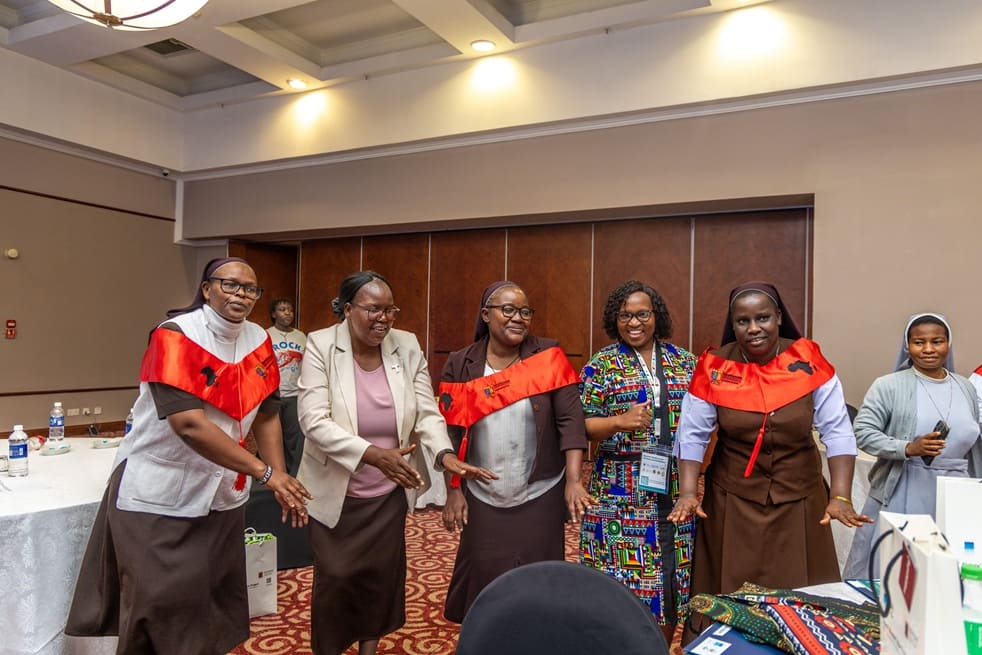
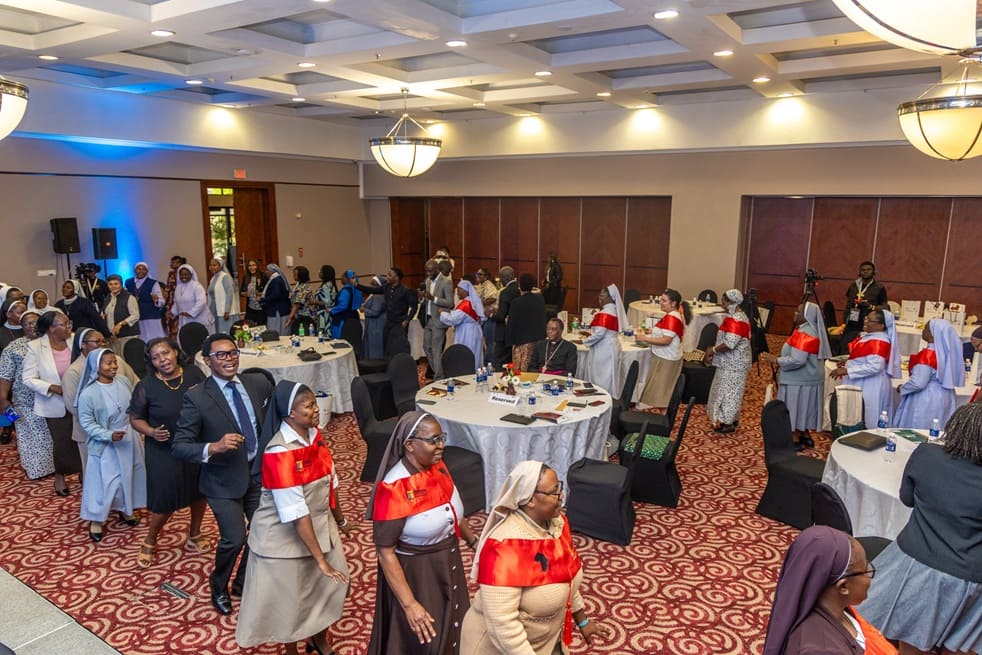
LUSAKA, Zambia — Before Bishop George Cosmas Lungu rose to speak, Sr. Valeria Prudence Kabaso, president of the Zambia Association of Sisterhoods (ZAS), briefly broke into song.

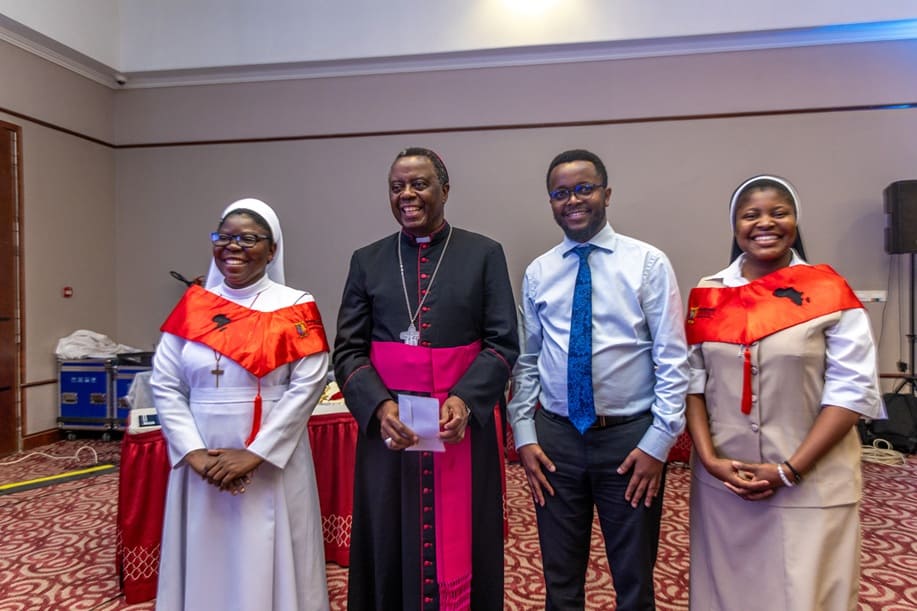
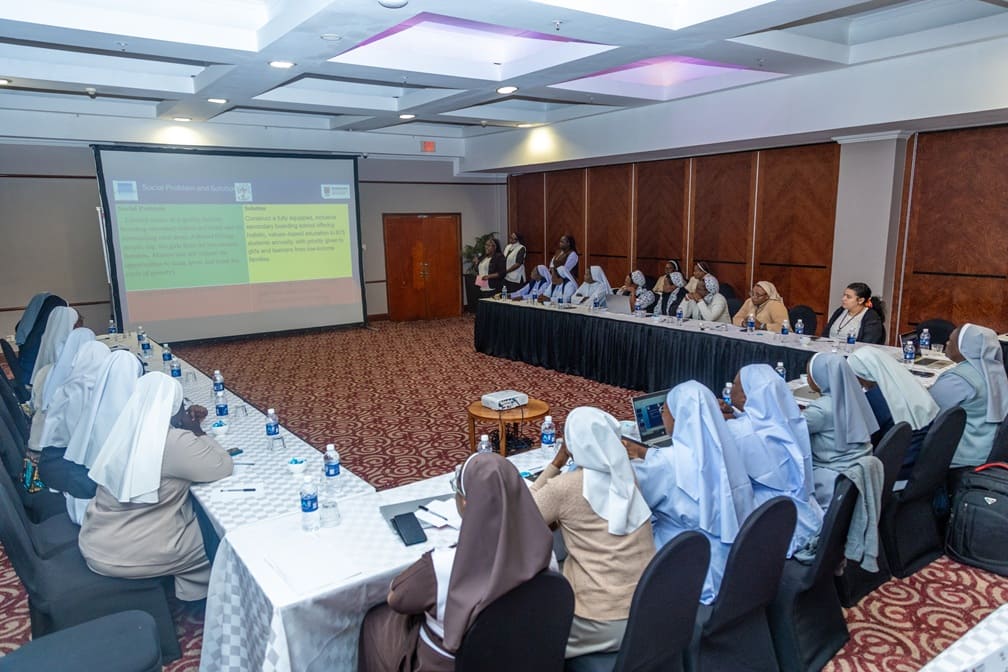
“Mwana wandi nakula eya,” she sang, translating the words for those present as “my child has grown”. For the 26 Catholic sisters seated before her at the Taj Pamodzi Hotel on 11 September, the song captured the significance of their journey through nearly two years of formation and learning.

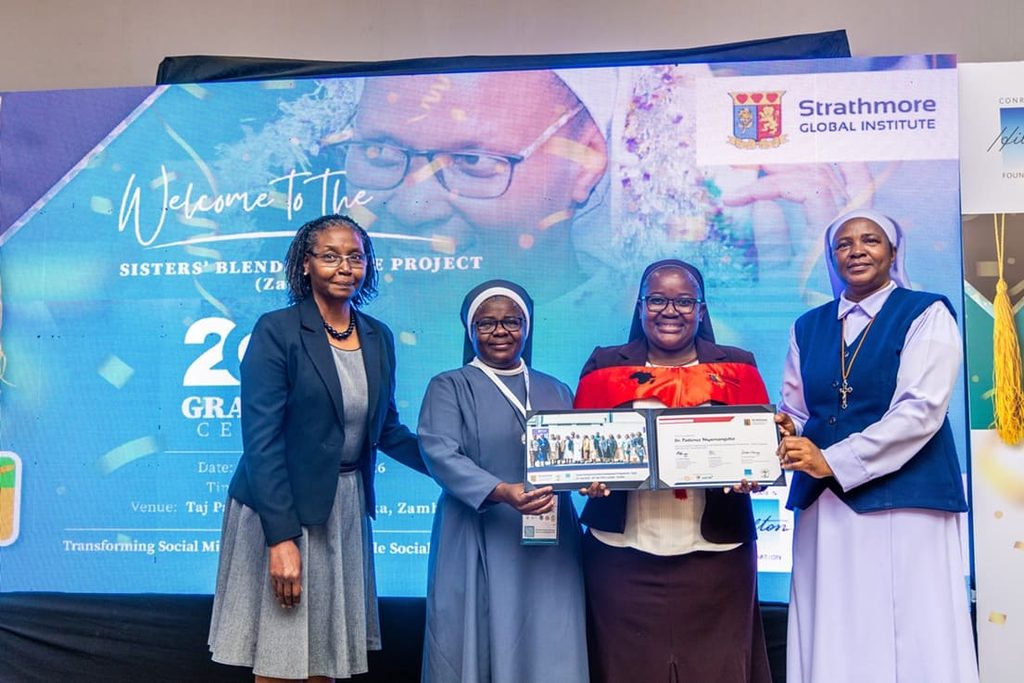
The ceremony marked the graduation and commissioning of 12 sisters from the Start Group and 14 from the Advanced Class of the Sisters’ Blended Value Project (SBVP), a joint initiative of the Association of Consecrated Women in Eastern and Central Africa (ACWECA) and Strathmore University Business School, supported by the Conrad N. Hilton Foundation.

The programme equips religious congregations with the knowledge and skills to develop sustainable social enterprises that generate financial resources while advancing their social and pastoral missions.

It now operates in five of ACWECA’s ten member countries: Kenya, Uganda, Tanzania, Zambia and, most recently, Malawi.

The graduation followed a day of cross-sector dialogue at the same venue, where Catholic sisters joined bankers, investors and business leaders for the Annual Zambia Social Entrepreneurship and SMEs Conference and Expo.

Related coverage: https://voiceafrique.org/catholic-sisters-encouraged/

Yet, beyond the discussions about markets, investment and financial sustainability, the graduation raised a fundamental question for religious congregations: how can they run viable enterprises without allowing business to overshadow their mission?

Keeping the mission at the centre

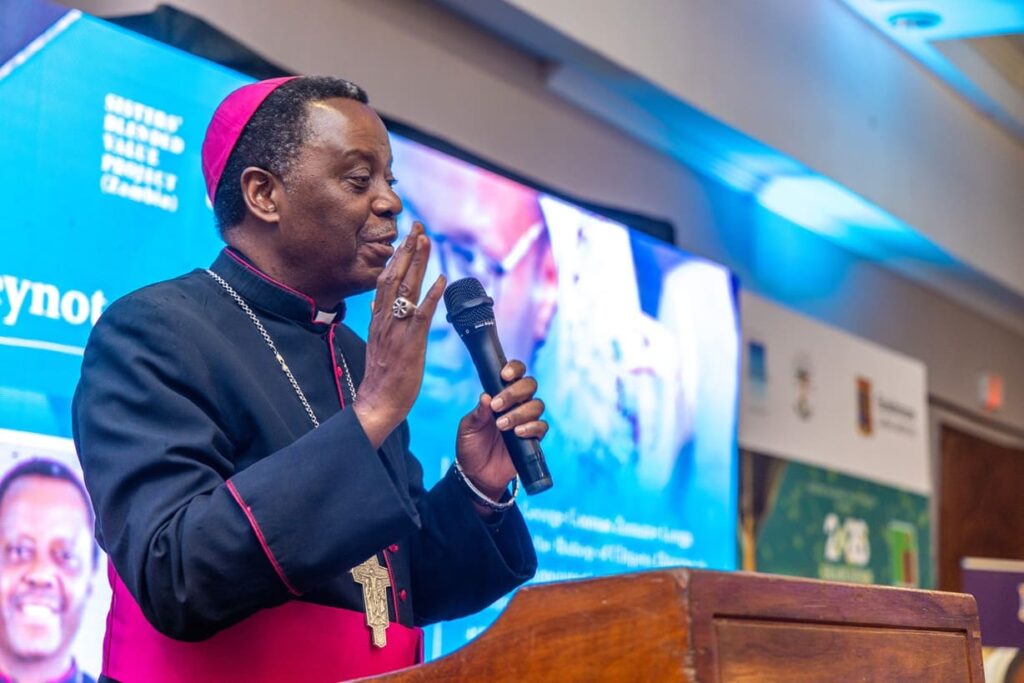
Bishop Lungu, who delivered the keynote address and presided over the commissioning on behalf of the Zambia Conference of Catholic Bishops, reminded the graduates that their new qualifications carried responsibilities beyond obtaining certificates.

“What you receive today is not merely a certificate. It is a grave responsibility,” he said.

He emphasised that religious congregations exist to fulfil their vocation and mission in Christ, and that business activities must serve that purpose rather than replace it.

Drawing on the Parable of the Talents in Matthew 25:14–30, the bishop presented financial sustainability as an expression of responsible stewardship rather than a departure from religious life.

He encouraged the sisters to embrace professional management and financial accountability, stressing that prayer and generosity must go hand in hand with sound accounting and financial discipline.

He also urged the congregations to collaborate rather than compete for limited resources, including donor support, and to recognise the value of sharing opportunities and expertise.

Bishop Lungu further acknowledged the Congregation of the Sisters of the Child Jesus, which was founded in 1926 by Bishop Étienne Larue, Vicar Apostolic of Bangweulu, and is marking its centenary this year.

His message was clear: social enterprises should strengthen the Church’s mission and help congregations sustain their service to communities, not become ends in themselves.

Navigating an uncertain world

ACWECA Secretary General Sr Bridgita Samba Mwawasi challenged the graduates to prepare for an increasingly unpredictable economic and social environment.

Drawing on the management concept of VUCA — volatility, uncertainty, complexity and ambiguity — she encouraged them to develop the agility and clarity needed to navigate changing circumstances.

She also reminded the sisters that their identity as consecrated women should remain central to their entrepreneurial work, grounding their approach in the Christian understanding of human dignity expressed in Genesis 1:26–27.

“Your identity is your passport,” she said.

Quoting Conrad Hilton, she added: “Success is never final, failure is never fatal.”

Sr. Mwawasi called on the graduates to become builders of Africa rather than passive consumers, encouraging them to use their knowledge and resources to create enterprises that respond to the needs of the communities they serve.

Leadership begins wherever you are

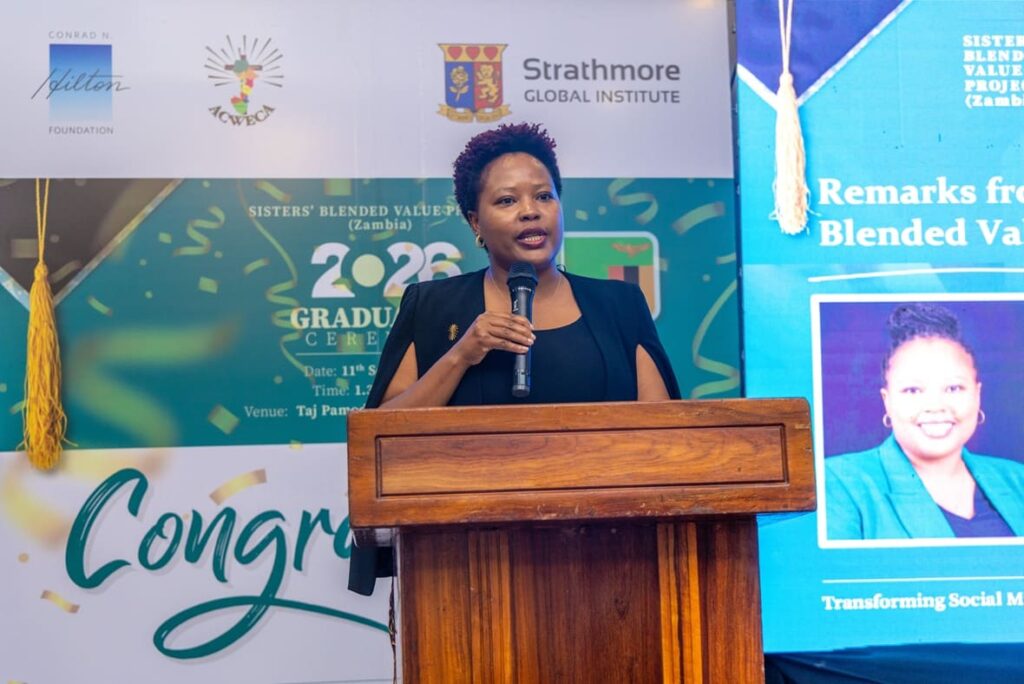
Dr. Angela Ndunge, the SBVP’s principal investigator at Strathmore University Business School, outlined the programme’s four pillars: capacity building, research, collaborative networks and access to finance.

She noted that the programme’s research component had produced more than 50 publications over five years, contributing to knowledge and practice in social entrepreneurship.

However, she placed particular emphasis on the graduates’ ability to exercise leadership regardless of their positions within their congregations.

“You don’t have to be the bishop or Mother Superior to make change,” she said.

Dr Ndunge encouraged the sisters to take responsibility for making a difference wherever they had been assigned, reminding them that meaningful change does not depend solely on holding senior positions.

Prof David Mathuva, Strathmore’s associate dean for academics and student affairs, welcomed the graduates into the university’s wider community, referring to them as “Stratizens”.

He lightened his remarks with a joke about personally checking the certificates for the Strathmore logo to confirm that the graduates had passed. He then encouraged them to represent the institution well as they returned to their respective ministries.

Anthony Kahindi, the university secretary, challenged the sisters to approach their work with dedication and a commitment to continuous learning.

Quoting Martin Luther King Jr., he recalled the civil rights leader’s message that every task, however ordinary, should be performed with excellence. He also invoked the question associated with Hillel the Elder: “If not me, who? If not now, when?”

Kahindi further encouraged the graduates to embrace lifelong learning and the discipline of continually improving their skills, while recognising the importance of rest and personal well-being.

Serving God while sustaining the mission

Representatives of the two graduating groups reflected on how the programme had challenged them to rethink the financial sustainability of their congregations’ ministries.

Speaking for the Start Group, Sr Patience Nyamangodo said the sisters had joined the programme amid growing concerns about the sustainability of their work as grants and donations became increasingly difficult to rely on.

Their congregations faced mounting needs, including employment creation, food security, skills development and support for vulnerable communities.

Through the programme, she said, the sisters had gained a deeper understanding of blended value, which brings together spiritual, social and economic outcomes.

“We do not have to choose between serving God and sustaining our work. Through social enterprise, we can do both,” she said.

For Sr. Nyamangodo and her fellow graduates, the training offered a way to explore how congregations could generate resources to sustain their ministries while continuing to respond to the needs of the people they serve.

Sr. Teclar Mukuli, representing the Advanced Class, urged the graduates to challenge attitudes and practices that leave congregations dependent on giving without adequately replenishing the resources needed to continue their work.

She encouraged them to identify and use the assets and opportunities available within their congregations to develop sustainable enterprises.

Echoing Bishop Lungu’s message, Sr Mukuli stressed the importance of maintaining a balance between their passion for Christ and compassion for humanity.

Entrepreneurial activities, she reminded the graduates, must not come at the expense of prayer, community life or the charisms that define their congregations.

From training to practice

Closing the ceremony, Dr Nancy Njiraini, the SBVP’s academic and research lead, reminded the graduates that completing the programme was only the beginning of the work ahead.

Each graduate would be supported by a post-graduation adviser for one year to help translate the knowledge gained into practical initiatives within her congregation.

Dr Njiraini encouraged the sisters to consult the communities they serve to ensure their enterprises respond to genuine needs. She also urged them to monitor both their social and spiritual impact and their financial performance, ensuring that economic growth remained aligned with their congregations’ missions and charisms.

She further emphasised the importance of personal well-being, reminding the graduates that sustaining their service to others also requires them to care for themselves.

The message brought the ceremony back to the responsibility Bishop Lungu had highlighted at the beginning: building sustainable enterprises is important, but the purpose of that work must remain firmly rooted in the mission of the Church.

For the 26 graduates, the challenge now is to translate their training into practical initiatives that sustain their congregations, create opportunities and serve communities — without losing sight of the vocation that brought them to religious life.

0 comments
0 FacebookTwitterPinterestEmail

The recent shooting at St. George’s Greek Orthodox Church in Hamoud, located in Jordan’s Al-Karak governorate, prompts a critical examination of a pressing issue. When acts of violence appear to be motivated by religious beliefs, should accountability solely rest with the individual who executes the act, or is it also imperative to address the underlying ideology that promotes hatred?

According to Reuters, the attack took place on 23 October during a funeral, killing nine people and wounding 40 others. On 26 October, Jordanian security forces arrested three relatives suspected of involvement. Authorities initially said investigators had found no evidence linking the suspects to other militant cells, and no group had claimed responsibility (Reuters, 26 October 2026).

Later that day, Jordan’s military said its air force had struck what it called militant hideouts in southern Syria, claiming the attackers were linked to “terrorist groups” operating there. Syria said it had received no advance notice of the strikes. The Syrian Civil Defence reported that seven people, including three children and a woman, had been killed and three others wounded in strikes in the countryside of Daraa and Sweida provinces. Jordan had not immediately commented on that casualty account (Reuters, 26 October 2026).

Jordanian officials have given differing accounts of the attackers’ links: some said they were not tied to any organised group, while the military later said they were linked to groups in Syria. The investigation must establish the facts, including the attackers’ motives, rather than allow speculation to harden into accepted truth. Even so, the tragedy calls for a wider examination of the ideas that can turn religious identity into a justification for violence.

Takfir and extremist teaching

Takfir is the practice of declaring another Muslim an unbeliever or apostate. In extremist settings, it can be used to exclude people from the religious community and justify hostility towards them. The Associated Press reported that Jordanian officials described the suspects as takfiri militants (AP, 26 October 2026). The danger arises when religious teaching dehumanises others, denies their equal dignity or presents violence as a sacred duty.

The gunmen are only the most visible part of the problem. Before an attack, there may be a chain of influences: propaganda, extremist preaching, recruitment, social networks and, in some cases, financial support. Each link deserves investigation where credible evidence exists.

Jordan’s Christians are not foreign guests in their own country. Christianity has deep historical roots in the region, and Christian communities remain part of its social and religious fabric. Their right to worship safely is a matter of citizenship and the rule of law.

A disturbing warning from Nigeria

The same concern is pressing in Nigeria, where religious tension and insecurity have already cost many lives.

On 26 October, Premium Times reported on a viral video in which a man appeared to lead boys in a Hausa-language chant calling for an AK-47 to kill Christians or non-Muslims in Enugu and Plateau states. The children wore uniforms resembling those of the First Aid Group associated with Jama’atu Izalatil Bid’ah Wa Iqamatis Sunnah (JIBWIS). At the time of the initial reporting, it remained unconfirmed whether those shown were registered members of the organisation or whether its leadership had sanctioned the display (Premium Times, 26 October 2026).

In a follow-up report on 28 October, Premium Times said the Zamfara State Police Command had identified the recording location as Maradun Local Government Area and reported that the suspect, Umar Ibrahim, had been arrested. Police said he would face charges relating to breach of public peace, incitement of hatred and criminal intimidation. JIBWIS’s leadership condemned the remarks and distanced the organisation from them (Premium Times, 28 October 2026).

These developments call for investigation, not premature accusations. The authorities must establish the facts and determine individual responsibility, while the organisation should clarify any questions about affiliation or authorisation. An arrest is not proof of guilt.

If children are taught to celebrate the killing of people because of their religion, the problem extends beyond one disturbing video. It becomes a warning about how young minds are being formed. Children taught to regard their neighbours as enemies may carry that hostility into public life.

Who will hold preachers accountable?

Religious leaders influence how followers understand their obligations towards people of other faiths. That influence carries responsibility.

Governments should investigate credible threats and prosecute incitement in accordance with the law and due process. Religious institutions should set standards for teachers and preachers, respond transparently to allegations and reject messages that encourage attacks on civilians.

Local scholars, community leaders and institutions also have a role in challenging extremist interpretations and defending peaceful coexistence. Punishment alone cannot eliminate violent ideology; prevention requires responsible religious instruction, education, protection for minorities and constructive opportunities for young people.

The United Nations Security Council’s Counter-Terrorism Committee has stressed that repression alone cannot counter violent extremism. It advocates a comprehensive approach that respects human rights and involves religious communities, educators, civil society and local communities in countering extremist narratives. See the Committee’s resource, Countering Violent Extremism and Terrorist Narratives.

That approach should include investigating credible evidence of financial support for violent networks. Allegations involving states, charities or private donors must be assessed individually and supported by evidence.

The danger of denial

Two errors must be avoided: collective blame and denial. Extremists should not be used to condemn all Muslims, but concern about prejudice must not prevent scrutiny of dangerous teaching.

History shows that violence is rarely sustained by weapons alone. Propaganda, dehumanisation, institutional complicity and silence can create conditions in which atrocities become possible. Societies must therefore confront any ideology that strips others of their dignity.

The United Nations Office of Counter-Terrorism identifies human rights and the rule of law as essential to preventing terrorism and violent extremism. Security measures must therefore protect vulnerable communities without becoming an excuse for discrimination or collective punishment.

Beyond religion

The struggle is not between Islam and Christianity. It is between respect for human dignity and ideologies that make a person’s rights conditional on religious identity.

Jordanian Christians, Nigerian Christians, Muslims and members of other faiths deserve equal protection under the law. No one should fear that attending a funeral, entering a church or gathering for prayer could make them a target.

The response to religious violence must therefore go beyond arresting the attackers. It must confront incitement, investigate credible links to violent networks and protect vulnerable communities through lawful, evidence-based action.

The gunmen must be stopped. But those who teach hatred, encourage violence or knowingly shield credible threats must also face scrutiny. Gunmen spill blood; the ideology teaches them first whose blood may be spilled.

0 comments
0 FacebookTwitterPinterestEmail

Imagine a young girl sitting in a classroom at Ekwereazu Girls Secondary School in Mbaise, Nigeria, dreaming of a bright future. She hopes to become a doctor, a teacher, a mother or a leader who transforms her community. But has anyone taught her the importance of understanding her body, caring for her health and seeking medical advice when she notices unusual changes?

Each October, communities across the globe observe Breast Cancer Awareness Month. The pink ribbon has emerged as a symbol of awareness, hope, solidarity, and support for individuals impacted by breast cancer. It serves as a reminder of women living with the disease, of survivors, and of families and communities united in their support. The significance of the ribbon is further enhanced when it encourages not only expressions of solidarity but also the pursuit of knowledge, the challenging of misconceptions, and the initiation of proactive measures.

Breast cancer develops when abnormal cells in breast tissue grow uncontrollably. Although it is more common in adult women, young girls also need age-appropriate health education to help them understand their bodies and know when to seek medical advice. Many breast changes during adolescence are part of normal development and are not cancerous. However, unusual or persistent changes should not be ignored because of shame, fear or misinformation. Every girl should feel comfortable speaking to a trusted adult and seeking advice from a qualified health professional.

The scale of the disease shows the urgent need for awareness and access to care. According to the International Agency for Research on Cancer (IARC), Nigeria recorded an estimated 44,196 new breast cancer cases and 21,309 deaths from the disease in 2024, making it the leading cause of cancer-related death in the country. In the WHO African Region, a 2022 assessment reported an estimated 146,130 new cases and 71,662 deaths, meaning roughly half of those diagnosed died from the disease.

These figures are made more urgent by late diagnosis: between 70% and 80% of breast cancer patients in Nigeria present at an advanced stage (Stage III or IV). Research from the National Institute for Cancer Research and Treatment also points to a high prevalence of aggressive subtypes, such as triple-negative breast cancer, in younger African women. Awareness must therefore go hand in hand with timely diagnosis, appropriate treatment and support for those affected.

Unfortunately, many women face not only the disease itself but also stigma, financial hardship and limited access to health services. Some remain silent because they fear other people’s reactions, while others believe that a breast cancer diagnosis is a death sentence. These misconceptions must be challenged. Women affected by breast cancer deserve respect, compassionate care, encouragement and the support of their families and communities.

Students of Ekwereazu Girls Secondary School in Mbaise, Nigeria, during a breast cancer awareness outreach organised by PACTPAN Nigeria’s Health and Healing Unit and its partners on 28 October 2026.

Protecting the future of the girl-child must therefore be everyone’s responsibility. Parents need to create safe environments where girls can ask questions about their health without embarrassment or fear. Schools should promote age-appropriate health education and guide students towards reliable information. Health professionals must provide accurate advice and appropriate care. Churches, community leaders and civil society organisations also have an important role in challenging stigma and addressing the misconceptions that prevent people from seeking medical attention. We must not wait until a woman is already ill before showing her care and support.

It was with this responsibility in mind that, on 28 October 2026, we brought breast cancer awareness to Ekwereazu Girls Secondary School in Mbaise. The outreach was organised by the Health and Healing Unit of the Pan-African Catholic Theology and Pastoral Network (PACTPAN) Nigeria, in collaboration with Amaraya Foundation and Akumi4Christ Global Care.

We reached 220 students and 25 teachers through educational talks and a practical demonstration of breast self-examination. During the session, some students expressed fear of dying from breast cancer. We reassured them of the importance of early detection and timely medical care. Their concerns reminded us how important it is to give young people reliable health information and a safe space to ask questions and voice their fears.

One student expressed her determination to continue raising awareness. “Sister, I will keep fighting and telling people about breast cancer…” she said. Her words encouraged us to keep empowering young people to share knowledge and help others understand the importance of breast health.

Our message also addressed body shaming. A community that upholds the worth of every person cannot tolerate mockery of the body, so we encouraged participants to speak out and say no to it. No one should be made to feel ashamed of their body or treated unfairly because of illness or physical changes. We must build communities where compassion replaces judgement and no one feels isolated.

As part of the initiative, the Health and Healing Unit of PACTPAN Nigeria established a health club for students interested in careers in Medicine and Surgery, Nursing and Medical Laboratory Science. Through it, we hope to nurture their interest in health-related professions and encourage greater awareness of health issues within the school community.

Students of Ekwereazu Girls Secondary School in Mbaise, Nigeria, during a breast cancer awareness outreach organised by PACTPAN Nigeria’s Health and Healing Unit and its partners on 28 October 2026.

Our commitment must not end with a single outreach or with the close of Breast Cancer Awareness Month. As I often emphasise in this campaign, “We must keep saving the future of our girls, we will keep wearing pink for survivors…” Wearing pink should be more than a seasonal gesture; it should remind us of our continuing responsibility to educate girls, support survivors and challenge the stigma surrounding breast cancer.

As Breast Cancer Awareness Month draws to a close on 31st October, let us see the pink ribbon as more than a symbol we wear. Let it become a pledge to educate, protect, support and act. Together, through PACTPAN Nigeria, Amaraya Foundation and Akumi4Christ Global Care, we invite our school community, the wider Mbaise community, and people across Africa and beyond to join us in building a future where breast cancer is met with knowledge, understanding and compassion.

SAVE HER FUTURE: Educate the girl, promote breast cancer awareness, empower her voice and build a community that cares.

0 comments
0 FacebookTwitterPinterestEmail
Newer Posts
Secret Link