
You might be forgiven if you cringe at the title of this essay, but that is really what this piece is about: to expose the nakedness of the black race and our homelessness shamefully displayed in the recent attacks of black South Africans against fellow Africans living in South Africa. John Bowlby once said that all of life, from the cradle to the grave, is a daring excursion from a secure base.
“It seems to me that the crisis facing every black person everywhere in the world today is whether we, as a race, have any more secure base on which to anchor our history, collective consciousness, and collaboration in pursuing common goals.”
It seems to me that many black people throughout the world have internalized the racist logic and violence, falling into the febrile pit of learned helplessness. Rather than tell our stories as redemptive, pushing towards a new social imaginary, some would rather wallow in self-pity and swim in the mud of contaminating narratives.
The nakedness and homelessness of black people reflect this loss of a secure base. What has continued in South Africa since the post-apartheid era, in black-on-black violence, first among black South Africans, painfully displayed in the clashes between the Inkatha Freedom Party and ANC youth immediately after the release of Nelson Mandela, and subsequently since 2008 in the attacks of South Africans against fellow black Africans, is a symptom of that loss.
Our secure base as people of African descent was articulated by the late Desmond Tutu as ubuntu. This organizing virtue shapes love, community, solidarity, participation, and friendship in our communities.
The land that popularized Ubuntu is showing us, as blacks, much to our collective pain, that Ubuntu, like our other deeply held and celebrated cultural values and ethics of community, is in crisis. Indeed, contemporary Africa faces a crisis of history, identity, and community, resulting from many years of gradual erosion of our collective consciousness of our shared history and our intimate, inseparable destiny.
“It does not matter where you live as a black person or the height you have attained in society; the ubiquity of racism hangs over every black person as a present threat to social mobility, dignity, and survival.”
When blacks fight against each other or see each other as enemies, they recirculate the destructive techniques of the oppressors among the victims of history.
Frantz Fanon warned the black people about this possibility over 60 years ago, arguing that colonialism reproduces itself in the colonized. Racism, like colonialism, also reproduces its worst forms through hatred, violence, mistrust, killings, dehumanization, barbarism, lies, prejudice, and atrocities within black bodies and minds whose inner human recesses it has poisoned. Thus, in ways not fully controlled or contained within black communities, these pathologies are reproduced in black-on-black violence.
Breaking this cycle of violence in black communities, from the favelas of Rio de Janeiro to the Khayelitsha slums in Cape Town, from the “microbes” unleashing criminality in Abobo, Abidjan, to the marauding killing squads of Jama’at Nasr al Islam wal Muslimin in the Sahel, requires more than moral outrage. It requires what may be called a social autopsy and a liberation historiography of black suffering and black violence.
We must ask difficult questions about the social conditions, historical humiliations, economic exclusions, political betrayals, and psychological wounds that make the oppressed turn against one another. A liberation historiography refuses shallow explanations and recovers the buried histories of dispossession, colonial fragmentation, racial humiliation, and failed postcolonial and post-apartheid promises that continue to shape black consciousness today.
A social autopsy helps us diagnose not simply the symptoms of violence and attacks on fellow Africans by black South Africans, but the deeper moral, historical, and structural diseases that sustain it. Without such a critical diagnosis, black communities risk merely condemning violence episodically in Harlem, New York, or the South Side of Chicago, while failing to dismantle the forces that continually reproduce it.
The Symposium of Episcopal Conferences of Africa and Madagascar (SECAM), in its statement condemning the attacks, rightly noted that the crisis in South Africa today is not simply a political or economic problem, but a profound moral and spiritual crisis, marked by the loss of the communal ethic of Ubuntu expressed in the conviction, “I am because we are.” Violence against fellow Africans is therefore a denial of African identity and the interconnectedness, dignity, and shared humanity of all people, where we affirm the humanity and dignity of others and see ourselves in them.
The call by the African bishops captures the spiritual path to repair from the moral and spiritual rupture that has stripped black South Africans of the Ubuntu spirit. But to understand the deeper rupture and crisis of Ubuntu in South Africa, and by extension in many black communities in Africa and the Diaspora, we must reflect more critically on the roots of the loss of historical consciousness among blacks, the failures of black liberation. This is what I have framed with the omnibus term ‘homelessness.’
Homelessness, Pan-Africanism, and the Future of the Black Race
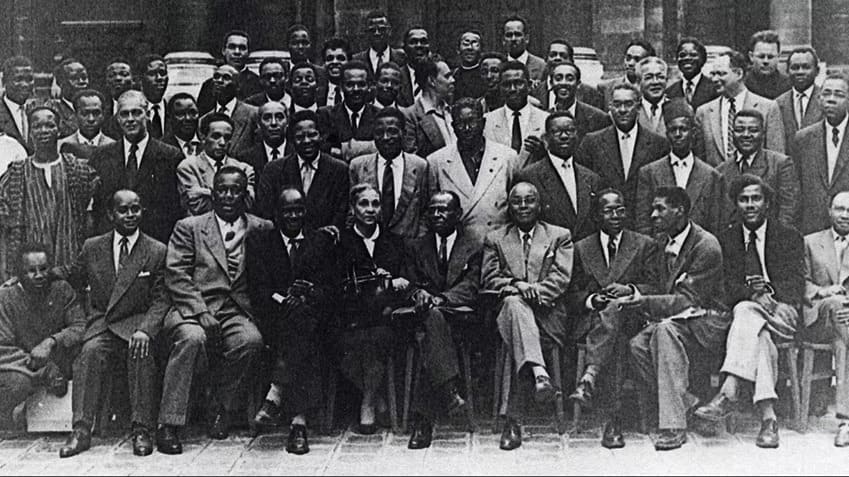
In the first half of the twentieth century, Pan-Africanists like W. E. B. Du Bois, George Padmore, Marcus Garvey, Mamadou Dia, Modibo Keita, Ahmed Sékou Touré, Léopold Sédar Senghor, Kwame Nkrumah, Alioune Diop, and Nnamdi Azikiwe advocated the return of Africans to their African motherland, the political emancipation of colonial Africa, and the restoration of the dignity and rights of Africans in the United States, South Africa, and other parts of the world where they suffered racism, violence, and denial of basic human rights. As a movement, Pan-Africanism had different trajectories and concerns, expressed in various slogans by different advocates. The Back to Africa Movement sought the return of formerly enslaved Africans to their homeland to build a great nation. The Universal Negro Improvement Association and African Communities Imperial League proclaimed, “Africa for Africans at home and abroad,” a slogan popularized by Marcus Garvey.
Despite their differences, these movements converged around the longing among Africans in the Diaspora for return, dignity, freedom, and the recovery of a wounded historical consciousness. This return was framed within political, economic, spiritual, and cultural visions of liberation, buoyed by Black consciousness movements such as Négritude.
This vision included Spanish-speaking Africans in Cuba, Portuguese-speaking Blacks in Brazil and Portugal, Dutch speakers in Holland, French-speaking Blacks from Haiti to Martinique and from France to Belgium, Arab speaking Africans in the Middle East, Afro Saxons in the Americas, and Black citizens of Trinidad and Tobago, Grenada, the Dominican Republic, Britain, and Canada. Driven by this idealism, the Pan-Africanists did not sufficiently appreciate the complexity of the concept of Africa, blackness, and Africanness, because being African does not necessarily mean being Black.
Africa is a continent of immense racial, cultural, linguistic, and religious diversity. It is home to thousands of ethnic groups, languages, cultures, and religious traditions. Asian and Indian communities have lived, intermarried, and flourished in Africa for centuries. Countries such as South Africa, Zimbabwe, Namibia, Angola, Mozambique, Madagascar, and Ethiopia are home to rich mixtures of African, Caucasian, Asian, and Indian populations. Significant Arab and Afro Arab populations also exist in the Maghreb, Sudan, Somalia, parts of Chad, and Nigeria.
As Jared Diamond observes, even before colonialism, Africa already contained five of the world’s six major divisions of humanity and nearly one quarter of the world’s languages. Africa’s immense diversity reflects its geography, ecological complexity, and long human history.
“Thus, while the Pan-Africanist vision rightly sought to restore Black dignity, Frantz Fanon was correct to describe some aspects of it as “a vague formula” in its call for all Africans to return physically to their homeland.”
It was largely a geographical attempt to conquer the homelessness of Africans.
What do I mean by the homelessness of Africans? The homelessness of Africans does not merely refer to the millions of Africans living far from the African motherland, nor simply to the devastating effects of brain drain on African economies and societies.
“The homelessness of Africans refers to the abandonment of Africa by Africans physically, but more fundamentally, emotionally, culturally, and spiritually. It is the alienation of Africans from their roots.”
This alienation weakens their sense of identity, unity, and connection to each other, and hampers the integral transformation of their societies both within Africa and in the Diaspora. It is the existential exile into which the historical conditioning and cultural suffocation of Africans have placed them, making impossible the full blossoming of the African personality and the emergence of truly liberated, self-regenerating, cohesive, and organic African societies. It is also the root cause of the seeming failure of Africans to work together locally, nationally, regionally, continentally, and internationally to build robust socio-political and economic structures for a new era in which the light of African existence, extinguished by historical injustice, can be rekindled through cultural rebirth.
Homelessness also reflects the loss of our epistemological roots and the gradual depletion of our indigenous fund of knowledge. As a result, we increasingly accept the orthodoxy of Northern epistemologies as the dominant and unquestioned framework for interpreting reality and solving social problems, while neglecting African epistemological pillars, cultural wisdom, and worldviews. Yet these African ways of knowing contain intellectual, moral, spiritual, and communal resources that can help shape a functional rationality capable of addressing the concrete historical, political, economic, and social challenges confronting African peoples today.
Homelessness produces a loss of faith in the future of the Black race. It leads Blacks to loathe fellow Blacks and embrace social hierarchies among us. It contributes to the repeated failure of Black leaders in Africa, the United States, and those who occupy positions of influence in international institutions to harness the positive energy and shared identity of Black peoples in reimagining Black dignity, agency, and collective efficacy. Above all, it reflects the failure of Black peoples to take a critical look at their historical condition and to discover, from within the heart of Mother Africa and through collaborative partnership, the path toward renewal. The homelessness of Africans also refers to the identity crisis of millions of Africans and their continuing search for who they are and where they belong in the world.
Cry, the Beloved Country
Nearly eighty years ago, South African novelist Alan Paton warned the world in Cry, the Beloved Country, about a society consumed by fear, division, social disintegration, and the tragic erosion of human solidarity under racial injustice. Paton mourned a country losing its moral soul through hatred, exclusion, humiliation, and violence. Today, the painful irony is that some of the wounds he described under apartheid now reappear in the violence Blacks inflict upon fellow Blacks and African foreigners in democratic South Africa. The tragedy is no longer only what white supremacy did to Black bodies and Black dignity, but the homelessness that unresolved humiliation, poverty, fear, resentment, and social despair are now causing Black people to do to one another.
Paton’s prophetic lament, therefore, acquires a new and disturbing meaning in our time. South Africans, and indeed all of us, must now cry not only for a country wounded by racism, but for a humanity in danger of losing its Ubuntu. We must cry for the migrant humiliated in the streets of Johannesburg, for the fellow African treated as an enemy rather than a brother or sister, for the poor who have inherited despair instead of hope, and for a generation of young Black people growing up in societies where fear is slowly replacing solidarity. As Paton wrote, “Cry, the beloved country, for the unborn child that is the inheritor of our fear.” That unborn child now stands before us in the townships, the slums, the refugee shelters, and the forgotten neighborhoods of our world, inheriting the bitterness, violence, fragmentation, and moral exhaustion that we have failed to heal—striking a dagger into the very soul of God in whose image and likeness we are all made.

1 comment
Prof, thank you for this essay you delivered recently. I read it at the moment of its apparition. Later, I felt like saying something which may likely not relate so much to what you are driving at.
But …
I think you rightly pointed out the issue of leadership which is dragging the growth of Pan-Africanism and keeping it in stillness.
Leadership has been the boiling issue in the hearts of many, like the agitators of Bịafran sovereignty. It is a common conception.
Having followed you, I’m aware that _Ubuntu_ is deep in your heart and it’s your favourite philosophy.
Can we try to see _Ubuntu_ in the light of _Onyemalụ, Aghala, Ọnụrụ-Ube-Nwanne._ I can scarcely see the spirit of _Ubuntu_ weighing any positive influence on the originators of this beautiful philosophy. It has left little or no mark on its owners. Unlike _Aghala_ and the rest of the synonyms. Apart from striking some points in the pages of philosophical thinkers, I have not witnessed the beauty said of _Ubuntu_ as I have done with _Aghala_ and its sisters in its practical sense.
My experience in Chad informs me of this. It is just like saying: Africa: Something must be wrong somewhere.
During my mission in Chad, I saw what it means to be separate. Chadians are a people that scarcely accommodate others even of same colour as them. The kind of relationship and rapport we expect from them is rather shown to us missionaries by people of other race (missionaries of other colours) in the land of Chad. One would occasionally hear us missionaries blasting out words while common discussions are going on: “Even we of same colour with you, almost the same culture, you are doing this to us!” Their manners of approaches to us make us furious. Do our reactions have any effect on them? For them, it meant nothing. They were only exhibiting their normal natural behaviour towards strangers. Their culture has brewed them to be so. The class of people I’m talking about are priests. In almost every conduct, normal affection is wanting. It is normal for them to tell us that they are averse to strangers. The evidence is glaring. They hardly can be classified as a friendly society. Even to their fellow Africans.
Some personal experiences I had – a hot debate arose one day between me and a priest and namesake too right in his parish. As I was hurt by his conduct I said to him, ‘You are treating me this way in your house, but I heard that you have visited my country with some of our missionaries who took you to the place during their days of holidays. Even though they have not told me how they made you welcome; I know they must have treated you very well. Our people are that way. They treat people very well.’ He retorted, ‘After all, it was only in the East they made me welcome; I was in the West and in the North, they did nothing.’ ‘That East is my real home. And here, look at how you are handling me,’ I repeated. It meant nothing to him. He ejected me from the parish house. This happened in a neighbouring diocese where I was on visit to see a newly arrived missionary from home.
Another very close encounter with another priest in another diocese that left me cold was when he refused to render me a help I badly and urgently needed. A white missionary came in between and threw his weight in vain while wanting to make it work. In the long run, this white missionary left all his appointments for the moment and did for me what I had hoped that a fellow black would have done for me. The pain though remained long didn’t wear me out. This is just a replica of what missionaries especially Africans see in places that are not far away like Europe or America. Being at home and being estranged.
The picture here is we and Pan-Africanism.
At any rate, in areas like this, hope is not lost. Some of the in-house traditional practices that look Europeanish are disintegrating and swept to the background as a result of their contacts with missionaries of African origin. Often we could lament on certain occasions: “You people are Africans. Why have you borrowed this from the whiteman and holding tight to it?” As missionaries, when we have opportunities to occupy some positions of influence, as often we do, we bring changes of which they also feel the joy.
_Ubuntu_, as I see cannot move things so much as could _Onyemalụ (Onyemalụ-Nwanne-Ya), Aghala (Onyeaghala-Nwanne-Ya), Ọnụrụ-Ube-Nwanne._
It is because of closed up characters of the Chadians that make us missionaries from home drag our feet in making quick and lasting friends of them and always bringing them home for visits plus help. For them, stepping their foot into our land is equal to going to Europe or America. Any of us who opens the way in this regard is taking a major risk.
The driving force of Pan-Africanism I think might not be _Ubuntu_, but should rather be _Aghala_ and other synonyms following. It is more active and more dynamic.
These _onyeaghalas_ are catalysts. Wherever they are, there is this natural emission of their qualities and talents nature has coated them with. In the churches in Chad as in other places, they make things work; in every field they do the same; is it in commerce, they are second to none; (a Chadian priest once cracked a joke after returning from the market one day and said: “I wonder whether these Igbo people in the market know how to do other things except trading business.” Their mastery of the trading business is beyond his grasp. We laughed over the joke, but he has made a strong point.
I can recall the words of Ahmadu Bello in his interview with a white journalist: ‘Igbos are such that when you make them labourers to work in a camp, they emerge as managers.’ He had such a blurred mind. Instead of seeing these catalysts as assets to be explored, he saw them as liabilities to be discarded. And he did just that.
No one can believe that Igbos suffer mercilessly in the hands of Chadians occasionally for no just cause. These indigenes organise themselves in groups, going from shop to shop making routine collections from the Igbo traders. If any shop is closed at the moment of this exercise, it is raised down. After this raid, the Igbo traders have no option than to start afresh to rebuild. And they do. And they succeed. They are the burning grass. How do the indigenes clear their conscience of this despicable act? They utter words like: “We are the indigenes, you are strangers. While you entered our land, not even with sand did you enter. You made all you have here in our land. Therefore, they all belong to us.” This is Africa and her own people.
What I saw the agitators of Bịafran sovereignty do is a starting point to salvage the situation. If these activists have their way, things can never remain the same. They seem to have been silenced at the moment. But I don’t think so. I am one of the staunch believers of the philosophy: “In Bịafra Africa Died.”